
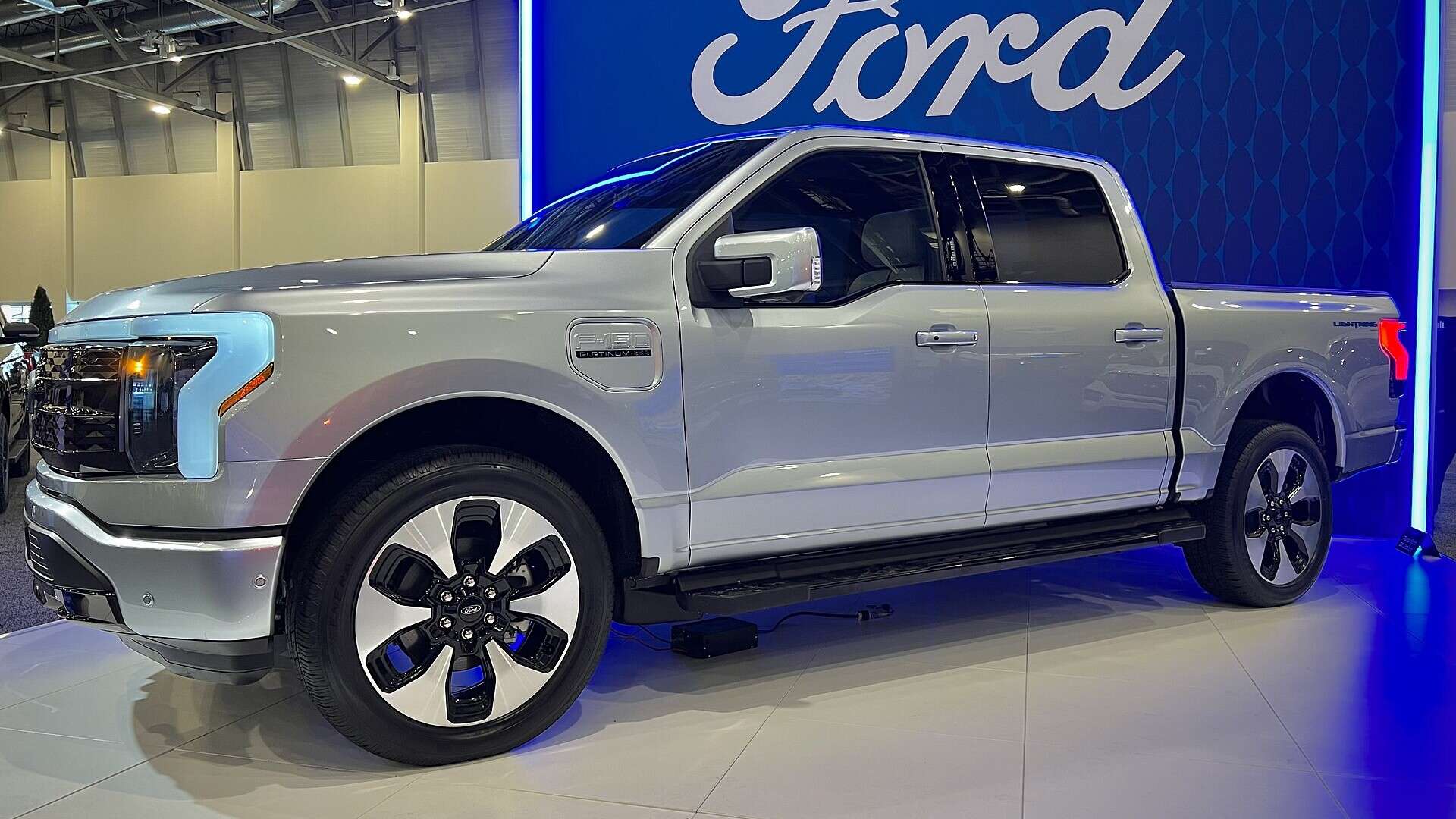
JG Kern Enterprises, a family-owned machine shop on Merrill Road in Sterling Heights, has told the state of Michigan it will permanently lay off 156 workers after Ford pulled its business, and at least part of that work is headed to suppliers in India.
The layoffs come while Washington argues about auto tariffs and Canada’s place in North American production. The case shows what those tariffs actually protect. They are written around where a vehicle gets its final assembly. They do much less for the shops a tier or two down that machine the parts, and this one appears to be paying for a Ford product plan that fell far short of its own targets.
What JG Kern makes, and what it filed
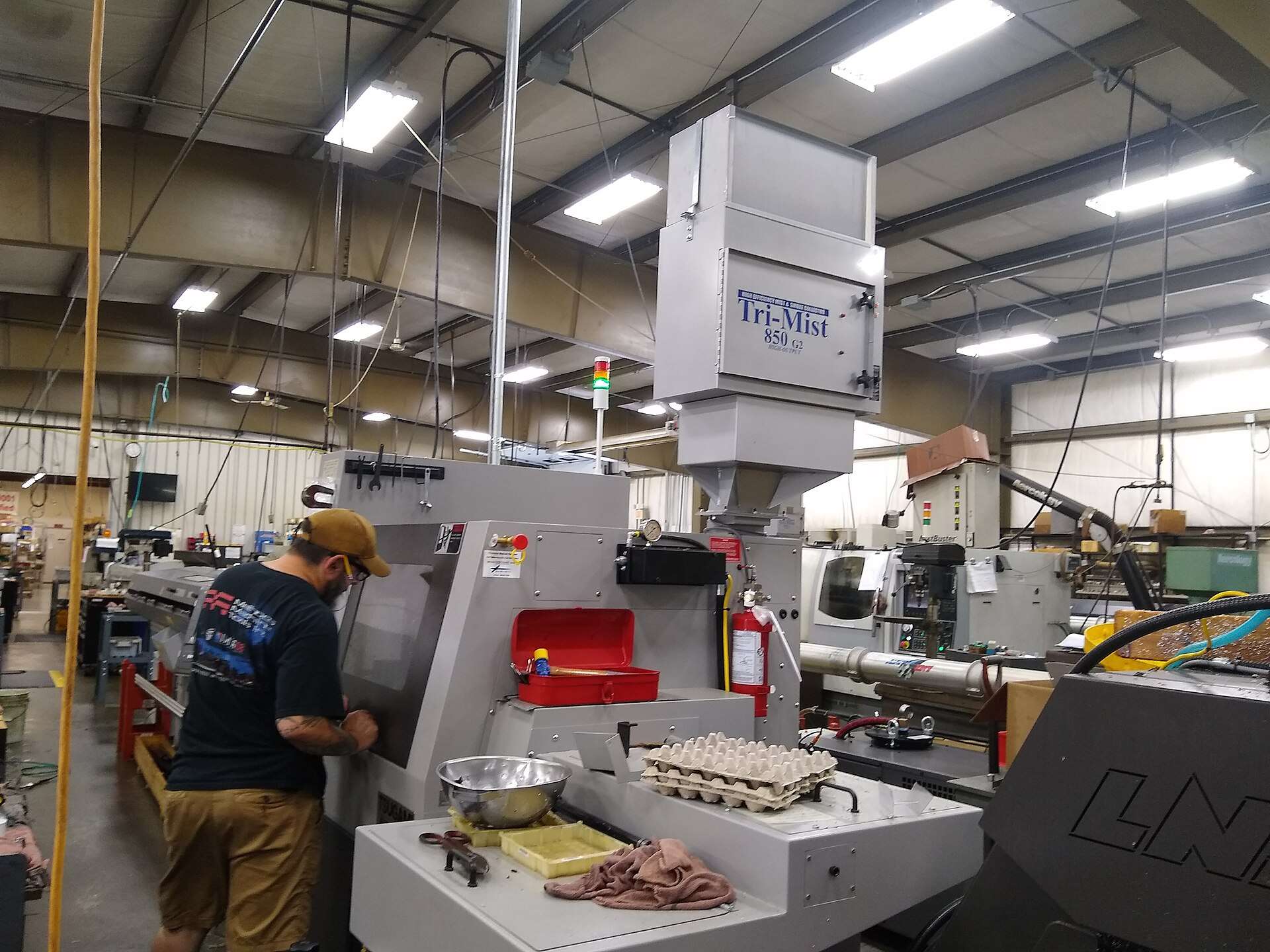
The company’s website describes it as a CNC machining operation that turns out close-tolerance components for drivetrain and powertrain assemblies and chassis frames. Its product pages list transmission flanges, axle flanges and slip yokes, the parts that connect a transmission or motor to the driveshaft and axles. Close-tolerance work like this runs on dedicated fixtures and programs tuned to one part number, so a shop’s equipment is often bought around a single customer’s part.
The layoff was first reported Oct. 15 by the Detroit Free Press, which said the company’s Worker Adjustment and Retraining Notification filing with the state cites “unforeseeable business circumstances.” According to the Free Press, JG Kern was founded in 1967 with seven employees, occupies nearly 200,000 square feet, has employed as many as 250 people at full production and reports annual revenue of $30 million to $50 million. A person familiar with the company told the paper Ford has been a customer for more than five decades. BorgWarner, Dana and Magna are also listed as clients.
Most of what the plant made recently went into the F-150 Lightning, the Free Press reported. One source told the paper Ford is moving the component work to suppliers in India; a second said some of it is going to U.S. suppliers. The plant is finishing its remaining Ford work at reduced volume and is expected to idle by the end of the year. We could not confirm from any Ford or JG Kern document which part numbers are moving or which vehicles they will go into, and neither company has said.
Ford spokesman Dave Tovar told the Free Press that Ford does not discuss confidential contracts or relationships with individual suppliers, and said, “Ford is committed to American manufacturing and jobs.” In an April 13 post under CEO Jim Farley’s name, Ford said it employs about 56,300 hourly manufacturing workers in the U.S. and that 83% of the vehicles it sells here are assembled here. Both figures count Ford’s own payroll and its own final assembly. Neither counts the machinists at a supplier like JG Kern.
A supplier sized for 150,000 Lightnings a year
Ford’s own Lightning page says the company planned to ramp the truck to an annual run rate of 150,000 in 2023 at the Rouge Electric Vehicle Center, where it invested $950 million. Sales never came close. Ford sold 27,307 Lightnings in 2025, down 18.5% from 2024, the Free Press reported. That is about 18% of the planned run rate, by The Auto Wire’s math.
On Dec. 15, 2025, Ford said production of the current Lightning had concluded, that the next one would be an extended-range electric vehicle built at the same Rouge plant, and that it expected to record about $19.5 billion in special items, most of it in the fourth quarter of 2025, with about $5.5 billion in cash effects. In the same release, Ford listed among its risk factors the multi-year commitments it had made to raw material and other suppliers that left it exposed to lower future demand. Ford has not announced a launch date for the extended-range truck. Our earlier coverage tracked how Ford’s EV sales have kept sliding since.
A source told the Free Press that JG Kern spent millions on equipment for the Lightning, expecting Ford to need thousands of parts a month. Ford books its losses on a program like this as special items and spreads the cash over two years. A machine shop with $30 million to $50 million in revenue has no such cushion when its biggest customer’s volume comes in at a fifth of plan.
Why a blanket purchase order rarely guarantees volume
Much of the auto supply chain runs on blanket purchase orders. The automaker issues one document that sets price, warranty and other terms, then sends “releases” that call for specific quantities. Suppliers often treat that arrangement as a long-term commitment. Michigan’s highest court has said the label alone does not make it one.
In MSSC, Inc. v. Airboss Flexible Products Co., Docket No. 163523, decided July 11, 2023, the Michigan Supreme Court held that calling an order “blanket” does not by itself create a quantity term under the state’s version of the Uniform Commercial Code. An order that does not commit the buyer to a set amount or share of its needs is a release-by-release contract, and the court said that kind of deal lets either side end its obligations quickly by not issuing, or not accepting, the next release. The case was brought by a buyer trying to hold a supplier to its prices, but the logic runs both ways. A customer under that kind of paper can stop sending releases.
We have not seen JG Kern’s purchase orders with Ford, and Ford would not discuss them. If they follow the common blanket-order pattern, the supplier carried the risk on the equipment while Ford kept the right to stop ordering. Shops that want protection have to negotiate it in writing up front: a stated share of the customer’s requirements, tooling reimbursement, or cancellation charges. Small suppliers with one dominant customer are the least likely to win those terms.
What the WARN Act’s “unforeseeable” exception covers
The federal WARN Act generally requires 60 days’ notice before a plant closing or mass layoff, and an employer that skips required notice can owe back pay and benefits for each day of the violation, up to 60 days. The phrase in JG Kern’s filing invokes an exception. The Labor Department’s regulation at 20 CFR 639.9 says it covers layoffs caused by business circumstances that were not reasonably foreseeable when notice would have been due, and it gives as its first example a principal client’s sudden and unexpected termination of a major contract. Even then, the employer must give as much notice as is practicable.
JG Kern’s situation matches that example closely. The exception also means workers at a captive supplier can get less warning than workers at the automaker whose decision caused the layoff. The regulation judges foreseeability by what a similarly situated employer would have predicted about its market, so any dispute over the timing would turn on what JG Kern knew about the Lightning, and when.
How the parts tariff and its offset treat a part from India
Since May 3, 2025, Proclamation 10908 has put a 25% tariff on covered imported auto parts, as the Commerce Department’s International Trade Administration restated in a June 2026 filing. Moving machined driveline parts from Michigan to India therefore carries a cost on paper. The fight over Canadian vehicles and parts gets the headlines, but the same rules decide what a flange from India costs.
The same system also gives automakers a way to soften that cost. A proclamation signed Oct. 17, 2025 lets manufacturers apply for an import adjustment offset equal to 3.75% of the aggregate sticker price of all the vehicles they assemble in the United States, from April 5, 2025, through April 30, 2030. Authorized importers can use that offset against tariffs on parts. The credit grows with U.S. final assembly. It does not grow with the share of a truck’s parts made in the U.S. A company that assembles a lot of vehicles here earns a large pool of credit that can absorb duties on imported components, including a flange or yoke that used to come from Sterling Heights.
India may get a further break. In a joint statement published Feb. 6, 2026, the two governments described a framework for an interim trade agreement under which India will receive a preferential tariff-rate quota for automotive parts subject to the national-security auto tariff. The statement describes a framework, not a finished deal, and We could not find a federal document putting that quota into effect.
Ford’s own footprint in India is also growing again. Ford is restarting its idle Chennai plant after signing a memorandum with the Tamil Nadu government for a ₹3,250 crore powertrain project there, with capacity for 235,000 engines a year and production starting in 2029, according to an Indian government announcement dated Oct. 31, 2025. Nothing in the public record ties that plant to the JG Kern work, which reportedly went to outside suppliers.
What Lightning owners and Michigan suppliers should watch
For the tens of thousands of Lightnings already on the road, Ford will need to keep supplying service parts after production ends. Ford has not said whether any of the driveline pieces JG Kern machined were service parts, or where replacements will come from. Owners who need an axle flange or yoke over the next few years will learn the answer at the parts counter, in price and wait time.
For the industry, the next test is the extended-range Lightning at the Rouge. Ford has not said where its driveline components will be sourced. If that program goes to new suppliers abroad while Ford keeps citing its U.S. assembly numbers, the gap between “assembled in America” and “machined in America” will be on display in the same building. Michigan’s WARN list is also worth checking in the coming months for other shops that tooled up for the first Lightning’s planned 150,000 trucks a year.
When an automaker shrinks or cancels a program, should it owe its small suppliers for the equipment they bought on the automaker’s forecast, or is that risk simply part of taking the purchase order?
Top photo: 2023 Ford F-150 Lightning. Photo: WMrapids via Wikimedia Commons (CC0)