
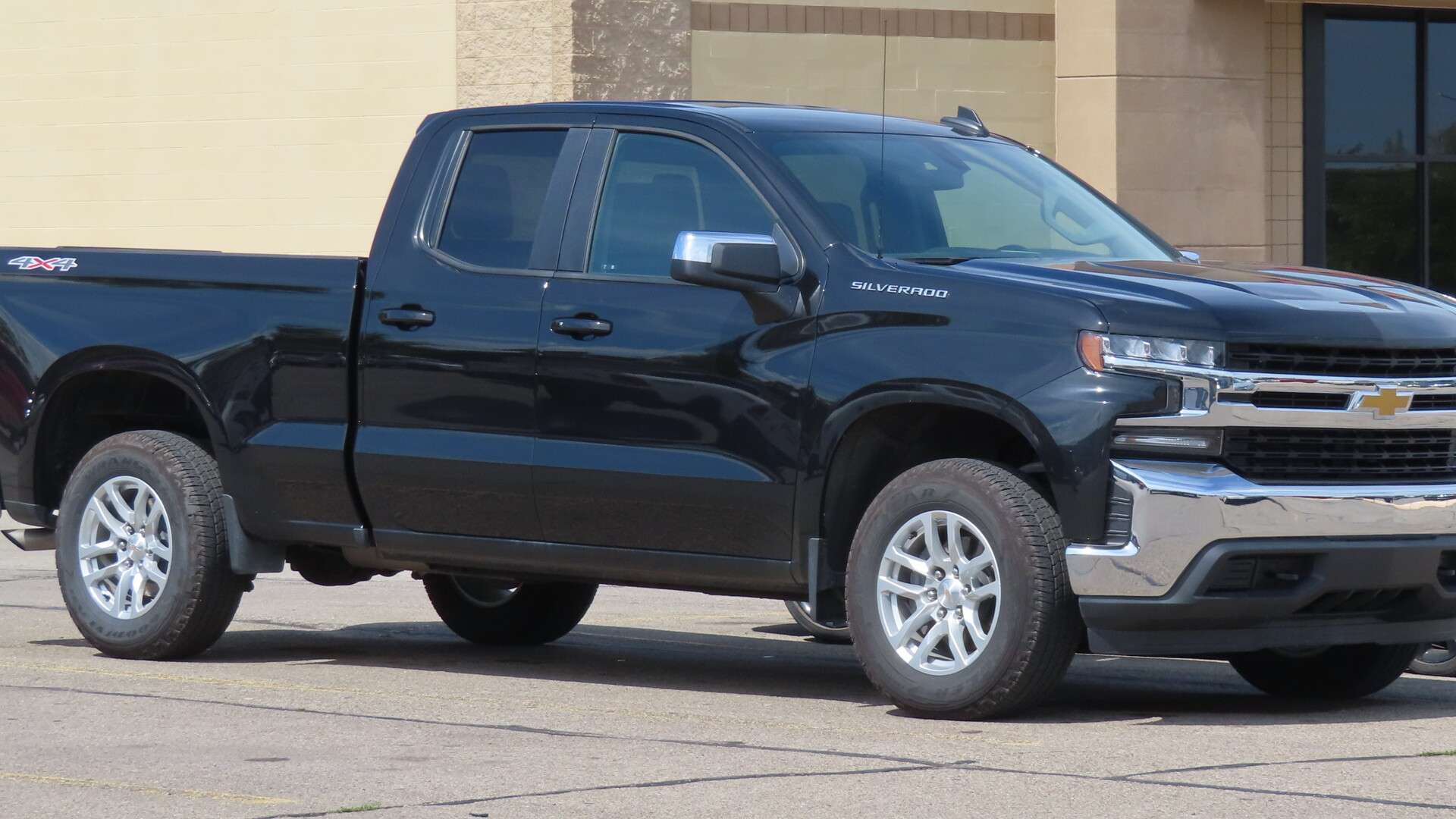
Fort Collins police say the pickup that drove onto a downtown sidewalk on Aug. 29 had spotted the pedestrians before it reached them. According to an arrest affidavit, the Silverado’s automatic emergency braking was set to “Alert and Brake,” the truck’s front camera and radar had picked out an adult ahead, and the accelerator pedal was reading 99%.
The driver, 88-year-old Van Edward Lemaster of Cheyenne, Wyoming, was booked into the Larimer County Jail on Oct. 16. Fort Collins Police Services said the district attorney’s office accepted charges of vehicular homicide, four counts of vehicular assault and two counts of reckless endangerment. Joshua Robert Douglass, 33, of Denver, died of multiple blunt force injuries. Lemaster is presumed innocent, and everything below that comes from the affidavit is an allegation, not a finding.
What happened on Mountain Avenue
Shortly before noon, 911 dispatchers began taking calls about a truck striking people in the 100 block of West Mountain Avenue, near Walrus Ice Cream. The Tour de Fat bicycle parade had just ended, and the affidavit says several hundred cyclists were making their way back through downtown.
Lemaster and a female companion had stopped for lunch at The Rio Grande after visiting the farmers market, according to the affidavit. The Silverado was in a diagonal space on the south side of the street. As he backed out, he had to stop and yield to bicycles and other eastbound traffic. One witness described a woman near the back of the truck who seemed to be trying to hold the cyclists back, saying things like “We aren’t a part of this” and “We just want to leave.” The officer who wrote the affidavit noted that the description could fit Lemaster’s companion, who was out of the truck at the time.

As the truck reversed, its rear bumper hit the rear door of a passing Nissan Altima. Several witnesses told police the engine then “revved aggressively,” the driver “threw that thing in drive” and the tires “squealed,” the affidavit says. The truck turned left out of the roadway, struck a handicap parking sign and three locked-up bicycles, and kept going. It pushed through a metal railing at the ice cream shop’s patio, hit the people on the sidewalk and finally stopped against a tree.
Douglass was pronounced dead at Poudre Valley Hospital at 12:15 p.m. Four others were hurt badly enough to support the vehicular assault counts, with injuries that included broken bones in the pelvis and legs that needed surgery, a broken foot and ribs, and broken teeth and facial injuries. Two more people, including a young child sitting with family at the shop’s outdoor seating, were knocked down. Police said in their first release that they did not believe anyone was targeted.
What the truck recorded
Investigators executed a search warrant on the Silverado on Sept. 14 and pulled data from its airbag control module and front camera module. The affidavit says the truck was moving backward at 11 mph when it hit the Nissan, then shifted into a forward gear and went from 0 to a peak of 21 mph in less than three seconds before striking the tree. The accelerator pedal read 99% both while backing up and while going forward. In between, the truck traveled 58 feet in a left-hand arc from the street onto the sidewalk.
The record is not one flat line, and the affidavit includes the messier parts. It shows throttle climbing from 19% to 68% before dropping to 40%, a dip the affiant attributes to StabiliTrak, GM’s stability control system, which can cut engine power and apply brakes. Throttle then rose to 99% two seconds before the tree and fell to 50% a second before it. Pedal pressure read 0% one second before impact and 65% a half-second before.
The braking system that was on
The front camera module logged a “Pedestrian-Adult” detection, the affidavit says, after combining camera and radar inputs and concluding that the truck’s speed and heading would likely end in a collision if nothing changed. The automatic emergency braking system was active and programmed to “Alert and Brake.” The affiant wrote that it “would have been disabled by LEMASTER’s use of the accelerator pedal.”
By the module’s data, the detected pedestrians were 23 feet away and the truck was moving at about 9 mph. “Had LEMASTER not overridden the AEB, the vehicle would have been able to stop before striking the pedestrians,” the affidavit states. It adds that, given road conditions and the Silverado’s braking ability, a full stop from 9 mph would have taken less than six feet. Systems like this are commonly designed to yield when a driver presses the accelerator hard, so they don’t fight someone who genuinely needs to move. This case turns on that design choice. The affidavit also says examination of the vehicle and its controls found no known defects that would have contributed to the crash.
What the driver told police
At the hospital, Lemaster told an officer he tried to back out three or four times before he “just gunned it” to get out of the parking spot, according to the affidavit. He was treated for a head injury and evaluated for impairment. The affidavit says he admitted drinking a 12-ounce can of beer with lunch, that he is a known diabetic and that he takes several prescription drugs. He consented to a blood draw, and no intoxicants were recorded. In its Oct. 16 update, Fort Collins Police Services said impairment was ruled out.
The officer who wrote the affidavit concluded that the rapid acceleration backward and then forward showed “a willful and wanton disregard” for others on the road. That is the prosecution’s theory, and Lemaster has yet to answer it in court.
Where the case stands
Police say their investigation is complete. The vehicular homicide count is a class 4 felony, the vehicular assault counts are class 5 felonies, and the reckless endangerment counts are class 2 misdemeanors. Fort Collins Police Chief Jeff Swoboda spoke to the community after the crash in this post from the department’s official account.
Chief Swoboda here, Fort Collins, reminding you we’re in this together…
— Fort Collins Police (@FCPolice) via X
The case also lands in the middle of an unsettled argument over automatic braking. Federal regulators finalized an emergency braking requirement for new passenger vehicles in 2024, automakers pushed back, and the rule survived, for now. Independent testing keeps finding uneven results too, including in a recent IIHS round that put work vans and pickups through crash-avoidance tests.
Nothing in the affidavit suggests the software failed. According to police, it did the job it was built for, and the pedal had the final say.
If the truck had already seen a pedestrian 23 feet away, should a floored pedal still get the last word, or does overriding the driver create its own dangers?
Top photo: File photo of a 2021 Chevrolet Silverado 1500, not the truck involved. Photo: MercurySable99 / Wikimedia Commons, CC BY-SA 4.0