

GM Financial, the lender that writes loans and leases on Chevrolets, GMCs, Buicks and Cadillacs, set aside $340 million for loan losses in the third quarter, up from $244 million a year earlier, according to its quarterly report. That is a 39% jump. In its Oct. 20 earnings release, the parent company reported $3.3 billion in net income attributable to stockholders and a new $20 billion share buyback authorization.
Both numbers are accurate, and they describe two different stages of the same bad year. Ford, GM and Stellantis have spent the last 12 months booking enormous charges to unwind their electric-vehicle plans, and most of that accounting is now behind them. The strain that is still growing sits further down the chain: in the automakers’ own finance companies, in the credit lines dealers use to stock their lots, and in the lenders who serve buyers with the weakest credit. That is where the next round of bad news is likely to show up first.
The EV write-downs are mostly on the books
Stellantis took the hardest hit. On Feb. 26, the parent of Jeep, Ram, Dodge and Chrysler reported a 2025 net loss of €22.3 billion after €25.4 billion in unusual charges, covering a reset of its product plan and EV supply chain, a change in how it estimates warranty provisions, and workforce cuts in Europe. It suspended its 2026 dividend, posted negative industrial free cash flow of €4.5 billion for the year, and authorized up to €5 billion in hybrid bonds. Hybrid bonds are very long-dated, subordinated debt that credit-rating agencies treat as partly equity, which lets a company raise cash without loading its balance sheet with the kind of debt that triggers a downgrade. Companies reach for them when they want to protect a rating. CEO Antonio Filosa said the results reflect “the cost of over-estimating the pace of the energy transition.”
The North American business is still soft. Stellantis estimated on Oct. 13 that its third-quarter shipments in the region fell about 47,000 units, or 12%, because of planned production downtime that mostly hit Jeep. Grand Cherokee and Compass shipments each fell by about 25,000 units, partly offset by a gain of about 17,000 Rams. The company reports full third-quarter results Oct. 28. The Auto Wire has already looked at how Stellantis is measuring its quality fixes against its warranty reserve, which was part of the 2025 charge.
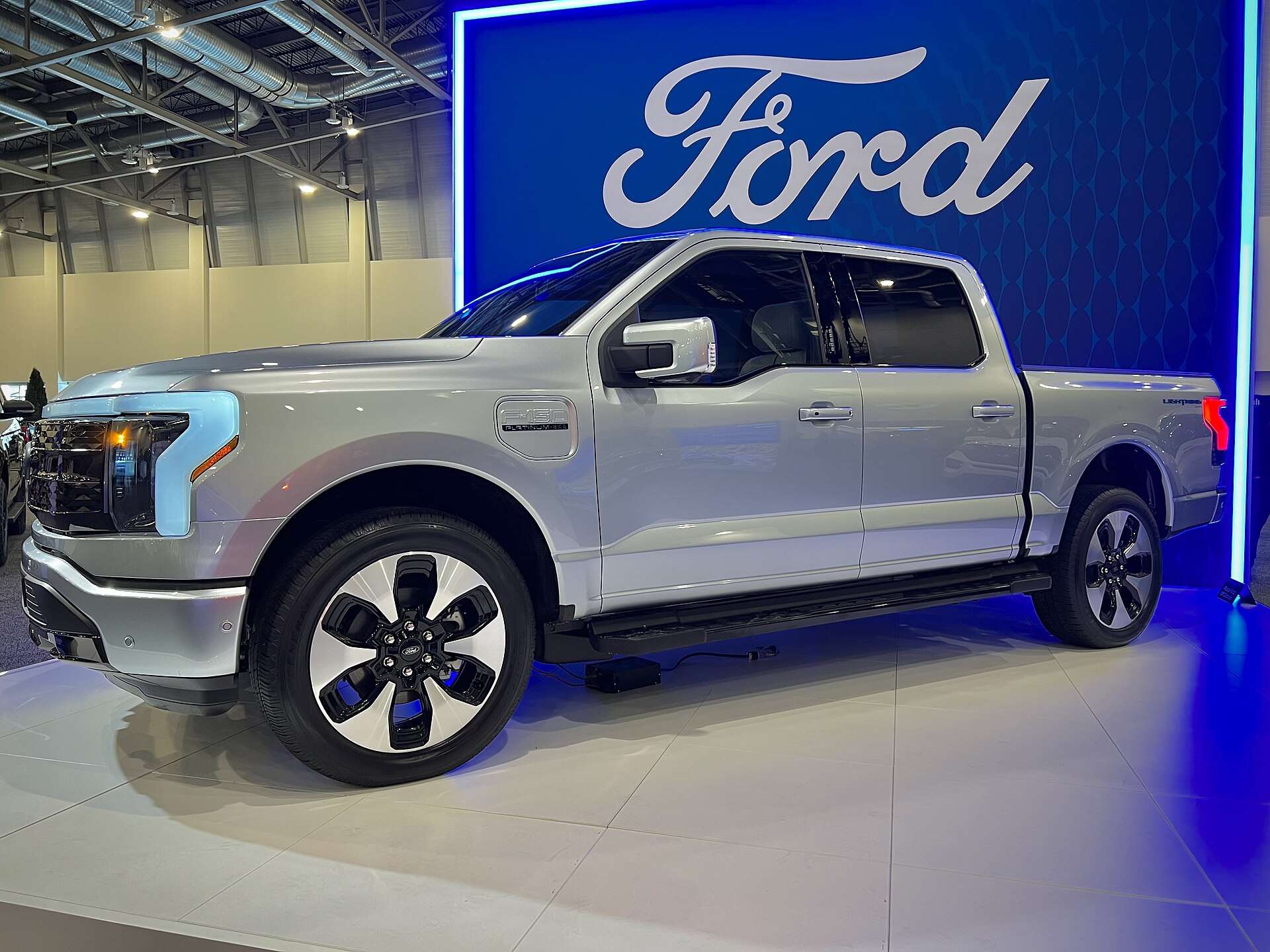
Ford’s reckoning came in December. On Dec. 15, 2025, the company said it expected about $19.5 billion in special items, most of it in the fourth quarter and the rest in 2026 and 2027, with about $5.5 billion of that paid in cash. It ended production of the current F-150 Lightning, said the next version would be an extended-range EV with a gas engine on board, and replaced a planned next-generation electric truck at its Tennessee plant with gas-powered trucks. Ford’s full-year 2025 results showed a net loss attributable to Ford of $8.2 billion, including an $11.1 billion loss in the fourth quarter. Its Model e electric unit lost $4.8 billion before interest and taxes.

The charges kept arriving into 2026. Ford’s second-quarter report showed a $1.3 billion net loss attributable to Ford after $4.2 billion in pretax special items, $3.6 billion of it tied to the disposition of the BlueOval SK battery joint venture, which splits the Kentucky and Tennessee plants between Ford and SK On. In the same report, Ford raised its full-year adjusted EBIT forecast to $10 billion to $11 billion. Model e is still expected to lose about $4 billion this year.
GM moved earlier and smaller. A Jan. 8 filing with the SEC said GM expected about $6.0 billion in EV-related fourth-quarter charges, citing the end of certain consumer tax incentives and what it called a “reduction in the stringency of emissions regulations.” Another $1.1 billion, mostly tied to restructuring its Chinese joint venture with SAIC, came on top. By the third quarter of 2026, GM’s EV realignment adjustments had shrunk to $238 million, from $1.592 billion a year earlier.
How much of that money is real cash matters. Most of an impairment is a bookkeeping admission that tooling, equipment and battery capacity bought for EVs is now worth less than the company paid for it. No check gets written. The cash portion is the money paid to suppliers whose contracts were canceled: about $5.5 billion at Ford by its own estimate, and about $4.2 billion of GM’s fourth-quarter EV charge, according to its filing. Those are large bills. Ford’s own forecast of $6 billion to $7 billion in adjusted free cash flow this year shows they can be paid.
The automakers’ own lenders are seeing more late payments
The captive finance companies (GM Financial, Ford Credit, Stellantis Financial Services) exist to sell cars. They fund the subsidized rates in the ads, they write the leases, and they usually also fund the dealers’ inventory. When a buyer stops paying, the captive takes the loss. When a dealer stops paying, the captive is the creditor at the courthouse.
GM Financial’s third-quarter numbers moved the wrong way on each credit measure in its release. Retail loans more than 30 days past due rose to 3.7% of receivables from 3.2% a year earlier. Annualized net charge-offs, the losses left after repossessed cars are sold at auction and the proceeds applied to what the borrower owed, rose to 1.6% from 1.2%. Pretax earnings fell to $668 million from $804 million. Those loss rates are still low for an auto lender. The bigger reserve tells you GM Financial expects the trend to continue.
Ford Credit is earning more money while setting more aside. Its pretax earnings rose to $757 million in the second quarter, but its provision for credit losses rose to $150 million from $114 million, and its allowance for credit losses reached $968 million at June 30, up from $911 million at the end of 2025, according to Ford’s second-quarter release.
The broader market shows the same slow drift. The Federal Reserve Bank of New York reported Aug. 11 that auto loan balances reached $1.713 trillion at the end of June, and that the annualized share of auto debt moving into serious delinquency, 90 days or more late, was 3.00%, up from 2.93% a year earlier. The increase is small and steady, and The Auto Wire has tracked how it is squeezing used-car buyers and showing up in repossessions among borrowers with good credit.
How a dealer falls out of trust with its lender
Almost no franchised dealer owns the new cars on its lot. A floorplan lender, often the automaker’s captive, pays the factory when a vehicle ships and the dealer pays interest on it every month it sits. As a car ages, many floorplan agreements require the dealer to start paying down principal, known as curtailments. When the car sells, the dealer is required to pay off that unit promptly. A dealer that sells a car and keeps the money is “out of trust,” and lenders send auditors to count vehicle identification numbers on the lot to catch it. Slow sales make this worse in two ways: interest piles up on unsold cars, and a dealer short on cash is tempted to use one car’s sale proceeds to cover another bill.
That mechanism is visible in this year’s court records. In March, Stellantis Financial Services sued Sky Auto Mall of Center Point, Iowa, an affiliated Chevrolet store in Newhall, and their owners in Linn County District Court. According to the Business Record, the lender alleges the owners borrowed from multiple lenders against the same vehicles, sold vehicles without repaying Stellantis, kept multiple sets of books, and owe more than $12.3 million in total. Those are allegations in a civil suit. The two stores laid off 76 workers, 30 in Newhall and 46 in Center Point, KCRG reported.
Broadway Ford Truck Sales in St. Louis took a different road to the same place. It filed for Chapter 11 on May 18 in the U.S. Bankruptcy Court for the Eastern District of Missouri. Its first-day filings say it fell out of compliance with its Ford Motor Credit floorplan line after carrying too much inventory, and describe a Ford Pro Elite commercial service center built for about $5.6 million and sized for 56 technicians but staffed with about 20. The filings also say the dealer leaned on merchant cash advances, short-term financing repaid out of daily receipts at steep effective rates, and that one of those lenders was paid more than $2 million in March 2026 alone. Dealers usually reach for that kind of money after cheaper credit has run out.
The trouble has reached the plumbing between dealers, too. Dealer Trade Network, a Louisville marketplace where franchised dealers trade new vehicles with one another, filed for Chapter 11 on Aug. 27. And the big public dealer groups, the healthiest operators in retail, are already seeing profits slip.
Buy-here, pay-here lending is running out of road
At the bottom of the market, the dealer and the lender are the same company. America’s Car-Mart, which sells used cars mostly to borrowers with weak credit and finances them itself, reported a net loss of $139.1 million for the fiscal year that ended April 30, on revenue of $1.28 billion. It went from 154 dealerships to 94. Its net charge-offs equaled 27.6% of average finance receivables, up from 25.9% the year before.
Its annual report carries a going-concern warning, which the filing describes as “substantial doubt about the Company’s ability to continue as a going concern.” The filing says the company does not currently have a revolving credit facility or a warehouse facility available, and it lists about $722.4 million of outstanding debt. That matters because of how this business works. A buy-here, pay-here dealer pays cash for every car it sells and gets that money back over years of weekly or monthly payments. A warehouse line is the short-term credit that bridges the gap until the loans can be bundled and sold to investors. Without one, every car sold on credit drains cash.
CEO Doug Campbell said the year did not meet expectations but that “this is a liquidity and capital-structure story, not a credit-quality one.” The financing gap is what puts the company at risk of closing, so he has a point. His own annual report also says inflation, and gasoline prices that it says rose about 50% from pre-conflict levels, led to more delinquencies, repossessions and credit losses during the year. A lender that writes off more than a quarter of its average loan book in a year has a credit problem and a funding problem at the same time.
What owners, buyers and dealers should watch
Stellantis reports Oct. 28, and the number to watch is any update on North American dealer inventory and incentives after a quarter of Jeep downtime. Discounts move cars, but they also shrink the trade-in and resale values that lenders count on when a loan goes bad. When Ford reports its third quarter, the important line is Ford Credit’s provision for credit losses, not the adjusted EBIT figure that will lead the headlines. At GM Financial, the test is whether delinquencies keep rising into the fourth quarter.
For owners, a failing dealer does not take your factory warranty with it. Warranty repairs can be handled at any franchised dealer of that brand, and your loan belongs to the lender, not the store. The exposure is narrower. If you recently traded in a vehicle that still had a loan on it, confirm with your old lender that the dealer’s payoff arrived. In an out-of-trust case, the trade-in payoff is one of the bills that can go unpaid, and the loan stays in your name until it is.
Traded in a car with a loan on it this year? Did you confirm the payoff actually landed?