
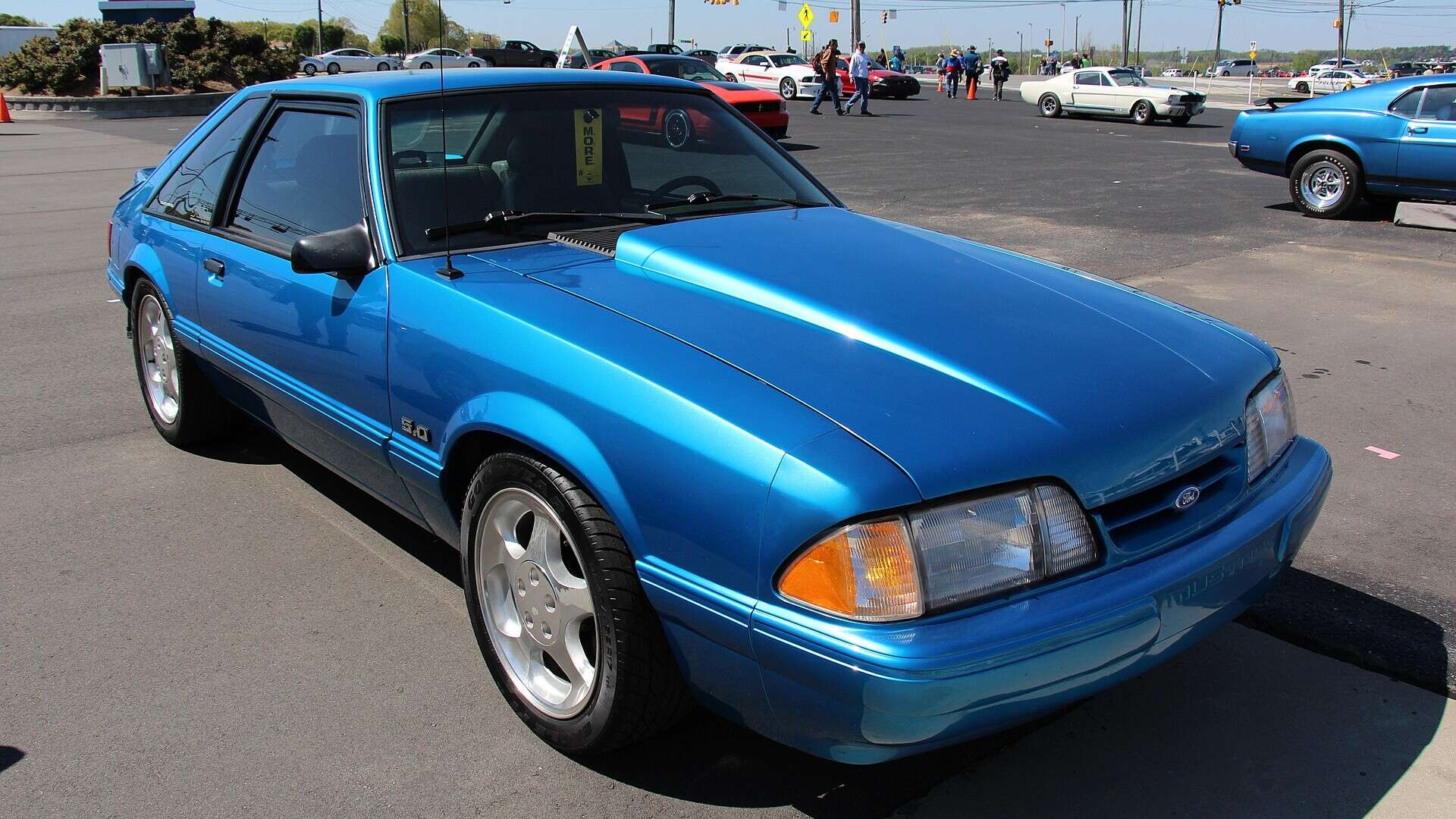
Ford’s least expensive V8 Mustang, the 2026 GT Fastback, carries a starting MSRP of $47,800 on Ford’s own model page. The average new vehicle sold in the United States in September went for $50,562, according to Kelley Blue Book data published by Cox Automotive on Oct. 13. The car that used to be the cheap way into a V8 now starts within a few thousand dollars of the average new-vehicle price, and that tells you who the new-car business is built for.
That was the complaint on episode 179 of the Minnoxide podcast, in a clip posted Sept. 24. The guest, Doc Meyer, argued that trucks and SUVs pay the industry’s bills, that new-vehicle prices have passed $50,000, and that nothing on sale today plays the role a cheap 5.0-liter Mustang once did for a young buyer who wanted a starting point for a fun car. He also said this: “Average age of a new car buyer is 61.”
The price point is right. The age is not supported by anything I could find. The trend behind it is real, though, and the federal and industry records explain it better than the number does.
What the age data shows
I could not locate a government, manufacturer or industry-research source that puts the average new-vehicle buyer at 61. The most detailed public work on the question comes from three Federal Reserve Board economists, Christopher Kurz, Geng Li and Daniel Vine, whose June 24, 2016, FEDS Note on new-vehicle demographics used J.D. Power transaction data. They found the average buyer’s age rose from 43-1/2 in 2000 to more than 49 in 2009, then held roughly flat after the recession. Over 2000 to 2015, buyer age climbed almost seven years, about twice as fast as the median age of the U.S. population.
The same paper tracked who signed the contracts. In 2000, buyers 55 and older accounted for 21.2% of new light vehicles purchased, and buyers 16 to 34 accounted for 28.6%. By 2015 the 55-and-older share was 36.4%. S&P Global Mobility’s registration data, in a June 3, 2025, analysis by Jason Jordhamo, picks up the thread: buyers 55 and older made up nearly half of all new registrations, and the 18-to-34 share fell from 12% in the first quarter of 2021 to below 10%. The two data sets use different age brackets and methods, so they don’t splice into one clean line, but they point the same way.
So 61 overshoots. A showroom where close to half the registrations go to people 55 and up still looks a lot like the one Meyer described.
Federal Reserve economists traced the shift to income
The Fed paper opened with an explanation it found in press coverage: young adults had lost interest in driving. The authors tested that idea against the data and mostly rejected it. They found the aging of buyers came chiefly from two things: baby boomers moving into the 55-plus bracket, and a falling purchase rate among people 35 to 54. Young adults pulled the numbers down less than their share of the population would suggest. Once the economists controlled for employment and income, purchase rates after 2007 fell by similar amounts across age groups. Their conclusion was that the drop “more likely reflects economic factors than permanent shifts in tastes and preferences for vehicle ownership.”
S&P Global Mobility’s numbers show why that finding still applies. It reported that monthly payments rose 30% over four years and that nearly one in five new vehicles carries a payment above $1,000. At that level, a 24-year-old with a starter salary and a thin credit file runs into the loan approval and the monthly payment long before any question of taste comes up. A 58-year-old with a paid-off trade-in and decades of credit history walks into the same finance office with a different set of options.
Sedans fell from half of production to under a quarter
Meyer’s line about trucks and SUVs paying the bills shows up plainly in the EPA’s Automotive Trends Report 2025, released in February 2026. In its production-share table, sedans and wagons made up 50.5% of new light-duty vehicles in model year 2005. By model year 2024 they were 23.7%. Truck-classified SUVs went the other way, from 20.6% to 49.6%. Pickups barely moved, from 14.5% to 14.1%.
Federal vehicle categories hide part of this shift. The EPA report notes that most two-wheel-drive SUVs under 6,000 pounds gross vehicle weight are classified as cars, while most four-wheel-drive versions are trucks. The same crossover nameplate can count as both, depending on which wheels are driven. That is how the government can say cars were 34% of 2024 production under NHTSA definitions while sedans and wagons were only 23.7%.
Fuel economy rules also stopped punishing growth. NHTSA’s 2006 final rule for light truck fuel economy standards for model years 2008 through 2011 replaced a single fleet target with targets tied to footprint, the area between a vehicle’s four wheels. The rule says it in one line: “Smaller footprint light trucks have higher targets and larger ones, lower targets.” NHTSA later applied the same footprint approach to passenger cars. The agency’s main argument was safety: the rule says the change eliminates “the previous regulatory incentive to downsize vehicles.” It also means a bigger vehicle brings an easier fuel economy target with it, and the smallest, cheapest car in a lineup carries the toughest one. The EPA report says average footprint has generally grown since it began tracking the measure in 2008, and it stood at 51.5 square feet in model year 2024.
A footprint curve doesn’t kill a sedan by itself. It does remove one reason an automaker used to keep a small, inexpensive car in the lineup, at the same time buyers with the most money were asking for something taller.
Where a new Mustang sits on today’s price ladder
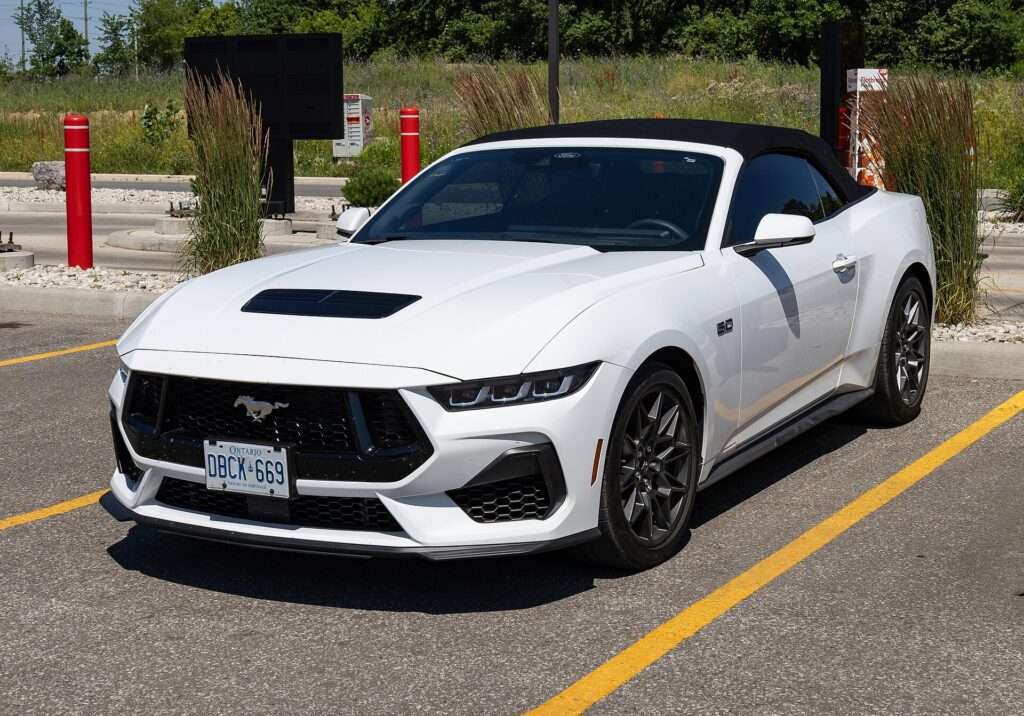

Ford’s model page lists the 2026 Mustang EcoBoost Fastback, with a 315-hp 2.3-liter four-cylinder, at $32,995. The 5.0-liter GT Fastback is $47,800, the GT Premium $52,080 and the Dark Horse $65,080. The GT’s starting price sits $2,762 below September’s industry-wide average transaction price, and those are not the same measurement: MSRP is a sticker, and the Kelley Blue Book figure is what buyers paid. The gap is still small enough to make the point.
Kelley Blue Book’s segment tables for September show where the money is. Compact cars averaged $27,977, up 3.2% from a year earlier. Subcompact SUVs averaged $31,213. Full-size pickups averaged $67,573 and full-size SUVs $79,707. Cox Automotive executive analyst Erin Keating said in the release, “Consumers don’t buy the industry average. They buy a vehicle.” She added that affordability pressure is pushing more shoppers toward cheaper vehicles and segments, which is holding the overall average down even as individual prices climb. I read that as a warning. Buyers are already trading down, and the average is still only $52 from the record of $50,614 set in December 2025.
The $10,000 V8 Meyer described was a used car, and that is where the role went. A young buyer who wants a weekend project now finds it on the used lot, often a decade or more old, with the repair bills that come with that age. The catch for the next generation of buyers is that today’s used supply is drawn from the last decade’s new-car mix, and that mix included fewer small, inexpensive cars each year, so the pool of cheap used ones shrinks with it.
Three numbers to check next year
The first is S&P Global Mobility’s 18-to-34 registration share, and whether it stays below 10% or climbs back toward the 12% of early 2021. The second is the compact-car line in Kelley Blue Book’s monthly tables. It is the cheapest of the five highest-volume segments Cox tracks, and its 3.2% annual increase outran the industry average’s 0.7%. The third is the sedan-and-wagon share in the EPA’s next Automotive Trends Report. A further drop from 23.7% would mean the cheapest body style keeps shrinking as a source of future used cars.
If the Fed economists were right that buyers follow their incomes, a recovering job market for people under 35 should show up in these figures. If it doesn’t, the cause is more likely what automakers build and what they charge for it. With new-vehicle prices near $50,000, the next year of data should show which.
If you were 25 with $35,000 to spend on something fun, would you take a new four-cylinder Mustang with a warranty or a used V8 GT with some miles on it, and why?