
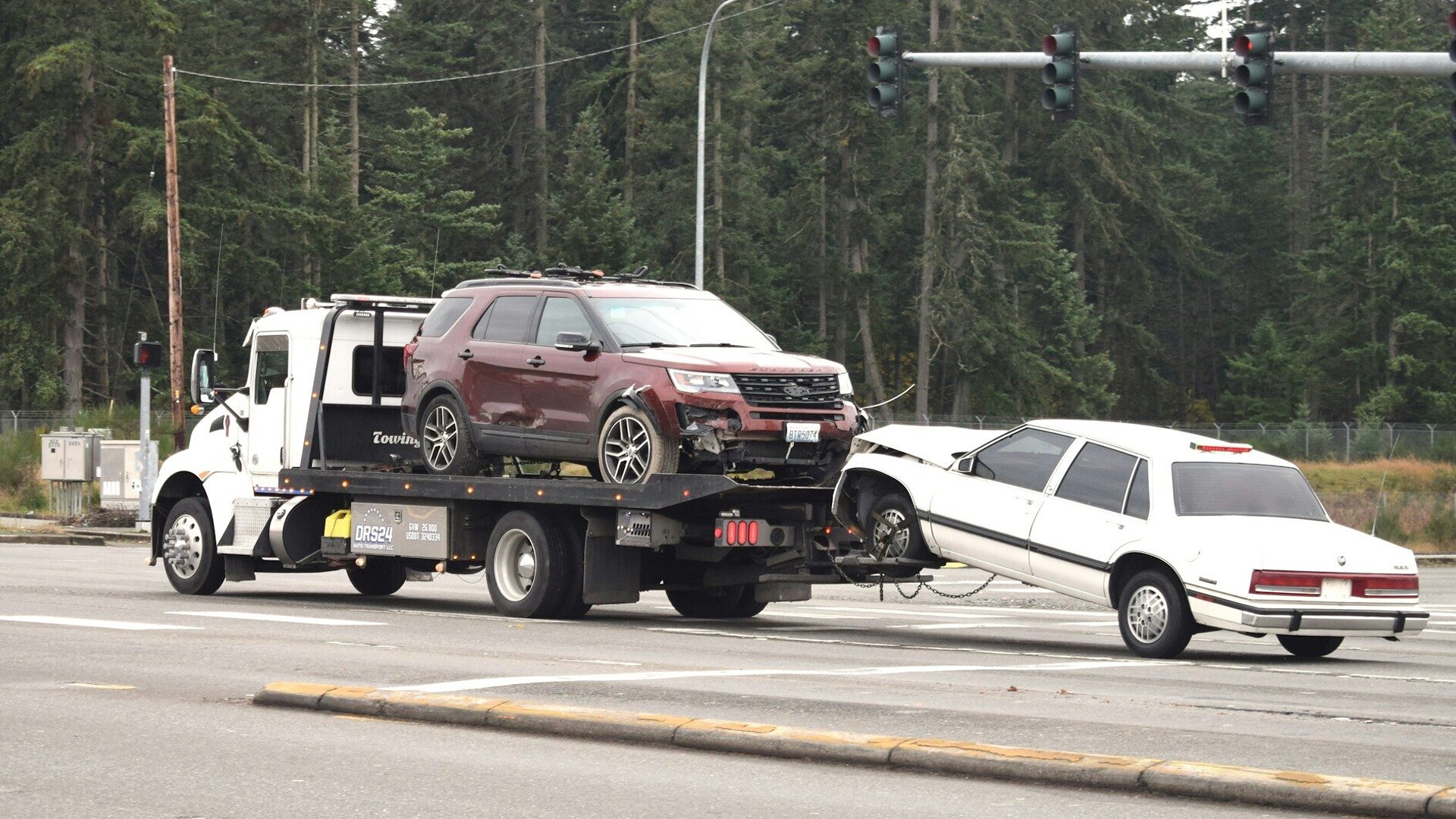
If your car has expired tags and sits behind your house, University City, Missouri, has apparently considered it fair game. A federal class action filed October 22 says the St. Louis suburb ordered more than 150 vehicles towed from private residential property in three years. According to the complaint, officers took cars out of driveways, carports and backyards, and from behind privacy fences, without warrants, real notice, or any working way to challenge the tow.
Everything below comes from the complaint. These are allegations, and the city has not yet filed its response in court.
The case
The case is Shucks v. City of University City, No. 4:26-cv-01818, in the Eastern District of Missouri. ArchCity Defenders, a St. Louis civil-rights nonprofit, represents four current and former residents. The defendants are the city and five officers, who are sued individually.
Related Articles
- Its Box Stayed on I-5. Its Cab Hung Off the Side and Caught Fire. Neither Man Inside Went to the Hospital
- Rhode Island’s Flock Camera Rules Allow 30 Days of Plate Data. Flock Itself Now Recommends Seven.
The proposed class covers everyone whose vehicle the city seized from private property for an alleged ordinance violation since October 22, 2021. The suit seeks damages, punitive damages against the officers, and a declaration that the practice violated the Fourth and Fourteenth Amendments.
The cars
Per the complaint, these were people’s cars, not abandoned wrecks:
- Whitney Shucks owned a 2009 Dodge Journey that failed inspection over a possible overheating issue. She was learning to fix it from YouTube videos while she saved for a re-test. Officers towed it from her carport on October 4, 2024. By her next payday, Hartmann’s Towing told her release fees had passed $2,000 and were climbing by hundreds of dollars a day. She never got the car back. The yard also wouldn’t release the work boots and artwork inside unless she paid.
- Sheila Schroers and Jason Wendt lost a 2001 Camry, a 1998 4Runner and a 2001 Dodge Ram from their backyard driveway in April 2023. The 4Runner had current tags; she wasn’t driving it because of a damaged bumper. According to the complaint, when Schroers questioned the city’s authority, an officer replied, “If you believe that, then I’ll go get a warrant.” Schroers says the officer never got one.
- Phillip Hammonds lost a 1987 Cutlass Supreme he’d owned since high school. It was taken from his backyard on November 26, 2024, while he was away. In October 2025, the city towed his 2005 Silverado and a trailer with current tags from the backyard of another property he owns, with no warning at all.
The city’s own code
The complaint’s sharpest argument uses University City’s own ordinances against it. One section makes it a violation to keep an unplated vehicle on property for more than seven days. But other sections allow the city to tow from private property only when a vehicle is:
- “abandoned or inoperable”
- a public health or safety hazard
- no longer self-propelled, and then only after 10 days of written notice
None of that describes a car with stale stickers parked behind a house.
The suit says the city’s form letter gave five days, not ten. It also says the letter listed City Hall’s general phone number, and that callers ended up talking to the same police department ordering the tow. At least one resident who asked about a hearing was sent to Animal Control.
One more ordinance stands out. It says owners “shall not deny access” to city agents examining or removing a vehicle.
Why the driveway matters
The Supreme Court addressed this in Collins v. Virginia in 2018. That case involved a motorcycle under a tarp at the top of a driveway. The Court held that the driveway was curtilage, meaning part of the home for Fourth Amendment purposes, and that the “automobile exception” doesn’t let police walk onto it without a warrant.
The University City complaint goes further than Collins. These officers weren’t chasing a stolen bike. According to the suit, they were looking for expired registrations, on private land, apparently without a warrant.
How tags go stale
Every plaintiff’s vehicle was a 2009 or older. That matters in Missouri, where state rules exempt vehicles from safety inspection only for their first 10 model years under 150,000 miles. St. Louis County, which includes University City, also requires emissions testing.
Related Articles
- Hughes FCU Repo Settlement Pays About $1,067 a Check and Settles $25.6 Million in Disputed Car Debt
- Why D.C. Speed Cameras Now Out-Earn New York City’s Entire Program
So an older car can’t be registered until it passes inspection, and a failed inspection means a repair before the tags can be renewed. The complaint argues that towing these cars doesn’t fix the registration problem. The owner just pays a tow yard and gets the car back in the same unregistered state. The only things that change are the owner’s savings and their ability to get to work.
This has happened nearby before
According to ArchCity Defenders’ own announcement, a federal judge approved a $465,000 settlement in September 2026 in a similar case against nearby Calverton Park. That city also agreed to stop treating expired tags alone as grounds to tow.
What owners should do
If you live anywhere with aggressive code enforcement:
- Photograph where your car is parked and the condition it’s in.
- Keep records of inspection failures and repair receipts. They show you’re working toward compliance, not abandoning the car.
- Request a hearing in writing, and keep a copy, if you ever get a tow notice.
- Never accept a phone call as your hearing.
A ticket is supposed to be the price of stale tags. According to the complaint, Shucks’s price was a $2,000-plus impound bill and a car she never saw again. If a tow truck showed up in your driveway tomorrow, would you know who to call for a hearing?