
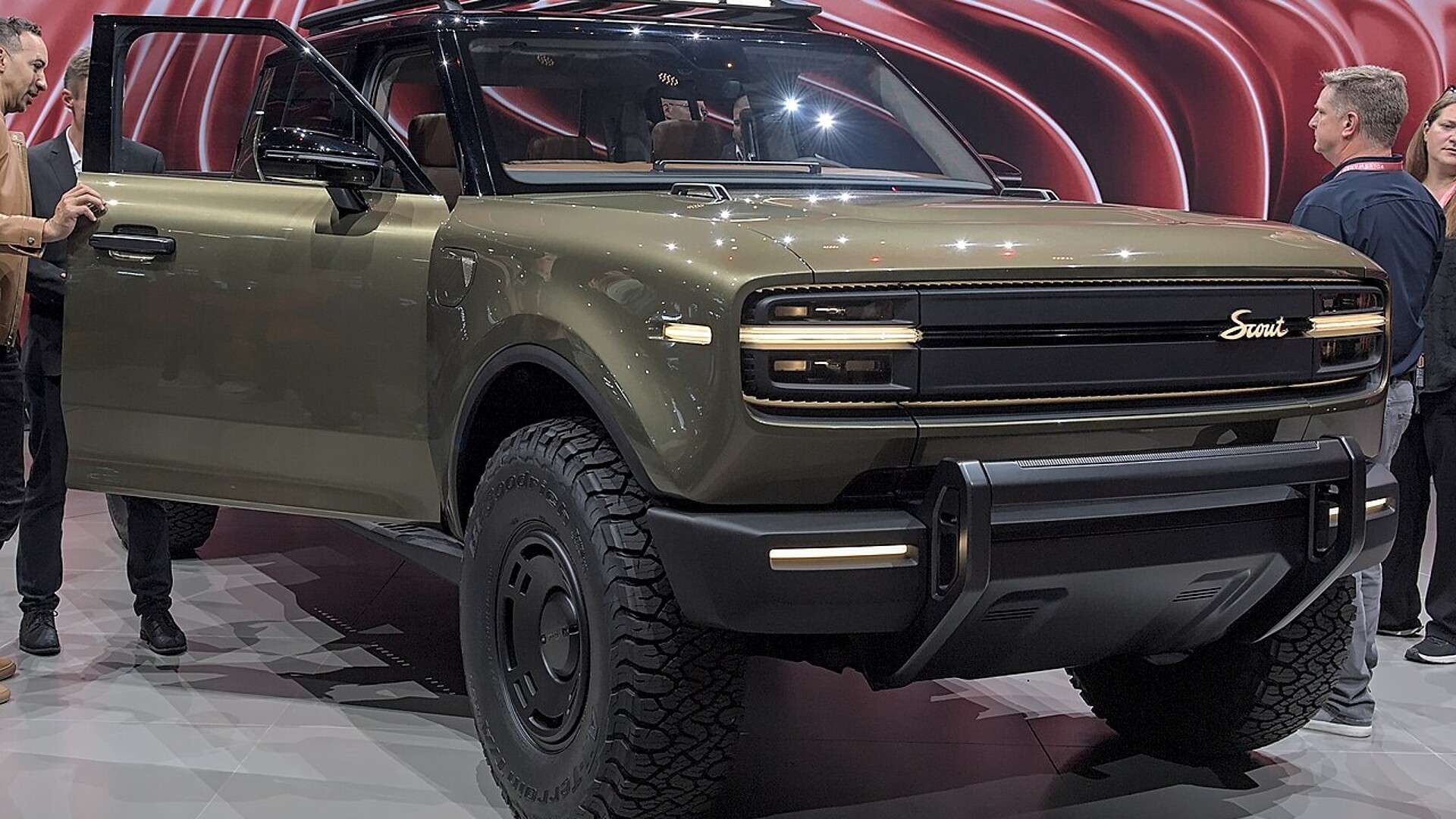
On October 22, Chief Judge Cynthia Bashant of the U.S. District Court for the Southern District of California denied motions by Volkswagen Group of America and Scout Motors to end a dealer lawsuit brought by the California New Car Dealers Association, which says Scout’s plan to sell vehicles directly to customers violates state dealer law. The eight-page order does not say whether Scout may sell in California. It says the defendants already lost the central argument in March and may not ask for a second ruling on it.
What the October order did
Both defendants filed their motions for judgment on the pleadings on June 23. Volkswagen Group of America argued, among other things, that the court’s broad reading of the statute offends substantive due process and overrides the common-law rule that a corporation is separate from its parent and siblings. Scout argued the association had not stated a claim under California’s unfair competition law. Judge Bashant found both motions barred by the law-of-the-case doctrine. She treated Volkswagen’s as an untimely motion for reconsideration filed nearly two months after the deadline, and she noted that the company had not argued her earlier reading was clearly wrong and had conceded that the statute is “equally susceptible” to it. The motions were denied without prejudice, and the order sets no new deadlines.
The case is not waiting around. In a July 28 order, the court refused to pause discovery while those motions were pending, reasoning that if they failed the case would need to move quickly to summary judgment or trial.

The statute and the word “affiliate”
California Vehicle Code section 11713.3(o)(1) bars licensed manufacturers and distributors from competing with their franchised dealers in new-vehicle sales, and it extends to competition “indirectly through an affiliate.” In her March 30 order, Judge Bashant read that phrase broadly. Volkswagen Group of America does not have to direct the affiliate’s sales, and a shared parent is enough to make two companies affiliates. Scout Motors, Inc. is wholly owned by Volkswagen International America, the same company that sits above Volkswagen Group of America, which is licensed in California as a manufacturer and distributor and has franchised dealers. The association’s theory is that Scout is the affiliate and Volkswagen’s U.S. arm is the one competing through it.
The order also describes what the Legislature took out of the law. Assembly Bill 473, effective January 1, 2024, removed the earlier “same line-make” and “relevant market area” language. Those limits are what once let a manufacturer say a different brand, sold somewhere else, wasn’t competing with anyone. My read of the orders is that a structure that might have fit the old text is being tested against the text that replaced it. The statute still leaves one door open: a manufacturer creating a new line of vehicles may sell and service it through new or existing franchisees. Judge Bashant found that exception cuts against Scout, which has none.
A dealer license did not end the argument
Scout did not lack state permission. DMV records the court took judicial notice of show that Scout Motors received a manufacturer’s license in 2023, renewed in 2024, and that Scout Motors Sales LLC received a vehicle dealer license in 2023, renewed in 2024, and has two licensed salespersons. Scout argued that licensing created a safe harbor and that the suit was a collateral attack on the DMV’s authority. The March order rejected both: the licensing statutes grant permission to operate but do not displace the dealer-protection rules. A license to sell cars is not an exemption from a separate statute that says a licensee may not compete with its own franchisees.
The ruling is narrower than it may sound. The court doubted that Scout itself can violate section 11713.3, since Scout has no franchisees, but let the unfair-practices claim against it proceed, and it kept the claim against Volkswagen Group of America, the licensee that does. It dismissed Volkswagen AG for lack of personal jurisdiction, without prejudice, and dismissed a false-advertising claim over Scout’s reservation agreement, also without prejudice, for failure to plead reliance. Only the unfair competition claim remains. The order also recounts allegations, not findings, that Scout opposed AB 473, sought carve-outs for its direct model, and that its general counsel wrote in 2023 that the bill would end that plan. Scout also faces a separate suit from neighbors over blasting at its South Carolina plant.

What the case could mean for buyers
The association is asking for a declaration that the model violates section 11713.3 and that each reservation is a separate violation, plus preliminary and permanent injunctions and restitution. The court has not decided which remedies, if any, are available. Scout’s reservations carry a deposit of $100 in the United States, fully refundable until an order is confirmed according to the company’s support page. The March order recites Scout’s plan to release vehicles in 2027, but Scout’s June 26 production update now speaks of delivering vehicles in 2028 from a $2 billion plant in Blythewood, South Carolina, built for up to 200,000 vehicles a year. A ruling could therefore arrive before a California customer takes delivery of one.
If the association wins an injunction, Scout and Volkswagen would have two real choices: sell through California franchisees, as the statute’s new-line exception contemplates, or restructure the ownership that makes Scout an affiliate. Skipping the most populous state is on the list too, though nobody’s volunteering it. For a shopper, that decides whether a Scout is bought on a screen from the factory or negotiated at a store whose owner carries its own inventory risk. Volkswagen is also not the only automaker being tested: the court pointed to a March 9, 2026 tentative decision from Los Angeles Superior Court in a separate case involving American Honda as support for its reading of “affiliate.”
The next thing to watch is summary judgment, since the court has said the case must move there quickly and no remedy has been decided. If a shared parent is enough to turn Scout into a dealer’s competitor, where does “affiliate” stop?