
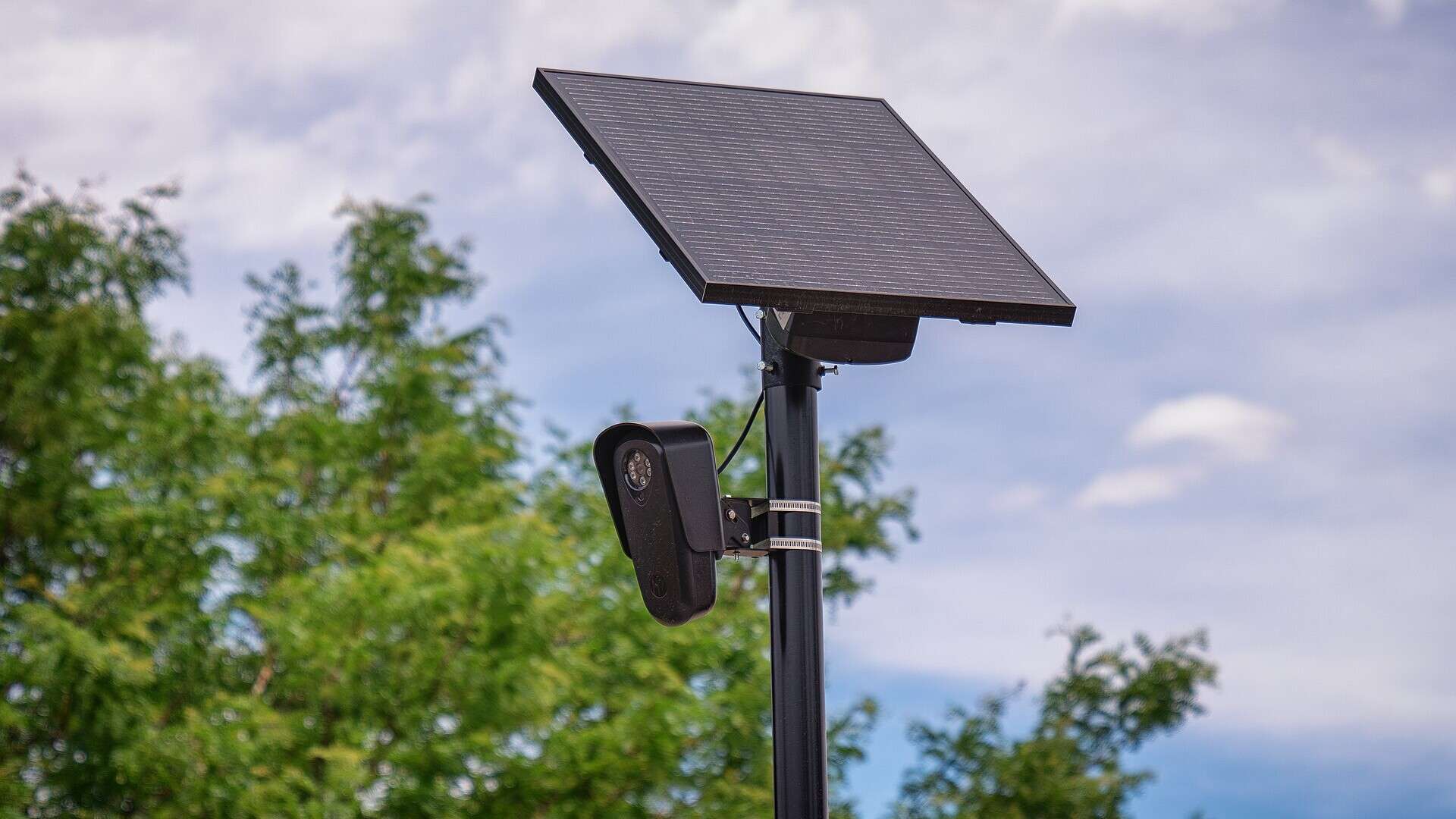
Under the plate-reader policy Rhode Island State Police sent to every department on Oct. 19, a photo of your car’s back end can sit in a police database for up to 30 days. Flock Safety, which makes most of the cameras, cut its own recommended default to seven days in August.
That gap is the best single measure of what Rhode Island’s long-awaited rulebook does. The state now has written standards for Flock cameras and other automated license plate readers, or ALPRs,, including outright bans on using them for immigration enforcement or sharing data with ICE. But the retention limit trails the vendor, the document is a template, not a law, and the penalties it lists depend on statutes Rhode Island doesn’t have. Gov. Dan McKee, who ordered the review, has left those binding questions to the General Assembly, which returns in January 2027 and has let two stricter bills die in committee.
A 60-day pause with no end date
McKee started this on Aug. 18. His office announced that the State Police would not install or activate any more ALPR cameras, urged cities and towns to pause new installs too, and gave State Police Col. Darnell Weaver and the Department of Public Safety 60 days to produce statewide standards with the Rhode Island Police Chiefs’ Association, the League of Cities and Towns and others. Cameras already running could keep running. “Public safety and personal privacy are not mutually exclusive,” McKee said in that release.
The State Police had 24 of their 39 contracted Flock cameras installed when the pause began, according to NBC 10 WJAR. The 60 days ran out on Monday, Oct. 19. Instead of lifting the hold, the governor’s office extended it with no end date to give lawmakers time to write legislation, as Rhode Island Current reported. For the State Police, that is a freeze. For the cities and towns, it remains a request.
What the State Police model policy allows and forbids
The Statewide Automated License Plate Reader Policy is written as a fill-in-the-blank document. Its policy statement opens with a blank line where a department’s name goes. McKee is urging local police to adopt it, and a working group of the Department of Public Safety, the chiefs’ association, the Providence Police Department and the League of Cities and Towns is supposed to review it every year.
I read all eight sections. The retention rule reads: “Unless preserved as part of an investigation, ALPR data shall purge no later than 30 days after the data was captured.” The policy bars using the cameras “for traffic violations, outstanding fines or any civil infractions,” for immigration enforcement, and for crimes Rhode Island law doesn’t recognize. It also prohibits using them to enforce abortion restrictions, to infringe First Amendment rights, to target people based solely on race, religion or other protected classes, and for anyone’s personal use. Sharing with Immigration and Customs Enforcement, or any agency enforcing federal civil immigration law, is banned outright, and other police agencies get access only after signing a written agreement to the same rules.
For investigations, an officer needs reasonable suspicion that a crime was committed before searching the data. The department’s ALPR administrator has to audit the system at least once a quarter by pulling a random sample of 10 searches, and each department must run a public transparency portal listing its hot-list sources, retention period, camera count and search figures.
How a plate read turns into a traffic stop, or a database entry
A fixed ALPR photographs every plate that passes, reads the characters and does two things with the result. It checks the plate against hot lists, which the Rhode Island policy says come from the FBI’s National Crime Information Center, the state Division of Motor Vehicles and local be-on-the-lookout notices, among others. And it stores the read, with a time and location, so investigators can search it later.
The policy is careful about the first function. It says an alert concerns a vehicle, not necessarily the person driving it, and that an alert alone isn’t grounds to act. Before a stop, the officer has to confirm the plate is still wanted and check with their own eyes that the plate number, state and vehicle match. Anyone whose car has been flagged after a misread or a stale stolen-vehicle entry knows why that step matters. The policy lists the DMV as a hot-list source but doesn’t say which DMV records go onto the list, which is something the quarterly audits and transparency portals should eventually show.
Retention governs the second function, and it covers mostly cars that aren’t wanted for anything. A 30-day window means a month of location points for every vehicle that drives past a camera. Flock’s case for seven days came from its own usage data: the company said in its Aug. 13 post, signed by CEO Garrett Langley, that more than 90% of searches without a full plate happen within a week. The same post said the 30-day default it had been shipping would drop to seven, but existing customers keep their current settings. A Rhode Island department that already runs Flock at 30 days can adopt the state policy without changing a thing.
Penalties without a statute behind them
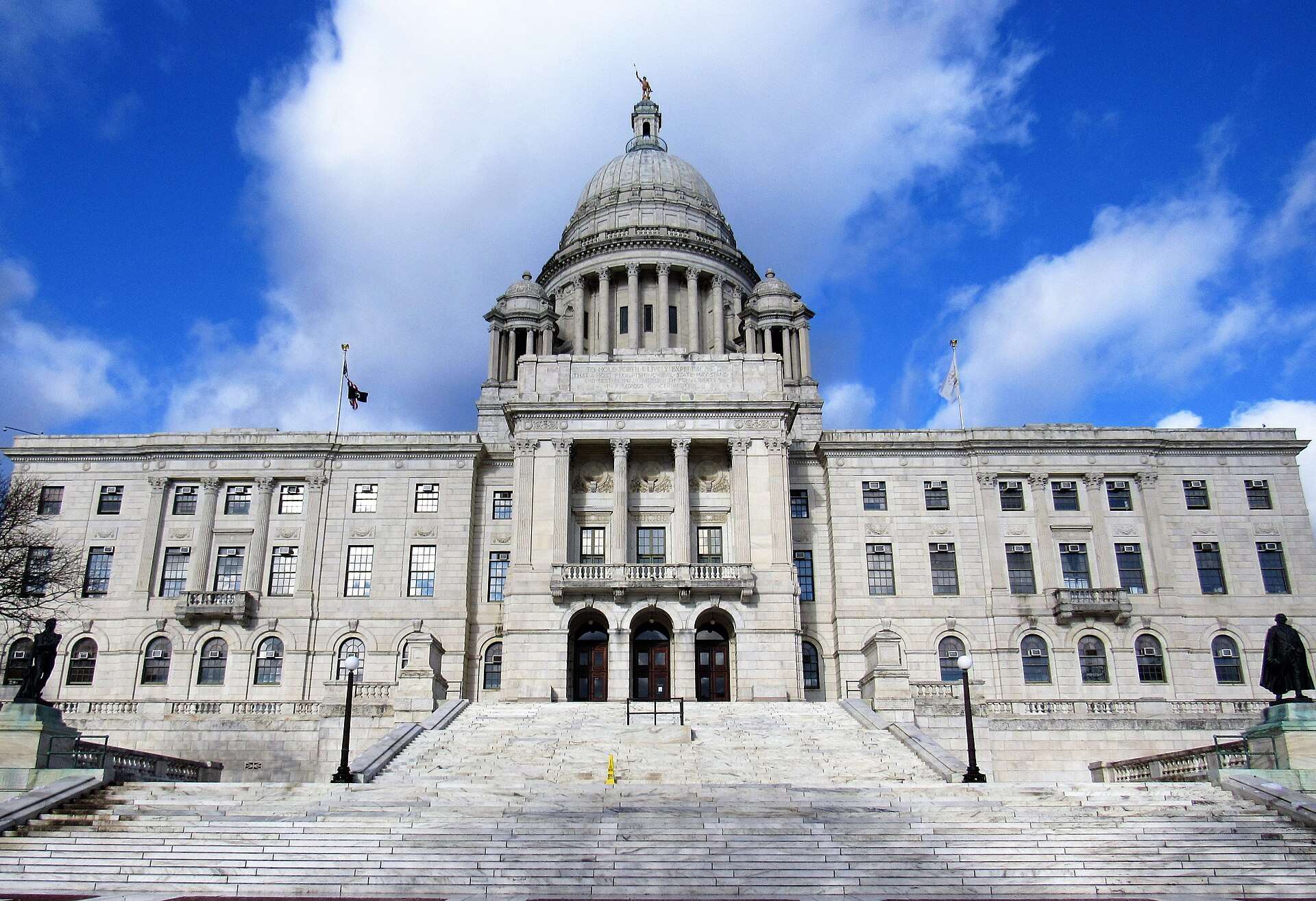
The ACLU of Rhode Island responded the same day with what it called a preliminary review, concluding that the policy “promises much less than meets the eye.” The group listed four problems. The definition of a valid law enforcement purpose covers information gathering, crime prevention and public safety, which the ACLU said leaves almost any use permitted unless it is specifically banned. The 30-day window is longer than Flock’s new default. Nothing in the policy stops the cameras from photographing drivers and passengers or bars facial recognition. And the warning that misuse can lead to criminal prosecution or civil liability means little, the ACLU said, without a law that makes misuse a crime or lets a driver sue.
A department policy can get an officer disciplined or fired, and this one says intentional violations can. It can’t create a cause of action for the person whose movements were searched, and it can’t keep improperly gathered data out of court. Only the legislature can do those things, and it had a bill in front of it that would have.
House Bill 8077 and the cameras already on poles
H 8077, introduced Feb. 27 by Rep. Matthew Dawson of East Providence and nine co-sponsors, would have required deleting plate data after 21 days, barred cameras from photographing occupants or capturing anything beyond the rear plate, and limited use to stolen vehicles, wanted or missing people, and active violent felony or domestic violence cases. Cities and towns would have needed council approval after a public hearing before buying readers. The attorney general could have sought an injunction, people could have sued in superior court, and improperly collected data would have been destroyed and barred as evidence except to prove the violation. The House Judiciary Committee held it for further study on March 24, Uprise RI reported, and it died when the session ended in June. A 2025 version, H 5659, met the same fate.
Local governments haven’t waited. Uprise RI reported that Cumberland’s council voted 6-1 to end its Flock contract after East Providence resident Eva Pizzarelli filed a federal lawsuit on June 16 alleging a Flock image led to her wrongful arrest. Cumberland denies the probable cause rested only on social media, and the criminal case against her was dropped. On Oct. 15, Providence’s council unanimously advanced a proposal to ban the city’s Flock readers, though Mayor Brett Smiley has argued for fixing the privacy problems instead of removing the cameras. The ACLU estimates at least 280 plate readers operate in the state, most of them Flock units.
Rhode Island isn’t alone this month. Tempe, Ariz., banned license plate readers and then found the data can still reach its police. Savannah fired an officer over a shared login tied to an ICE agent. Rep. Rashida Tlaib introduced a federal bill that would give federally funded plate readers 30 days to come down. Until Congress acts on something, the retention clock on a Rhode Island driver’s plate reads is set by a mix of department policy and whatever the vendor’s settings say.
What the 2027 session has to settle
McKee has said he will work with lawmakers to put protections into law. The bill they write will answer four questions the model policy leaves open: whether retention lands at 7, 21 or 30 days; whether drivers get a right to sue and illegally gathered data gets thrown out; whether cameras can photograph who is in the car; and whether towns need council approval after a public hearing before buying them. Until then, the most concrete thing a Rhode Island driver can check is a department’s transparency portal, once those go up, for the retention number it chose.
If police keep a record of where your car has been, should it disappear after a week, or is a month a fair price for solving more crimes?