
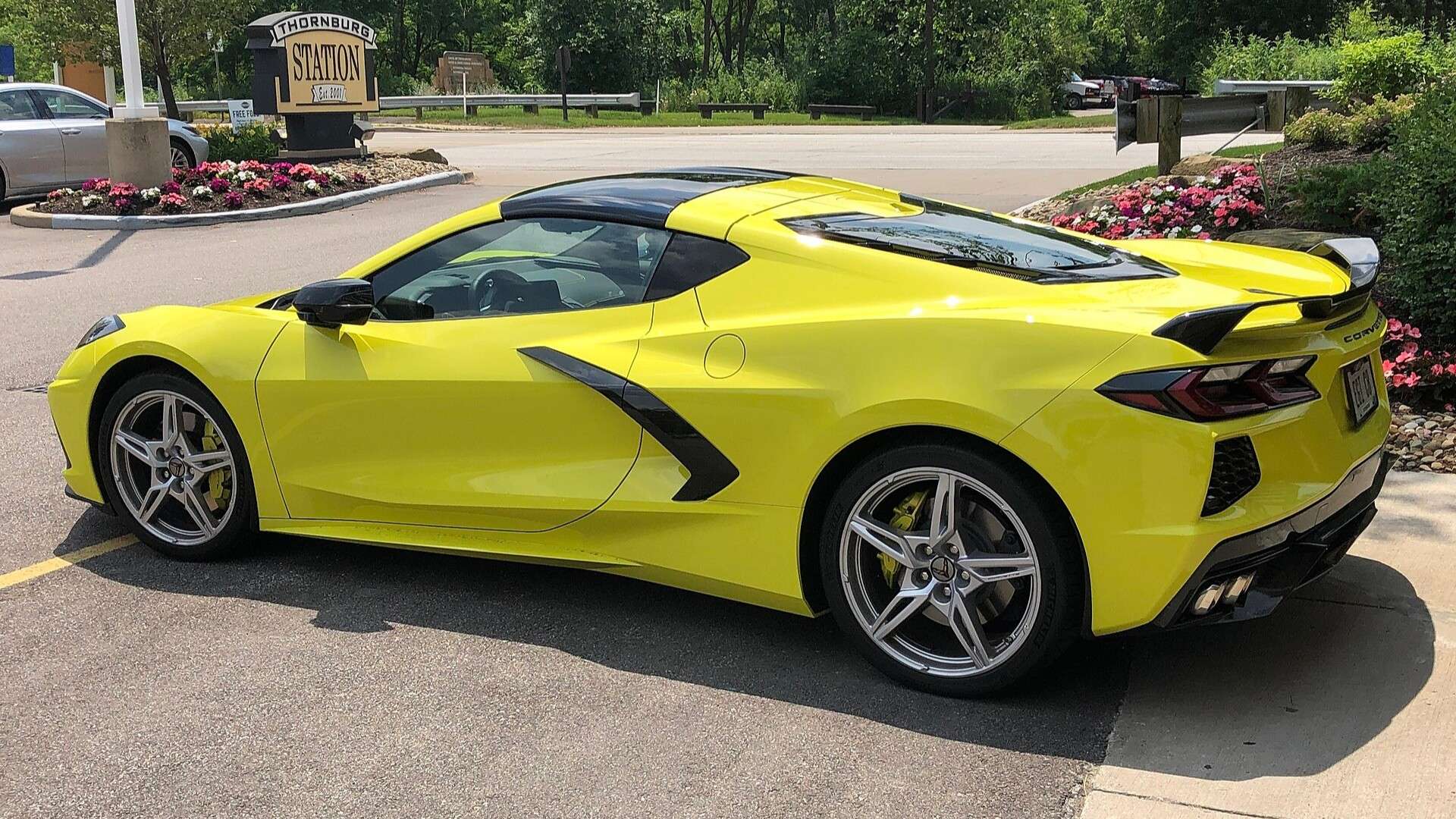
A federal complaint against Jomaar Andre Taylor of Washington, D.C., describes a theft method that needs no broken glass: a white Corvette left a dealership after a key fob was reprogrammed, according to WUSA9’s reporting on the court documents. Taylor is charged with transporting a stolen motor vehicle, possessing a stolen motor vehicle across state lines, and conspiracy. Those are allegations, and he is presumed innocent. This is a case of key fob programmer theft, and the part that matters to owners is how little the law says about who can use one.
What the complaint says Taylor did
Per WUSA9, the documents say Taylor or a conspirator was at a car dealership, reprogrammed a fob key and drove the white Corvette back to D.C. Security video, the complaint says, shows Taylor and another man moving an electronic programming device from one stolen car to another.
The reported timeline starts in November 2025, when a Dodge Charger was taken in Manheim, Pennsylvania. On Dec. 1, a Secret Service sergeant stopped Taylor in a 2025 GMC pickup carrying a fake diplomatic plate and called a Frederick, Maryland, dealership to check the VIN. The dealership did not know the truck was missing. A week later, Secret Service personnel found the Charger on 29th Street NW, where it had been towed for illegal parking, and Taylor later retrieved it by showing his driver’s license.
A Harford County detective then tied the GMC to two Corvettes taken from Jones Junction Auto and Bob Bell Chevrolet of Bel Air, according to the report. Investigators also found a black 2019 Corvette, reported stolen from a Waldorf Toyota dealership, wearing a fake plate with a partly covered VIN. Taylor was arrested after an Arlington police stop on Feb. 14, WUSA9 reported. Every Corvette named in the account came off a dealer’s property.
The programming step is the weak point
A modern engine runs only for a key the car’s immobilizer recognizes. That check is hard to forge, but it has to allow one thing: adding a new key when an owner loses the only one. A programmer reaches for that function. The Justice Department described the same approach in an April case in D.C., where a 15-count indictment charged six people with conspiring to possess, sell and transport stolen vehicles. Prosecutors said the group used electronic devices that let them reprogram cars to accept previously blank key fobs, and the release lists an OBD2 device recovered in Pennsylvania in February 2025. That ring went after Honda Civics and CR-Vs and Acura TLXs and RDXs, at least 20 cars across the Washington area and Pennsylvania, with some found in shipping containers in Baltimore bound for Ghana. The Auto Wire has covered how the diagnostic port under the dash figures in the Honda thefts, and a Charlotte crew was reported to have beaten immobilizers by swapping fobs at dealerships.
Federal law sets a low floor here. I read the text of FMVSS No. 114, the theft-protection standard in 49 CFR 571.114. It requires that removing the key keep the engine from running normally and either lock the steering or prevent forward movement. I found nothing in it about who may program a new key or how that person is verified.
Europe wrote a rule for exactly that. Commission Delegated Regulation (EU) 2021/1244, applying from July 30, 2023, makes independent repairers get approved before they can reach security-related repair information. The criteria include a clean criminal record and liability insurance, employees authenticate with digital certificates, and every security-related transaction is recorded.
What owners can do
A signal-blocking pouch and switching off keyless entry address relay theft, and Faraday protection does that job well. Neither stops a programming device, because it teaches the car a new key and never touches your original fob. Physical measures fit better: a locked garage, a lock cover for the OBD2 port, and a hidden tracker. The Auto Wire has not tested port locks, and none of them helps if a thief is already inside the car. A computer-made key in a Florida Escalade case shows how a car can vanish with both original keys at home. Tell your insurer what you have fitted and ask whether it affects your premium.
Who gets to program a key
If the weak point is the permission to add a key, the fix belongs there. A dealer-verification or credentialing scheme would cost independent locksmiths and owners who lost their only fob some time and money, which is the trade the European system already makes. I found no U.S. rule that requires it.
Should automakers lock fob programming behind dealer verification, even if a lost key then costs more and takes longer to replace?