
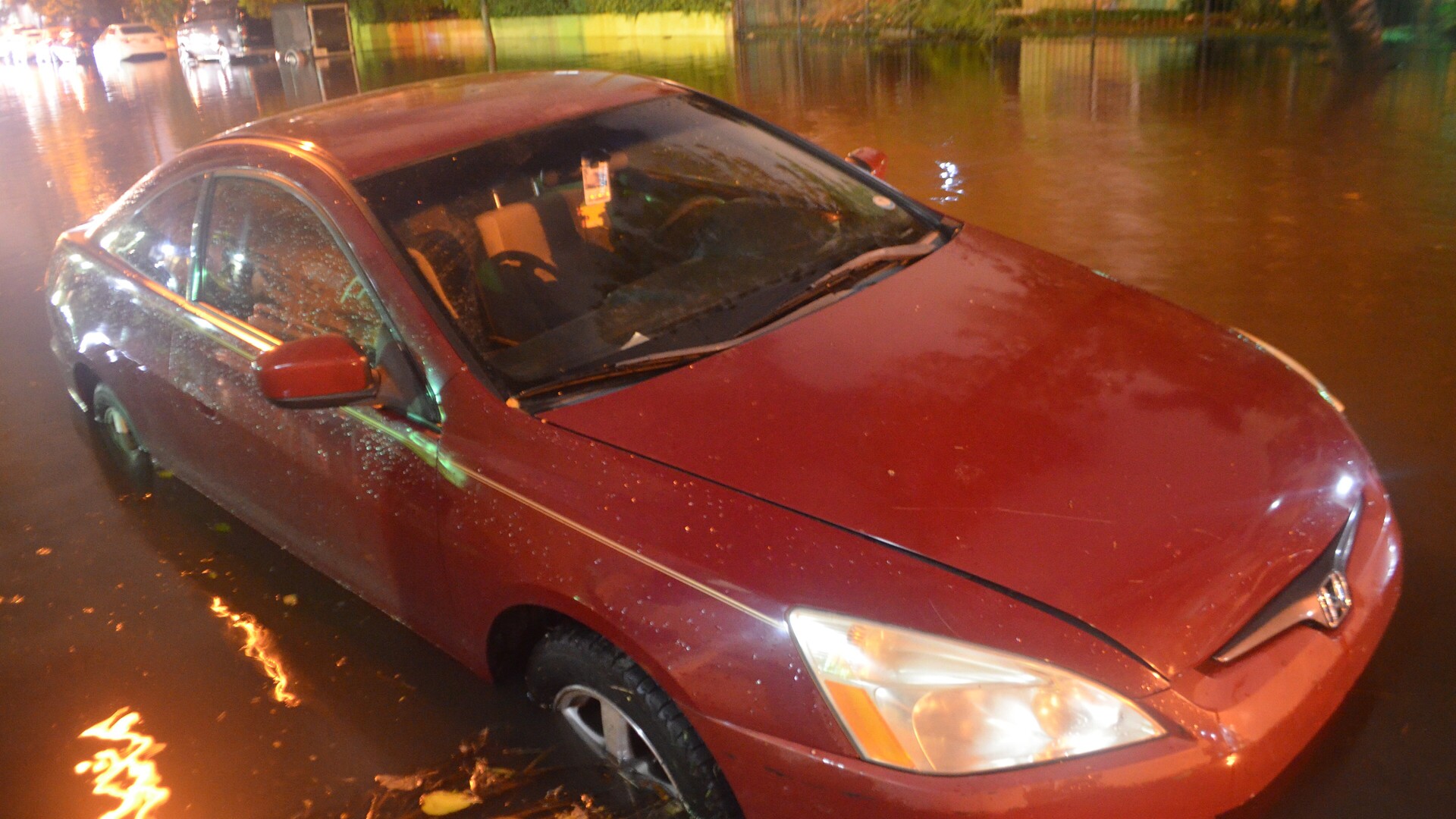
During the same storms that put water into some West Palm Beach gas station tanks, Palm Beach County Fire Rescue reported nearly 100 residents trapped in stranded vehicles in the Century Village area of unincorporated central Palm Beach County, Florida, on the evening of Sunday, Nov. 1. According to WPTV’s account of the department’s report, water reached 3 to 4 feet in places, and firefighters saw cars floating with people inside. No injuries were reported in those rescues.
The people got out. The cars are a longer story. Some will be paid off by insurers and branded. Others will be dried, shampooed and sold with Florida titles that say nothing about the water, and state law permits more of that than most buyers would guess. Florida’s “flood vehicle” title brand does not attach to a car because it flooded. It attaches to a car that has been declared a total loss.
Nearly 100 people stuck in cars at Century Village
The rain that filled Century Village’s streets set records. The National Weather Service measured 7.39 inches at West Palm Beach on Nov. 2, breaking a daily record of 2.52 inches that had stood since 1925, and 11.67 inches across Nov. 1 and 2, CBS12 reported. Around Palm Beach Gardens, an estimated 17 inches fell in six hours, past the threshold for a 1-in-1,000-year rain event, WLRN reported. In Broward County, a National Weather Service meteorologist in Miami put four-day totals at 13 to 15 inches between Weston and Sunrise, according to WLRN.
The Century Village operation began around 5 p.m. that Sunday, and crews handled more than 70 calls to 911 from the area, according to the fire rescue department’s account. A day later in Riviera Beach, the department’s swiftwater team evacuated 71 people. The department’s account counts people, not cars. Under Florida’s title system, a car that sat in that water enters the state’s records as a flood vehicle only when an insurer or its owner declares it a total loss.
Florida’s flood brand is triggered by a total-loss declaration
Section 319.14 of the Florida Statutes requires the state to stamp “flood vehicle” in a conspicuous place on the title of a car that qualifies. The definition is narrow. A flood vehicle is a motor vehicle or mobile home that has been declared a total loss under section 319.30(3)(a) as a result of damage caused by water. A car can sit in floodwater to its door handles and still fall outside that definition if no one declares it a total loss.
Section 319.30 sets two routes to a total loss. For an insured car, it happens when the insurance company pays the owner to replace the vehicle with one of like kind and quality. For an uninsured car, it happens when the cost of repairing it reaches 80 percent or more of the cost of replacing it. Once an insurer pays, it must obtain the title and forward it to the state within 72 hours of receiving it, and the state issues a salvage title or a certificate of destruction. An owner who keeps a total-loss car has 72 hours after it becomes salvage to send the title in.
The Florida Department of Highway Safety and Motor Vehicles describes the system the same way in its consumer advisory on flooded vehicles: when a flooded car is reported to the owner’s insurer, the insurer brands it and reports it to the department. The agency also says flooded cars are not inspected before they are branded. When a flood vehicle is later rebuilt, the department inspects its major components, but the purpose of that inspection is to confirm the parts weren’t stolen. It is not a check on whether the wiring under the carpet was replaced.
The flooded cars no insurer will ever see
Florida requires vehicle owners to carry $10,000 in personal injury protection and $10,000 in property damage liability, according to FLHSMV. Comprehensive coverage, the part of an auto policy that pays for flood damage to your own car, is not on that list. As The Auto Wire explained earlier this month, a liability-only policy pays nothing to fix a car that drowned in a parking lot.
That gap matters twice. An owner without comprehensive has no claim to file, so no insurer ever takes the title. The only legal trigger left is the 80 percent rule, and the statute leaves the owner to apply it to his own car and mail in his own title. Take a hypothetical 2015 sedan worth $9,000 that comes back from a shop with a $6,500 estimate for carpet, seats and a few control modules. That repair is 72 percent of the car’s value, which is The Auto Wire’s math, not the state’s, and it falls under the line. Under the statute’s definition, that car is not a total loss, so it is not a flood vehicle. It can be fixed and sold on a clean title. The same goes for an insured car whose claim was paid as a repair rather than a total loss.
The disclosure rule follows the brand. Section 319.14(2) bars a person from knowingly selling a vehicle covered by the section without first disclosing its status in writing, and FLHSMV says dealers must disclose in writing when a vehicle has been branded. As I read the statute, a car that took on water but was never declared a total loss isn’t a flood vehicle under the law’s own definition, so that written-disclosure requirement doesn’t reach it. A buyer who can show a seller knowingly hid flood damage still has the general fraud and deceptive-practices laws, but that means a lawsuit filed after the purchase.
The penalties are lopsided. Knowingly selling a branded vehicle without the required disclosure is a second-degree misdemeanor under section 319.14(6), which in Florida carries up to 60 days in jail and a $500 fine. Section 319.30, by contrast, makes most violations of the salvage rules a third-degree felony. On paper, Florida treats a salvage-paperwork violation more harshly than a seller who keeps quiet with the buyer.
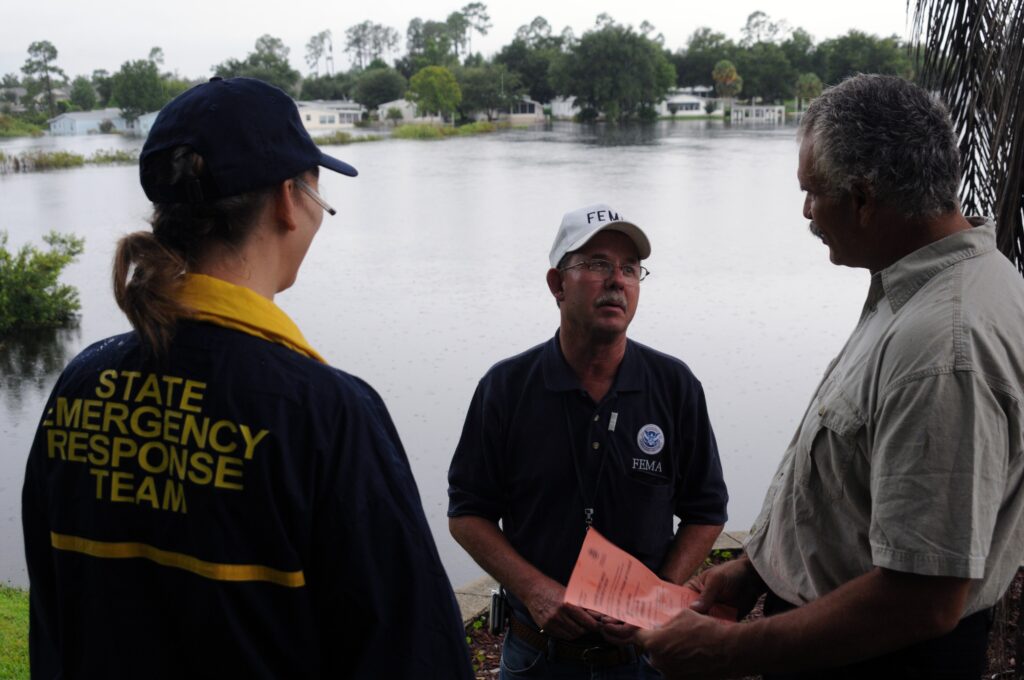
Out-of-state flood cars can arrive with clean Florida titles
Florida’s brand also stops at the state line. FLHSMV says title standards are set state by state, and that a flood-damaged vehicle titled in another state can be sold in Florida with a clean title. Title washing works the same seams between state systems, whether the history being erased is a lien, as with a Cleveland dealer’s used Mercedes that was repossessed from its buyer, or theft, as Pennsylvania’s attorney general alleged in a case involving 12 stolen vehicles sold with washed titles.
The federal backstop is the National Motor Vehicle Title Information System, run by the Justice Department, which collects title and brand records from states along with total-loss reports from insurers and salvage yards. FLHSMV points buyers to it for title history, the latest odometer reading, brand history and theft data. It has the same blind spot as Florida’s own brand: a flooded car that never generated a claim or a total-loss declaration leaves nothing for the system to record.
A 2023 bill would have printed the water type on the title
Florida lawmakers have looked at the flood brand before. Senate Bill 1252 in 2023, sponsored by Sen. Nick DiCeglie, would have required the state to brand flood-vehicle titles with “Salt Water,” “Fresh Water,” or “Other or Unknown Water Type,” according to a Senate staff analysis. The bill died on the Senate calendar on May 5, 2023, and the 2026 version of section 319.14 contains no water-type language. Even if it had passed, it would have changed the wording on titles that already get branded. It would not have reached the uninsured car that never gets declared a total loss.
What a South Florida used-car buyer can check before signing
FLHSMV’s free Motor Vehicle Information Check shows brands on Florida-titled cars by VIN or title number, and NMVTIS covers records from other states. Both report only what has been filed, so a car sold within weeks of these storms may not show a brand yet even if one is coming, and a car that was never declared a total loss won’t show one at all.
That leaves the car itself. The department’s advisory lists the signs: a musty smell, or a heavy air-freshener scent that may be covering mildew; mold or odor in carpets and upholstery; a waterline or mud in the glove box, under the dash and in the trunk; and rust underneath that looks wrong for the car’s age. A seller who is asked in writing whether a car has been in floodwater and answers in writing gives the buyer a document to point to if the answer turns out to be false.
Some of the cars that sat in Century Village’s water on Nov. 1 are likely to be sold again. Whether their titles say “flood vehicle” will depend less on how deep the water got than on whether each owner bought comprehensive coverage, filed a claim, and got a check for a total loss.
Should Florida brand a title as a flood vehicle whenever a car is documented as submerged, whether or not anyone declares it a total loss, or should the brand stay tied to the total-loss declaration as the law does now?