
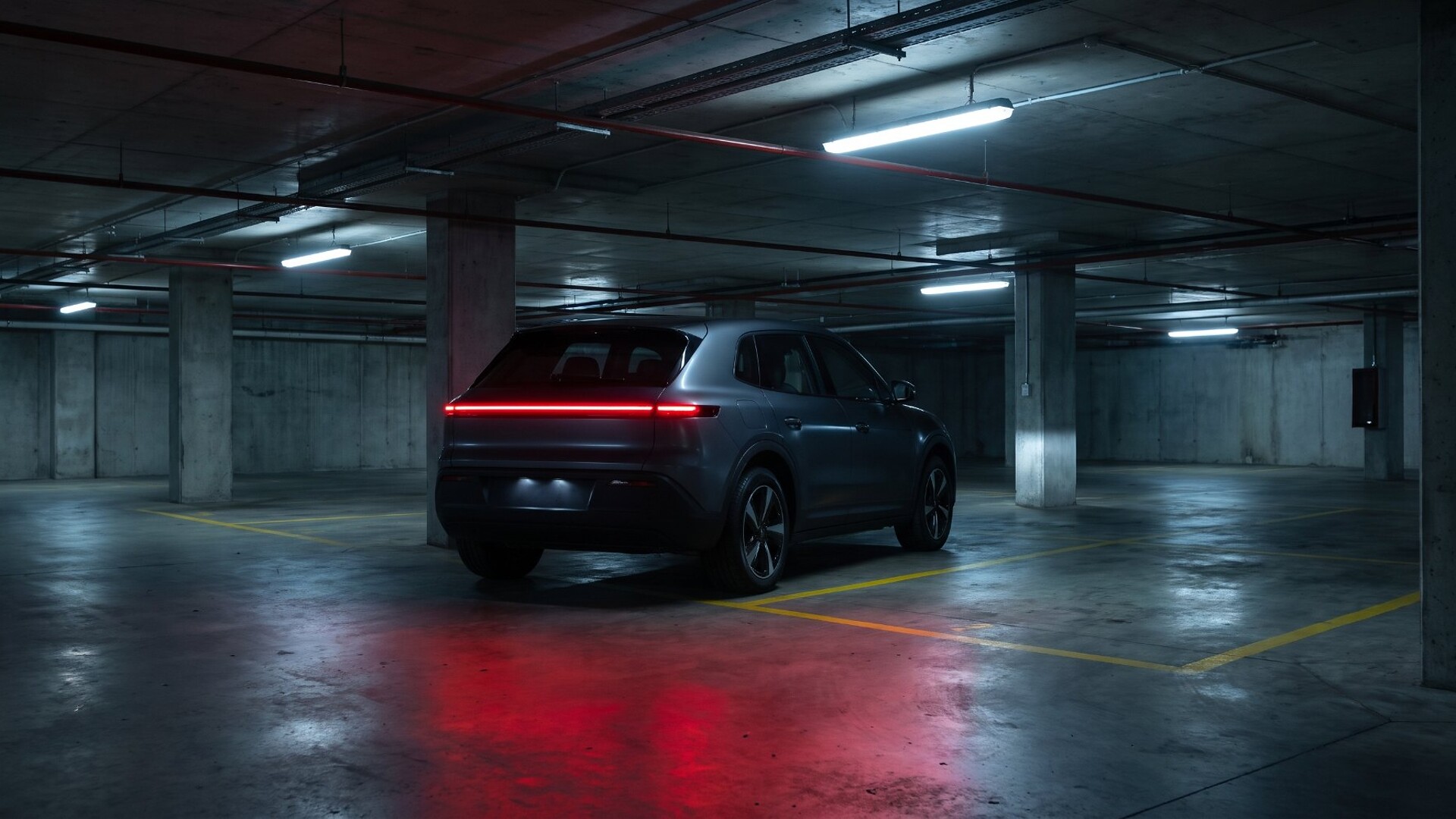
A security guard in an underground residential garage in Anhui province, China, followed a noise around 3 a.m. and found an electric car running its driver-assist parking routine with nobody inside. According to HK01 and TVB, the car kept pulling forward, backing up and straightening out, and when the owner later checked the car’s system log, the automatic parking function had been activated 868 times that night. The car finally settled beside another parked vehicle.
The clip spread through Chinese and Hong Kong outlets from Nov. 21 to Nov. 23. None of the reports I found identifies the car’s brand or model, the owner, or the city, and TVB reported that neither the automaker nor the owner had publicly explained what set the car off. Two explanations are circulating: a software fault, or someone sending the parking command again and again from a phone. Huawei’s own contest paperwork gives the second one a motive, and it also shows why a 3 a.m. session would have been pointless.
Huawei Paid Prizes for the Number of Times a Car Parked Itself
Huawei’s second Qiankun ADS Open Championship was open to owners of cars running Huawei’s Qiankun driver-assist system, which Sina Tech listed as including Aito and the rest of the HIMA lineup, Avatr, GAC Trumpchi, Deepal, Fangchengbao, Voyah and several other brands. Huawei’s campaign page includes a “Parking Elite” prize ranked on one thing: how many times an owner successfully used assisted parking during the contest. The top 10 get a Huawei MatePad SE 11-inch tablet, paid as 19,990 points in the Huawei Qiankun app. Ranks 11 through 40 get a router worth 8,990 points, and ranks 41 through 100 get a fitness band package worth 2,890 points. A separate mileage contest paid more: MyDrivers reported at launch that the top three would get a Mate XT 2 phone valued at 23,999 yuan.
Huawei’s page defines assisted parking to include remote parking assist, which is run from a phone, and a leave-the-car function in which the driver gets out and the car parks itself. Both work with an empty driver’s seat, and a leaderboard that counts parks gives no extra credit for a hard space or a long trip. A car backing into the same bay counts the same as a car squeezing into a tight spot at a mall.
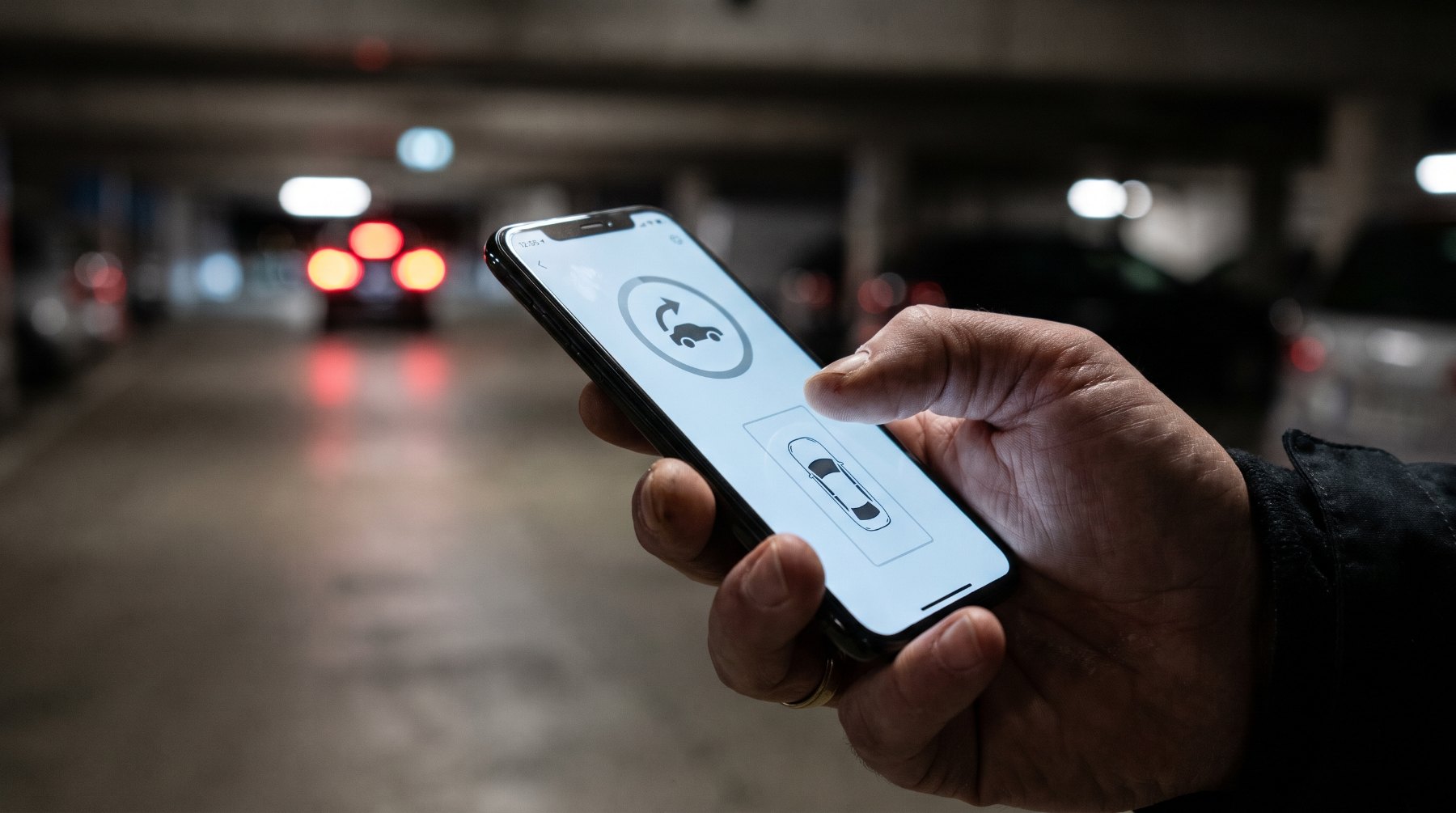
On Nov. 23, Sina Tech reported that users had posted videos of empty Aito and other cars backing into residential garage spaces at night, pulling out and backing in again, and that the posters said the owners were padding their Parking Elite counts. A Sina News post built around one owner’s screenshot cited 24 parks in 27 minutes. Huawei Qiankun customer service told Sina Tech that contest data is collected only from 6 a.m. to 10 p.m., that deliberately driving the same road repeatedly is prohibited, and that back-end staff would review the data.
The Contest Stopped Counting at 10 P.M., and Ended Nov. 13
Huawei’s rules say assisted-parking counts are valid only from 6:00 to 22:00 each day, Oct. 31 through Nov. 13. A car cycling at 3 a.m. earned nothing under those rules. The rules also ban driving four hours or more without a break and ban “cheating tools,” which Huawei’s page lists as counterweights and tape, the sort of hardware used to fool steering-wheel sensors into reading a hand on the wheel.
That leaves the Anhui car’s connection to the contest unproven. The reports don’t give the date of the footage, only that it surfaced around Nov. 21, more than a week after the counting period closed. If the night came after Nov. 13, there was no leaderboard left to climb. What the documents establish is narrower: Huawei offered prizes for parking repetitions, owners posted videos of empty cars doing exactly that, and Huawei says it will check the data.
868 Activations Is Not 868 Parks
The Anhui reports say the parking function was activated 868 times. Huawei’s leaderboard counts successful parks. Those can be very different numbers. At the pace in that 24-in-27 screenshot, one complete park takes about 67 seconds. At that rate, 868 completed parks would take roughly 16 hours, longer than the night in question. That is The Auto Wire’s arithmetic, not anyone’s log. Either this car parked far faster than the screenshot pace, or most of its 868 activations ended before a finished park. The owner’s log, which hasn’t been published, would settle it.
Remote Parking Rules: 6 Meters in Europe, No Federal Limit in the U.S.
A car making hundreds of driverless moves in a shared garage at night tests how loosely remote parking is regulated. In the countries that apply UN Regulation No. 79, a remote-controlled parking system is approved to work only within 6 meters of the vehicle. In a June 16, 2026, submission to the UN working party on automated vehicles, the industry groups OICA and CLEPA proposed raising that to 15 meters and stated that Canada, the U.S. and China do not regulate the maximum operating range at all. The working party asked for more data. Hong Kong writes its own rule: since March 1, 2025, its Transport Department guideline has capped remote parking at 12 meters of vehicle travel and 2 km/h.
Where governments set no limit, automakers set their own. Xiaomi told SU7 owners in 2024 that the phone must be within 8 meters of the car and connected by Bluetooth, IT Home reported. I could not find a Huawei document giving the operating range of its remote parking function, and the contest page doesn’t say. If Huawei’s system works like Xiaomi’s, someone had to be standing near that car with a phone for each run, a question the owner’s log could also answer.
The U.S. has run one large test of what happens when owners move cars from their phones. NHTSA opened preliminary evaluation PE24033 on Jan. 6, 2025, into Tesla’s Actually Smart Summon on an estimated 2,585,000 vehicles. The closing resume, dated April 3, 2026, counted 159 incidents, 97 of them crashes, with no injuries, and said a fraction of 1% of millions of Summon sessions ended in an incident. Tesla told the agency Summon is a short-distance SAE Level 2 system controlled from a phone within a certain distance. NHTSA closed the probe after six over-the-air updates and said the closure is not a finding that no defect exists.
Who Pays When an Empty Car Scrapes the Car Next to It
Huawei’s contest material reminds owners that Qiankun ADS is assisted driving, not autonomous driving, MyDrivers noted. That label carries weight when something goes wrong. A Level 2 system leaves the person who started it responsible for supervising it, and in the U.S. a low-speed scrape during a remote-parking session is generally handled like any other at-fault collision: the owner’s liability coverage pays the neighbor, and any argument that the software failed comes afterward, at the owner’s expense. Rules vary by state, and a garage scrape is the kind of claim that raises a renewal premium.
A count-based leaderboard pushes owners toward more unattended moves in tight garages lined with other people’s cars, the setting where a low-speed remote-parking scrape is most likely to land on a neighbor. Huawei is due to announce winners within 14 working days after the Nov. 13 close, which by The Auto Wire’s count of working days lands around Dec. 3. Whether any Parking Elite entries are thrown out will show what Huawei’s data review amounts to, and whether the Anhui owner ever releases that log will show whether this was a glitch or a phone.
If your neighbor’s empty car spent the night backing in and out beside yours, who gets the angry note under the wiper: the owner, or Huawei’s leaderboard?