
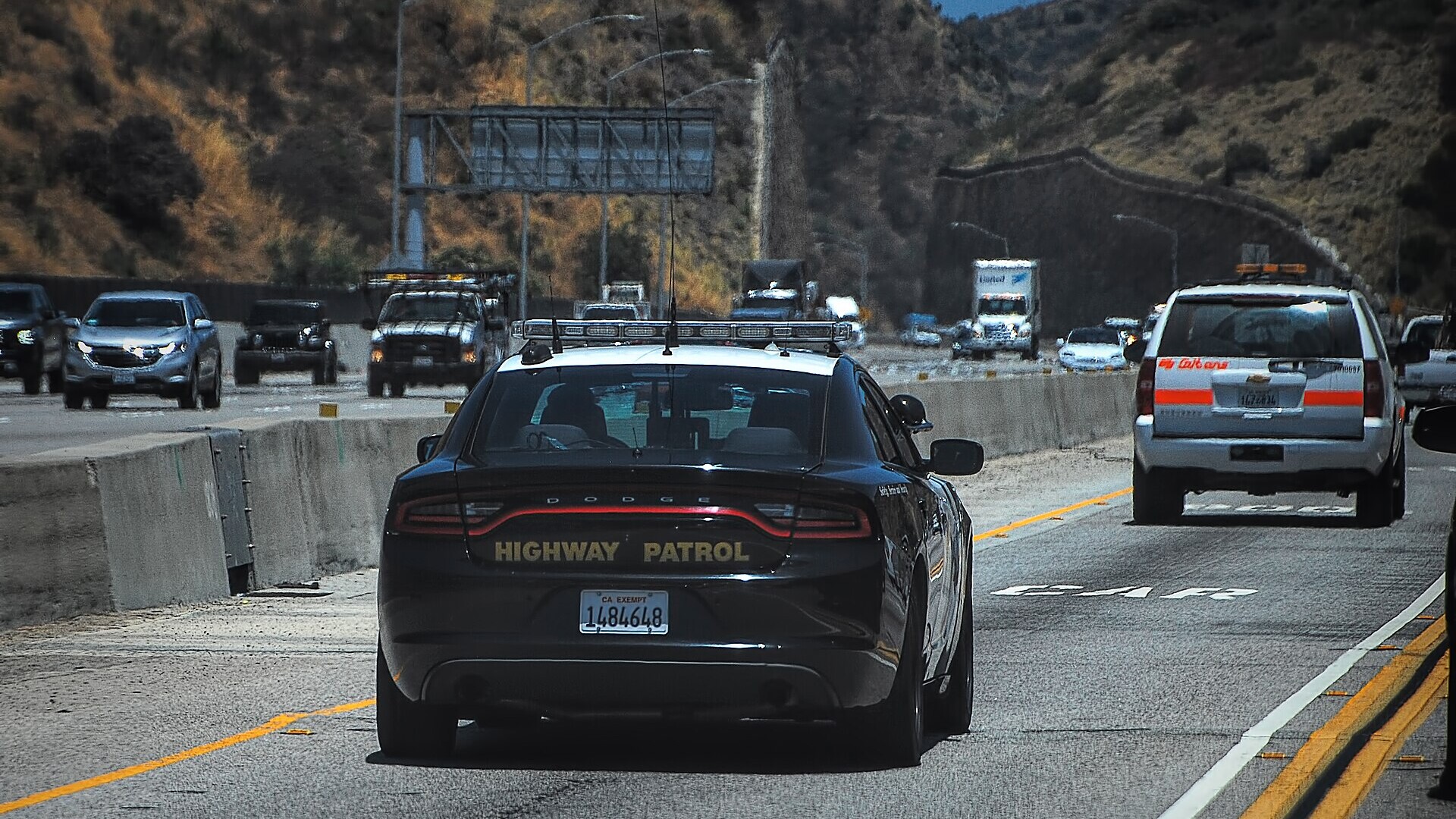
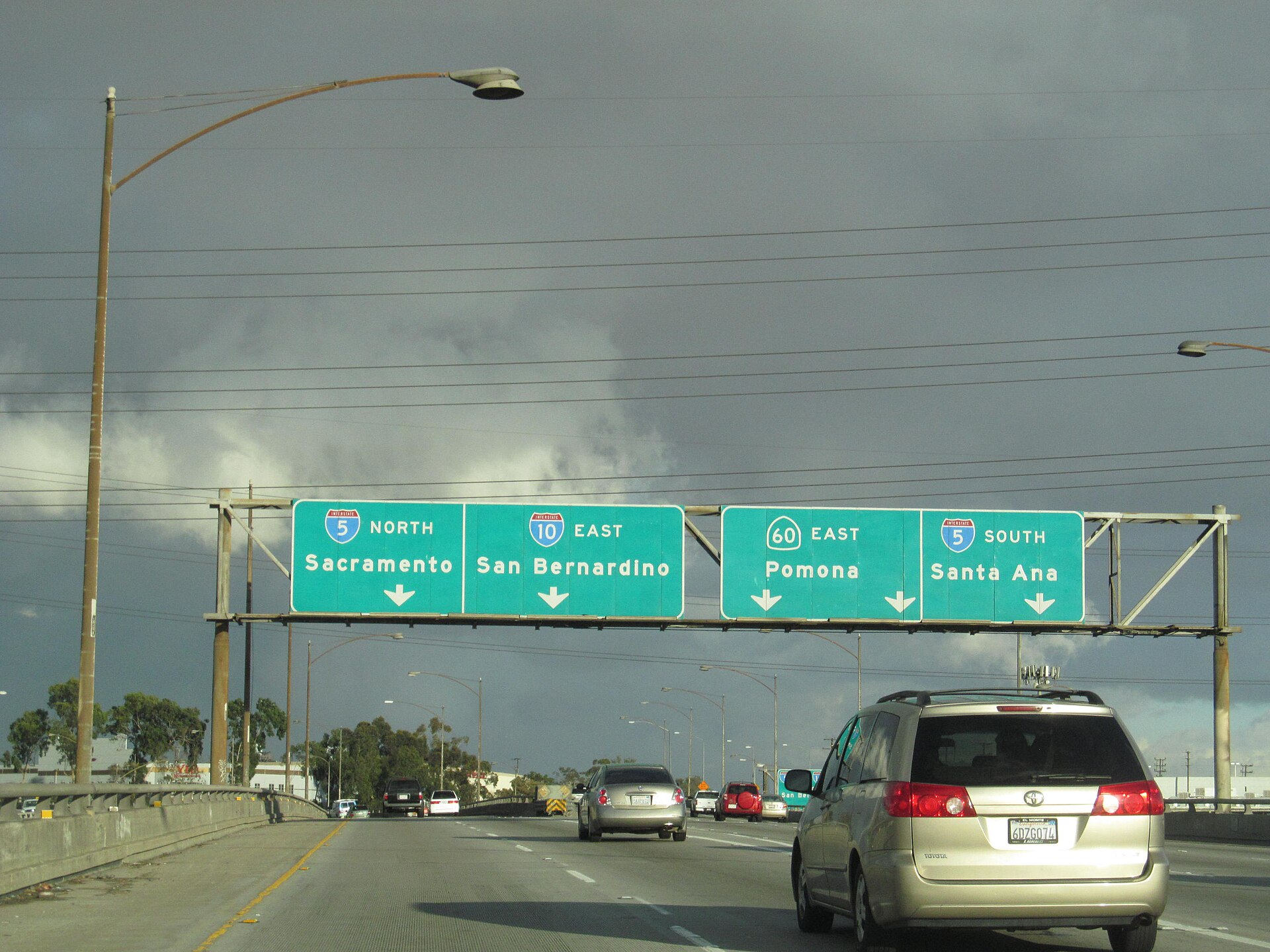
The California Highway Patrol says officers began the chase after seeing a red sedan go over 100 mph on the westbound 10 Freeway in Baldwin Park, Los Angeles County, shortly after 4 a.m. on Saturday, Nov. 7. A few minutes later the driver tried to take the Francisquito Avenue off-ramp and hit a concrete barrier, and three of the four people inside died.
ABC7 Los Angeles attributes the account to CHP. Officers saw the sedan speeding, tailgating and weaving in and out of lanes near Azusa Avenue before the pursuit began. CHP Lt. Saul Gomez said the driver was “unable to negotiate the curvature of the roadway.” The driver was pronounced dead at the scene, two of the three passengers died at hospitals, and the third was in critical condition. ABC7 reported that the four were between 19 and 25 years old, and names had not been released. A SigAlert was issued that morning and canceled around noon.
ABC7’s report gives no speed at impact, only the 100-plus mph CHP says officers first saw. It does not say whether officers were still behind the car when it left the freeway or whether anyone was wearing a seat belt.
What California law requires of a chase policy
Vehicle Code section 17004.7 is the state’s pursuit-immunity statute. A public agency that employs peace officers is immune from civil damages for injury, death or property damage caused by a collision involving a pursued suspect if it has adopted and distributed a written pursuit policy and gives officers annual training on it. Adopting a policy is discretionary. The policy has to address 12 subjects, among them when to initiate a pursuit, speed factors, when to terminate and reporting and post-pursuit analysis, and each officer has to certify in writing that they have received, read and understood it.
The statute lists what a policy must cover, not what it must say, so the answer to when a chase starts is left to each agency’s own document. Section 17004.7 also concerns the agency’s civil liability only. It says nothing about the driver’s, and ABC7’s report does not say whether any claim has been filed.
The paper CHP files after a pursuit
Chapter 7 of CHP’s Highway Patrol Manual 100.86, revised in January 2026, requires a supervisor to evaluate each pursuit and complete a pursuit report in the department’s Pursuit Reporting System, the report Vehicle Code section 14602.1(a) requires. The report has to be completed and routed to the division within seven calendar days, which for a Nov. 7 pursuit meant Nov. 14. Before the area commander approves it, the commander must review the associated documentation, including in-car and body-worn camera footage. Potential employee misconduct is handled under a separate manual, HPM 10.2.
That chapter governs the paperwork, not the chase. CHP keeps its rules on when to start and stop a pursuit in separate documents, and nothing in ABC7’s account shows whether this pursuit’s report has been filed or what it found.
How many people die in CHP chases
The newest statewide tally The Auto Wire found is CHP’s Senate Bill 719 report, and it’s seven years old: dated November 2019, covering 2014 through 2018. For 2018 it counts 2,546 pursuits involving CHP, 464 that ended in a collision, and eight fatal collisions with eight deaths: six drivers of the pursued vehicle, one passenger and one uninvolved third party. Annual deaths over the five years ran from 15 in 2014 down to eight in both 2017 and 2018. The Baldwin Park crash killed three people on its own, more than a third of the 2018 total.
Other agencies make a different call. In an Illinois case we reported this month, a trooper did not chase a car police said was stolen and going 140 mph, and a helicopter followed it instead.
Three dead, no names, no word on the report
The sedan’s occupants had not been publicly named as of ABC7’s last update, which came the day of the crash. Under HPM 100.86 the pursuit report was due to the division by Nov. 14, and no published account says what it concluded.
If you drive the 10 before dawn, you’ve probably watched a car do 100 and weave through traffic. Would you want CHP lighting it up right behind you, or hanging back and letting a helicopter do the following?