
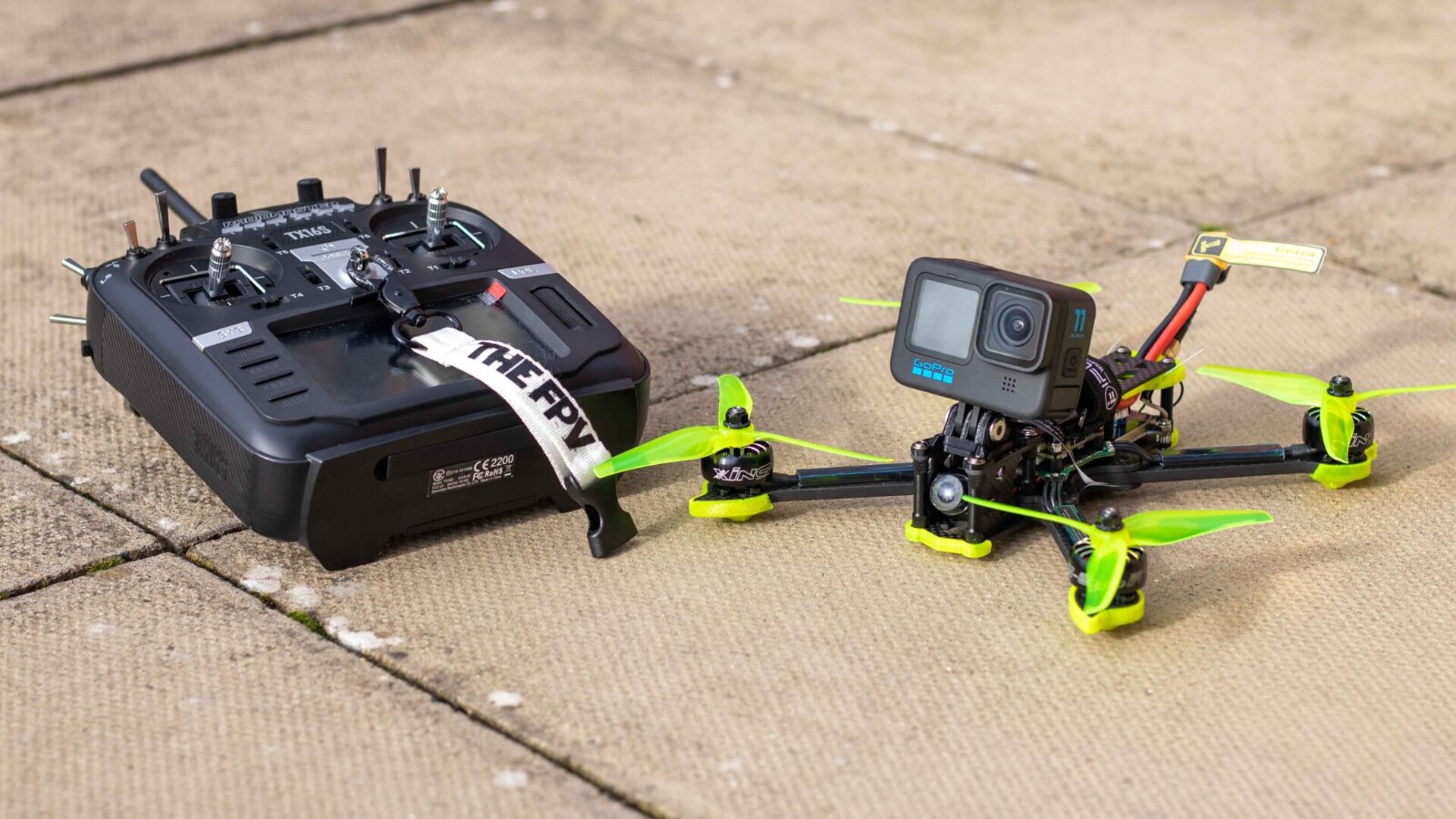
Detroit-based General Motors, which shipped its first Patriot missile housings to Lockheed Martin in August, is now weighing whether to build motors for military drones, according to a Wall Street Journal report relayed by Reuters on Nov. 24. Four months earlier, by Reuters’ account, GM ended a long-term contract to buy rare-earth magnets from a new plant in Sumter, South Carolina, and that supplier is now fighting GM in arbitration.
Small electric drone motors, like the traction motors in GM’s EVs, typically run on permanent magnets, and the Sumter plant was built largely to make that kind of magnet for GM. The Pentagon’s drone push needs the same kind of domestic magnet supply that GM, by Reuters’ account, decided it no longer wanted for cars.
What the Pentagon asked GM, Ford and Magna for
According to the WSJ report as summarized by Reuters, the Pentagon is in talks with GM, Ford and other manufacturers to help mass-produce drones. The automakers would not build finished aircraft. Under a deal, they would supply parts to drone companies, including actuators, engines, sensors and lidar. Defense officials have also met with leaders at Ford, Canadian supplier Magna International and manufacturers outside the auto business.
No deals are final. The report said the Trump administration has gotten mixed reactions from auto executives, and that GM has shown the most interest in military work, including separate talks with RTX and L3Harris. GM and Ford did not immediately respond to Reuters, and Magna told Reuters it had nothing to add. Reuters said it could not immediately verify the Journal’s reporting.
Magna had at least hinted at this. On its July 31 second-quarter call, transcribed in an SEC filing, CEO Swamy Kotagiri said the company was evaluating markets next to its auto business and already had “some initial project wins,” while noting that its Steyr engineering unit does aerospace work. He did not mention drones or defense by name.
The Pentagon’s courtship of GM and Ford started in the spring with munitions. What changed is the product: drones are built at volumes and price points that look a lot more like auto parts than like missiles.
340,000 drones at $2,300 apiece
The demand comes from the Drone Dominance Program, which the Pentagon laid out in December 2025. It uses $1 billion from the reconciliation bill to buy about 340,000 small attack drones over two years. The first phase called for 12 vendors to deliver 30,000 drones at $5,000 each. By the final phase, the plan narrows to five vendors building 150,000 drones at $2,300 each.
“We cannot afford to shoot down cheap drones with $2 million missiles,” War Secretary Pete Hegseth said when he announced it.
Part of that contest ran in GM’s home state. The Michigan Department of Military and Veterans Affairs hosted the second-phase qualifier at Camp Grayling in June, and the Pentagon said on June 17 that the program had received its first order.
A $2,300 drone has no room for a hand-built motor. It needs the kind of high-volume, low-margin stamping, winding and assembly that a car company does every day.
Why the motor is the part the Pentagon is short on
For years, federal law left drone motors alone. Section 848 of the 2020 defense authorization act, now codified at 10 U.S.C. 4881, bars the Pentagon from buying drones that use flight controllers, radios, data transmission devices, cameras or gimbals made in China and other covered countries. Motors are not on that list. The provision targeted parts that store or send data, so a U.S.-assembled drone could clear Pentagon vetting while spinning on Chinese motors.
That gap is closing on a deadline. In December 2025, the Federal Communications Commission added all foreign-made drones and “UAS critical components” to its Covered List, which blocks new equipment authorizations. The Pentagon’s definition of critical components, quoted in the FCC’s Jan. 7, 2026 public notice, lists motors by name, along with batteries, flight controllers and cameras. The same notice carved out drones on the Pentagon’s Blue UAS Cleared List and parts that qualify as domestic under the Buy American standard, but the Blue UAS exemption runs only until Jan. 1, 2027.
That is five weeks from now. A domestic drone motor supply does not exist at the scale the Pentagon wants, and automakers already build electric motors in volume for their EVs. A drone motor is far smaller than a Silverado EV drive unit, but it is the same basic part: copper windings, a steel stator and a rotor carrying rare-earth magnets.

The South Carolina magnet plant GM left behind
GM saw the magnet problem early. In December 2021 it announced a supply deal with MP Materials for U.S.-made rare-earth magnets for the motors in the Hummer EV, Cadillac Lyriq and Chevrolet Silverado EV, and a separate arrangement with Germany’s Vacuumschmelze, or VAC. VAC’s U.S. unit, e-VAC Magnetics, built its plant in Sumter, and GM listed it in January 2025 as a supplier facility with production expected in early 2026.
Taxpayers helped pay for it. e-VAC announced in April 2024 that it had been awarded $111.9 million in federal advanced-energy tax credits for the project, and said the Defense Department had separately signed it up under its mine-to-magnet supply chain effort. VAC held the plant’s opening ceremony on July 15, 2026, calling it the first large-scale U.S. producer of these magnets in more than a quarter century, with nameplate capacity of about 2,000 metric tons a year. VAC said the plant would serve automotive, defense and industrial customers.
Two weeks before that ceremony, a customer had already walked. Reuters reported in October that Energy Fuels, which agreed in June to buy VAC for about $1.9 billion, disclosed in SEC filings that a Sumter customer terminated its supply agreement on July 1, and that VAC began arbitration days later. A person familiar with the matter told Reuters the customer was GM. e-VAC says the termination was wrongful and is seeking damages.
GM has not said publicly why it left. Its own numbers point to the EV slowdown: the company booked $1.6 billion in charges tied to EV capacity in October 2025, and a long-term magnet contract sized for an EV ramp that did not arrive became a cost with no product to put it in. Arbitration will decide whether GM owes for leaving. Nothing in the filings ties the cancellation to the drone talks, and I would not read it that way. What they do show is that GM shed domestic magnet supply in July and is now weighing a product that needs it.
What GM still has, and what it would need
GM is not starting from zero. The Reuters report on the Sumter dispute did not involve GM’s separate MP Materials agreement for magnets made in Fort Worth, Texas. GM Defense already builds the Army’s Infantry Squad Vehicle, and its Patriot work showed it can go from contract to shipment in 22 days. The company has also spent the year cultivating the White House.
The harder question is money. Drone parts for a $2,300 aircraft are a thin business, and the Drone Dominance budget is $1 billion spread over two years and hundreds of thousands of drones. For GM, a drone motor line makes most sense if it fills plant space and engineering staff left idle by slower EV sales. For the Pentagon, it makes sense only if the motors are domestic all the way down, which brings the magnets back into it.
The one hard date is Jan. 1, 2027, when the FCC’s Blue UAS exemption runs out. The e-VAC arbitration grinds on in the background, and none of the three companies has confirmed a contract. Until one of them does, every figure in the WSJ report comes from unnamed people familiar with the talks.
Should the Pentagon pay automakers like GM to build drone motors, or should that money go to the drone makers and magnet plants already built for the job?