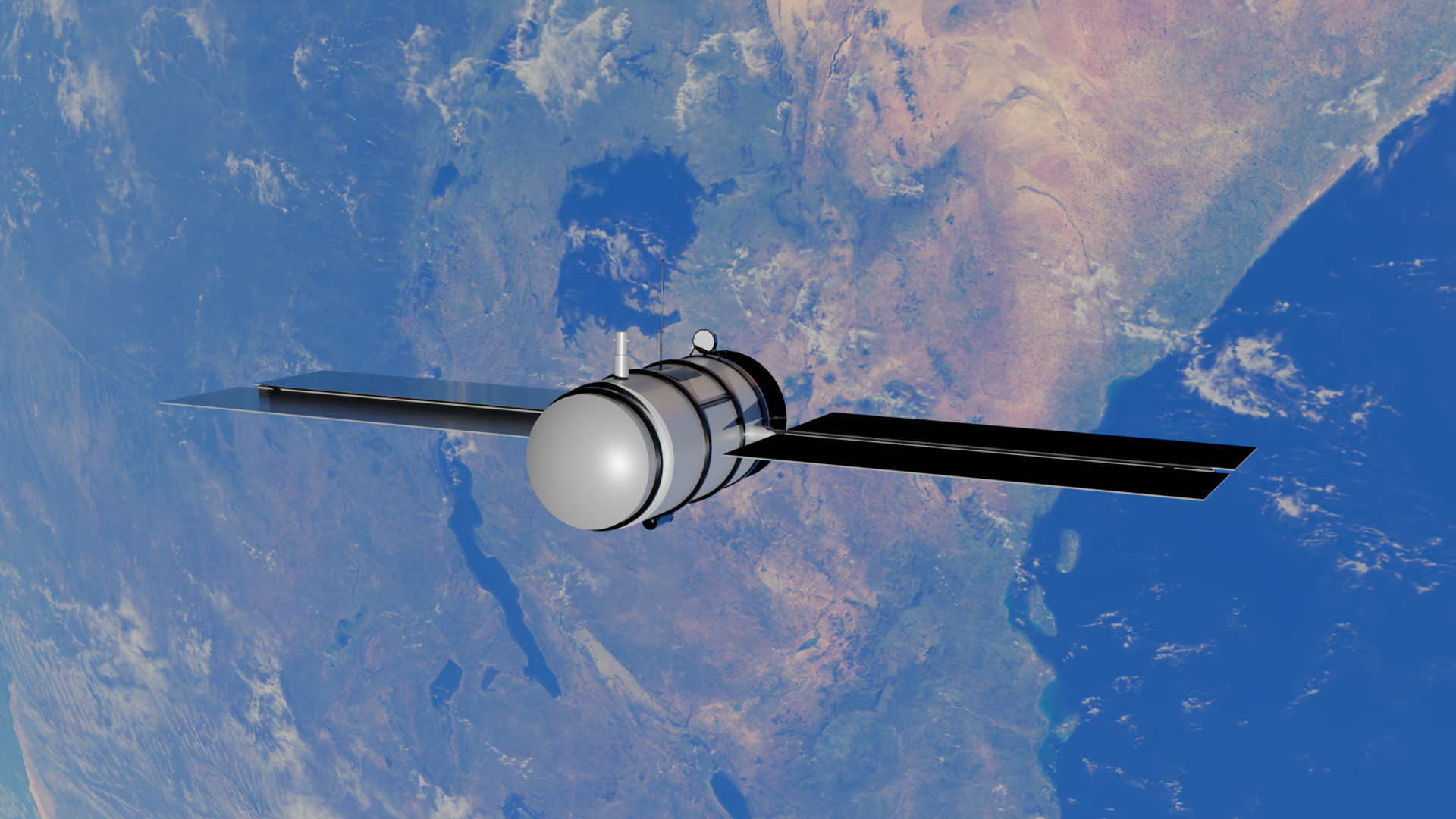
Ford Motor Co., already reshuffling its top ranks ahead of vice chair John Lawler’s retirement, said Monday from Dearborn, Michigan, that it is buying a minority stake in Revolution Space, a Boston company that designs and builds spacecraft, and will lend it Ford’s factory know-how to build them in volume. Ford would not say what it is paying. The joint announcement states that the companies are not disclosing financial terms, and the deal still needs regulatory approvals before it closes.
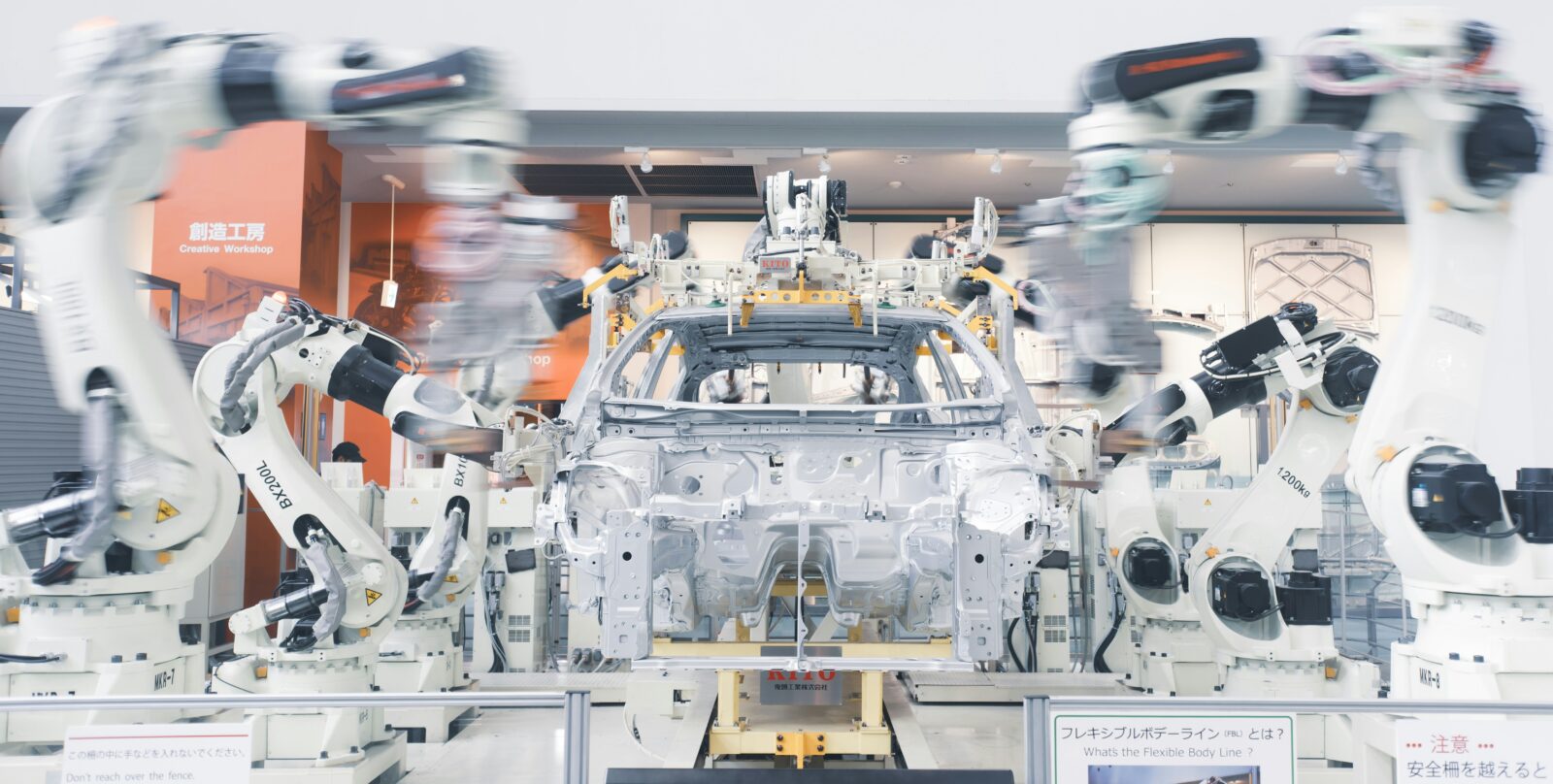
Marin Gjaja, Ford’s chief strategy officer, put the pitch in one line: “Ford’s strength is building complex products in large volumes, something today’s growing satellite market requires.”
Ford’s own federal filings show what that strength costs on the ground. As of Sept. 30, the company was carrying $17.7 billion on its books for future warranty and recall repairs on vehicles it has already sold, and it is two years into a federal consent order over how slowly it recalled cars with bad backup cameras. A spacecraft stake small enough that Ford won’t price it doesn’t change any of that. The question for anyone who owns or is shopping for a Ford is whether the company’s engineering attention is about to be split one more way.
Who Revolution Space is
Revolution Space began life as Accion Systems, an electric-propulsion maker. The federal trademark record shows Accion Systems Inc. filed for the “Revolution Space” mark on July 17, 2023. Its core hardware is the electrospray thruster, which uses electric fields to fire charged particles out of a liquid propellant. The push is tiny, but it sips propellant, which is what lets a small satellite change orbits again and again instead of drifting until it dies. NASA’s Jet Propulsion Laboratory signed a reimbursable Space Act agreement with the company covering an electrospray thruster subsystem it calls Palomino, built for small satellites.
The company now sells itself as a prime contractor, meaning it delivers whole spacecraft, not parts for someone else’s. The announcement says it is 100% U.S. operated, with locations in California, Washington, D.C., Albuquerque and Denver. Its board chairman is Daniel S. Goldin, the longest-serving NASA administrator. On its news page, Revolution Space lists a selection for DARPA’s Lunar Assay via Small Satellite Orbiter program, which the Pentagon research agency runs with NASA under an interagency agreement to map likely water reserves on the moon from a very low lunar orbit.
Ford is investing through a subsidiary called Industrial Platform LLC. The announcement frames the move as part of a strategy to put money into businesses with strong growth and return potential that are less cyclical than cars and where Ford has a competitive advantage. It also describes the stake as a focused bet made with limited capital.
Ford’s $17.7 billion repair reserve
When Ford sells a vehicle, it books an estimate of what that vehicle will cost in future warranty claims and field service actions, the category that includes recalls, after subtracting what it expects suppliers to pay back. The money sits as a liability until it is spent. Ford’s third-quarter 10-Q shows the balance started 2026 at $17.19 billion. Over the first nine months, Ford paid out $4.58 billion, added $4.671 billion for vehicles sold this year, and raised its estimate for older vehicles by $447 million, ending Sept. 30 at $17.699 billion. The filing adds that reasonably possible costs beyond those accruals for material field service and customer satisfaction actions run up to about $1.8 billion.
The $447 million line measures how much worse older vehicles turned out than Ford first predicted. In the first nine months of 2025, the same line was $1.688 billion. This year’s figure is roughly a quarter of that, which backs up CFO Sherry House’s claim in Ford’s third-quarter note to investors that quality is improving. The reserve itself, though, is still bigger than it was a year earlier, when it ended the third quarter of 2025 at $16.584 billion.
On Nov. 14, 2024, the National Highway Traffic Safety Administration announced a consent order with Ford and a $165 million civil penalty, the second-largest in the agency’s history, after finding Ford failed to recall vehicles with defective rearview cameras in a timely manner and failed to provide accurate and complete recall information. Only $65 million was paid up front. Another $55 million is deferred and $45 million is tied to obligations Ford has to meet, including safety-data analytics, a test lab for low-voltage electronics, tracing components down to the individual VIN, and a review of every recall from the prior three years. An independent monitor oversees the work, Ford meets with NHTSA quarterly, and the order runs a base term of three years that NHTSA can extend for a fourth.
For owners, that is a big part of why recall letters keep coming, including one this month covering 60,956 Transit vans. Recall work is free, but the owner still loses the day at the dealer, and how much automakers pay dealers for warranty labor is the subject of a new automaker lawsuit in New Jersey.
Ford built satellites before, then sold the business in 1990
Ford is not new to orbit, and the announcement leans on that history. From the 1960s into the 1970s, Ford built communications and weather satellites for NASA, the military and NATO. In 1963, Philco-Ford became prime contractor for NASA’s Mission Control Center in Houston. In 1976, Ford’s aerospace division won a $235 million contract to build seven communications satellites for INTELSAT, at the time the largest single award for a commercial satellite communications system.
The announcement stops before 1990. Ford’s own archived corporate history says Ford Aerospace Corp. was sold to Loral Corp. in October 1990 for $715 million, ending the company’s involvement in space technology. Back then Ford owned the whole operation and walked away from it. This time it is taking a minority stake in someone else’s company, and the announcement does not say where the spacecraft will be built or whether any Ford plant or Ford worker will touch them.
Trucks and vans still pay for the space bet
The money for side businesses comes from the vehicles people buy. In the third quarter, according to the 10-Q, Ford Pro, the commercial-vehicle unit, earned $1.665 billion before interest and taxes, and Ford Blue, the gas and hybrid business, earned $1.392 billion. Ford Model e, the electric-vehicle unit, lost $1.058 billion, partly because of spending on next-generation products and Ford Energy, the stationary battery-storage business House calls Ford’s first step toward diversifying. Ford’s adjusted EBIT for the quarter was $2.7 billion on $49.5 billion in revenue, and it has narrowed full-year guidance to $10.5 billion to $11 billion.
The space market Ford is buying into is small next to Ford itself. The announcement cites analysts at Future Market Insights putting global satellite manufacturing at roughly $22 billion to $26 billion in 2025, rising to $87 billion to $114 billion by 2035. Ford took in about twice the low end of that 2025 range in a single quarter. Put those numbers side by side and “limited capital” is easy to believe, price tag or no price tag. Whether satellites ever show up in Ford’s earnings is a question for the 2030s.
What happens before the deal closes
No closing date was given. Closing depends on customary conditions, including required regulatory approvals. Ford’s annual report for 2026, due early next year, is the first place shareholders could see whether the stake is big enough to be broken out. The NHTSA consent order’s base term, meanwhile, runs into late 2027.
Ford and Lincoln owners don’t need to wait on any of it. Running a VIN through NHTSA’s recall lookup shows every open recall on a specific vehicle, and the fix is done at no cost.
Ford owners, how many recall letters have you opened this year? Does a spacecraft stake make you more confident the next fix gets done right, or less?