
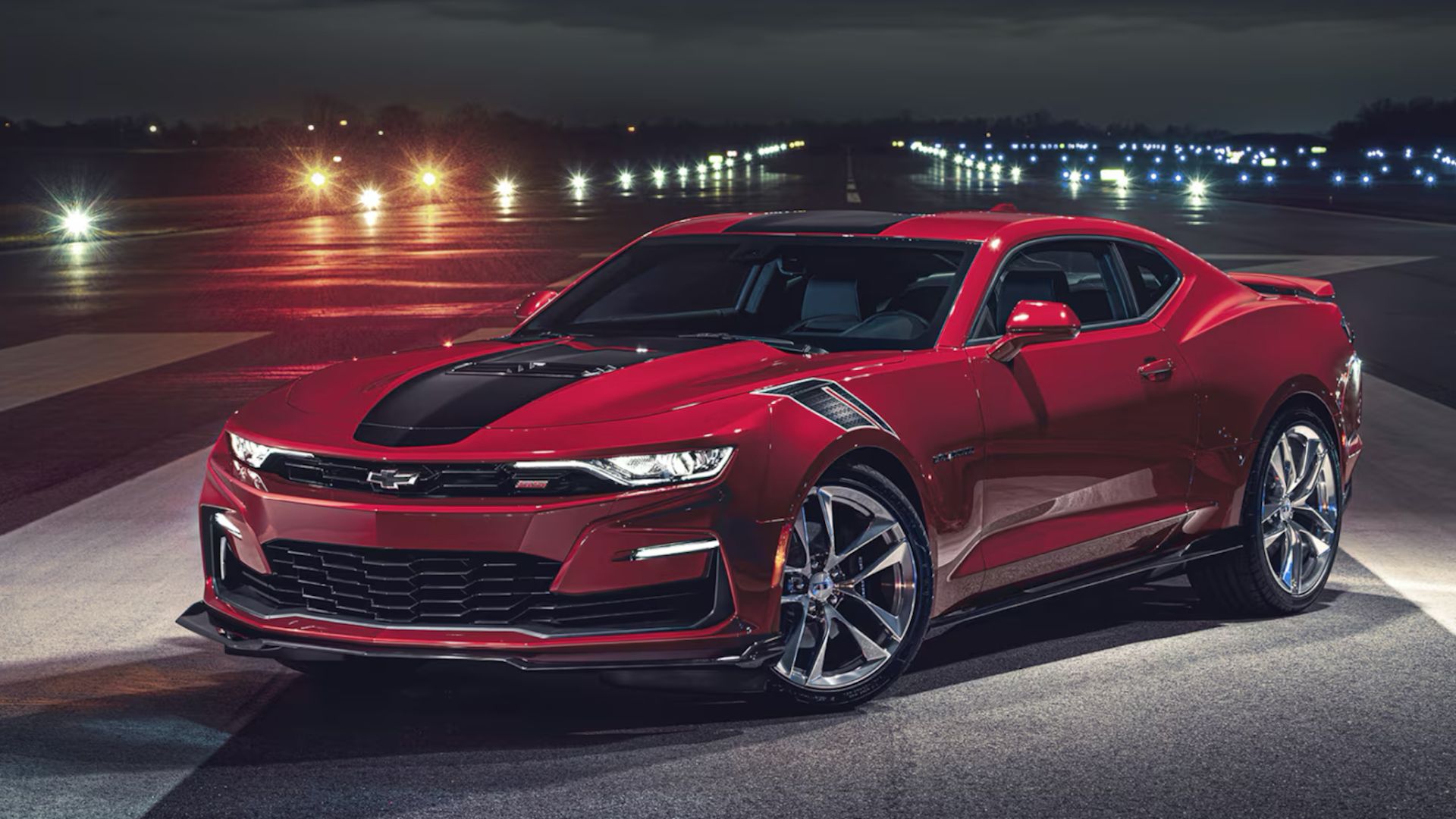
General Motors has filed a new trademark for the Chevrolet Camaro name in Cambodia, a filing location that has sparked speculation about whether the discontinued muscle car could be planning a return.
Timing of the Filing
The trademark application was filed on September 25, just months after the sixth-generation Camaro ended production in 2024. GM’s U.S. trademark rights for the Camaro name remain active, making the international filing notable primarily for its timing rather than legal necessity.
Corvette Destroyed After High-Speed Pursuit Ends in Fiery Crash in Fontana
A Long History Behind the Nameplate
Chevrolet originally introduced the Camaro in 1966 as a direct competitor to Ford’s Mustang, offering an affordable, rear-wheel-drive performance car for everyday buyers. Over six generations, the Camaro became a fixture of American muscle car culture, including a 2009 revival built around a 3.6-liter V6 as its base engine. Production of the current generation ended last year, though GM executives have suggested at the time that the ending wasn’t necessarily permanent.
Speculation About an Electric Successor
By August, industry speculation had grown around the possibility of an electrified Camaro successor, potentially following a path similar to Ford’s Mustang Mach-E, which shifted the nameplate toward a crossover body style. Rumored specifications for a potential Camaro EV have referenced a starting price around $37,000 and a range of roughly 320 miles per charge, though none of this has been officially confirmed.
Drunk 13-Year-Old Crashes Stolen Truck in Arizona, 11-Year-Old Passenger Injured
Chevrolet Declines to Comment
When asked directly about potential revival plans, Chevrolet spokesperson Chad Lyons declined to provide details. “For competitive reasons, we do not disclose our future product plans,” he told MotorTrend.
What the Filing Might Signal
While the trademark filing alone doesn’t confirm a Camaro revival, GM typically doesn’t file international trademarks without some underlying business rationale, leaving enthusiasts to speculate about what, if anything, comes next for the nameplate.