
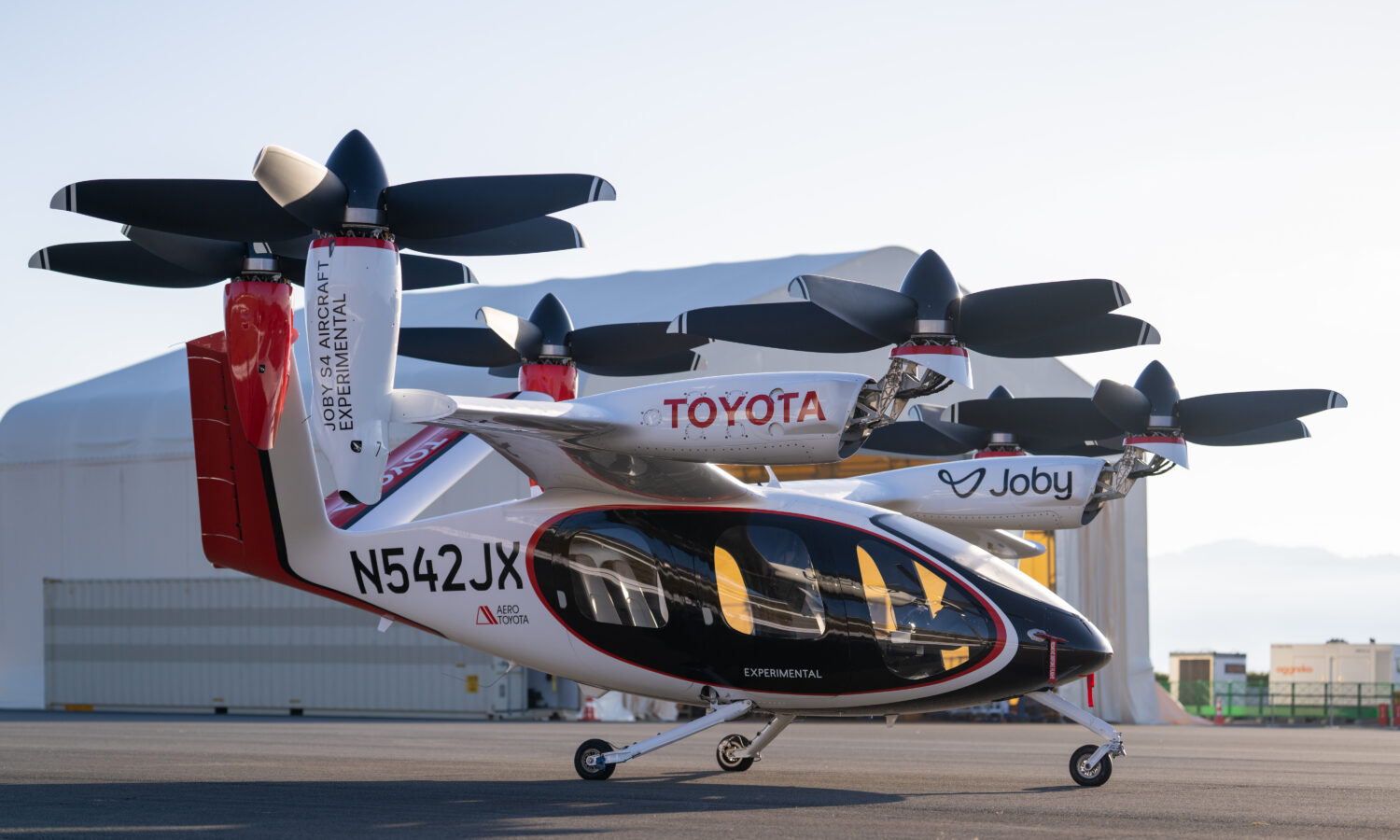
Ask anyone building an electric air taxi what actually keeps their program grounded, and the honest answer rarely involves rotors, batteries, or flight software. It’s the assembly line.
Building One Aircraft Is Easy. Building Ten Thousand Is the Real Test
Aerospace companies have plenty of experience building a handful of incredible aircraft by hand. What almost none of them have done is build thousands of identical units consistently, safely, and cheaply enough that a ride actually pencils out financially.
That gap is the real story behind the joint venture Joby Aviation just formed with Toyota Motor Corporation, even though the official language is dressed up in talk of bringing air mobility to everyone. Building one exceptional aircraft proves an engineering team is brilliant. Building the ten-thousandth identical one proves a factory is.
Toyota Just Changed Its Role, Not Its Commitment
Toyota has quietly backed Joby for close to a decade, contributing hundreds of millions of dollars across multiple funding rounds while loaning engineers to help with everything from seat design to production tooling. What changed this week isn’t the size of the relationship — it’s the shape of it.
Instead of acting as a financial backer watching from the sidelines, Toyota is now co-owner of a joint venture created specifically to industrialize Joby’s aircraft. That’s a fundamentally different bet. Toyota isn’t just funding a flying taxi; it’s putting the manufacturing system that spent decades perfecting Camrys, Corollas, and Tundras directly onto Joby’s factory floor.
Why Manufacturing, Not Aerodynamics, Is Where eVTOL Programs Die
Hyundai’s Supernal division recently slashed much of its workforce as its own ambitious air taxi program slowed, and Germany’s Lilium ran out of money before it ever reached commercial service. That’s precisely the muscle Toyota has spent decades developing, and it’s exactly the capability a Silicon Valley aerospace startup is least likely to build on its own.
The FAA Hurdle Most People Don’t Know Exists
The timing also lines up with something buried in the announcement: references to supporting aircraft certification while preparing for future production demand. Joby has spent years working toward FAA type certification, the regulatory milestone that allows an aircraft design to move beyond the prototype stage. What often gets overlooked is that type certification alone doesn’t put paying passengers in the air.
The FAA also requires a production certificate, proving a manufacturer can build that same aircraft repeatedly, consistently, and to the exact same safety standard every time. That’s as much a manufacturing audit as it is an engineering one, and it’s exactly the kind of discipline Toyota has been living with across its global factories for decades.
Partnerships like this tend to surface as certification draws closer, when companies need to convince regulators, investors, and future operating partners they can do more than fly impressive prototypes for demonstration videos. They have to prove they can build a real business.
The Irony of Cautious Toyota Betting on a Hype-Driven Industry
Toyota built its reputation by being cautious, methodical, and almost allergic to hype. The flying-car industry has spent the better part of a decade doing the opposite. Putting those two together says something about where the auto industry believes its next opportunity may lie.
EV sales in the United States have cooled from their earlier surge, margins remain under pressure, and automakers are increasingly searching for businesses where manufacturing expertise creates a lasting competitive advantage instead of another race to build the next electric crossover. An air taxi isn’t a car. But building one at scale rewards exactly the same discipline that keeps a Toyota assembly line humming.
What This Deal Doesn’t Mean
None of this means a flying taxi is landing in your neighborhood anytime soon, and nothing about this partnership puts a Joby aircraft in a Toyota showroom. Joby still plans to operate its own air taxi service in cities, much the way a rideshare company operates vehicles it doesn’t manufacture.
The average driver’s stake in this story isn’t a personal flying car. It’s a preview of how legacy automakers intend to stay relevant once the automobile itself is no longer the only complex machine they’re capable of building at world-class scale. Toyota’s wager is that manufacturing excellence — not the vehicle itself — will determine who succeeds long after the hype cycle moves on.
What to Watch Next
The key question is whether Joby reaches FAA certification on the timeline it has laid out, whether Toyota’s manufacturing playbook translates cleanly from cars to aircraft, and whether this partnership becomes the model other automakers copy as they eye a broader consolidation of eVTOL companies.
The aircraft is the part everyone will see. The factory that can build it ten thousand times over is the part that actually decides who wins.