
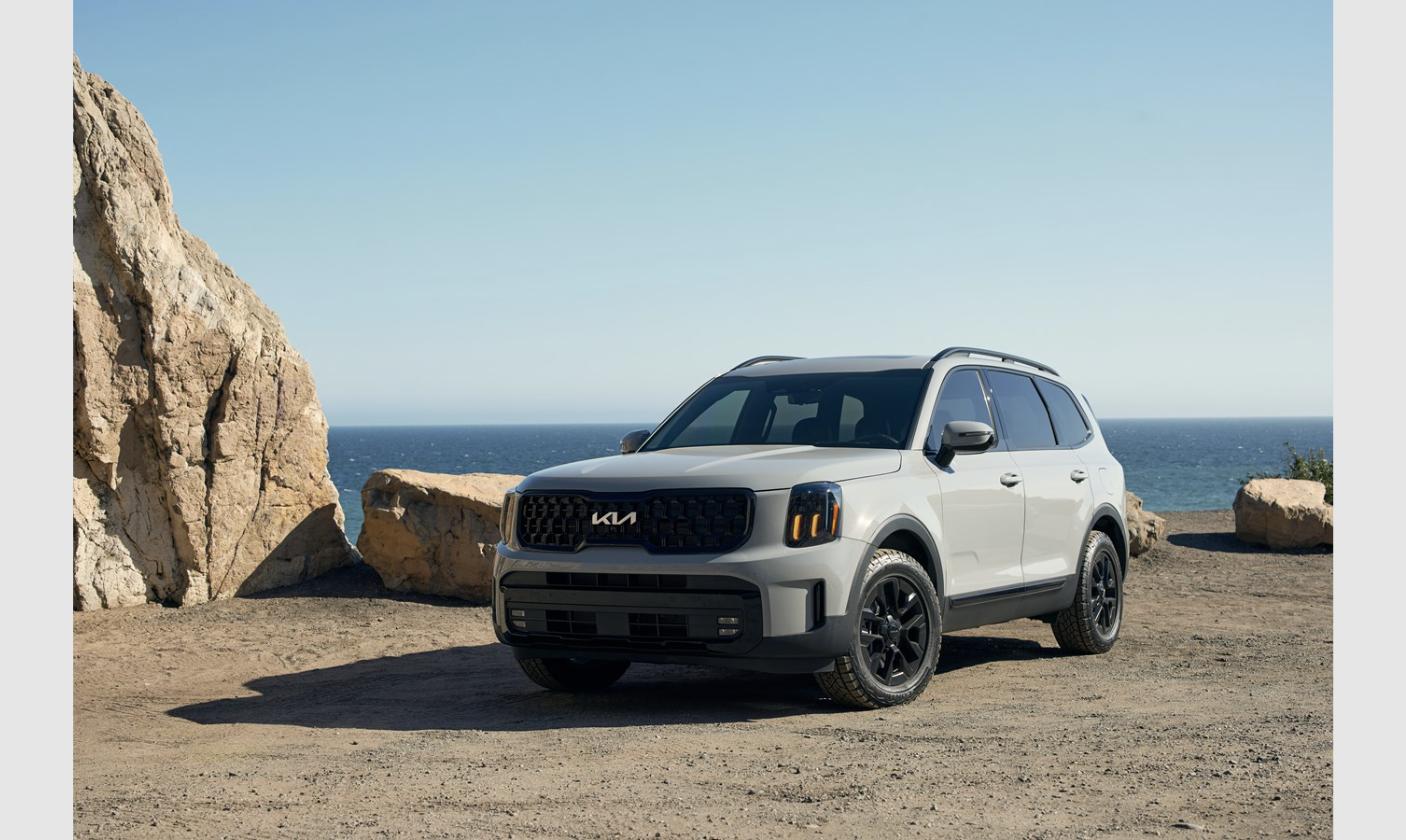
Kia just told the owners of 462,869 Tellurides to park their SUVs away from the house because the driver’s seat might catch fire. That instruction should sound familiar. Kia said almost the exact same thing about many of these same trucks two years ago. What makes this recall worth stopping on isn’t the fire risk. It’s the sentence buried in Kia’s own filing admitting that the fix from 2024 can, if done wrong, cause the very fire it was supposed to prevent. A recall got recalled.
The Recall That Recalled Itself
The National Highway Traffic Safety Administration announced the new campaign on July 9, covering model year 2020-2024 Tellurides. The problem lives in the front power seat: if the slide switch or knob gets bumped hard enough to jam or misalign, the seat motor keeps running instead of stopping. A motor that never stops eventually overheats. Kia says it is aware of seven seat fires and eleven melted seat motors. Owners will start getting letters on August 13, and dealers will install what Kia calls an electronic fuse assembly.
Here is the detail that separates this from a routine recall notice. These are largely the same Tellurides Kia already recalled for this same failure mode under campaign 24V407. In its new filing, Kia states that an improperly performed repair from that earlier campaign could itself lead to the motor overheating and catching fire. Read that twice. The fix is now a suspect in the fire it was built to stop. Owners who did the responsible thing and brought their Telluride in back in 2024 may be dealing with a repair that introduced a new failure point rather than closing one.
A Fuse Is a Pretty Basic Thing to Be Missing
Power seats have used sliding motors since roughly the 1950s, and the engineering has always relied on a simple assumption: the switch tells the motor when to stop. Kia’s fix admits that assumption failed. The remedy dealers are installing is described as an electronic fuse assembly, a component meant to cut power to the motor if the switch itself becomes damaged or stuck. In other words, the Telluride’s seat motor circuit did not have reliable overcurrent protection built in from the start. A jammed switch could let voltage flow into a motor that had nowhere to send the resulting heat except into the foam, fabric, and plastic stacked around it. That is a strikingly basic gap for a vehicle that has been in production since 2019 and remains one of Kia’s best-selling models.
Park Outside Is Becoming a Regular Feature, Not an Emergency
Kia’s Telluride is not an isolated case this year. In June, NHTSA issued a park outside warning for more than 1 million Jeep Gladiator and Wrangler trucks over a wiring defect that could ignite combustible material near the power steering pump, even with the engine off. FCA had 51 fires on record and, notably, no repair ready yet when it told owners to keep their trucks away from buildings. Roughly ten months earlier, BMW issued its own park outside recall covering close to 200,000 vehicles for a separate fire risk. Add it up and you get nearly a million and a half vehicles across three brands ordered to sleep outdoors in about a year, each because the manufacturer could not rule out a fire starting on its own.
It helps to know that “park outside” is a specific, deliberate tier in NHTSA’s language, one notch below “do not drive.” A do-not-drive order forces a stop-sale and usually a loaner or rental for affected owners. Park outside does not. It lets the automaker keep cars on the road and keep selling new ones off the lot while shifting the actual risk mitigation to the owner’s driveway. For Kia, that distinction matters more than it might for a niche brand. The Telluride is one of the highest-volume, highest-margin vehicles Kia sells in the United States, anchoring its three-row SUV lineup against the Honda Pilot and Toyota Highlander. A stop-sale on nearly half a million of them would hit dealers and Kia’s own sales numbers immediately. A park outside notice, paired with a slow-rolling mailer schedule that starts more than a month after the announcement, does not.
What Happens to Your Coverage If You Ignore the Warning
A garage fire started by a documented, unrepaired recall defect is normally a comprehensive claim, not a liability dispute, and most auto policies will pay out. Where it gets messier is homeowners’ insurance. If a Telluride parked inside an attached garage burns and takes the house with it, and the owner received a notification letter telling them explicitly to park outside, an insurer has every incentive to ask why that instruction was ignored. Compliance with a manufacturer’s safety notice is exactly the kind of documented, date-stamped fact that shapes how a claims adjuster handles subrogation against Kia versus scrutiny of the homeowner. Nobody talks about that part in the press release. It is simply the quiet consequence of turning a safety recall into a homework assignment for the owner.
The Real Lesson Isn’t About Kia
This is where the Telluride fits a pattern The Auto Wire has been tracking all summer. Rivian’s rear suspension recall turned out to cover only a fraction of the affected tucks once new crash data surfaced. Stellantis is currently dealing with 1.5 million Ram 1500s recalled over a bolt torque problem nobody caught for eight years. Ford just recalled tens of thousands of Mustang Mach-Es because its own factory line started moving faster than the adhesive curing process could keep up with. Different components, different causes, same underlying story: modern vehicles have so many interacting systems, built at such volume and speed, that a single missed spec, rushed fix, or untested repair procedure can undo a recall almost as fast as it closes one.
If you own a 2020-2024 Telluride, the practical steps are simple: park away from the house and other vehicles now, check your VIN on NHTSA.gov once the database updates on July 17, and wait for Kia’s letter, expected starting August 13. But the bigger takeaway applies well beyond this one SUV. A completed recall repair used to feel like the end of a story. Increasingly, it is just the next chapter. The most dangerous part of a recall isn’t always the original defect. Sometimes it’s the fix.