
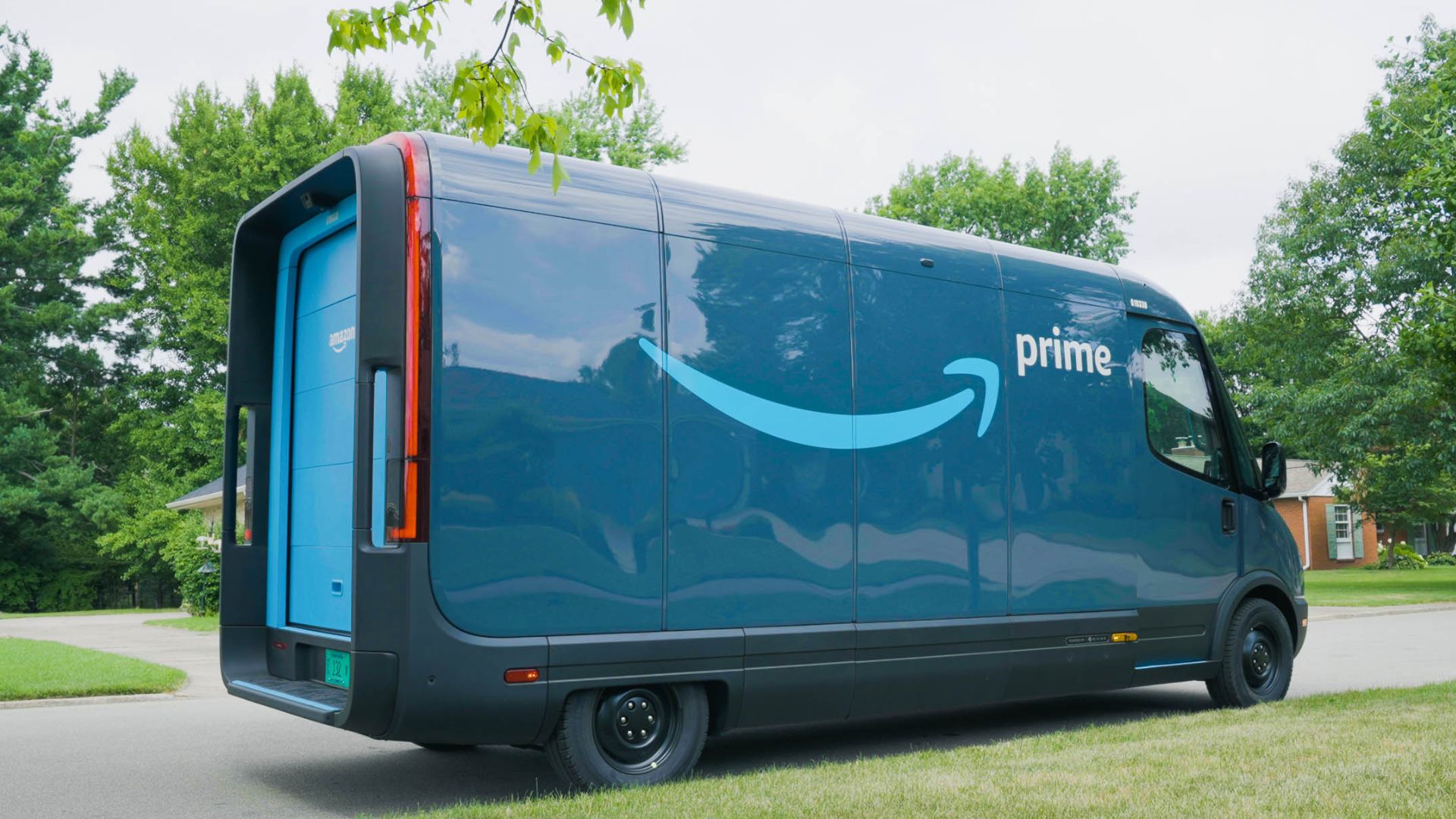
Rivian already told federal regulators it fixed this. That detail matters more than the two new crashes that just reopened the case.
The National Highway Traffic Safety Administration opened Preliminary Evaluation PE26004 on May 26, 2026, examining whether the rear suspension on 2022-2025 Rivian R1S and R1T models can separate from the chassis and send the vehicle out of control. Regulators estimate the population at 114,922 trucks and SUVs. The trigger was two crashes in which the rear toe link, one of the small rods that keeps a rear wheel pointed straight, is alleged to have separated while the vehicle was in motion. In one case, a New Jersey driver’s own onboard camera recorded the rear driver-side toe link failing moments before the R1S spun and struck a guardrail.
Here is the detail that got buried under the crash footage: Rivian already recalled this exact failure mode four months earlier. Case closed, or so it seemed.
Except that recall covered 19,641 vehicles. Not 114,922. Nineteen thousand.
That is wait-really moment number one. Rivian did not recall every R1S and R1T for a toe link defect. NHTSA Campaign 26V003000, filed January 5, 2026, covered only vehicles that had previously had service performed, specifically ones where a technician may have reassembled the rear toe link incorrectly before March 10, 2025. The fix was replacing bolts, not redesigning a part. In plain terms, Rivian’s position was that this was not a manufacturing or design flaw at all. It was a wrench-turning problem, isolated to trucks that had already been into a service bay.
Wait-really moment number two: neither of the two vehicles involved in the crashes that triggered this new investigation was part of that recall population. If the failure shows up in trucks nobody serviced under the recall, blaming reassembly error stops being a sufficient explanation. NHTSA’s new investigation is explicitly examining two things at once, whether the rear suspension itself is durable enough, and whether Rivian’s repair procedures are adequate. Regulators do not open that second line of inquiry unless they suspect the first diagnosis was incomplete.
A toe link is not a glamorous part. It is a metal rod, usually with a ball joint or bushing on each end, running from the wheel hub back to the chassis, and its only job is to control toe angle, meaning how much a wheel points inward or outward relative to the direction of travel. Lose that link at highway speed and the wheel is free to swing toward toe-out, turning a straight line into a sudden, violent yaw. It is one of the smallest parts on a three-ton SUV and one of the least forgiving to lose. Heavier vehicles load these links harder in every corner, every pothole, every regenerative-braking stop, and a fully loaded R1S pushes close to 7,000 pounds. That is not a knock on Rivian specifically. It is physics every heavy EV maker has to engineer around. But it does mean the margin for a torque spec or bushing tolerance being slightly wrong is smaller than it was in a body-on-frame SUV three decades ago.
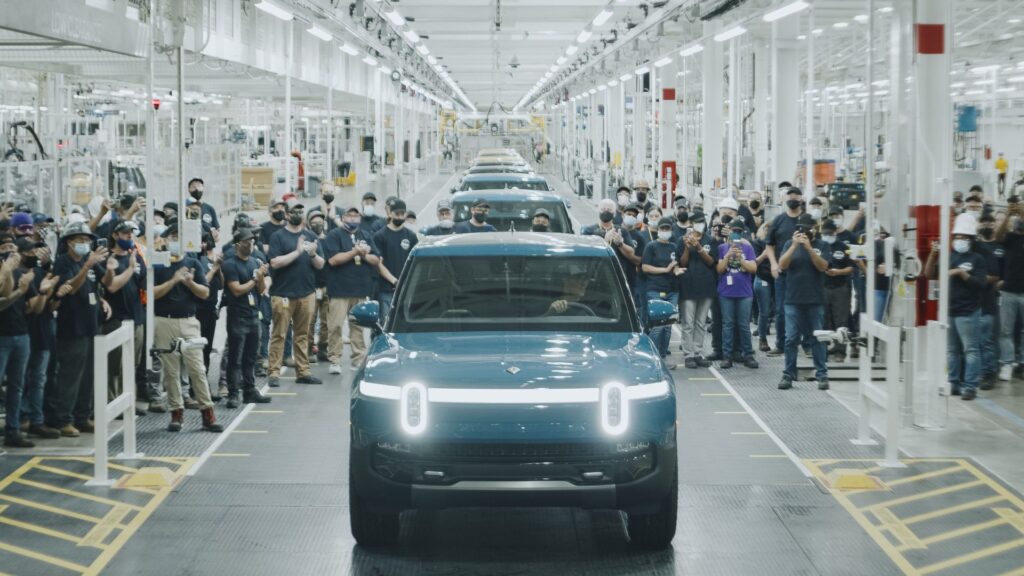
This also is not Rivian’s first suspension recall. Back in 2023, Rivian recalled almost every vehicle it had built over a loose suspension fastener, a campaign broad enough to cover practically the entire early production run. A second suspension recall, narrower in scope but identical in failure mode, followed four months later by a federal investigation questioning whether that second recall actually worked, is not a great pattern for a company still building out its production and service discipline. It also is not the only open NHTSA inquiry into Rivian’s assembly and repair consistency. The agency opened a separate investigation into seatbelt failures last September.
None of this is happening in a vacuum. Rivian just told investors it turned its first quarterly profit, and much of that profit traced back to software and regulatory credit sales rather than the vehicles themselves. A young automaker trying to convince Wall Street it has graduated from startup chaos to disciplined manufacturer does not want federal investigators publicly questioning whether its recall fixes actually fix anything. Every open investigation is also a warranty and legal-exposure line item, and it lands right when Rivian needs its cost story to look clean.
It also lands on top of an ownership base that has grown vocal about reliability. One R1T owner spray-painted the word junk on his own truck and built a website rather than write a review, and it went viral. A repeat suspension investigation, on a part the company already claimed to have addressed, is exactly the kind of story that turns private frustration into public distrust. Distrust is the one thing that shows up in resale values and insurance underwriting long after a recall notice is mailed.
For current owners, the practical takeaway is not panic. It is paperwork. Rivian’s own recall data show it can trace which specific vehicles had rear suspension service performed before March 10, 2025, so owners outside that window should still ask a dealer directly whether their VIN has been inspected, especially before a long highway trip. Independent shops taking on Rivian suspension work should treat torque specs on that toe link as non-negotiable, because the company’s own recall notice already blamed reassembly error once.
You can recall a bad bolt. It is much harder to recall an explanation that turns out to be incomplete. That is the real story sitting inside this investigation, and it is the one Rivian did not put in a press release.