
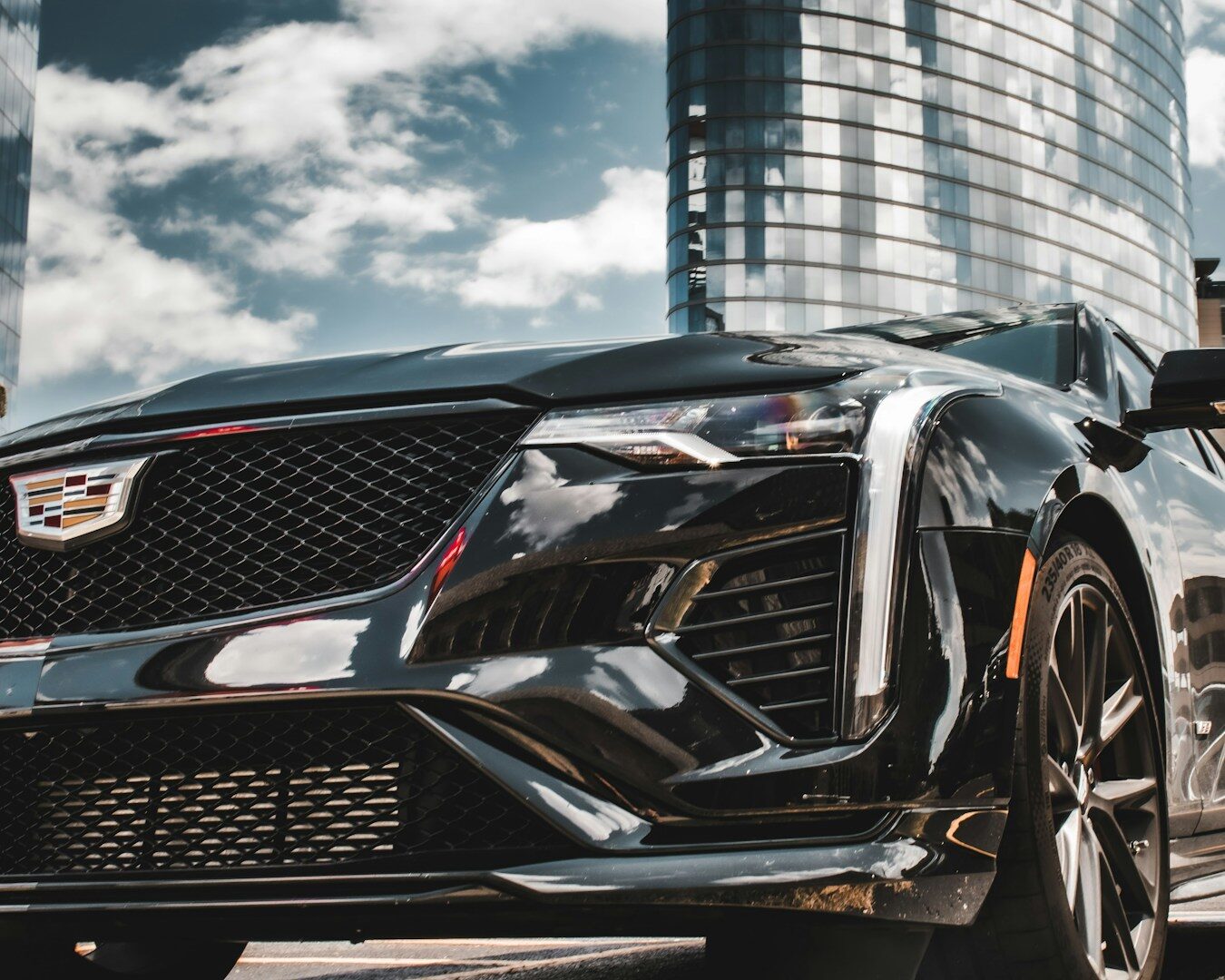
Everyone reading about the layoffs at Lansing Grand River is asking what happens to the Cadillac CT5. Almost nobody is asking about the car parked on the same line right now: the CT4. That is the more interesting question, because the CT5 is getting retooled. The CT4 is just disappearing.
We’ve already covered why GM is retooling that Michigan plant for a gasoline engine after taking half a billion dollars in federal money to electrify it. That story is about a broken promise to Washington. This one is about a broken promise to whoever wanted the cheapest possible way into a new Cadillac.
Cadillac confirmed in October 2025 that the CT4 goes away for good after the 2026 model year. No successor. No badge migrating forward. Production ends in June 2026, and Cadillac’s own online configurator already treats the car like a closeout item. The CT5 survives, gets a redesign, and keeps building at Lansing. The CT4 doesn’t even get that dignity.
Here’s the number that deserves more attention than the retooling headline. A 2026 Cadillac CT4 starts at $36,000. A 2026 CT5 starts at $49,200. That is the entry price of a new Cadillac sedan jumping more than $13,000, or 37 percent, the moment the cheaper car’s production run ends. Nobody announced a price increase. Cadillac didn’t need to. It just stopped selling the thing that used to cost less.
If that feels familiar, it should. Cadillac’s own website keeps a running list of the bodies. Its retired-vehicles archive shows the ATS sedan and ATS-V sedan gone in 2018, the ATS coupe and ATS-V coupe gone in 2019, the CTS sedan and CTS-V sedan gone in 2019, the XTS gone in 2019, and the CT6 and CT6-V gone in 2020. That is nine sedan nameplates erased in three years, right before the CT4 and CT5 arrived to replace all of them combined. Seven years later, one of those two replacements is going the same way. Cadillac has not been consolidating its sedan lineup. It has been liquidating it in slow motion for a decade, and every round gets sold as a leaner, smarter Cadillac.
The timing gets worse once you look at what else Cadillac killed recently. The XT4, the brand’s smallest and cheapest crossover, was discontinued in 2025, one model year ahead of the CT4. That means Cadillac cancelled its cheapest sedan and its cheapest SUV within about twelve months of each other, with no gasoline replacement stepping in below either one. The nearest thing Cadillac points former XT4 shoppers toward now is the Optiq electric crossover: a different powertrain entirely, starting at $50,900, which is a lot to ask of someone who bought a compact Cadillac specifically because it wasn’t a $50,000 purchase.
Put those two facts side by side and the picture stops being subtle. Cadillac has exited the compact luxury segment completely, in both body styles, inside a single year. There is no gasoline Cadillac left in showrooms under roughly $49,000. Five years ago there were four.
That matters beyond the spreadsheet, because the entry-level luxury sedan has never been a footnote. It’s the industry’s farm system. It’s the car a 32-year-old buys with their first serious bonus, three years before they’re cross-shopping an Escalade. Nobody’s brand loyalty starts at the top of the lineup. It starts with the cheapest car wearing the right badge, financed over 72 months by someone who wants to feel like they’ve arrived. Delete that car, and the damage isn’t just this year’s sales chart. It’s the buyer who would have traded up to a Lyriq, then an Escalade, a decade from now.
There’s real engineering logic behind the decision, and it’s worth explaining rather than waving off as generic cost-cutting. Every dedicated body structure a manufacturer certifies has to earn back its tooling and crash-testing costs across everything built on it. The CT4, CT5, and the outgoing Camaro all shared GM’s rear-wheel-drive Alpha platform, an arrangement that only pencils out if every nameplate riding on it sells in volume. When one half of that pair sells more slowly than the other, deleting it is cheaper than redesigning it: one fewer trim path, one fewer crash structure to recertify, one fewer variant competing for the same shared tooling budget. Consolidating down to a single sedan lowers Cadillac’s fixed cost per unit built. It also happens to raise the price of the cheapest thing still standing.
That isn’t a conspiracy. It’s arithmetic. It’s just arithmetic that Cadillac would rather you experience as “the CT5 got better” instead of “the floor moved up $13,200.”
If you already own a CT4, the practical news is better than the marketing news. A discontinued Cadillac is not like a discontinued car from a low-volume boutique brand, where parts supply can dry up within a few years. The CT4 shares most of its chassis, suspension, and drivetrain hardware with the CT5, which GM will keep building and supporting for years. Service parts and diagnostic support tend to follow platform volume, not badge volume, so CT4 owners aren’t staring down the kind of scarcity that hits a truly bespoke orphaned model. Resale value is the bigger unknown, and it typically settles one of two ways for a discontinued entry-luxury car: it becomes a bargain for buyers chasing a Cadillac badge once depreciation kicks in, or dealers use “no longer in production” as leverage on trade-in offers. Whether the redesigned CT5 turns out to be the better car is still an open question, too. We’ve already flagged one crash-test result on the new sedan worth watching before anyone calls this an upgrade across the board.
None of this means the CT5 is a lesser car. On paper, it’s a genuinely more capable one. But the next time an automaker “streamlines” its lineup, don’t just count the nameplates that survive. Count the price tier that disappeared along with the one that didn’t. Cadillac spent a decade turning six sedans into two, one press release at a time, and it just did the same thing to the number on the window sticker. A brand doesn’t need to raise a single price to get more expensive. It just needs to stop selling anything cheap enough to argue with.