
Volkswagen wants to sell you a pickup truck by 2030. Set that fact aside for a second, because the truck itself is not the interesting part of this story.
The interesting part is why a company that has spent sixty years perfectly content building Golfs and Jettas suddenly wants into the one segment of the American market it has never touched. The more interesting part is why a decades-old tariff wall stands between Volkswagen and that truck in the first place, and whose fault that wall actually is.
Reuters reported on August 7 that Volkswagen plans to overhaul its U.S. business with new leadership and a new product lineup, anchored by a pickup truck built on American soil before the end of the decade, according to a company source. Marco Schubert, previously the head of sales at Audi, is moving to run VW’s U.S. operation, replacing outgoing chief Kjell Gruner. Volkswagen brand chief Thomas Schaefer has pointed to pickups and large SUVs, both high-margin categories Volkswagen doesn’t compete in at all right now, as the growth opportunity.
That would be a tidy little story about a legacy import brand finally chasing where the money is in America. It landed two weeks before a much darker memo.
On August 21, Reuters obtained an internal Volkswagen memo in which CEO Oliver Blume told employees that overhead costs run more than 30 percent above comparable rivals, and that current profit margins, already under 4 percent, aren’t nearly enough to fund the new products, new technology, and factory investment Volkswagen needs to survive the next decade.
“The situation is more than critical,” Blume wrote.
Sources briefed on the plan told Reuters that Volkswagen is weighing an additional 50,000 job cuts on top of 50,000 already underway, effectively doubling the total to 100,000, and that four German plants, Emden, Hannover, Zwickau, and Audi’s Neckarsulm site, aren’t expected to hit competitive output levels even by the 2030s. Volkswagen’s supervisory board is scheduled to dig into the details on September 4.
So here is the actual shape of the story: a European manufacturer squeezed by Chinese competitors at home, falling profits in China itself, and painful U.S. tariffs is proposing to shrink dramatically in the market where it is strong while expanding into a market where it barely exists. Volkswagen holds roughly four percent U.S. market share. The pickup truck is not the headline. It is the one hopeful paragraph tucked inside a much grimmer one.
Why pickups, specifically? Because trucks are where the money already is. Pickups accounted for nearly 20 percent of U.S. vehicle sales last year, according to Cox Automotive, and the large trucks that dominate that category, sold almost entirely by Ford, GM, and Ram, carried average sticker prices approaching $70,000. Ford and GM have both raised their 2026 profit outlooks on the strength of exactly these vehicles. Volkswagen, meanwhile, doesn’t sell anything bigger than the three-row Atlas, whose backup cameras had a habit of vanishing from 57,851 SUVs badly enough to trigger a federal recall this summer. A truck is the fastest route into margin-rich territory Volkswagen has spent decades ignoring.
Here is the part almost nobody explaining this story bothers to explain: Volkswagen cannot simply build that truck in Germany and ship it over.
A 25 percent tariff has applied to imported light trucks since 1964, a Cold War-era relic that trade economists and historians have long identified as aimed squarely at one vehicle in particular: Volkswagen’s own Type 2 Transporter, the Bus and pickup that were flooding American ports at the time and undercutting Detroit’s compact trucks. That tariff is still on the books today, and it still applies to any truck Volkswagen might otherwise want to import from Mexico, South Africa, or Germany.
The tariff wasn’t written with Toyota in mind. It was written with Volkswagen’s own delivery van in mind. Sixty-two years later, Volkswagen is still paying for it.
That single fact explains almost everything in Reuters’ sourcing about this plan. The truck has to be built in the United States, full stop, which is exactly why Volkswagen has not yet said whether it will design and build the truck alone or lean on a partner. Ford is the name being floated. The two companies already share hardware in both directions: Volkswagen’s Amarok, built in South Africa, rides on the same platform as the Ford Ranger, while Ford’s electric Explorer and Capri, built in Cologne, use Volkswagen’s MEB architecture. A joint truck would not be a new alliance. It would be an extension of one that already exists, engineered specifically to spread cost and dodge exactly this kind of tariff exposure.
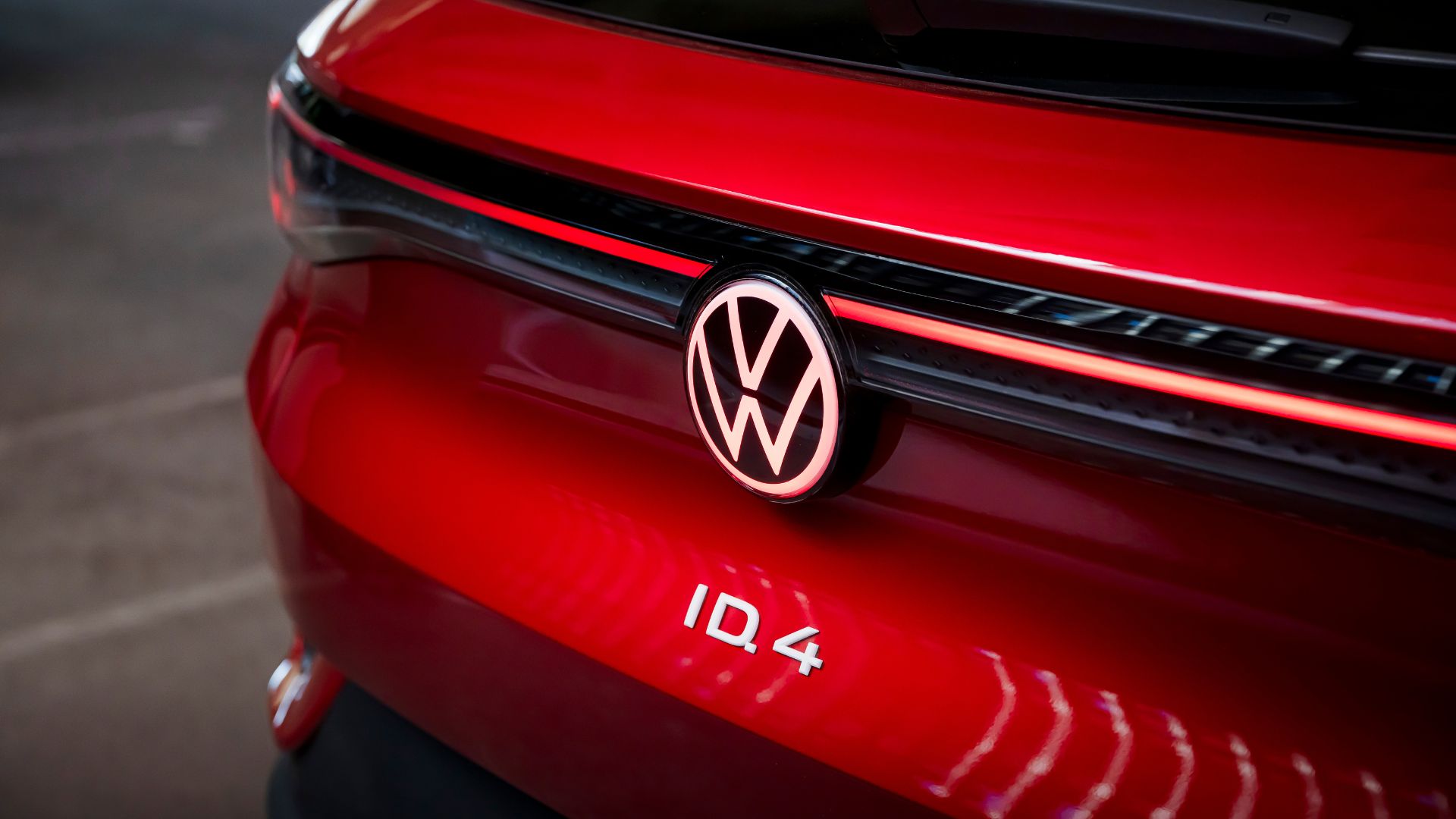
There is also a strong hint about where such a truck could be built. Volkswagen’s assembly plant in Chattanooga, Tennessee, stopped building the electric ID.4 earlier this year after Washington eliminated the federal EV tax credit that had propped up its sales. That leaves a fully tooled, currently underused American factory sitting idle right as Volkswagen needs American floor space for a combustion or hybrid truck that a gutted EV incentive structure will not save. Handelsblatt, the German outlet that broke the original story, has reported Chattanooga as the leading candidate.
Here is a wrinkle almost nobody has connected yet: Volkswagen Group is already building an American pickup truck. It is called the Scout Terra, an electric, range-extended, body-on-frame truck from the revived Scout Motors brand, headed for production at a new factory in Blythewood, South Carolina, sold direct to consumers with no dealer network at all. The new Volkswagen-brand pickup reported by Reuters is a second, separate bet: sold through VW’s traditional dealer network, aimed at a different buyer, and very possibly running on gasoline or a hybrid drivetrain rather than a battery. A company that cannot decide between EVs and combustion, dealers and direct sales, Chattanooga and somewhere else, is not executing a strategy. It is hedging every position it can afford, because it cannot afford to be wrong twice in the same segment.
Who benefits if any of this actually happens? Ford, potentially, by sharing tooling and R&D costs across a plant it already runs. Volkswagen’s U.S. dealers, who finally get inventory in the segment printing the industry’s biggest profits. Everybody else already selling a midsize truck, the Ranger, Chevrolet Colorado, Toyota Tacoma, Nissan Frontier, Jeep Gladiator, Ford Maverick, and Hyundai Santa Cruz, gets one more competitor in a field that was not exactly thin to begin with. The clearest losers are the workers at Emden, Hannover, Zwickau, and Neckarsulm, whose plants are the ones actually being asked to shrink so Wolfsburg can afford to try this in America.
None of it is decided yet. Volkswagen has not settled the Ford question, and its supervisory board has not finished arguing about the plant closures that would fund any of this. What is already clear is the shape of the trade underway: Europe gets smaller, Germany gets fewer factories, and America gets a truck built specifically to slip through a 62-year-old tariff loophole that Volkswagen, more than any other company on earth, helped write into existence.
Remember the truck if you want. The tariff is the real story, and Volkswagen has known that longer than anyone else in the business.