
Volkswagen wants Brussels to move fast on tariffs against Chinese plug-in hybrids. What the company isn’t saying is that eighteen months ago, its own lobbying helped make sure the last round of tariffs came in soft enough for Chinese brands to keep winning anyway.
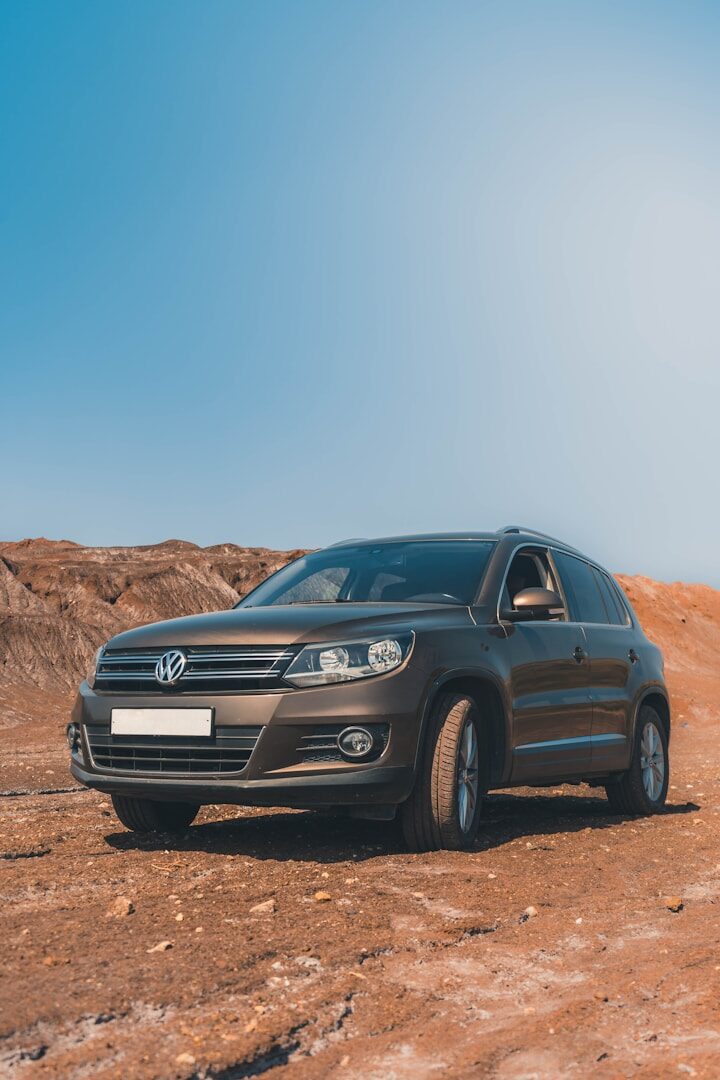
On Volkswagen Group’s first-half earnings call this month, CEO Oliver Blume said the EU has no time to lose and needs to raise import tariffs on Chinese-built plug-in hybrids immediately. The reason is sitting right there in the sales charts. Chinese brands captured 28.3 percent of Europe’s PHEV market in the first half of 2026, and the three best-selling plug-in hybrids on the continent right now are the BYD Seal U, the BYD Atto 2, and the Jaecoo 7. The Volkswagen Tiguan PHEV, Europe’s top-selling plug-in hybrid as recently as last year, has been pushed all the way to fourth.
Jaecoo is worth pausing on. It’s a brand Chery launched in 2022 that most European buyers had never heard of two years ago, and it’s now outselling Volkswagen’s flagship crossover in the one powertrain segment where Volkswagen used to set the pace. That’s not a rounding error. That’s a changing of the guard, and it happened in about eighteen months.
Here’s the part Volkswagen would rather you forget. In October 2024, when the EU was preparing to impose tariffs of up to 35 percent, on top of the standard 10 percent import duty, on Chinese-built electric vehicles, Volkswagen lobbied Germany to vote against them. Germany did, one of only five EU members to reject the measure, after months of pressure from domestic automakers that depend on China for roughly a third of their global sales. The tariffs passed anyway. Less than two years later, the same company is demanding Brussels move faster and hit harder, just on a different powertrain.
This isn’t really a contradiction. It’s a pattern. Volkswagen was never against tariffs on principle. It was against tariffs on the products it needed China to keep buying and building. Now that Chinese brands are winning in the one segment Volkswagen still leads at home, the math flipped overnight, and so did the position.
To understand why Volkswagen is fixated on plug-in hybrids specifically, and not sedans or compact SUVs generally, you have to understand what a PHEV is actually for in Europe right now. It is less a product than a compliance tool. Under EU fleet CO2 rules, a plug-in hybrid’s official emissions number is calculated using a utility factor that assumes drivers cover a large share of their miles on electric power alone. Real-world data collected by the EU’s own Joint Research Centre has repeatedly shown that many PHEV owners plug in far less often than the formula assumes, which means the cars burn more gasoline in daily use than their type-approval figures suggest. None of that changes what counts on paper. Automakers still get to bank the favorable lab number toward their fleet average, regardless of how the car is actually driven. Where it’s not working, in Blume’s own words, is “with the plug-in hybrids.” Losing that segment to Chinese brands doesn’t just cost Volkswagen sales. It costs the company compliance headroom it was counting on to keep its fleet average under the ceiling.
That headroom matters more this year than most. Blume is simultaneously pushing a restructuring plan that could affect up to 100,000 jobs, on top of 50,000 cuts already approved. A company managing layoffs at that scale has very little room to also absorb a fleet-emissions shortfall, or the fines that come with missing EU targets.
There’s an engineering wrinkle here too. BYD’s response to the 2024 BEV tariffs was to start building cars inside the EU, which is why the company now has a factory in Hungary, one that’s currently facing its own political scrutiny. Plug-in hybrids don’t offer that same easy escape route. Localizing a battery pack and an electric motor is one thing. Localizing an entire gasoline engine and transmission supply chain is a slower, far more expensive undertaking. That gap, between how easy it is to dodge a BEV tariff and how hard it is to dodge a PHEV tariff, is exactly the window Blume wants closed before Chinese brands figure out how to build their way around it too.
Whether Brussels moves quickly is a political question, and German outlet Handelsblatt has already reported the European Commission is weighing additional PHEV tariffs, though the size and timing are still undecided. But the more interesting fact is already on record. Volkswagen didn’t discover unfair competition this month. It discovered arithmetic. The company was comfortable with the rules of global trade right up until those rules started producing a losing hand, and that reversal is worth remembering the next time an automaker frames a tariff request as a matter of principle. It rarely is. It’s a scoreboard.