
Every Labor Day, AAA releases the same warning wrapped around a new number. This year it’s 405,000 — the count of drivers who called for roadside rescue during last year’s Labor Day travel window alone. AAA wants you thinking about your wiper blades and your coolant level. That’s not the interesting part. Buried in AAA’s own list of what actually went wrong is a detail the press release never explains, and it says more about how new cars are engineered than any pre-trip checklist could.
Towing topped that list. Not dead batteries. Not flat tires. Towing, ahead of both. That ordering is the real story hiding inside a routine holiday press release. A flat tire used to be a fifteen-minute errand: pull onto the shoulder, drop the spare, drive to a shop on Monday. For a large and growing share of cars built in the last fifteen years, a flat tire is still a fifteen-minute errand — it just ends with a flatbed instead of a jack, because there’s nothing in the trunk to drop.
The Part Automakers Quietly Removed
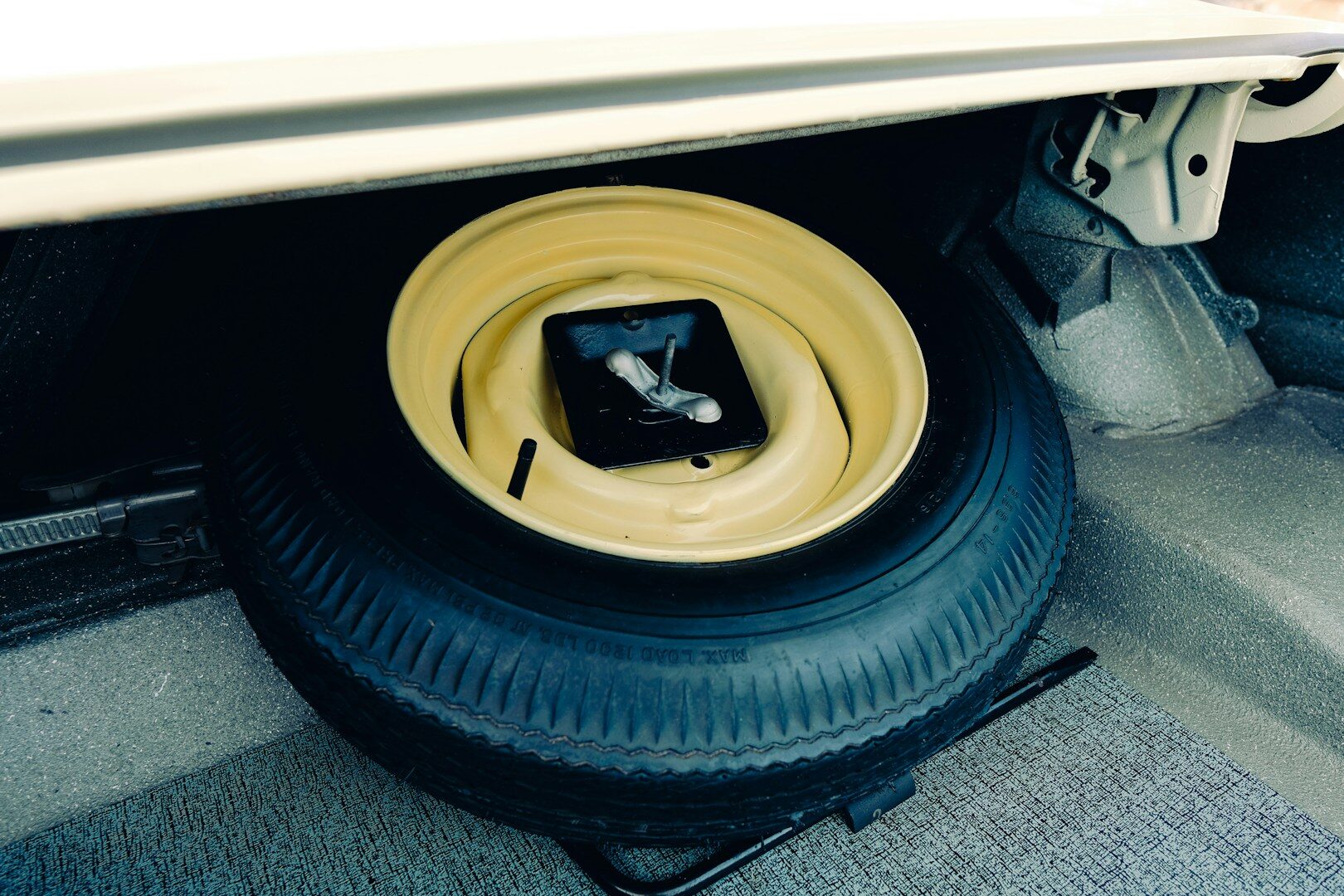
Full-size spares started disappearing from mainstream cars in the 2000s and never really came back. Compact “temporary” spares replaced them in plenty of models. Run-flat tires and aerosol inflator kits replaced spares entirely in plenty more. None of this happened because drivers asked for it. It happened because a spare tire, jack, and mounting hardware add roughly 40 pounds a car has to haul around for its entire life without ever using, and every one of those pounds counted against a fuel economy number automakers were legally required to hit.
Buyer’s guide: Best Tire Inflators for Cars & Trucks (2026)
That number was CAFE — Corporate Average Fuel Economy — and for the better part of two decades it was the quiet force behind hundreds of small weight-saving decisions buried deep in a vehicle’s parts bin. The spare tire was one of the easiest to cut, because most owners never noticed it was gone until the one day it mattered.
Here’s the detail AAA’s press release doesn’t get into, and one we’ve covered in detail before: even drivers who still have a spare often can’t use it, because it has been quietly losing air and aging into brittleness in the trunk for years. Combine a car with no spare at all with a car whose spare has rotted into uselessness, and “towing” stops looking like a mysterious catch-all category. It looks like the predictable result of two overlapping trends nobody markets to car buyers.
The Excuse That Expired
Here’s the part that should really bother you. CAFE, the regulation automakers spent twenty years citing to justify pulling spares, run-flat kits, and half the sound-deadening out of new cars, effectively stopped having teeth in 2025. Congress eliminated the civil penalties for missing federal fuel-economy targets in the budget reconciliation law signed that July, a shift The Auto Wire detailed earlier this year. The regulatory pressure that supposedly forced the spare tire out of your trunk is gone. The spare tire is not coming back.
That’s not an accident, and it’s not automaker inertia either. It’s a pretty clear signal that fuel economy was only ever part of the reason the spare disappeared. The rest of the reason is cheaper and less flattering: a spare tire well is valuable trunk space, and that space now gets used for subwoofer enclosures, hybrid battery packs, and bigger cargo numbers to print on a window sticker. CAFE gave that decision a regulatory alibi. The alibi just ran out, and nobody is giving the spare tire back anyway.
Batteries Are the Same Story, Different Season
Dead batteries were AAA’s second-most-common call of the weekend, and the timing is where most drivers get the story backward. A battery that fails on a summer road trip didn’t fail because of one hot afternoon in a rest-stop parking lot. It failed because heat accelerates the internal corrosion and fluid loss that kill a battery slowly, all summer long — the same mechanism we broke down earlier this summer. Cold weather gets blamed for dead batteries because cold is simply when a weakened battery finally runs out of reserve capacity to hide behind. By Labor Day, a battery that’s spent three months in a hot driveway is already living on borrowed time. AAA’s advice to get it tested isn’t wrong. It’s just arriving months after the damage was actually done.
Flat tires round out AAA’s top three, and there’s a second irony worth knowing before your next blowout. Every new car sold in the United States has carried a federally mandated tire pressure monitor since model year 2008, a rule NHTSA put in place specifically to cut down on blowout-related crashes. Cars have never been better at warning you a tire is failing. At the exact same time, a shrinking share of those cars have given you any way to actually fix it yourself on the shoulder. The industry solved the warning half of the flat-tire problem and quietly walked away from the fix-it half.
What AAA Isn’t Saying
There’s one more piece of context AAA leaves out of every one of these releases, and it’s worth sitting with: this is a membership organization whose core product is exactly the service it’s reminding you to need. AAA runs a version of this press release before essentially every major travel holiday, and the underlying message is always the same — your car is one bad battery away from needing us. That’s not dishonest. It’s also not charity. It’s a renewal pitch timed to the calendar.
It’s also a pitch facing more competition than it used to. Most new cars now come with a few years of free roadside assistance bundled into the purchase price, tied to an app instead of a membership card. That sounds like it should make AAA less necessary, and for a three-year-old car still under warranty, it probably does. But the math flips once that free coverage expires, right around the time a car’s original battery and tires are old enough to actually start failing. AAA’s business doesn’t get weaker as cars age past their factory coverage. It gets more useful. That’s worth knowing the next time a renewal notice shows up, whichever side of that math you’re on.
None of this means Labor Day travelers are wrong to check their tires before a trip. AAA’s checklist is fine advice. But 405,000 roadside calls in one weekend was never really a story about drivers skipping maintenance. It’s a story about an industry that spent twenty years engineering the backup plan out of your trunk, kept doing it after the regulatory excuse expired, and is still counting on a tow truck to cover for the decision.