
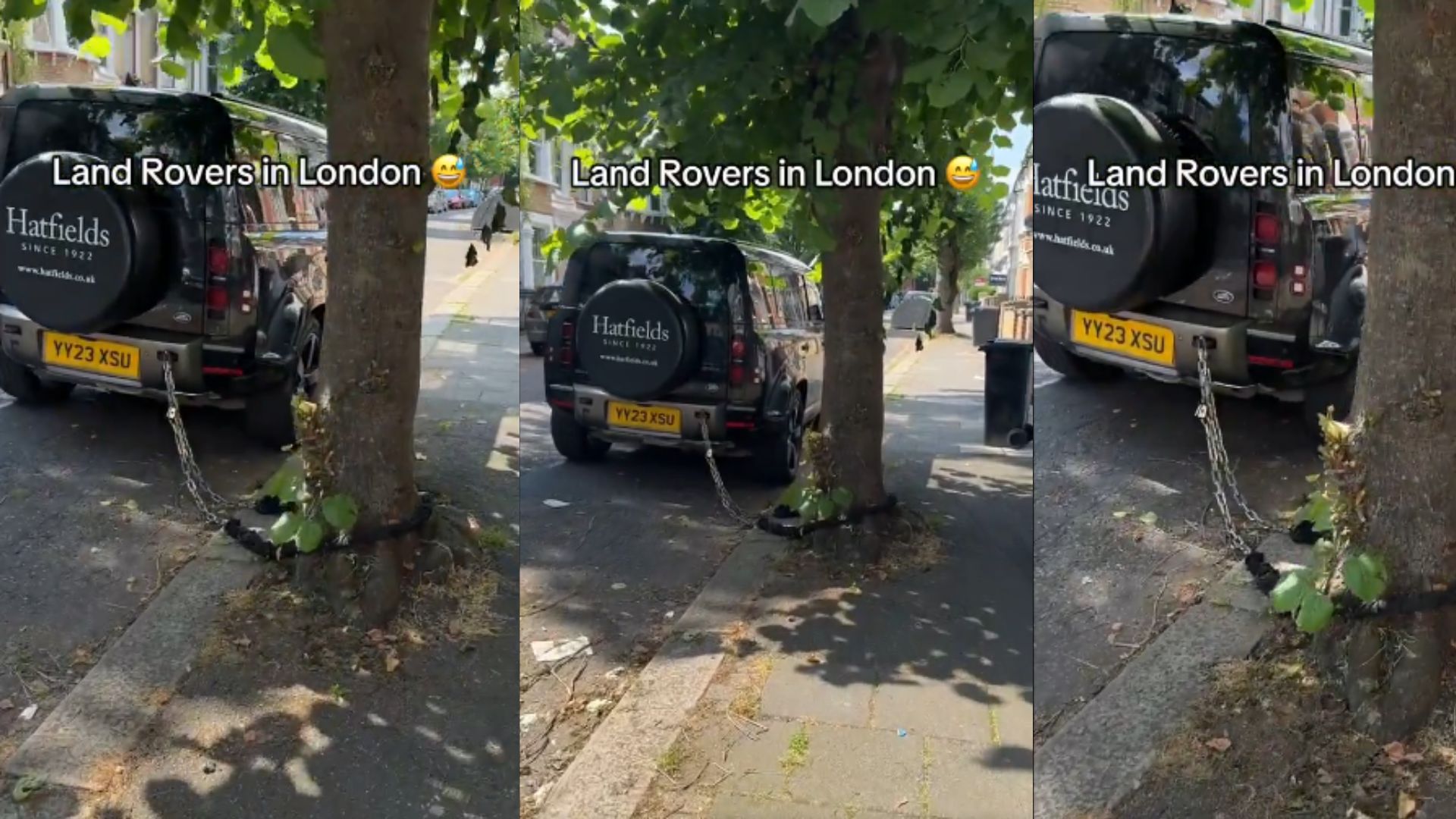
Jaguar Land Rover just told investors it’s bringing Defender production to the United States. Most of the coverage framed this as a tariff story, and it is one, but that framing buries the more interesting part. JLR isn’t building an American factory. It’s moving into someone else’s, and the someone else happens to be Stellantis, a company with its own reasons to want the rent.
On its Q1 fiscal 2027 earnings call on August 13, JLR confirmed what a May memorandum of understanding with Stellantis had only hinted at: the two companies will collaborate on new Defender-branded vehicles engineered specifically for the American market, according to JLR’s own investor filing. A binding agreement is targeted by the end of the year. Neither company has named the plant. Speculation has centered on Stellantis’s idled Belvidere, Illinois complex and its Toledo, Ohio Jeep operation, but both remain unconfirmed.
Here’s the case for reading this as a tariff story, briefly, because the numbers are real. JLR’s own results show the tariff rate on UK-built vehicles easing from 27.5% down to 10% this year, but that’s still a real tax on every Range Rover, Discovery and UK-built Defender crossing the Atlantic. Vehicles built at JLR’s Nitra, Slovakia plant, which currently supplies every Defender sold in the US, fall under the EU’s separate tariff framework, which settled at roughly 15% this year. JLR’s finance chief, Richard Molyneux, was characteristically blunt about the fix, telling investors the company needs production on “the right side of the tariff barrier.”
That’s the press-release version. Here’s what it leaves out.
Start with how little room for error Land Rover actually has left. JLR’s own Q1 FY27 results show that Range Rover, Range Rover Sport and Defender together accounted for 80.8% of the company’s entire global wholesale volume this quarter, up from 77.2% a year earlier. Jaguar, the brand that supplies half the company’s name, is down to a single outgoing model line while its electric replacement waits in the wings. When a company’s fortunes ride this heavily on three SUVs, getting the newest one’s production strategy wrong isn’t a rounding error. It’s the whole ballgame.
Next, look at why JLR isn’t building this factory alone. Free cash flow for the quarter was negative £998 million. Profit before tax fell 68.9% year-over-year to £109 million. Some of that is the lingering cost of the cyberattack that knocked JLR’s global production offline for five weeks last September, an incident independent estimators have pegged at close to £1.9 billion in economic damage. Building a standalone American assembly plant the way BMW did in Spartanburg or Mercedes-Benz did in Tuscaloosa costs low billions of dollars and takes years to bear fruit. JLR, still climbing out of last year’s hole, doesn’t currently have that kind of patience or spare cash sitting around.
Then there’s Stellantis’s side of the ledger, which is the part that actually makes this deal make sense. Stellantis has plants and not enough product to fill them. Belvidere has sat dark since February 2023, and Stellantis’s own recent announcements about reviving it for a next-generation Jeep Cherokee pushed the restart date to 2029. The company’s stock has spent this year trading in the single digits, its former CEO was forced out in late 2024, and recent quarters have shown just how little margin for error remains. Renting assembly capacity to a foreign automaker with cash to spend and a tariff problem to solve turns idle floor space into revenue, without Stellantis committing its own capital to a new nameplate. JLR gets tariff relief. Stellantis gets a paying tenant. Neither company has to write the biggest check by itself.
There’s a detail buried in here that deserves more attention than it’s gotten: Land Rover’s own founding story runs through a Jeep. Company lore holds that Rover engineer Maurice Wilks sketched the original 1948 Land Rover using a war-surplus Willys Jeep as his test mule on his farm in Wales, convinced Rover could build something better suited to postwar Britain. Seventy-eight years later, Land Rover’s flagship off-roader is set to be assembled somewhere inside the same corporate family that still builds the Jeep Wrangler. History doesn’t usually loop back this cleanly.
One more wrinkle worth knowing if you cover, sell, insure or simply obsess over this vehicle: assembling a car on US soil doesn’t automatically erase a tariff bill. Trade rules typically require a minimum share of a vehicle’s parts, materials and labor to actually originate in the country of assembly before that vehicle qualifies for preferential treatment. Bolting a US-stamped VIN plate onto a vehicle still full of Slovak- or UK-sourced components doesn’t necessarily clear that bar. How much of the Defender’s supply chain JLR is willing to move stateside, not just where the last bolt gets torqued, will decide whether this deal solves the problem it’s being sold as solving.
Buyers should file away a second wrinkle. Nameplates built in two different factories, under two different corporate cultures, with two different supplier bases, don’t always turn out identical. It happens across the industry: different countries of assembly for the same badge can mean different parts bins, different quality-control habits, different early-build hiccups. A Nitra-built Defender and a Stellantis-built Defender sharing a nameplate is not the same thing as a Nitra-built Defender and a Stellantis-built Defender sharing a parts catalog.
None of this makes the deal a bad idea. It probably is not. It means the deal is being sold as a tariff workaround when the more accurate description is that two automakers who can’t currently afford to build alone have decided to build together. Watch which plant gets named. Watch how much local content actually moves into the supply chain. And watch whether “Defender” quietly starts meaning two subtly different vehicles depending on which side of the Atlantic assembled yours.
The tariff wall is what pushed JLR toward Stellantis. What’s keeping the deal on the table is that Stellantis needs this partnership just as much as JLR does.