
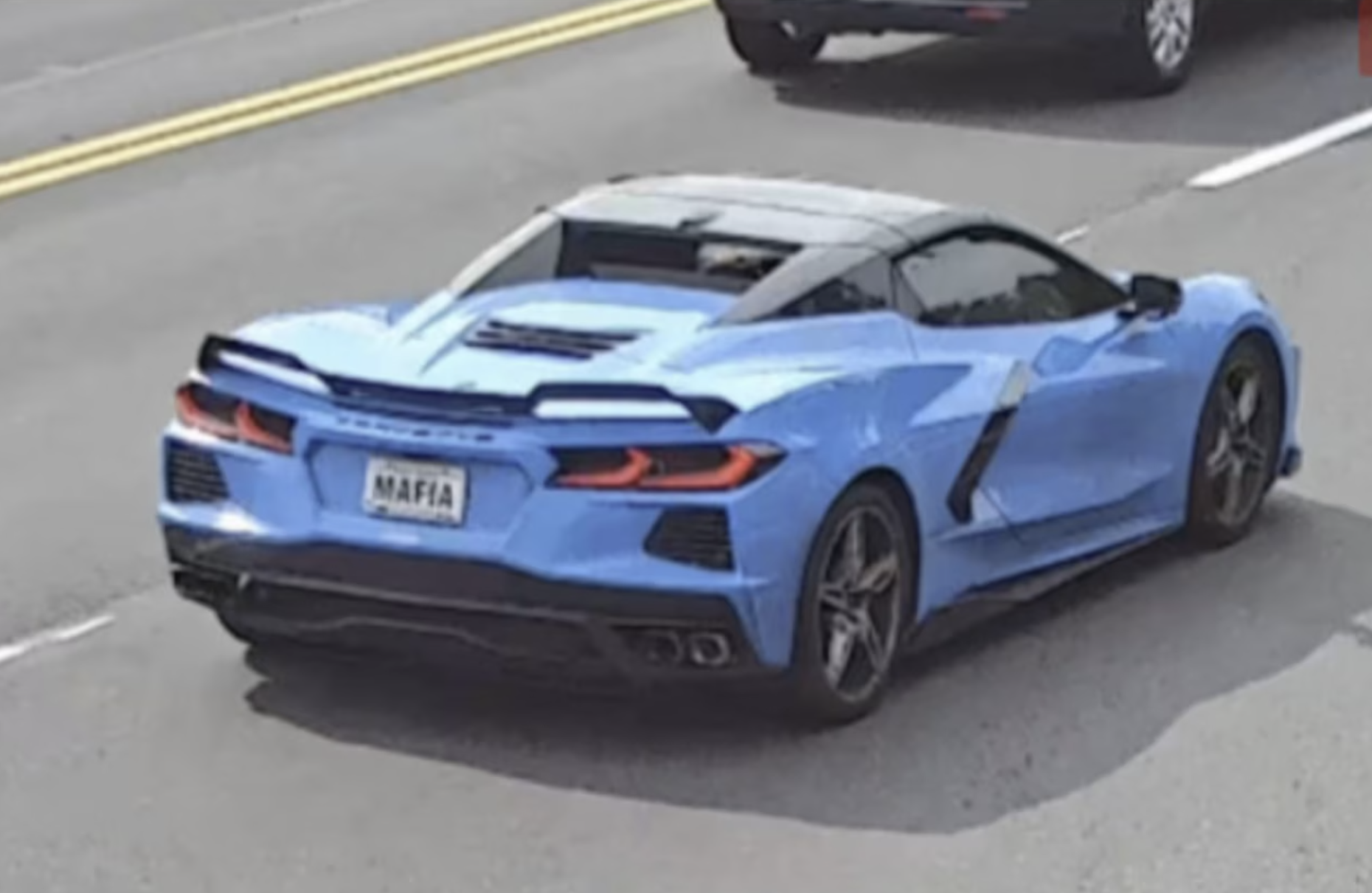
Nobody risks their own car spinning donuts in front of a hundred strangers with their phones out. That’s the detail that got buried this week under a much more clickable word: Corvette.
According to police, the sports car that spun circles through a downtown intersection in Stroudsburg, Pennsylvania, Saturday night wasn’t owned by anyone standing in that crowd. It probably wasn’t owned by the person behind the wheel, either. Stroud Area Regional Police say the Corvette had been stolen from a dealership in Rhode Island. The New York plate bolted to the back, stamped with the vanity phrase “MAFIA,” was fake. Officers who responded to 911 calls about the stunt never caught the driver. Two days later, and one state over, New Jersey State Police found the car abandoned on Interstate 80, left behind after a chase. Nobody has been arrested. The driver hasn’t been identified.
Related Articles
- eBay Airbag Ban Starts September 24: What Owners And Buyers Need To Know
- The Physics Behind Using Suspension Impulses to Break Rear Grip on Purpose
That’s a strange little crime story out of the Poconos. It’s also close to a perfect case study in how street takeovers actually work these days, and why the car spinning through the smoke almost never belongs to anyone who plans on keeping it.
Buyer’s guide: Best Car Security Cameras in 2026 for Parking and Theft Protection
Start with the question nobody in that crowd of a hundred was asking: how does a brand-new Corvette walk off a dealer’s lot in Rhode Island and end up in Pennsylvania a few days later wearing a fake plate? The uncomfortable answer is that it has gotten easier, not harder, even as manufacturers keep piling on anti-theft technology. Modern keyless ignition systems will start a car for anyone holding the right signal, and thieves have gotten good at either cloning that signal or reprogramming a blank fob through a car’s diagnostic port using tools built for locksmiths and dealerships. The Auto Wire has walked through exactly how that trick works, and separately, how a nearly identical method turned into a $1.3 million theft ring built around stolen Corvettes and a getaway kit that cost almost nothing. Dealership lots, with dozens of cars parked outside overnight and keys or fobs often sitting one pegboard away, are a softer target than most owners’ driveways.
Here’s the part that should bother you even if you’ve never been near a street takeover: that theft isn’t really Chevrolet’s loss, and it isn’t fully the dealership’s loss either. Dealers don’t own most of their inventory outright. They finance it through floor plan loans, then insure it against theft and damage through garage and inventory policies while it sits on the lot waiting for a buyer. When a car disappears off that lot, it’s the dealer’s insurer that eventually cuts the check. Do that often enough across enough dealerships, and premiums climb. Nationally, insurers recovered more than 208,000 stolen vehicles last year alone, according to the National Insurance Crime Bureau, and dealership theft is a routine line item in that number, not a rare exception. Those premiums are simply a cost of doing business, which means they get built into the next invoice, the next fee, the next sticker price. The Corvette that did donuts in Stroudsburg will likely cost people who never went near Pennsylvania a little bit of money, spread thin enough that nobody will ever notice it happening.
The fake plate matters just as much as the missing driver. “MAFIA” reads like a joke, but a plate that doesn’t belong to the car defeats almost every automated system built to track it: toll gantries on I-80 and the Pennsylvania Turnpike, red light cameras, and the growing network of license plate readers that insurers and police now lean on to recover stolen vehicles. The Auto Wire has reported on how much surveillance infrastructure exists specifically to close that gap, and on the insurance industry’s own mixed record defending it. A car that can’t be matched to a real plate is, for practical purposes, invisible right up until it crashes or gets abandoned.
None of this happens by accident. Street takeovers have increasingly become a magnet for cars nobody intends to keep, because a takeover is built to be filmed, and a stolen car is disposable content. The Auto Wire has covered organized rings that steal muscle cars specifically to burn through them at takeovers, and reporting on crews recruiting minors as low-risk, low-consequence drivers for exactly that purpose. A Corvette doing donuts on borrowed time isn’t reckless the way a teenager showing off in his dad’s car is reckless. It’s reckless the way a firework is reckless: it was never going to survive the show, and everyone involved already knew that.
Related Articles
- This ‘Trading Floor’ For New Cars Just Went Bankrupt. Federal Records Show It Wasn’t Even Legally Cleared To Move Its Own Inventory
- Chrysler Just Won a Warranty Lawsuit Without Anyone Ever Checking Its Math
That’s also why the crackdowns cities and states have leaned on lately tend to land hardest on spectators and organizers driving their own cars, not on the stolen one doing the actual donuts. San Diego police now impound and destroy vehicles pulled straight out of takeovers. Other cities have simply started banning the gatherings outright, permit or no permit. Both approaches assume there’s a car with a real owner attached to it. You can’t forfeit a Corvette that’s already sitting abandoned on the shoulder of I-80 with a fake plate bolted to it. The enforcement tool works fine. It just isn’t aimed at the vehicle that actually started this story.
Forget the smoke and the crowd. The real story is a dealership in Rhode Island that’s out one Corvette, an insurer somewhere quietly writing a check, and a driver who never intended to still have this car by Monday. The takeover was never really about the Corvette. The Corvette was just the prop nobody was going to have to return.
Image via troud Area Regional Police Facebook