
Come September 24, the world’s largest parts swap meet stops trading in the one component nobody should ever buy blind. eBay has told sellers that airbags, airbag inflators and steering wheel airbag covers are off the platform entirely, for every seller, worldwide. The company’s seller notice frames it as the result of a “comprehensive review of the risks these products may pose to eBay users,” which is corporate for we looked at our legal exposure and did not like the view.
The ban is broader than the counterfeit problem that prompted it. eBay’s updated policy prohibits new, used, deployed, rebuilt and recalled airbags alike. A pristine, never-fired driver’s module pulled from a low-mileage donor car by a certified recycler is now just as banned as a rebuilt fake. What survives is the electronics: control units, crash sensors, diagnostic modules and passenger occupancy sensors. Outside the US, anyone can list those. Inside the US, only sellers already holding pre-approval can, and eBay isn’t taking new applicants. Sellers who miss the deadline get their listings pulled automatically, without a policy strike, but relisting invites account restrictions.
The federal paper trail behind the decision
This didn’t come out of a strategy offsite. On January 30, NHTSA served eBay with a Special Order under investigation EA25-005, and the document is worth reading if you want to understand corporate risk calculus. The agency told eBay it believed modules built with substandard DTN inflators “have been sold by sellers on eBay Inc.’s website,” then demanded the owner names and contact details behind specific seller accounts, every buyer who purchased from them, and a decade of records covering any listing eBay learned had moved a counterfeit or substandard airbag product, including associated deaths.
Related Articles
- A Texas Restoration Shop Promised Better Engines. It Delivered a 60-Year Prison Sentence Instead
- Toyota’s $283.7M Vietnam Expansion Is a Hybrid Plan, Not an EV Plant
It also asked eBay to explain, in writing, how it verifies that a listed airbag has never been deployed or rebuilt, what software and AI it uses to screen listings, how a seller earns and loses “approved” status, and whether it enforces hazmat shipping rules. The stick attached: civil penalties of $27,874 per day, capped at roughly $139.4 million for a related series of violations, plus criminal exposure up to 15 years for falsifying a response. Answering all seventeen requests honestly, forever, for a category that generates modest revenue is an obviously bad trade. Deleting the category is cheaper.
Why these inflators kill instead of cushion
An airbag inflator is a small pyrotechnic pressure vessel. Solid propellant burns in milliseconds, gas floods the cushion, and the steel housing is engineered to contain the combustion event while venting through calibrated ports. Get the propellant chemistry, the weld quality or the housing metallurgy wrong and the housing becomes the projectile. That is the entire Takata lesson, repeated by a different supply chain.
NHTSA issued a final decision in April banning the sale and import of frontal driver inflators marked DTN60DB, the first equipment ban the agency has ordered in two decades. Its running crash tally now stands at 13 ruptures, ten deaths and three severe injuries, spread from Dallas to Toledo to Hayward, all in Chevrolet Malibus and Hyundai Sonatas so far. The inflators are marked with the abbreviated name of Jilin Province Detiannuo Safety Technology. The company told the agency it never sold them into the US and suggested the parts may be counterfeits of its own product, which NHTSA correctly noted changes nothing about whether they rupture.
The truly ugly part is enforcement. These inflators entered the country outside any factory supply chain, so they aren’t tied to a VIN. Punch your VIN into the recall lookup and you get a clean bill of health regardless. A conventional recall is effectively impossible because no list of affected vehicles exists.
What a good technician actually looks for
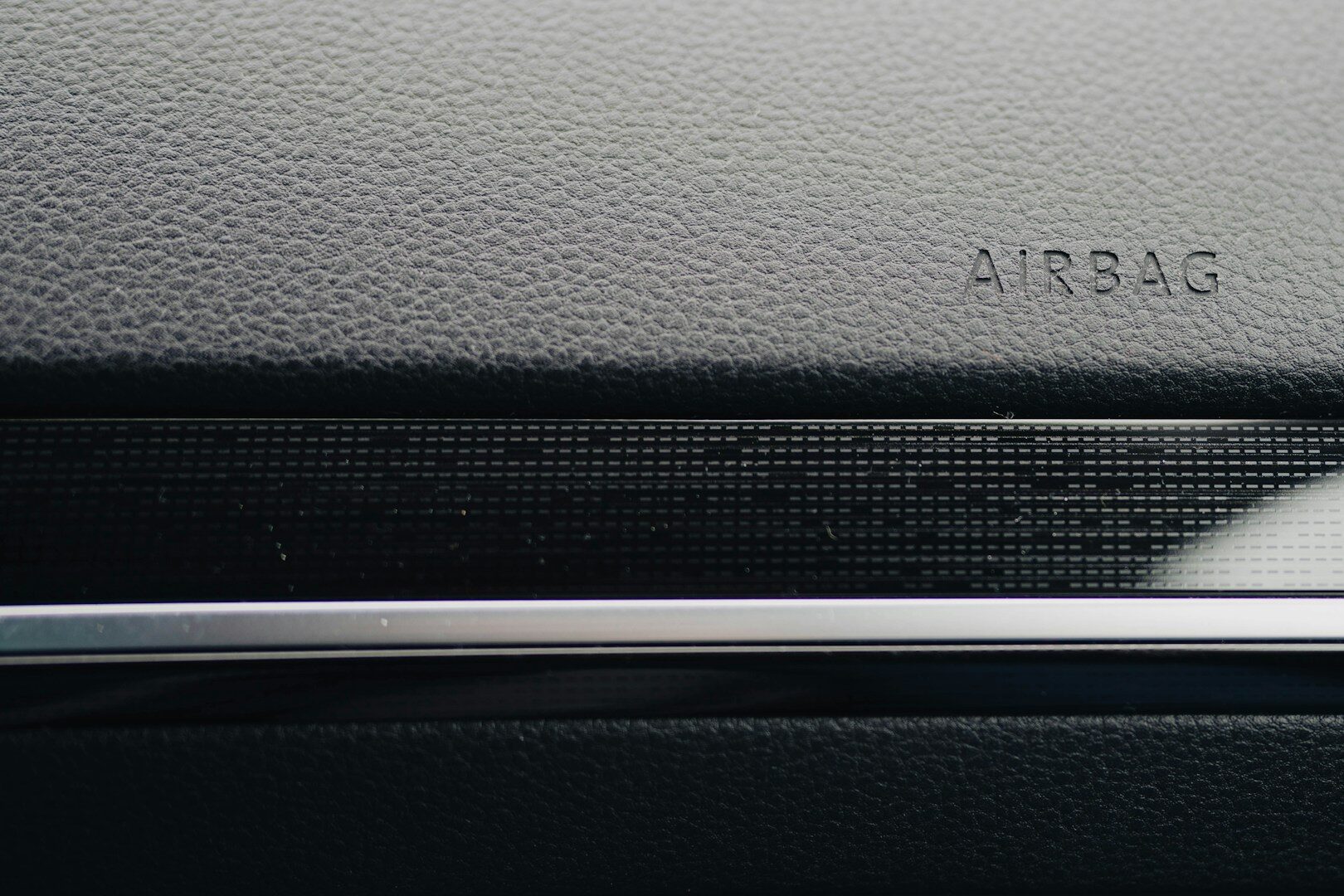
NHTSA’s technician guidance is the most useful document in this whole mess, and it reads like a forgery-detection manual. The tells include trim cover vinyl with the wrong texture or poorly defined SRS lettering, missing tear seams in the cover, connector wire colors that don’t match OEM, duplicate barcode labels appearing on multiple inflators, and grind or tool marks on fasteners. The standout: backing plates drilled full of extra holes so one module can be forced into a wide range of vehicles. Universal fitment is a red flag on a device engineered around a specific steering wheel geometry and a specific deployment curve.
The guidance also flags rebuilt units assembled from previously deployed hardware, where the metal has already been heat-cycled and stretched, and where the SRS warning lamp has been fooled with resistors or diodes so the dash stays dark. If your airbag light went out after a cheap repair without the module being replaced, that is not good news.
Two warnings buried in that document deserve amplification. Do not probe or electrify airbag connectors, because they can detonate. And do not tear into your own steering wheel to look.
Who eats the cost
Nobody good. Hyundai’s service bulletin on suspect DTN inflators tells dealers plainly that inspection is not a recall or warranty campaign and gets performed at customer expense. NHTSA says the same about replacement. Buy a used Malibu with an undisclosed airbag deployment in its past and you may be paying for a diagnosis and a genuine module out of pocket.
There is an insurance wrinkle worth acting on. NHTSA’s guidance instructs technicians to have customers call their insurer and ask whether OEM replacement airbags were verified during a prior claim, and to demand written proof from the shop that did the work. If you bought a car repaired under someone else’s claim, that paper trail is the cheapest verification available.
The legitimate recyclers are collateral damage
Professional dismantlers pulling undeployed OEM modules from clean donor cars were the responsible end of this market, and they just lost a national storefront. The Automotive Recyclers Association, which built certification, training and recall-verification standards alongside eBay’s approved-seller program, said in its public statement that it respects the decision while noting lawful over-the-counter airbag sales continue under state law. Translation: the parts still exist, the transactions just move offline and local, where nobody is screening them at platform scale.
Related Articles
- BYD’s Profit Jumped 30% While Sales Fell — Turns Out That Was the Plan
- Xiaomi’s European Launch Plan: What Its New Global Site Reveals and Hides
Shipping remains its own regulatory maze regardless. Inflators and modules are hazardous materials, generally moving as UN3268 safety devices in Class 9, with classification, packaging and communication requirements that a casual seller almost certainly isn’t meeting.
What the ban doesn’t fix
Marketplace liability law explains why eBay had room to move slowly for years and why it eventually chose to move anyway. Meanwhile the manufacturer verdicts are landing: Morgan & Morgan, representing the estate of a 22-year-old Florida driver killed by a ruptured DTN inflator in a minor 2023 collision, announced a verdict of $603 million against the Chinese manufacturer in June. Collecting it from an entity that skipped its own trial is a different project.
The practical takeaway for buyers hasn’t changed, it’s just gotten more urgent. Pull a history report before you buy anything used, and treat any prior deployment, theft claim or total-loss event as a reason to pay a dealer or a trusted shop to verify the module before you drive the car. Closing one listing category doesn’t remove the fakes already installed in American cars, and NHTSA has no idea how many that is.