
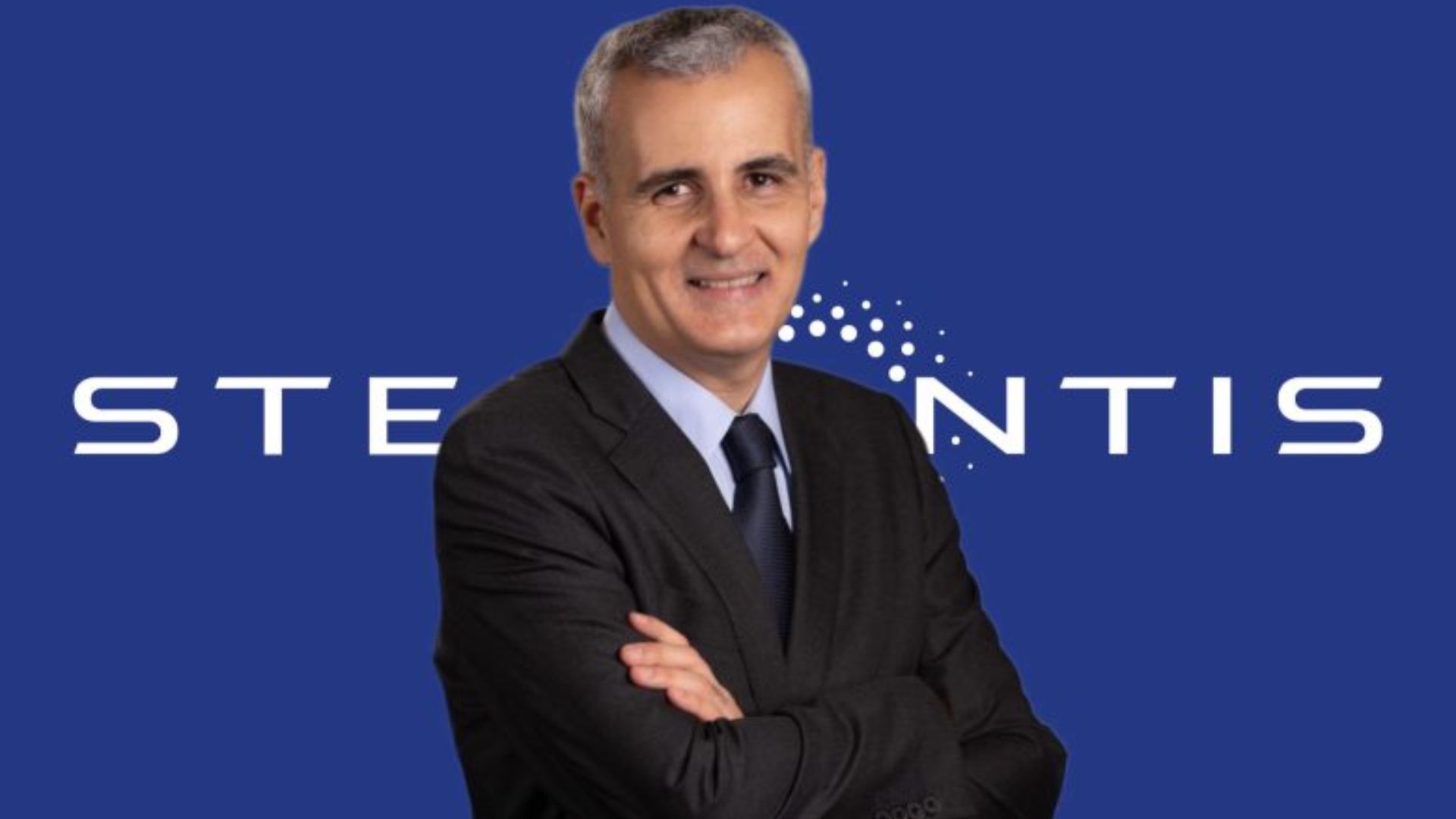
Antonio Filosa didn’t say anything unusual when he told stock analysts on September 10 that Stellantis sees “the world divided into two things.” CEOs drop lines like that at investor conferences constantly. It’s built for a highlight reel, not scrutiny.
Scrutinize it anyway, using nothing but the company’s own disclosures, and something more interesting turns up than a talking point about geopolitics. Stellantis hasn’t just described two markets with different rules. It has built two different ways of engineering, sourcing, and even owning the factories that make its cars, and the line separating them is drawn less by conviction than by a tariff schedule.
What Filosa Actually Described
At the Jefferies Global Industrials Conference in New York this month, Filosa framed the split this way: in the United States, Stellantis relies entirely on domestic engineering and development. Everywhere else, starting with Europe, it leans on outside partners, specifically the Chinese automakers Leapmotor and Dongfeng, both now deeply embedded in how the company builds cars for non-American customers.
That’s not new thinking dressed up for an analyst audience. It’s the product of three years of dealmaking that Stellantis has documented, announcement by announcement, in its own newsroom. In October 2023, the company paid roughly €1.5 billion to become Leapmotor’s largest shareholder and launched Leapmotor International, a 51/49 joint venture with rights to sell and build Leapmotor vehicles everywhere outside Greater China. That venture shipped more than 40,000 Leapmotor-badged vehicles in Europe in 2025 alone, and has since expanded into Mexico, South America, Asia-Pacific and the Middle East.
Then, this past May, the arrangement moved from selling Chinese-designed EVs to something closer to merging engineering and manufacturing outright. Stellantis and Leapmotor announced plans to add a new electric Opel SUV to the assembly line at the Figueruelas plant in Zaragoza, Spain, a factory that has produced more than 10 million Opel Corsas since 1982, running it alongside Leapmotor’s own C-SUV. The new Opel is expected to rely on components sourced through the joint venture’s Chinese supply chain to hit an affordable price. Stellantis also disclosed that it’s discussing handing ownership of its Villaverde, Madrid plant to Leapmotor International’s Spanish subsidiary outright.
Ten days after that, Stellantis and Dongfeng, a partner dating back 34 years to the earliest days of PSA’s China operations, went further. The companies announced plans for a European joint venture covering sales, manufacturing, purchasing and engineering, aimed at localizing Dongfeng’s Voyah-branded electric vehicles at the Rennes plant in France. That same week, Stellantis confirmed its long-running Dongfeng joint venture in Wuhan will build new Peugeot- and Jeep-branded electric vehicles for China and export markets starting in 2027.
Read that last part again. Jeep, the brand built on Willys military heritage and Moab rock-crawling credibility, is about to be engineered and assembled in Wuhan with a Chinese, state-linked automaker, for sale outside the United States.
The Other Half Of The Ledger
On the very day Stellantis announced the Dongfeng engineering partnership in Europe, it issued a second, much quieter release: a non-binding agreement with Jaguar Land Rover to explore product-development collaboration in the United States. No equity changed hands. No joint venture. No factory transfer. Just an agreement to keep talking, with a British-designed, Indian-owned company carrying none of the Chinese ownership entanglements attached to Leapmotor or Dongfeng.
That contrast, announced hours apart on May 20, is the clearest evidence of the line Filosa described in September. In Europe, Stellantis will co-engineer vehicles, share purchasing systems, and even consider signing away plant ownership to Chinese-linked partners. In the United States, the extent of outside collaboration on the table is an exploratory memo with a British luxury brand, while the actual product plan rests on a record $13 billion domestic investment announced in October 2025, aimed at expanding U.S. capacity by 50 percent, reopening the Belvidere, Illinois plant for two new Jeep models, and building a new four-cylinder engine in Kokomo, Indiana.
Why The Line Falls Exactly There
This isn’t cultural caution. It’s arithmetic, and it shows up on Stellantis’s own income statement. In its second-quarter 2026 results, the company disclosed a net tariff headwind now estimated at €1.0 billion to €1.2 billion for the year, even after a refund tied to the International Emergency Economic Powers Act returned €0.4 billion in the first half. Tariff exposure tied to Chinese-linked content entering the U.S. market is a real, quantified cost, large enough to justify keeping American engineering walled off from Chinese supply chains entirely. Europe has its own tariffs on Chinese-built EVs, but Stellantis found a workaround its American operation doesn’t have: build the Chinese-designed cars, and the parts that go into them, inside the European tariff wall, in Spain and in France, rather than trying to import them.
That’s the detail easy to miss in a short wire item about a CEO’s remarks at a conference. This isn’t Stellantis choosing nationalism in Detroit and globalism in Amsterdam. It’s a company pricing two different tariff regimes and building two different supply chains to match, then presenting the result to Wall Street as strategic philosophy.
What It Means For Owners, Dealers And The Industry
For American Jeep and Ram buyers, the near-term effect is a wave of new domestic product: two new Jeeps out of Belvidere, a next-generation Durango out of Detroit, a new midsize truck out of Toledo. Those vehicles will carry the cost structure of domestic-only engineering, which historically runs slower and pricier than development cycles subsidized by a Chinese joint-venture partner’s component costs.
For European buyers, and eventually customers in Mexico, South America and the Middle East, where Leapmotor and Dongfeng vehicles are already expanding, the payoff is real. European-market EVs increasingly carry price tags shaped by Chinese manufacturing economics rather than legacy European labor and engineering costs, the same dynamic Volkswagen has been sounding alarms about elsewhere in the segment.
For American suppliers and dealers, there’s a quieter lesson buried in Stellantis’s own numbers. The $13 billion U.S. investment is explicitly conditioned on completing incentive negotiations with state and local governments, meaning the domestic-engineering commitment Filosa touts to analysts is, on paper, still partly contingent on money that hasn’t been finalized. Anyone who has watched how Stellantis manages its supplier relationships through a rough financial stretch knows how quickly those contingencies can shift.
The Takeaway
Filosa’s two-worlds framing sounds like a talking point. Stellantis’s own disclosures show it’s closer to a balance sheet. The company didn’t draw a line between America and the rest of the world because of belief. It drew the line because tariffs made it profitable to draw it there, and it will keep the line exactly where the numbers say to keep it, right up until a factory in Illinois or a joint venture in Wuhan tells a different story.