
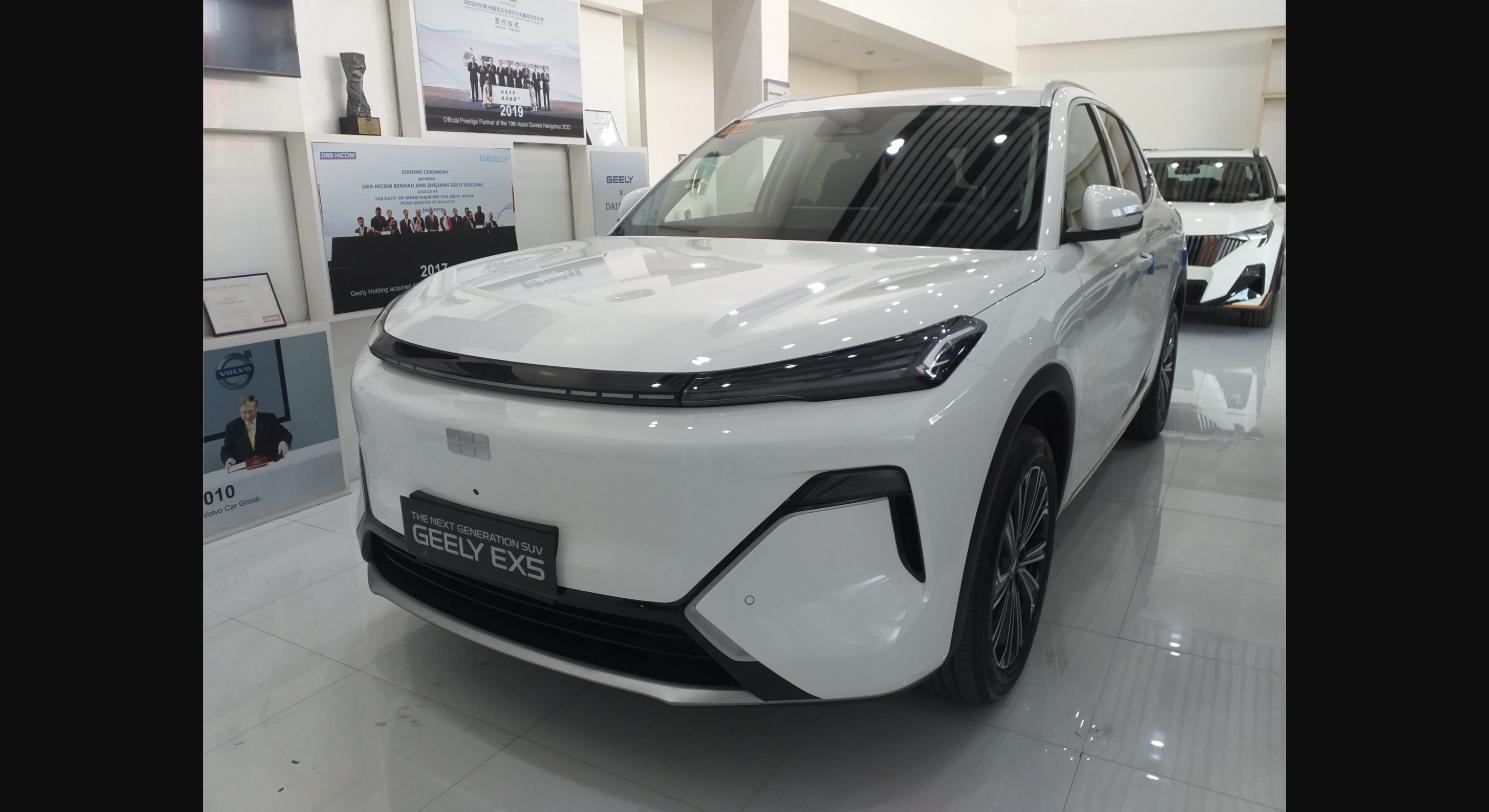
Geely just built its first car in the Western Hemisphere, and it didn’t spend a dollar breaking ground on a new factory to do it.
The Geely EX5 EM-i, a plug-in hybrid SUV, has started rolling off the line at the Ayrton Senna Industrial Complex in São José dos Pinhais, Brazil — a plant Renault opened in 1998 and has run continuously ever since. Renault Geely do Brasil, the joint venture that now controls the site, confirmed the milestone this week and added roughly 2 billion reais (about $389 million) in fresh investment on top of the 3.8 billion reais it had already committed when the partnership was sealed last November.
That’s the whole story in one sentence: Geely didn’t build a factory. It bought into one.
A Plant Renault Already Had
Under the November 2025 agreement, Geely Holding Group and Geely Auto together picked up a 26.4% stake in Renault do Brasil, with Renault keeping majority control and consolidating the business on its own books. In exchange, Renault gets to build its own future vehicles — including a flex-fuel hybrid and, in 2027, its first model on Geely’s Global Intelligent Electric Architecture — while Geely gets a finished factory, an existing dealer network, and a market where it previously had almost no footprint.
The Ayrton Senna complex wasn’t sitting idle waiting for a Chinese partner. It’s a 2.5-million-square-meter site that has already built more than four million vehicles, including the Kwid, Duster, Oroch, Kardian and Boreal, and it employs roughly 5,000 people. What changed is that the plant was re-engineered during 2026 to handle Geely’s GEA platform alongside Renault’s existing combustion and flex-fuel lines, so the same factory floor can now build a Duster and an EX5 EM-i without missing a shift.
The EX5 EM-i itself is a compact SUV — 4.74 meters long, a 262-horsepower hybrid system, up to roughly 112 kilometers of electric-only range — that already competes with the Jeep Compass and Toyota Corolla Cross as an import. Local production is what turns it from a curiosity into a contender: it lets Renault Geely do Brasil price and stock the car like a domestic model instead of an import, and it clears the runway for a second model, the EX2 electric hatchback, to start building at the same plant before the end of the year.
That flex-fuel detail matters more than it sounds. Brazil has required new gasoline-powered cars to run on ethanol, gasoline or any blend of the two since the late 1970s, when the country built an entire fuel infrastructure around sugarcane ethanol in response to the oil crisis. A hybrid that can’t run on ethanol doesn’t have much of a market there, which is exactly why Renault, not Geely, is the partner engineering that piece of the lineup.
Why This Beats Building From Scratch
Brazil isn’t a side market. It accounted for more than 40% of all Latin American vehicle registrations in the first half of 2025, and every automaker selling electrified vehicles there is working around the same problem: steep tariffs on fully built imports. Building locally, or partnering with someone who already does, is the only way around that math.
Geely could have taken the other route. BYD is building its own plant from scratch at a converted site in Camaçari, wholly owned, full control, full margin, and all the execution risk of standing up a new supply chain alone. Geely’s route through Renault trades some of that control and margin for speed: signed agreement to finished car in under eleven months, a pace Geely senior vice president Victor Yang called close to a “miracle.”
The Same Move, Different Partners
This isn’t a one-off, and it isn’t unique to Geely. Ford ran into an almost identical problem in Spain, where it was left with an underused plant in Valencia. Its answer was selling Geely a 34% stake rather than let the factory sit half-empty. Stellantis has leaned on a Chinese partner for growth too: Leapmotor supplied most of the European sales gains Stellantis was bragging about earlier this year. In each case, the legacy automaker gets a tenant for capacity it can’t fill alone, and the Chinese partner gets a market entry that doesn’t look anything like an import.
It’s worth noting the scale this is happening at: Geely sold 640,000 vehicles outside China through the first eight months of 2026, up more than 150% year over year, and that growth is arriving almost entirely through partnerships like this one rather than new plants Geely owns outright. The factory came first, and the car is just what filled it.
What This Really Means
A minority stake in somebody else’s underused factory is now a faster, cheaper way for a Chinese automaker to go global than building a new plant of its own. Brazil, with its tariff wall and a market of more than 200 million people, was always going to be one of the first places that strategy got tested at real scale, and it worked in under a year.
Which approach would you bet on holding up longer: an automaker that owns its factory outright, or one that rents its way into someone else’s?