
For years, the shrinking of Germany’s auto workforce has come with a ready-made explanation: electric cars need fewer parts, so the people who make the missing parts lose their jobs. It’s a tidy story. The industry’s latest casualty doesn’t fit it.
On September 9, the district court in Essen ordered preliminary insolvency measures for Prinz & Co. GmbH Stahlrohre, the Wickede-based company at the center of the family-owned Prinz-Mayweg precision tube group, and appointed attorney Dr. Christian Holzmann as provisional administrator (case 161 IN 116/26, published through Germany’s official insolvency notice portal). The company says it was founded in 1896. On its own website, it lists what it makes for the auto industry: tubes and tube components for seating, dashboard cross-car beams, steering components, locking systems, tubular frames and shock absorbers.
There isn’t a piston, a fuel line or an exhaust pipe on it.
The parts that don’t go away
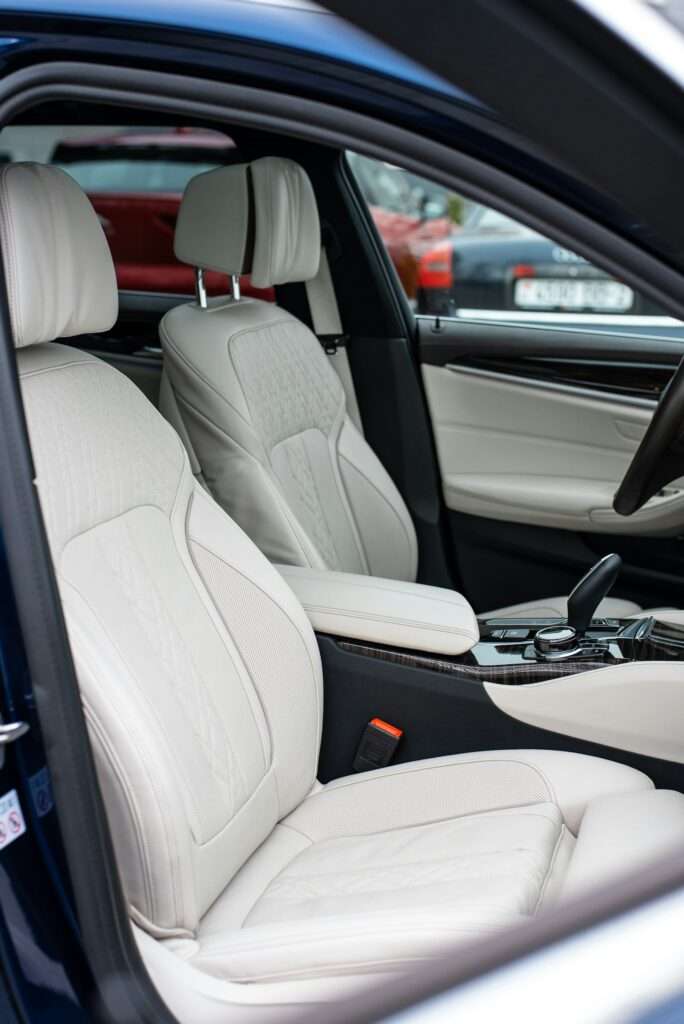
A battery-electric car deletes a long list of hardware: the fuel system, the exhaust, most of the transmission, the cooling plumbing that surrounds an engine. It does not delete the seat you sit in. It doesn’t delete the steel beam hidden behind the dashboard that carries the steering column, the instrument panel and the passenger airbag. It doesn’t delete the dampers at each corner, and EVs, which usually outweigh comparable gas models, lean on those at least as hard.
Prinz-Mayweg’s own tagline is that there’s a piece of the company in every car. That’s the point. This is a supplier whose product line is almost entirely powertrain-neutral, the kind of company that should ride out an electrification transition relatively unscathed.
You can take the engine out of a car. You can’t take out the seat.
So when a German auto supplier like this slides into insolvency, the drivetrain is not the diagnosis. Something more ordinary, and more stubborn, is going on.
What actually broke: volume and heat
The court notice doesn’t list causes. Statements attributed to the provisional administrator in German reporting point to strained liquidity, higher raw-material and energy prices, high fixed costs and a sharp drop in revenue over the summer. Neither the company nor the court has published a fuller account, so treat the specifics as preliminary. But every item on that list is a volume or cost problem, not a technology problem.
Start with volume. According to the German automakers’ association VDA, Germany built 5.75 million passenger cars in 2016. In 2025, it built 4.15 million, about 28 percent fewer, still 11 percent below 2019 and roughly flat for a third straight year. A tube supplier gets paid per part, per car. Every car that isn’t built is revenue that never arrives, while the plant, the machines and the payroll cost the same as they did at full volume.
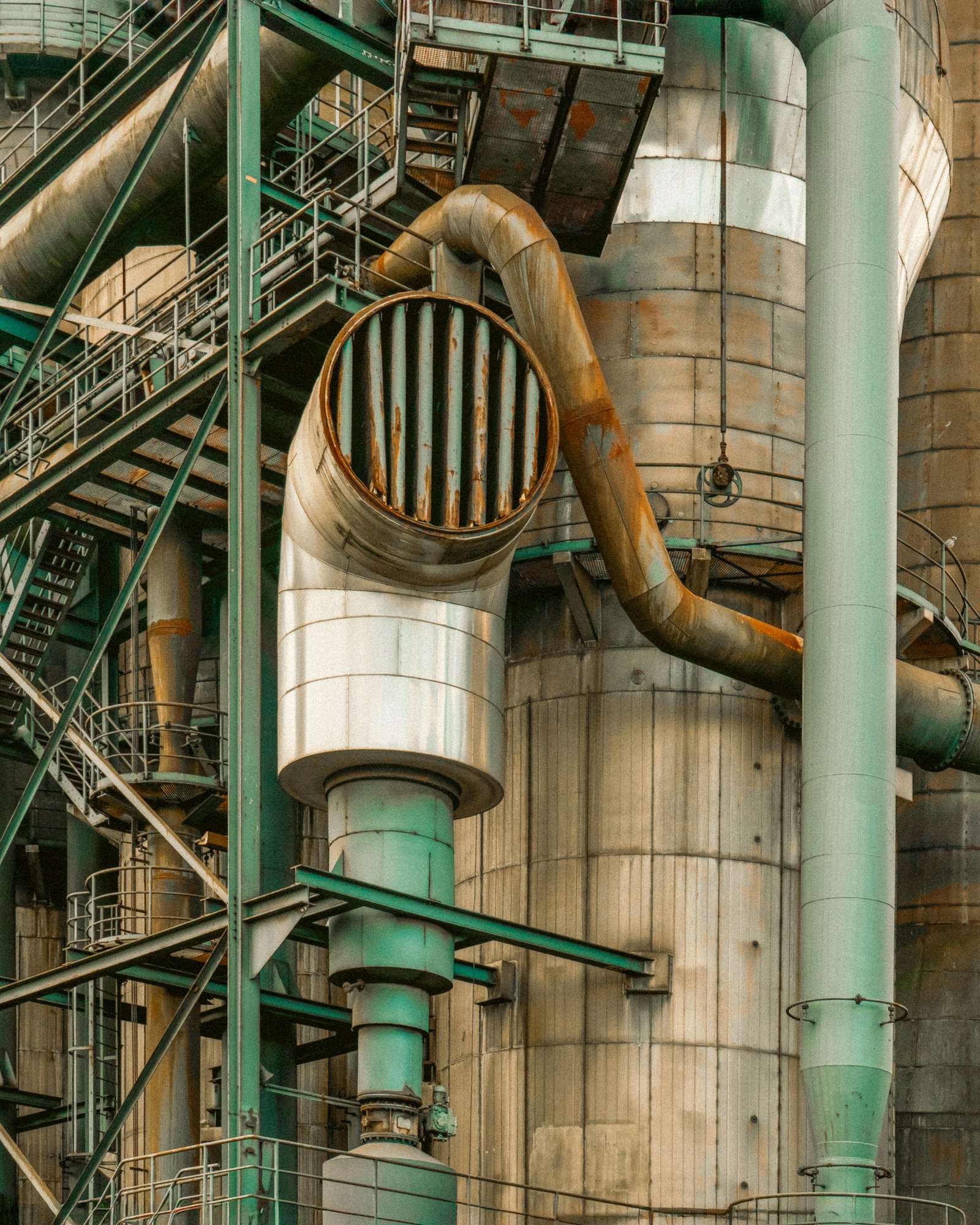
Then there’s the heat. Precision steel tube is made by pulling tube through a die, often over an internal mandrel, to hit tight wall-thickness and diameter tolerances. Cold drawing hardens the steel as it works it, so the tube typically goes back into an annealing furnace to restore its ductility before it can be drawn again or bent into a seat frame. Prinz-Mayweg lists annealing furnaces alongside its welding lines and drawing benches, and it holds ISO 50001 energy-management certification. Energy is a cost this company watches closely, and no engineering department can design it away. Annealing steel takes a certain amount of heat, and in Germany that heat has gotten expensive.
Suppliers are bleeding faster than carmakers
The broader numbers back up what Prinz’s filing suggests. Germany’s federal statistics office, Destatis, reported in August that the auto industry employed 691,500 people at the end of the first half of 2026, down 42,300, or 5.8 percent, in a single year. That’s the lowest figure since the series began in 2005. Parts and accessories makers fell 7.6 percent to 219,500 workers, a steeper drop than the 6.1 percent decline at the carmakers themselves. Manufacturing as a whole fell 2.7 percent.
The Center of Automotive Management, a research institute led by Stefan Bratzel, calculates that 142,500 auto jobs have disappeared since the 2018 peak of 834,000, about 17 percent. According to the institute, that’s roughly the scale of loss that forecasts from 2017 expected only once electric cars reached about half the market. Battery-electric vehicles, it notes, are at roughly a quarter.
The job losses arrived on schedule for a transition that hasn’t happened yet. That means something other than the transition is doing much of the damage.
What the industry’s lobby says, and what its math says
The VDA’s own forecast is grim. In a May release, it projected that about 225,000 German auto jobs will disappear between 2019 and 2035, up from the roughly 190,000 its commissioned Prognos study estimated in 2024. Around 100,000 are already gone. The association blames high taxes and levies, expensive energy, high labor costs, bureaucracy, weak location competitiveness and the shift to electric cars, which need less complex components, and it argues that a more technology-open regulatory approach could preserve about 50,000 jobs.
By the association’s own estimate, even if Brussels granted every bit of flexibility it wants, Germany still loses about 75,000 more auto jobs over the next decade instead of 125,000. EV rules are a lever. They are not the whole machine. Prinz-Mayweg’s product catalog makes the same point without a spreadsheet.
That isn’t an argument that electrification costs nothing. It clearly hits companies that machine engine and transmission parts. It’s an argument that Germany’s cost problem would be squeezing its suppliers even if every car it built still ran on diesel. Carmakers are feeling it too, from Audi’s 7,500 planned job cuts to a Volkswagen that tops Europe’s revenue chart while restructuring, which has even agreed to sell a car factory that will turn to defense work. The difference is that a family-owned tube maker has no balance sheet to absorb it.
In Germany, “insolvent” doesn’t mean “closed”
American readers hear “bankruptcy” and picture a padlock on the gate. German insolvency law is built to keep the lights on while someone looks for a rescue. In Prinz’s case, the court restricted the company to transactions its provisional administrator approves, redirected incoming payments to him and paused most enforcement actions by creditors. The factory can keep running.
For American readers, the surprise is who covers payroll. Germany’s Federal Employment Agency pays an insolvency benefit that replaces workers’ unpaid wages for up to three months before formal proceedings open, capped in 2026 at a gross monthly wage of €8,450, according to the agency’s guidance for employees. Banks can pre-finance those wages so workers are paid on time, but only with the agency’s approval, which it links to a positive outlook for saving jobs through a restructuring. The practical effect is that a struggling supplier gets a publicly backed payroll runway of up to three months to find an investor.
That runway matters to the carmakers on the other end, too. A structural tube for a seat frame or a dashboard beam comes from a plant certified to IATF 16949, the auto industry’s quality-management standard, which Prinz-Mayweg holds, and moving production of a safety-relevant part to a new source means validating it all over again. Customers can’t swap suppliers overnight. Three months is enough time to find a buyer, or for customers to line up a second source.
Why this reaches American driveways
Prinz-Mayweg says it ships to 26 countries, including in North America. That doesn’t mean a U.S. assembly line is about to stop. There’s no public evidence of that, and the company’s customers aren’t named. But the pandemic-era chip shortage taught every car buyer that a vehicle is only as available as its least glamorous component, and the stress in Europe’s supply base is now showing up at exactly that level: small, specialized, family-owned metal shops that sit two or three layers below the brand on the hood.
When those shops disappear, the survivors get bigger and the list of qualified sources gets shorter. Consolidation like that rarely makes parts cheaper, and eventually those costs find their way into sticker prices and repair bills, no matter which country the car was assembled in.
The German auto industry’s decline is usually narrated as an electric-car story. Prinz-Mayweg says otherwise. This is a volume, cost and competitiveness story that electrification is speeding up, not causing. When a company that makes seat frames runs out of runway, it’s the economics of building cars in Germany that failed, not the engine.
Should governments and automakers step in to keep century-old specialist suppliers alive, or is this the kind of consolidation the industry has to go through?