
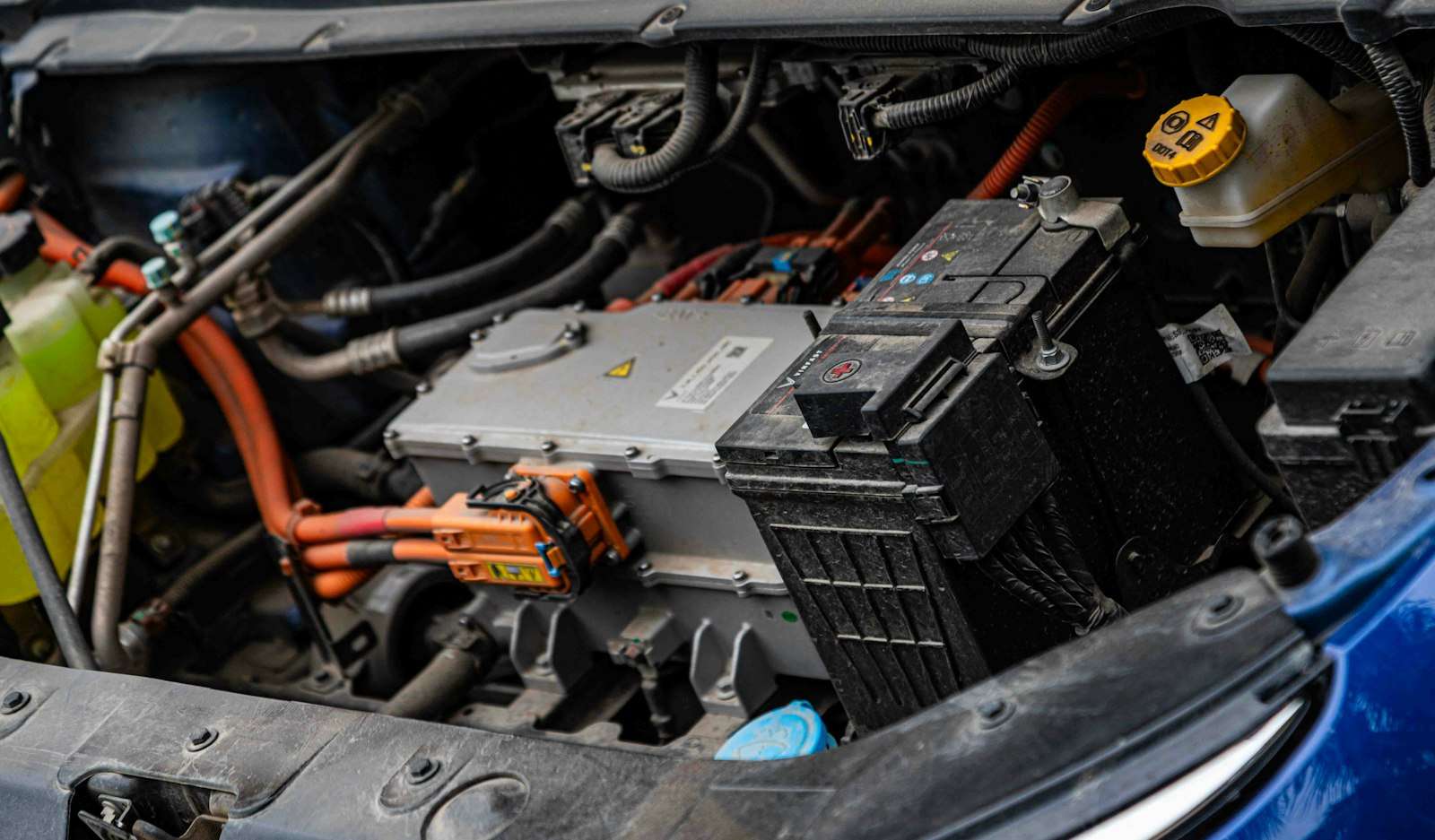
Every electric car sold in Britain is, sooner or later, a small deposit of lithium, nickel and cobalt. Because of which side the steering wheel sits on, most of those deposits are unlikely ever to leave the country.
That point is tucked into a new report from New AutoMotive, a UK transport research group, on the state of Britain’s battery industry. The headline number is £7 billion in committed investment. The more useful number is a date: the report arrives while the British government is openly asking whether to weaken its ZEV mandate, the rule that creates demand for those batteries.
Britain is debating its electric-car sales target as if it were consumer policy. In practice it works as factory-financing policy. Seen that way, the review now underway is less a relief valve for struggling carmakers than a bet on whether Britain still builds cars in 2035.
The Numbers Behind the Pitch
The report, The UK’s EV Battery Economy, looks at more than 14 commercial projects, from lithium extraction in Cornwall to cell plants in Sunderland and Somerset. It puts the sector’s annual turnover at £4.2 billion and direct employment at more than 10,000 people.
The gap matters more than those totals. New AutoMotive estimates the UK will need about 115 GWh of battery cells a year by 2035 for vehicle production and energy storage. Confirmed domestic capacity is about 56 GWh: 15.8 GWh at AESC in Sunderland and 40 GWh at the Agratas plant under construction in Somerset. That leaves a shortfall of roughly 55 GWh, which the report says means two or three more gigafactories. A 60 GWh site at Coventry, the GreenPower Park, is ready to build on but has no cell manufacturer signed.
The source deserves a caveat. New AutoMotive has long pushed for a faster move to electric vehicles, so its warning that ministers should not weaken the mandate is no surprise. The figures come from announced projects, and announced is not the same as built. Even so, the argument holds up without the advocacy, because the pressure behind it comes from the trade calendar, not the think tank.
Why a Sales Quota Decides Where Factories Go
Britain’s Zero Emission Vehicle mandate requires each carmaker’s new-car sales to include a rising share of zero-emission models: 33% this year, 52% in 2028, 80% in 2030 and 100% in 2035. Makers that fall short can buy allowances from rivals that beat the target. The government’s own figures put the average price of a traded car allowance at about £4,000 in 2024.
That trading scheme is the reason carmakers want the numbers eased. It is also the reason battery investors want them left alone. A cell plant does not sell to drivers. It sells to carmakers, and the mandate is the nearest thing Britain has to a legal guarantee that those carmakers will need millions of cells.
On August 14, the Department for Transport opened a formal review of that guarantee. The consultation, which closes October 23, lays out alternatives that include cutting the 2030 target from 80% to 70% or to 60%. Transport Secretary Heidi Alexander said the government wants targets that are “practical and back British industry.”
Fair enough. But a gigafactory is a multi-decade loan secured against a sales target that ministers can rewrite in a ten-week consultation. Lenders price that risk whether or not the target ever changes. Our reading of the consultation document is that the battery supply chain gets only passing mention, even though it has the most to lose from the answer.
The Deadline Nobody Can Push Back
For UK carmakers, the most important battery date is not 2030 or 2035. It is January 1, 2027.
Under the post-Brexit trade agreement, a British-built car can enter the EU without tariffs only if enough of its value counts as “originating” in the UK or EU. For an electric car, the battery is the most expensive part of that calculation. Stricter content rules were due earlier, and in late 2023 both sides agreed to push them back to the end of 2026 to avoid 10% tariffs on EV trade. The European Commission called it a “one-off” extension.
It was one-off in a legal sense. The Partnership Council decision that granted the delay also bars changes to those product-specific rules until January 1, 2032, apart from technical tariff-code updates. From January, the full rules for batteries and electrified vehicles apply, and they cannot be renegotiated for five years.
The report says about three in four UK-built cars are exported, mostly to Europe. A British EV with an imported battery therefore risks landing on the wrong side of a tariff wall in its main market. So when Britain decides how many gigafactories it can attract, it is also deciding how many car plants stay competitive. The sales target and the car plants cannot be separated.
American readers will recognize this pattern. Tariffs and content rules have been moving production decisions on both sides of the Atlantic, as when Ford’s Spanish plant became Geely’s way around an EU tariff.
An Island That Drives on the Left
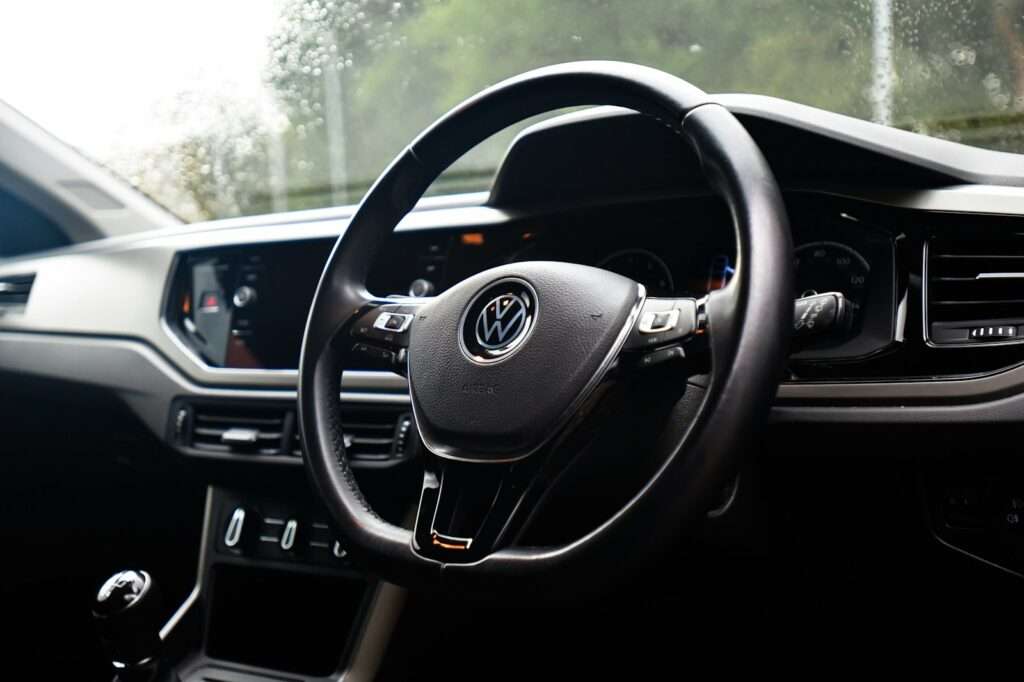
This is where the steering wheel comes in.
An old German or French car can be sold across a continent of left-hand-drive buyers. A British car is right-hand drive and sits on an island, so it has far fewer places to go at the end of its life. New AutoMotive argues this gives the UK a “captive future feedstock”: the country’s growing fleet of EVs, which the government says now exceeds two million, will mostly retire at home and bring their battery metals with them.
Recycling those packs usually means discharging them, taking them apart and shredding them into black mass, a dark powder that holds the valuable cathode and anode materials. Hydrometallurgical refiners dissolve that powder in chemical solutions and recover the metals in battery-grade form. The report cites UK recyclers Altilium and Recyclus Group and says recovery rates of 95% for lithium, nickel and cobalt are achievable, with about half the embedded carbon of newly mined material. Those figures come from the industry, but the logic doesn’t depend on them.
The catch is that Britain already exports much of its black mass to smelters in Europe and Asia, according to the report. The advantage exists on paper and leaves the country in shipping containers. One of the report’s five recommendations is to restrict those exports so domestic refiners have material to process.
One caveat. “Captive” is a matter of degree. Ireland and other markets also drive on the left, and some British used cars do leave. Even so, no large continental country can say that geography keeps most of its end-of-life battery metals at home.
Recycling economics are hard everywhere. U.S. readers have seen that with Ascend Elements. A guaranteed domestic supply of scrap packs removes one of the biggest risks: running a refinery without a reliable flow of material.
The Missing Middle
The £7 billion figure hides a large gap in the middle of the supply chain. By the report’s account, the UK has no industrial production of cathode active material or anode material, the engineered powders that make up a large share of a cell’s cost. China supplies more than 98% of lithium-iron-phosphate cathodes and more than 90% of graphite anodes, the report says.
That matters because a British gigafactory filled with imported cathode powder may still struggle to meet the content rules that take effect in January. Cell plants attract the ribbon-cuttings, but the chemistry plants in between may decide whether the cells count as British. It also explains why the report puts industrial electricity prices on its list. It asks for the British Industrial Competitiveness Scheme to start by April 2027 and cut power costs by £35 to £40 per MWh for energy-hungry refiners on Teesside and elsewhere.
Battery costs keep falling, a trend we tracked in Volkswagen’s latest efficiency push. The government’s consultation cites a global average pack price of $108 per kWh in December 2025. Cheaper packs help EV sales, but they also make it harder for a new plant in a high-energy-cost country to compete on price. Cost alone won’t justify these factories. Guaranteed demand has to.
Who Blinks
Carmakers have a real case. Missing a target costs them real money, and the government has said it wants to “take business with us on the journey.” The United States has shown how quickly the ground can shift under that kind of policy, most recently in the battle over California’s emissions waiver.
Britain’s version has one difference. Its carmakers depend on exports to a market with fixed battery rules, and its best long-term raw-material source is the used EVs already on its roads. Weakening the mandate eases this decade’s compliance bill. It also makes the rest of the supply chain harder to finance.
The country deciding how fast its drivers must switch is also deciding whether the factory that builds their next car stays in Britain. The raw material for that factory is already parked on British driveways.
Should governments set firm EV sales targets to give battery investors certainty, or keep the flexibility to ease them when car buyers push back? Where would you draw the line?