
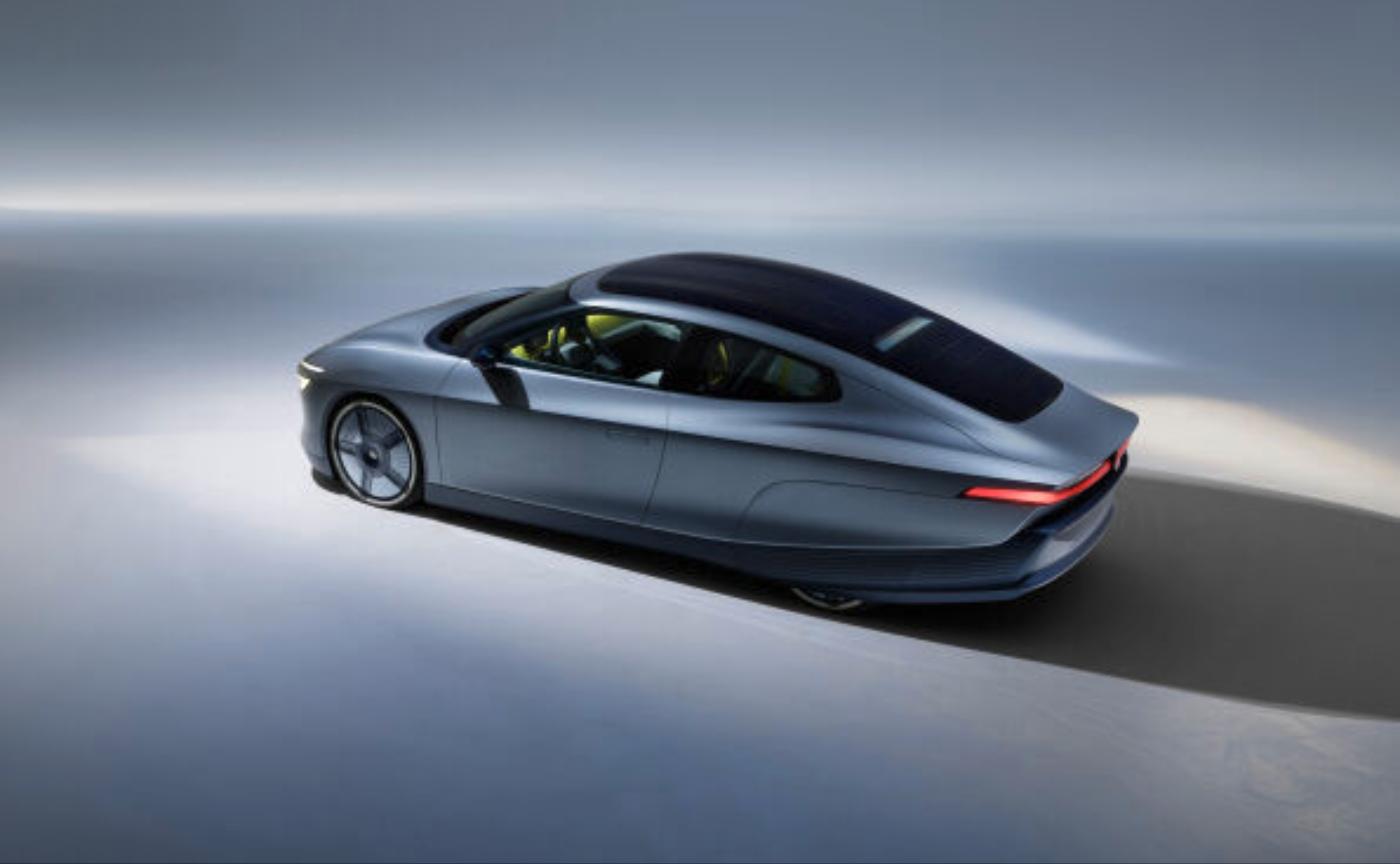
The most expensive component in an affordable electric car is not the motor, the software or the screens. It is the battery. Volkswagen has just spent an entire development program demonstrating how much of one a carmaker can leave out.
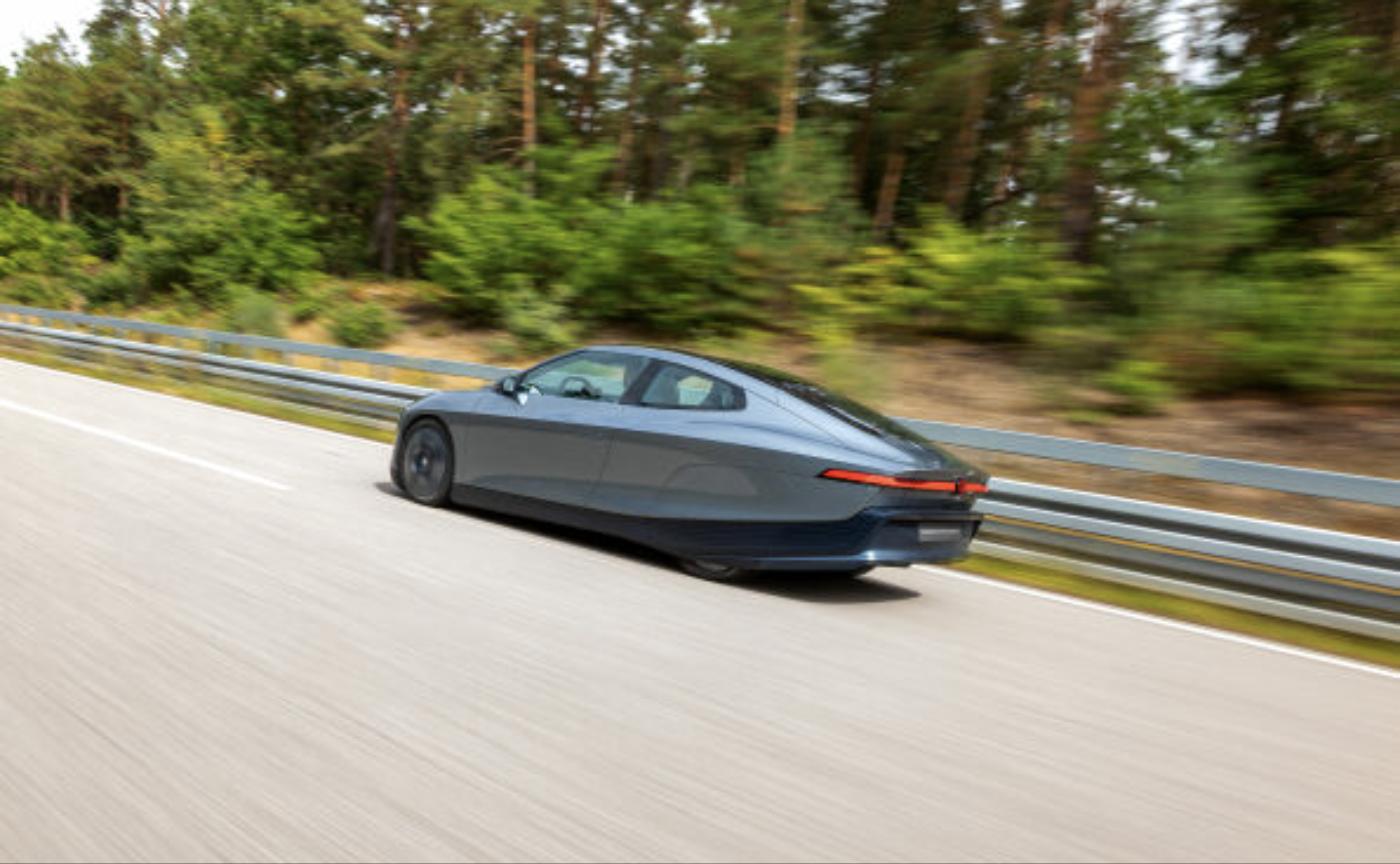
On September 14 in Wolfsburg, the company pulled the sheet off a very low two-door coupe called Mission Efficiency and claimed three records certified by Record Institute Germany: a drag coefficient of 0.158, which Volkswagen says is the lowest of any road-approved vehicle; a documented 1,278.36-kilometer run from Wolfsburg to Vienna at 6.89 kWh per 100 kilometers excluding charging losses; and the title of most economical near-production electric car yet built. It made that trip on a single charge of a 54.9 kWh battery and arrived in Vienna with 164 kilometers of range still showing, having averaged 67.72 km/h along the way.
The number Volkswagen did not print in large type is 99. That is the kilowatt rating of the motor, and it is the same permanently excited synchronous unit going into the ID. Polo, the entry-level hatchback the brand needs to sell in enormous numbers. The high-voltage battery is production hardware as well. “The new Mission Efficiency impressively demonstrates the huge potential of the drive system in our new ID. Polo,” said Kai Grünitz, the Volkswagen brand board member responsible for development.
That is the real story, and it is a finance story wearing a carbon-fiber suit. Mission Efficiency is not a halo car. It is Volkswagen’s argument that it can put a smaller, cheaper battery into a mass-market electric car and let shape, tires and brakes make up the difference.
A drag coefficient is not a measurement of drag
Start with the number everybody is quoting, because it is widely misunderstood. A drag coefficient is a ratio, not a force. It describes how cleanly a shape slips through air relative to its own size, and it says nothing at all about how big that shape is. The figure that determines how hard a car actually has to push is drag area: the coefficient multiplied by the frontal area.
Volkswagen publishes both numbers, so the comparison is easy. Mission Efficiency has a frontal area of 2.08 square meters, which puts its drag area at roughly 0.33 square meters. The ID.7, the slipperiest car the company sells, has a Cd of 0.23 and a frontal area of 2.46 square meters, for a drag area of about 0.57. So the concept is not merely 30 percent cleaner than the ID.7. In the terms that matter, it pushes about 42 percent less air.
Which explains the roofline. The car stands 1,392 millimeters tall and seats two adults in front with a strict 2+2 arrangement behind. You cannot negotiate with frontal area. You can only shrink it.
Nearly a third of the drag is hiding behind the wheels
Volkswagen has published its own breakdown of where a sedan’s drag coefficient comes from: about 50 percent from the body shape, roughly 30 percent from the wheels and tires, 10 percent from the underfloor and 10 percent from functional openings such as cooling intakes.
Read that middle figure again. The wheels and tires are nearly a third of the problem, and they are the part of a car that almost nobody thinks about aerodynamically.
Mission Efficiency’s answers there are unglamorous and, in one case, patented: fully enclosed rear wheels with lower airflow guides, flow-optimized hubcaps, rim deflectors inside the wheels that stop air circulating in the wheel housings, and a rear track narrowed by 170 millimeters so the tires sit further out of the airstream. Add active cooling flaps set flush into the nose that open only when the car needs air, plus a fully clad underbody, and three of those four categories are attacked without changing the silhouette at all.
The mirrors Volkswagen decided to keep
Nearly every aerodynamic concept of the past decade has deleted its side mirrors in favor of cameras. This one did not. Volkswagen fitted conventional exterior mirrors, aerodynamically reshaped, and said why in plain language: camera-based alternatives were more expensive without delivering a significant efficiency gain.
That is a striking verdict from the team with the most to gain from the swap. If camera mirrors cannot pay for themselves on a car built specifically to chase a world aerodynamic record, the business case for fitting them to an ordinary crossover looks thin.
American readers have a second reason to note it. Camera systems are still not permitted here as a replacement for outside mirrors. Manufacturers have petitioned for that permission, and as recently as May 2025 NHTSA was still commissioning research comparing how drivers use camera-based rear visibility systems versus traditional mirrors. Volkswagen just removed the efficiency argument from that petition.
A tire the label has no way to describe
The concept runs a tire developed from Continental’s EcoContact 7 with a rolling resistance of 4.9 kilograms per tonne. That number means nothing until you put it next to the regulation.
Under the EU tire labeling rules, the best fuel-efficiency grade a passenger car tire can earn is Class A, which covers everything at or below 6.5. There is no class above A. This tire is roughly a quarter better than the entry point for the top grade, and the sticker on the sidewall has no vocabulary for saying so.
That is worth carrying into your next tire purchase. Rolling resistance is what remains once the air has been dealt with, and it dominates at the speeds most people drive most of the time. Two tires can both wear an A and still differ meaningfully in how far your car travels on a charge or a tank. The label is a bucket, not a measurement.
Brakes with nothing left to leak
The chassis carries what Volkswagen calls a semi-dry brake system, developed with the tech supplier AUMOVIO. The front axle keeps the ID. Polo’s hydraulic brake. The rear is electromechanical, which means no rear brake lines, no brake fluid back there, and friction losses at the rear axle reduced to almost nothing.
Residual pad drag is one of those losses nobody notices, because on a gasoline car it vanishes into the fuel bill. On an electric car it eats range, and it does so every single mile.
There is also a regulatory tailwind that has gone largely unremarked. Euro 7 does something no previous European standard did: it sets limits on the particles a car produces when braking, with specific limits for electric vehicles, and it takes effect for new vehicle types 30 months after the regulation entered into force. A rear brake that holds its pads clear of the disc is not only an efficiency trick. It is a head start on a rule that treats brake dust as an emission in its own right.
Owners should note the tradeoff honestly. No rear brake fluid means one less fluid service and one less corrosion path. It also means a rear brake that can fail electronically rather than mechanically, and a repair that moves from a weekend job to a diagnostic one.
What a kilowatt-hour actually costs
Now the arithmetic the records are really in service of. Volkswagen says that above 80 km/h the concept’s consumption advantage over a standard ID. Polo exceeds 30 percent, and that Mission Efficiency traveling at 140 km/h uses roughly the same energy as an ID. Polo at 100.
Turn that around and the business case appears. A car that uses 30 percent less energy needs 30 percent less battery to cover the same distance. Argonne National Laboratory’s 2025 estimate puts a lithium-ion pack at roughly $103 per rated kilowatt-hour delivered to an automaker. Take 18 kWh out of a 60 kWh pack and you have removed something on the order of $1,800 from a car meant to sell at the cheap end of the range. No software feature, no supplier squeeze and no factory consolidation produces a saving that clean.
It is also the lever Volkswagen can actually pull today. Solid-state chemistry keeps promising a step change in energy density, and the numbers behind those announcements keep landing somewhere in the next decade. Aerodynamics ships when the tooling does. And a company that has spent the past year admitting its real problem is cost per car, right down to 2,600 different seat designs, while carrying a factory network built for volumes that no longer exist, does not have a decade to wait for the chemists.
The parts that will not reach your driveway, and the ones that will
Plenty of this car is never going into production, and Volkswagen is not pretending otherwise. It measures 4,775 millimeters long, some 722 millimeters more than an ID. Polo, yet it seats 2+2 and the rear seats are quoted for passengers up to roughly 1.60 meters tall. The doors are frameless. The fixed speakers were deleted in favor of a portable Bluetooth box, and the infotainment screen is your own phone or tablet clamped into a rail on the dash.
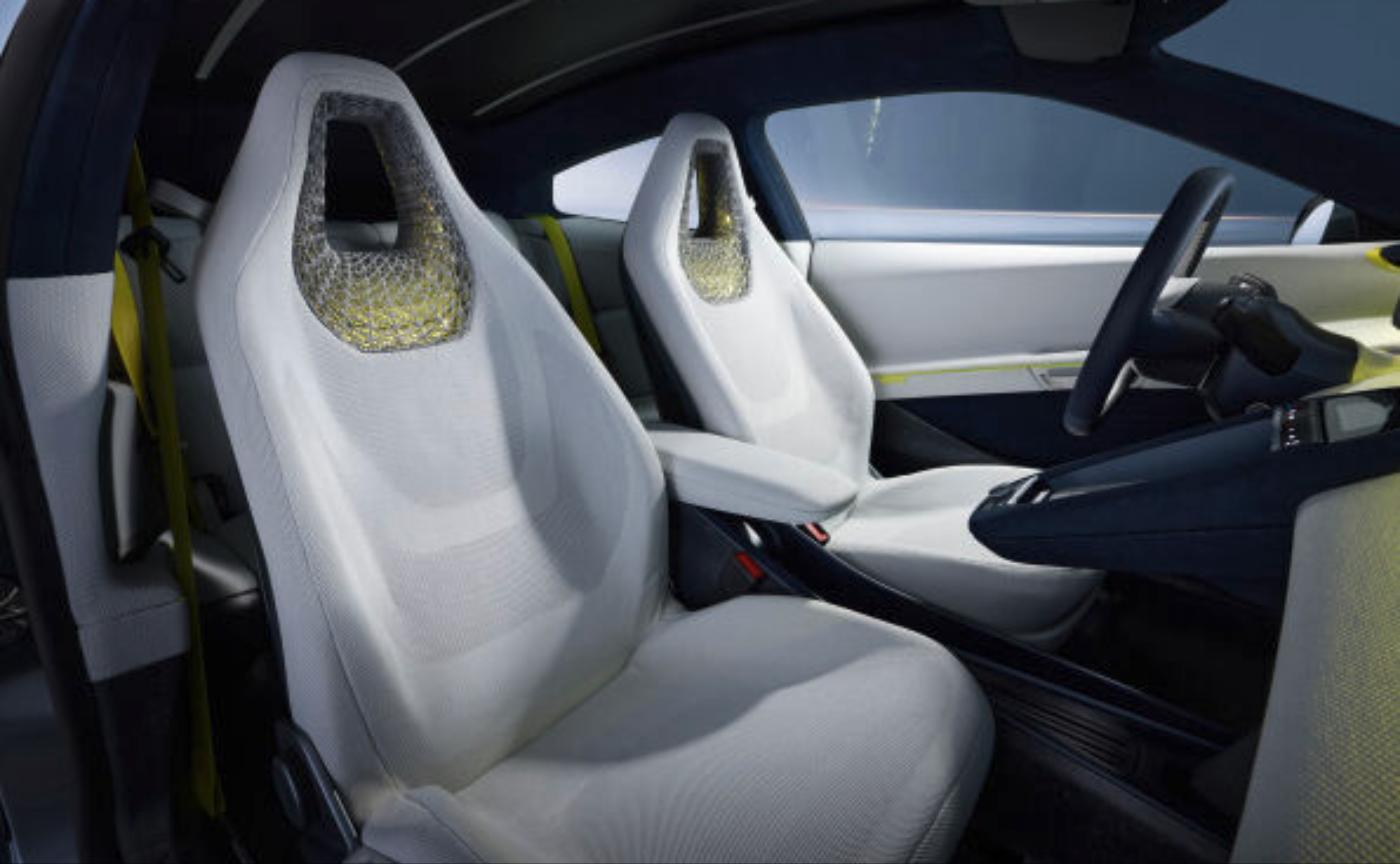
The doors, hood, trunk lid and fenders are carbon-fiber-reinforced polymer and aramid composite. That is the detail an insurance underwriter would circle. A steel fender with a parking-lot crease gets pulled and refinished for a few hundred dollars. A composite panel gets replaced, at a price that has very little to do with the size of the dent, by a shop with the right training and adhesives. Lightweight bodywork is a range strategy on the spec sheet and a total-loss threshold in the claims department.
The transferable list, though, is longer than the exotic one: active cooling flaps, rim deflectors, wheel-house airflow management, underbody cladding, low-rolling-resistance tires, an electromechanical rear brake, a heat pump using R744 – plain carbon dioxide – as its refrigerant, and a 370-watt solar array in the glass roof and trunk lid that Volkswagen says can add up to 30 kilometers of range on a good day. None of that requires a 1,392-millimeter roofline or a carbon hood.
Why this lands harder in America than in Europe
The record drive averaged 67.72 km/h, about 42 mph. Aerodynamic drag climbs with the square of speed, and the power needed to overcome it climbs with the cube, which means an aero package earns comparatively little at European average speeds and a great deal at American interstate ones.
The Department of Energy puts the same physics in consumer terms: fuel economy usually drops off rapidly above 50 mph, and a blunt roof-top cargo box, which is nothing more than added frontal area, can cost between 10 and 25 percent at interstate speeds. A roof box. That is how expensive shape is at 75 mph, and it is why the aerodynamics of an electric car are not a styling decision. They are a range decision, and they are the one decision the buyer cannot revise after delivery.
Volkswagen has been here before. This time the parts bin is different.
The company knows how this movie ends, because it has already made it. The 2013 XL1 managed 0.9 liters per 100 kilometers with a Cd of 0.189 and a curb weight of 795 kilograms, and design chief Andreas Mindt says its DNA “shines through” in this car. But the XL1 was exotic in every direction at once: a carbon monocoque, a bespoke two-cylinder diesel, a tiny production run and a price no ordinary buyer was ever going to pay. It proved a point and changed almost nothing.
The difference this time is where the exotic stops. The shape is extreme and the body panels are expensive. The motor, the battery, the front axle and the platform came off the same shelf that will supply Volkswagen’s cheapest electric cars. Brand CEO Thomas Schäfer called it “technology for the masses – not just for the few,” which is exactly the sort of line a press office writes. What makes it worth taking seriously here is the parts list underneath it.
Forget the 0.158. Remember this instead: the cheapest kilowatt-hour in an electric car is the one the engineers never had to install.
So here is the argument worth having. Would you trade the back seat, the ride height and the upright windshield for a car that travels 30 percent further on the same battery – or has the industry already concluded that buyers will always pick the taller car and simply pay for the bigger pack? Tell us where you come down.
Does a record like this change how you think about EV efficiency claims? Tell us in the comments.