
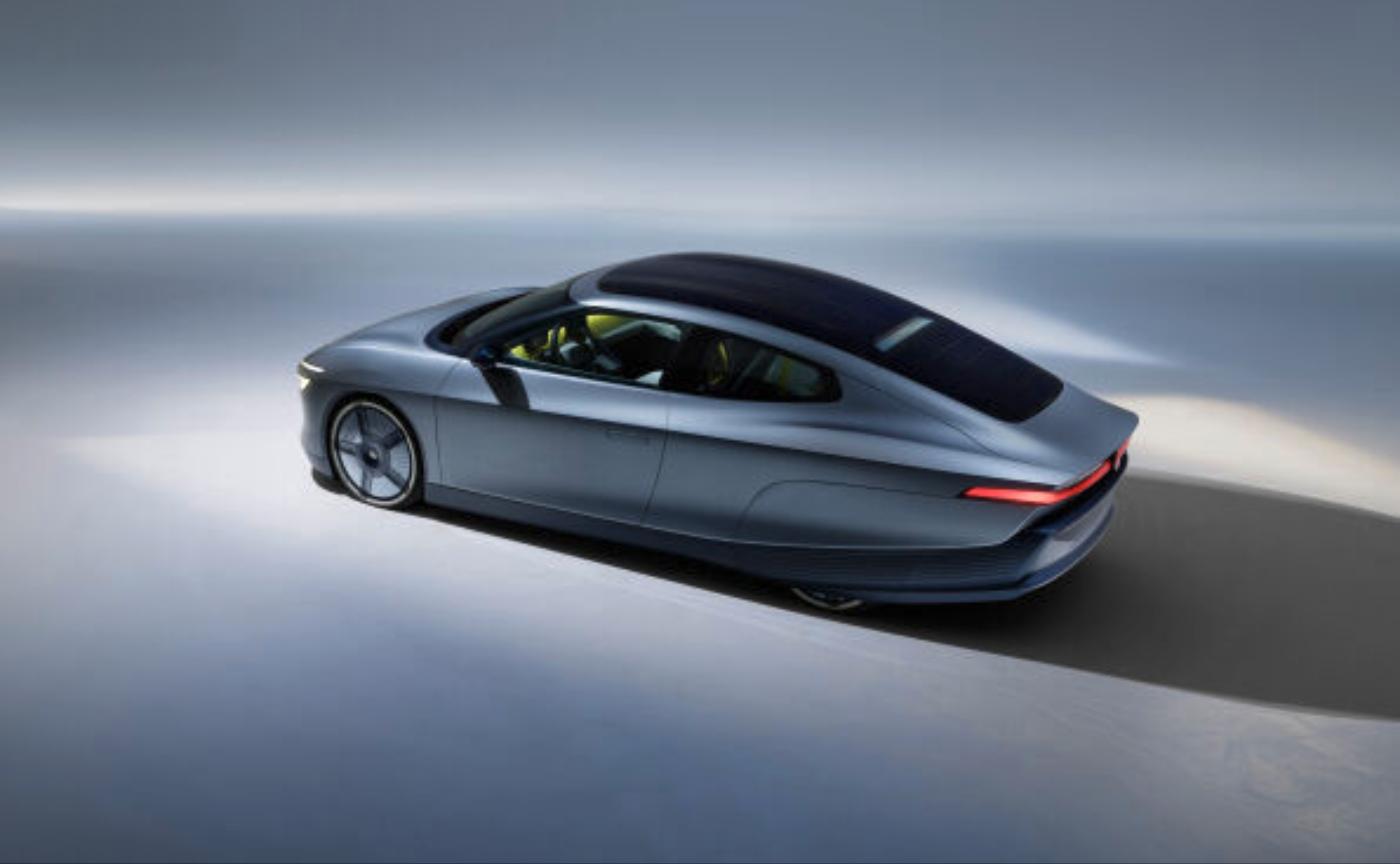
The most important number on Volkswagen’s new record car is not 0.158. It is 54.9.
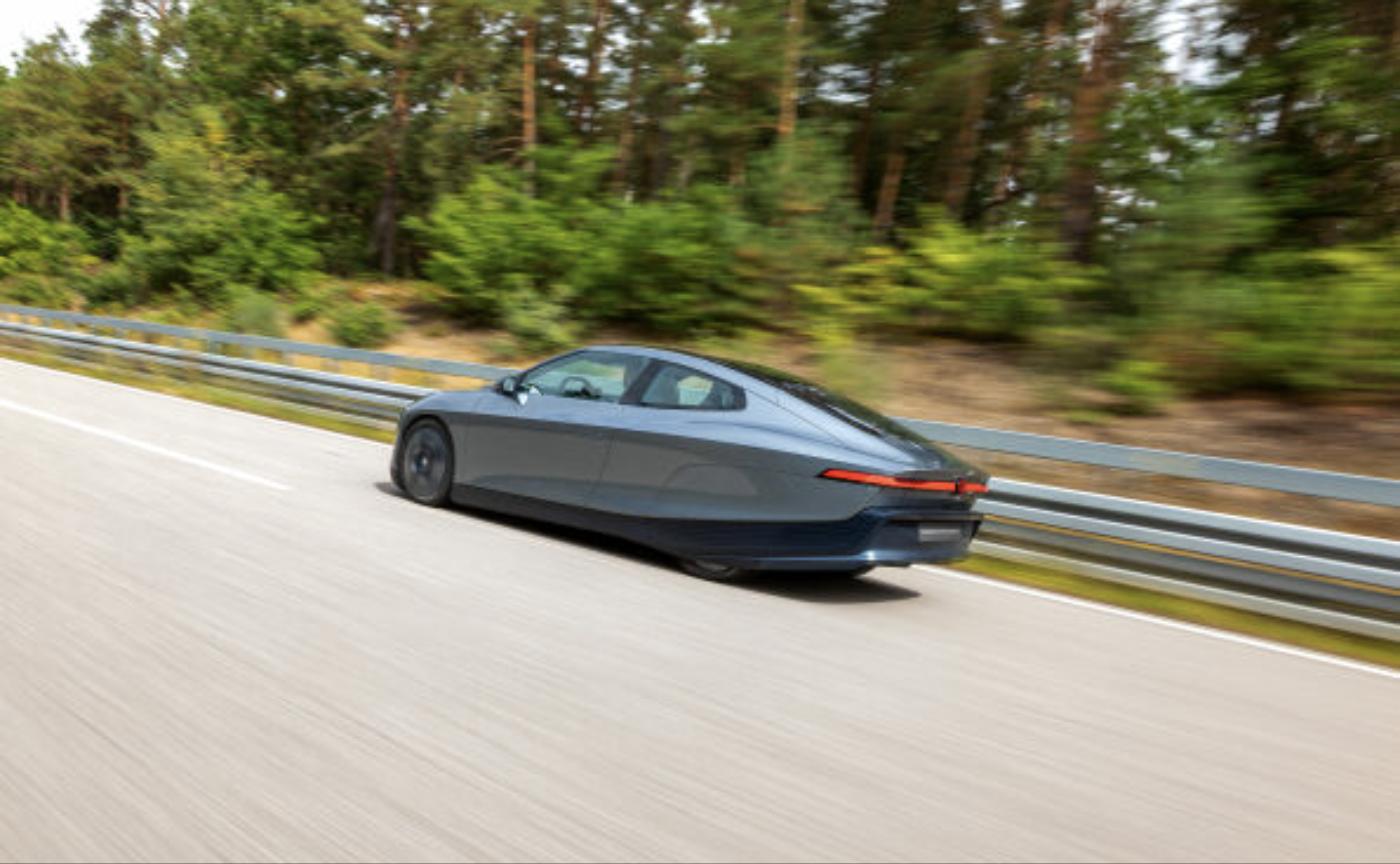
That is the battery, in kilowatt-hours, and it is essentially the same pack Volkswagen will sell you in an ID. Polo hatchback that starts at 24,995 euros in Germany. With it, a prototype called Mission Efficiency covered 1,278.36 kilometers — 794 miles — from Wolfsburg to Vienna by way of Poland and the Czech Republic, stopped to charge exactly once, and rolled into Austria with 164 kilometers, about 102 miles, still showing on the display.
The number Volkswagen is selling, of course, is the other one: a drag coefficient of 0.158, which the company says is a record for a road-approved car. That is a genuinely extraordinary figure, and also the less useful half of the story.
Here is the useful half. Volkswagen found roughly 40 percent more efficiency without touching the expensive part. Same 99-kW motor as the showroom car. Same battery. Same front-wheel-drive MEB+ architecture built for a car aimed at budget buyers. Every bit of the gain came from shape, wheels, tires and brakes — the cheap end of the bill of materials. And then, in the same press kit, Volkswagen explained exactly why nobody is going to sell you the result.
What a 0.158 actually buys
The production ID. Polo runs a drag coefficient of 0.264, which is a respectable number for a small hatchback. Mission Efficiency cuts that by about 40 percent and pairs it with a frontal area of just 2.08 square meters. Aerodynamic drag rises with the square of speed, and the power needed to overcome it rises with the cube. That is why the payoff is invisible around town and enormous on the highway.
Volkswagen’s own comparison is the clearest way to see it. Above 80 km/h — 50 mph — the prototype uses more than 30 percent less energy than a standard ID. Polo. At 140 km/h, roughly 87 mph, it draws about what the ID. Polo draws at 100 km/h, or 62 mph. On the WLTP cycle, the concept is rated at 8.4 kWh per 100 km against 14.9 to 13.6 for the 99-kW ID. Polo.
On the actual drive to Vienna, at a 42-mph average, it managed 6.89 kWh per 100 km without charging losses and 7.51 with them. In American units that is roughly 11.1 and 12.1 kWh per 100 miles, in a four-seat car with a trunk.
A bigger battery is a bill you pay once and then haul around for the life of the car. A better shape is free every mile after the tooling is paid for.
The 2.9 kilowatt-hours your EV already owns and will never use
Buried in the footnotes of Volkswagen’s release is one of the most candid admissions a manufacturer has made about battery sizing in years. The record car’s pack is the ID. Polo’s 52.0-kWh unit, reprogrammed to make 54.9 kWh available. Volkswagen’s explanation is that in a production car, to guarantee battery longevity, “the maximum energy content is deliberately not used.”
Read that again. There are 2.9 kilowatt-hours — about 5.6 percent more energy — physically present in the pack of every ID. Polo, already paid for by the buyer, permanently fenced off by software.
This is not a scandal. It is good engineering. Lithium-ion cells age fastest when they sit near the top and bottom of their charge window, so every manufacturer holds back a slice of capacity to protect cycle life and, not incidentally, the warranty it wrote against that cell. The difference is that almost nobody prints the number. Volkswagen printed it, then unlocked it for a car that only has to survive one record run rather than eight years of school runs.
It is worth keeping that in mind the next time an EV’s usable capacity looks stingy against its gross figure. The missing kilowatt-hours are a durability decision, and they are one of the quietly expensive reasons battery packs are so consequential when an electric car is damaged.
A quarter of your drag is bolted to the corners
Here is the second thing most drivers have never been told: Volkswagen puts wheels at 25 to 30 percent of a car’s total aerodynamic resistance. Not the mirrors, not the grille. The wheels.
So the engineers went after them properly. Engineers drew the front wheel arches tight around the tire radius to cut turbulence inside the housing. The rear wheels are clad. Flat, flow-optimized hubcaps finish the job. And Volkswagen patented a set of deflectors that sit on the inside face of every wheel, keeping air from getting into the rim and churning around in there in the first place.
The practical lesson for anyone who owns an electric car is unglamorous but real. Those plain plastic aero covers that come on EV wheels are load-bearing engineering, not cost-cutting. Swapping them for handsome open-spoke aftermarket wheels is a range decision as much as a styling one.
A tire 25 percent better than the best, wearing the same sticker
Volkswagen and Continental built a concept tire derived from the EcoContact 7 with a rolling resistance of 4.9 kilograms per tonne. To understand why that matters, you need the regulation. Under EU Regulation 2020/740, the top fuel-efficiency class for passenger car tires, class A, covers everything with a rolling resistance coefficient of 6.5 or lower. The band has a floor. It has no ceiling.
Which means this tire, roughly a quarter better than the threshold, earns the identical letter on the identical sticker as a tire that scrapes in at 6.5. There is no class above A. There is no way for a shopper to see the difference, and no commercial reward for a tire company that spends years chasing it. Regulators built a scale that stops measuring right where the interesting engineering starts — which is worth remembering as California phases in its own tire efficiency rules toward 2029 and 2033.
Dry brakes at the back, and a supplier tell
For the first time, Volkswagen fitted an electromechanical brake at the rear axle. No hydraulic lines back there, no fluid, no residual pad drag of the kind that quietly taxes every mile you drive in a conventional car. It also allows genuinely variable brake force distribution, which sharpens both regenerative braking and cornering stability.
The interesting part is who built it. Volkswagen developed the brake with AUMOVIO, the automotive electronics business Continental spun out and listed in Frankfurt in September 2025 — and AUMOVIO already supplies the brake system on the production ID. Polo. Concept cars usually get whatever hardware is convenient. Parts sourced from the volume supplier are a road map, not a display stand.
A note of caution belongs here too. Brake-by-wire is the most safety-sensitive place to remove hydraulics, and regulators are watching it closely; a federal probe into GM’s system widened a day after the company promoted it. Volkswagen says the prototype holds EU road approval and meets crash and strength requirements, which is more than most show cars can claim. It is still a first.
What Volkswagen left out of the press kit
Volkswagen published the drag coefficient to three decimal places, the tire’s rolling resistance to one, and the length of the drive to Vienna down to the centimeter. It did not publish the car’s weight. Not in the release, not in the technical summary.
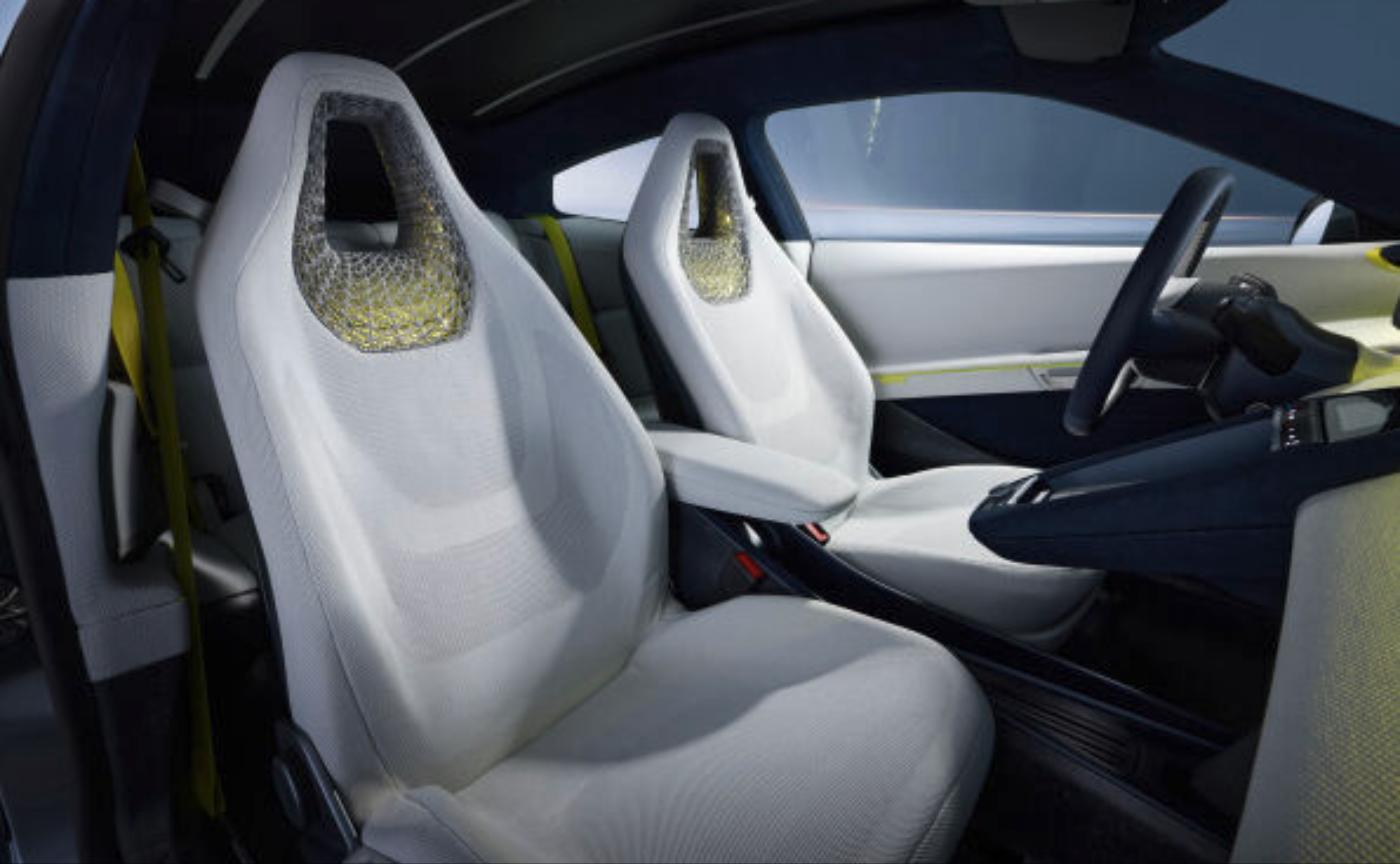
What it did publish tells you why the question is interesting: an aluminum structure with carbon-fiber and aramid composite doors, hood, tailgate and fenders, 3D-printed TPU headrests, a lightweight composite floor, no speaker system at all — a portable Bluetooth box stands in — and no infotainment screen, because you are expected to bring your own phone. Those are not the choices of a car headed for a showroom.
The word “four-seater” is doing some work as well. The two rear seats are intended for occupants up to roughly 1.60 meters, which is 5 feet 3 inches. And the record category itself, certified by the Record Institute for Germany, is “near-production four-seater electric vehicle suitable for everyday use” — a description narrow enough that it is hard to picture what else could have entered.
None of that makes the engineering less real. It does mean “near-production” is carrying a lot of weight the car itself refuses to disclose.
Why Volkswagen is making this argument now
This is a company that has spent the past year conceding, in public, that it built more electric-car capacity than demand justified. The battery is the most expensive component in an EV and the one most exposed to raw material prices and supply politics. If shape, wheels, tires and brakes can deliver 40 percent, the same range arrives in a smaller, cheaper, lighter pack.
So read the quotes again. Brand CEO Thomas Schäfer talks about “technology for the masses” and stresses that the records were set with affordable large-scale production hardware rather than specialist parts. This is not a halo car. It is a cost argument in a record car’s bodywork, and the thing being defended is the premise that Volkswagen’s cheap front-wheel-drive architecture is good enough to win on.
There is an awkward regulatory footnote to all of this. Under the EU’s fleet CO2 rules, a battery-electric car counts as zero grams at the tailpipe whether it consumes 8.4 kWh per 100 km or 25. Efficiency buys a manufacturer nothing in compliance terms. It only buys something from customers. Which is precisely why efficiency programs are the ones that get funded last.
The XL1 problem, thirteen years later
Volkswagen’s chief designer says the DNA of the XL1 shines through here, and he is right in a way that is more uncomfortable than flattering. The XL1 arrived in 2013 as a rear-drive plug-in hybrid, built from 2014 to 2016, 1,153 millimeters tall, with room for two. Volkswagen called it the most economical production car in the world at the time. It was a triumph, and it changed nothing whatsoever about what people bought.
Mission Efficiency is the same argument made politely to a family. At 239 millimeters — nearly 9.5 inches — taller than the XL1, it has a back seat and swallows 481 liters, about 17 cubic feet, of luggage. Call it the efficiency case rebuilt around a school run instead of a science project.
And it is still arguing with a market that buys tall crossovers on big open-spoke wheels. Look at what made this car work: a 1,392-millimeter roofline that is 5.4 inches lower than the ID. Polo’s, covered rear wheels, frameless door glass, handles buried in the bodywork, and back seats a grown adult cannot use. Every single one of those is a decision a product planner would reverse before it reached a dealership. The ID. Polo’s 0.264 is not lazy engineering. It is a shape designed to be sold.
What to remember
Forget the decimals. The idea worth keeping is this: for fifteen years the industry has been buying range in the single most expensive place available, and Volkswagen just spent a development program demonstrating that the cheap place works at least as well. Aerodynamics, tires, wheels and brakes bought 40 percent using hardware from a car that costs less than 25,000 euros.
The reason we are not all driving cars like this is not that it is hard. It is that we do not want to look at it. Volkswagen built the world’s most efficient electric car and, in the same gesture, built the clearest explanation yet of why the efficient car keeps losing to the tall one.
Which raises the question worth arguing about: if an automaker offered you the same range for meaningfully less money in a car shaped like this — low, long, covered rear wheels, back seats only a kid would tolerate — would you actually buy it? Or is the tall, boxy crossover the price we have all quietly agreed to pay?
Would you want the most efficient EV ever built even if you could never actually buy one? Tell us in the comments.