
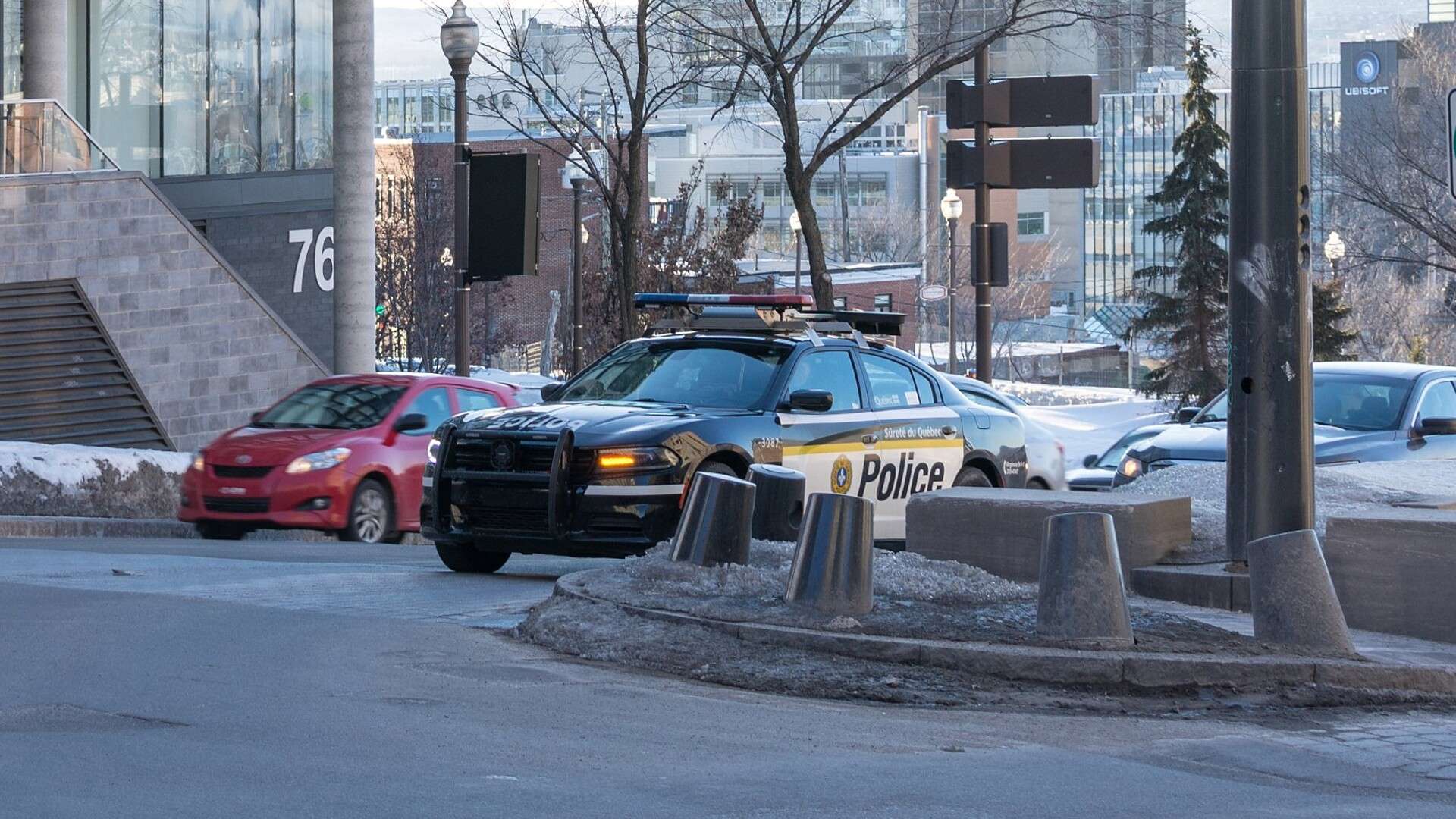
Nobody in this case is accused of breaking into a car. Quebec police say four men took luxury vehicles from 22 dealers in five provinces the way any customer would: signed contract, approved credit, keys across the desk. The credit just belonged to other people.
Quebec provincial police arrested Trésor N’Kumbu Luyeye, 42, of Mascouche, Quebec, on the morning of Oct. 8, ending a 16-month search for the fourth of four men police accuse of running a fraud cell that took luxury vehicles from 22 dealerships in five provinces using other people’s identities. He had been wanted on a warrant since May 22, 2025, the day the other three were arrested, Mon Joliette reported.
Luyeye appeared at the courthouse in Joliette on charges of conspiracy, fraud, possession of property obtained by crime, use and possession of forged documents, and vehicle trafficking, Noovo Info reported from the Sûreté du Québec’s announcement. The arrest was made by the SQ’s economic crime and cybercrime unit. None of the allegations has been tested in court, and the reports did not name a lawyer for Luyeye or include a response from him.
The SQ says the group committed 26 frauds in 2022 and 2023 and left dealers with more than $3.3 million in losses. CTV News Montreal’s account of the police release breaks the files down by province: nine in Ontario, eight in Quebec, six in New Brunswick, two in Nova Scotia and one in Manitoba.
Because police say the cars were sold on signed deals rather than taken, the case is being prosecuted as fraud, and the auto-theft penalties Parliament toughened in 2024 do not reach it.
How police say the cars left 22 dealer lots
When the SQ announced the first three arrests in May 2025, it said the suspects bought and took delivery of vehicles worth an average of $126,500 using forged identification, credit-file documents, cheque specimens, pay stubs and proof of insurance, The Canadian Press reported. This month’s release adds the piece that made the paperwork work: the identities were real ones, stolen from real people, which let the group obtain credit tied to each vehicle before exporting and selling it, according to CTV’s translation of the release.
That distinction matters at the finance desk. A made-up name has no credit history, so a lender’s system has nothing to approve. A stolen name with a long, clean file looks like the best customer of the week. The forged pay stubs and insurance slips only have to back up a story the credit bureau already appears to confirm.
The vehicles were then shipped out of the country by sea, police said in 2025, and investigators recovered two of them. Police have not said where the rest went or which port they left from. The three men arrested that day were a 47-year-old from Mascouche, a 62-year-old from Montreal and a 61-year-old already in custody in Ontario.

The Quebec dealers named so far are in smaller cities and towns. Regional outlet Infodimanche reported that the 2025 release listed dealers in Alma, Chicoutimi, Notre-Dame-des-Pins, Plessisville, Saint-Malachie and Thetford Mines, and that a dealer in Rivière-du-Loup was also among the victims. The SQ thanked financial institutions and municipal police forces for their help.
Why the Crown is charging fraud instead of auto theft
Parliament toughened the car-theft law in 2024. Section 333.1 of the Criminal Code now carries up to 14 years in prison for vehicle theft involving violence or committed for a criminal organization, and a six-month minimum for a third theft conviction. Those provisions are aimed at taking a car. In this case, police say, the dealers sold the cars, on contracts signed in other people’s names.
So the case rests on the fraud section, which is harsher in one respect. Section 380 allows up to 14 years when the amount exceeds $5,000, and subsection 380(1.1) requires a minimum of two years in prison when a person is convicted on indictment and the total value of the frauds tops $1 million. The ring’s alleged total is more than three times that. Whether the minimum would reach any one defendant depends on which files the Crown proves against that person, not on the group’s combined number.
The vehicle-trafficking count covers the other end of the pipeline. Section 355.2 makes it a crime to traffic in property knowing it came from an indictable offence, and section 355.5 sets the maximum at 14 years when the property is worth more than $5,000. In practice, that is the charge for moving and selling the cars after the deals were signed.
Finance-office fraud keeps turning up in car crime cases
Quebec isn’t an outlier. In a run of recent investigations, the vehicle is acquired on paper instead of stolen off a driveway. In August, The Auto Wire covered Project NoCargo, a yearlong RCMP-led pilot that intercepted 392 vehicles worth an estimated $28 million before they could be loaded onto container ships in Halifax, Montreal, Toronto and Vancouver. The RCMP described the same method police allege in Quebec: stolen or fabricated identities used to take out real loans and real insurance policies on real cars. In Connecticut, a Queens man was sentenced last month to 42 months in federal prison after pleading guilty in a scheme in which a stolen identity financed a $114,000 Corvette at a Greenwich dealership. And the identity documents dealers collect to stop this have become a target of their own, after scans of more than 153 million U.S. and Canadian driver’s licenses turned up for sale in a breach traced in part to an ID-verification company.
Export is the common exit. Canada’s border agency has gone after the paperwork side of that too, as in the $36.9 million penalty over undeclared vehicle exports The Auto Wire reported last December. A car obtained with a real person’s credit file arrives at the port with a legitimate-looking bill of sale and loan, which is a cleaner story than a car with a punched ignition.
Who pays when a stolen identity buys a $126,500 car
The SQ puts the $3.3 million loss on the dealerships. Police have not said how many people’s identities were used or what happened to their credit files. Someone whose name ends up on a contract like these is left to show the lender and the credit bureaus that the loan was never theirs, and the protections available differ by province.
Quebec gives residents two tools under its Credit Assessment Agents Act. A security freeze bars the credit bureau from releasing your file when a lender is checking it to open a credit contract, raise a credit limit or sign a long-term lease, which covers most car financing. A security alert lets the file go out but requires the bureau to give the lender a phone number where you can be reached to confirm your identity. The law allows the bureaus to charge a fee to place a freeze. Either one puts a step between a stranger with your name and a six-figure loan approval.
Next steps in the Joliette case
Luyeye’s case now moves through the Joliette courthouse, where the three men arrested in 2025 were ordered to appear on July 17 of that year. The Auto Wire could not find a public update on where their cases stand, and the SQ has not said whether all 26 files from five provinces will be tried together in Quebec. Investigators have recovered two of the vehicles and have not said where the others are. For the dealers, any money back depends on a conviction and a restitution order that can be collected from someone.
When a stolen identity finances a car, who should eat the loss: the lender that approved the loan from a clean credit file, or the dealer that checked the ID and handed over the keys?