
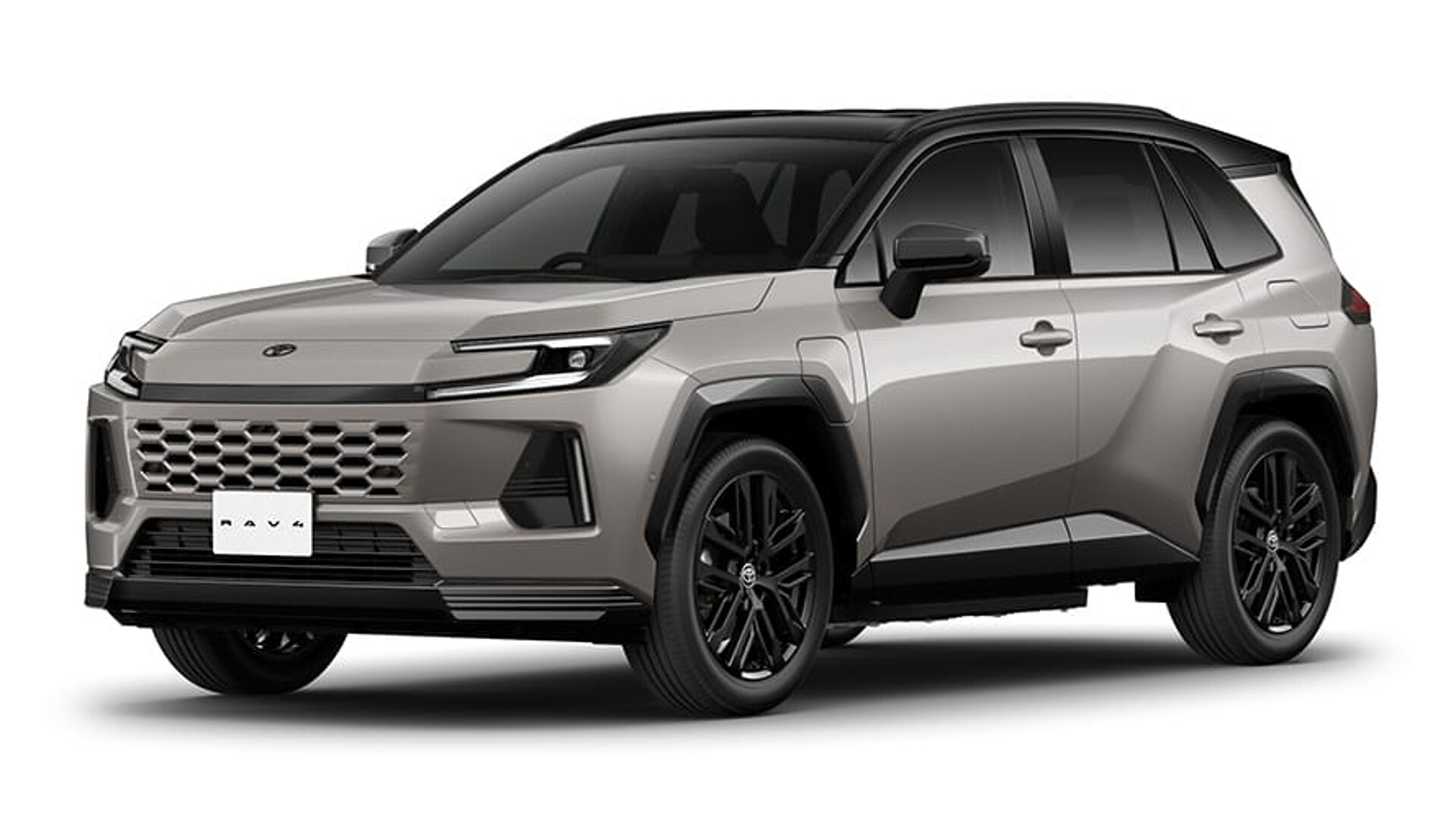
The 2026 RAV4 Plug-in Hybrid recall started with a Japanese-market SUV that lit its warning lights and would drive only its front wheels, at limited speed. That is a hybrid system failing the way it is supposed to. According to the defect report Toyota filed with the National Highway Traffic Safety Administration on Oct. 7, the recall happened because Toyota’s engineers then tested what the same software flaw would do to the motors up front, and the answer included a full shutdown of the plug-in hybrid system at speed.
When The Auto Wire first reported this recall, Toyota’s public notice did not name the part, the build dates, the supplier or how the problem surfaced. The four-page Part 573 report, which NHTSA acknowledged in a letter dated Oct. 13, answers most of that. I read it alongside Toyota’s earlier hybrid recall filings. The failure reported from the field and the failure Toyota reproduced in testing are not the same, and owners should know both.
The part: a Denso motor control unit inside the inverter
The recall, NHTSA campaign 26V659 and Toyota campaign 26TA22, covers 30,978 2026 RAV4 Plug-in Hybrids built from July 22, 2025, through Aug. 19, 2026. Toyota estimates that 100% of them have the defect. Toyota’s own announcement rounds the count to approximately 31,000.
The component is listed as “Inverter Assy, HEV Motor Control,” part number G92A0-42460, described as the MG-ECU, or motor generator electronic control unit. The supplier is Denso Corporation of Kariya, Japan. Toyota says the problem is confined to MG-ECUs running one specific software program and that no other Toyota or Lexus model sold in the U.S. uses that unit with that software.
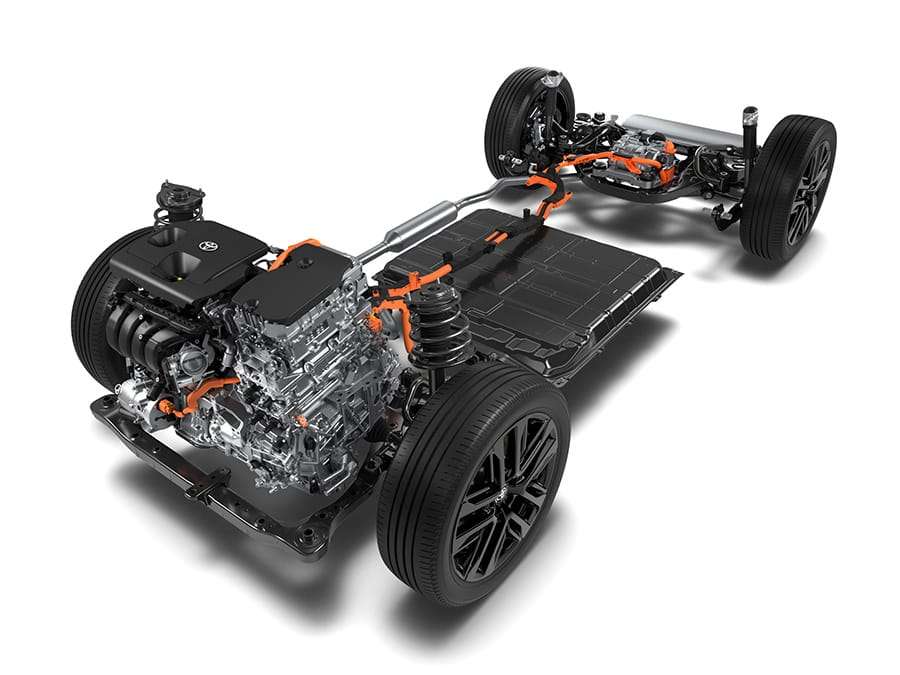
The MG-ECU is the computer that tells the inverter how to drive the plug-in system’s electric motor-generators. Each time the system starts up, it has to run an initialization process for those motors. Toyota’s filing says that in some cases the process does not finish correctly, and the control mode the motors need for higher speeds becomes unavailable. Nothing seems wrong in a parking lot or around town. The fault appears when the SUV reaches a speed that calls for that mode: warning lights come on, and the plug-in hybrid system either drops into a fail-safe driving mode or shuts down.
Why the rear-motor failure in Japan was the mild version
Toyota’s chronology begins between June and August 2026, with a field report from Japan, where the RAV4 plug-in went on sale March 9. The driver saw warning lights, and the vehicle could only be driven in front-wheel drive at limited speed. Using the dealer’s inspection and data pulled from the car, Toyota found a communication malfunction at the moment the rear motor generator switched from its lower-speed control mode to the one used at higher speeds. Repeated bench testing of the start-up sequence showed that, under certain conditions, the rear motor’s initialization could fail.
Losing the rear motor is an inconvenience. Toyota’s U.S. product material says all-wheel-drive RAV4 hybrids use a dedicated rear electric motor, which Toyota calls the MGR, to power the electronic on-demand AWD system, and the plug-in comes standard with AWD. Without that motor, the SUV becomes a front-drive car with a speed cap, which is what the Japanese owner got.
The front motor generators run the same control program as the rear one. In mid-August, Toyota ran vehicle tests with the higher-speed control mode removed to see what a failed initialization would do on those motors. The testing showed that when the vehicle reached speeds that required the missing mode, warning lights would come on and the system would either go to its fail-safe mode or shut down. A shutdown at speed means a loss of motive power, and that is the crash risk the recall is built around. Toyota decided on a voluntary recall on Oct. 1 and filed six days later.
The report does not say that any U.S. RAV4 has shut down on the road, and it does not mention crashes or injuries. As of Sept. 30, Toyota counted 38 Field Technical Reports and 58 warranty claims from U.S. sources that, in the company’s words, relate or may relate to the condition. It does not break down what those vehicles did.
96 U.S. reports in a fleet that has been on sale since spring
Toyota said in October 2025 that U.S. RAV4 plug-ins were expected to reach dealers in the spring of 2026, so the oldest U.S. examples have been in owners’ hands for a matter of months. The Auto Wire’s arithmetic, not Toyota’s: 96 reports against 30,978 vehicles is about one for every 320. That overstates the count of affected vehicles somewhat, since one SUV can generate both a technical report and a warranty claim, and “may relate” leaves room for cases that turn out to be something else. For a fault that only appears above a certain speed, in vehicles a few months old, that is a high count.
The build window also ends on Aug. 19, 2026, the same stretch of August when Toyota was running its front-motor tests. The report leaves blank the field asking how and when the condition was corrected in production, and the field asking how the remedy differs from the recalled software. Neither blank proves anything, but it means a buyer looking at a late-build plug-in should run the VIN rather than assume the cutoff date is clean.
Why the letters arrive in December, and what that means for cars still on lots
Toyota notified dealers on Oct. 7 and plans to mail owner letters between Nov. 22 and Dec. 6. Federal rules at 49 CFR 577.7 require owner notification no later than 60 days after the manufacturer files its defect report. Count 60 days from Oct. 7 and you land on Dec. 6. Toyota’s “early December” is the legal deadline.
New vehicles still in dealer inventory are on a different clock. Under 49 U.S.C. 30120(i), once a manufacturer tells a dealer that a new vehicle in its possession has a safety defect, the dealer can sell or lease that vehicle only after the defect is remedied before delivery. The dealer can still advertise it. A RAV4 Plug-in Hybrid sitting on a lot today should get the software before it leaves, and a shopper can reasonably ask to see the completed recall on the repair order.
The report’s consumer advisory boxes, “Do Not Drive” and “Park Outside,” are both unchecked. Toyota is not telling owners to park these SUVs, and nothing in the filing involves fire. The field for the date a VIN becomes searchable is also blank, so a VIN check on NHTSA’s recall lookup or toyota.com/recall may not show the campaign right away. Toyota’s customer line is 1-800-331-4331, and NHTSA’s Vehicle Safety Hotline is 1-888-327-4236.
Toyota has rewritten its hybrid fail-safe logic before, on the Prius
Toyota’s hybrid record shows how much rides on that fail-safe mode. In February 2014, Toyota recalled about 701,000 2010-2014 Prius models in the U.S. because, according to its dealer notice for campaign 14V-053, the inverter’s software could damage transistors in the Intelligent Power Module during high-load driving such as accelerating on the highway. Usually the car went into a reduced-power fail-safe mode. In limited cases, the motor/generator ECU reset and the hybrid system shut down. The fix was a software update.
Four years later, Toyota came back to many of the same cars. Its October 2018 report for campaign 18V-684 covered 807,329 2010-2014 Prius and 2012-2014 Prius V vehicles and addressed the risk that the hybrid system could shut down instead of entering fail-safe. The new software expanded the fail-safe modes to allow more speed and range, and Toyota added a separate program to repair or replace qualifying inverters for 15 years from first use, with no mileage limit.
The RAV4 case is a different fault in a different control unit, but the engineering question is the same one: when a motor controller loses something it needs, does the car limp or does it stop? The 2026 recall fixes the initialization problem through software. What the report does not spell out is whether the update also changes how the system behaves if initialization ever fails again. This is also the latest in a run of 2026 Toyota electrified-model recalls for control faults that can cut drive power, including the C-HR case Toyota found while testing a different car. Each has been fixed with a dealer software update.
What RAV4 Plug-in Hybrid owners should look for now
The symptom in Toyota’s Japanese field report is specific: warning lights, then a vehicle that drives only its front wheels and will not go past a limited speed. An owner who sees that has most likely met the rear-motor version of this fault, and the next stop should be a Toyota dealer, not the highway. Owners who have not seen anything should still call their dealer with the VIN rather than wait for the letter. Whether dealers can apply the update to customer cars before the mailing is not stated in the filing.
Three things to watch from here: an amended Part 573 that fills in the production-fix date, Toyota’s dealer bulletin describing what the new software changes, and any owner complaints to NHTSA describing a shutdown rather than a limp. Other recent campaigns are in our list of major recalls from August through early October and our report on Toyota’s Land Cruiser fuel-tube recall.
If your plug-in RAV4 dropped into front-drive limp mode on the way to work tomorrow, would you keep driving it until the recall letter shows up, or leave it at the dealer until the update is done?