
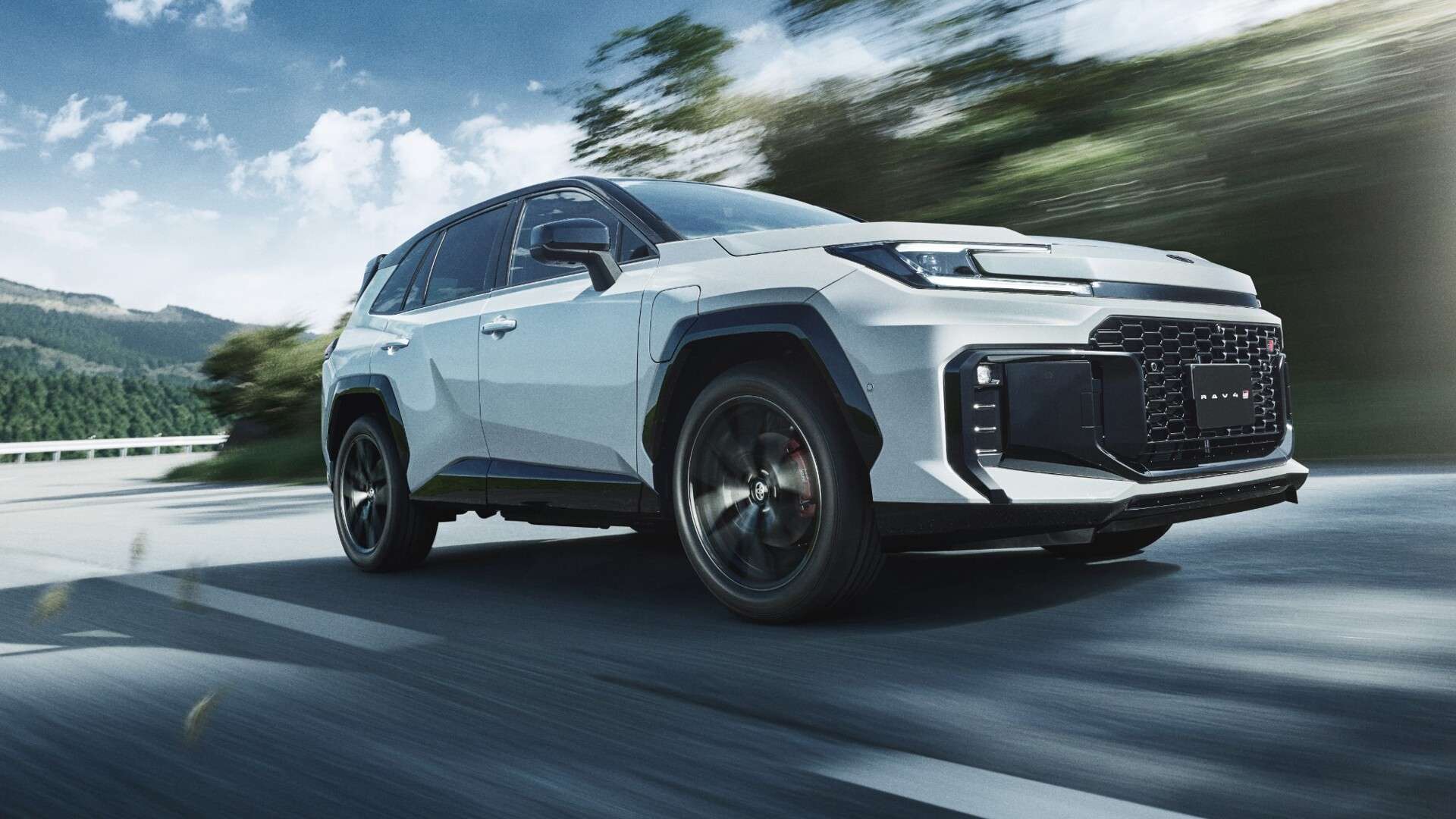
The 2026 RAV4 Plug-in Hybrid is all-new. Its recall isn’t. Toyota said on Oct. 7 that about 31,000 of them on U.S. roads carry an electronic control unit for the plug-in hybrid system that can fault and shut the system down while the SUV is moving. At higher speeds, the company’s recall notice says, that means a loss of motive power and a higher risk of a crash.
The RAV4 plug-in has been recalled for this before. In February 2023, Toyota told the National Highway Traffic Safety Administration that software in the hybrid control unit of 16,679 2021 RAV4 Prime models, the previous generation sold under the plug-in’s old name, could let the hybrid system shut down and cut power. The new RAV4 is also the third 2026 Toyota electrified model since June to be recalled for a control-unit fault that can stop the drive system at speed. Each time, the fix has been a software update at the dealer.
What Toyota’s Oct. 7 RAV4 notice says, and what it doesn’t
Toyota says all known owners will be told to bring their vehicles to a Toyota dealer, where technicians will update the software of the affected ECU at no cost. Owners are to be notified by early December 2026. Questions go to the Toyota Brand Engagement Center at 1-800-331-4331.
It does not say what sets off the fault, which build dates are covered, who supplied the control unit, how Toyota found the problem, or whether any crashes or injuries have been reported. It also doesn’t say whether steering and brake assist keep working when the system shuts down. That detail was in Toyota’s June notice for the electric bZ and Lexus RZ, which said power steering and power-assisted braking continue to operate. Those answers normally appear in the automaker’s Part 573 defect report to NHTSA. When I checked NHTSA’s public recall lookup on Oct. 13, it did not yet list a campaign for the 2026 RAV4 Plug-in Hybrid.
The affected SUVs are new. Toyota said in its October 2025 launch release that plug-in models would be assembled in Japan and that it expected them at dealers in spring 2026, after the regular hybrids. Toyota rates the SE and XSE plug-ins at 52 miles of electric driving range.
Four Toyota recalls with the same loss-of-power warning
I lined up the RAV4 notice against Toyota’s other recent recalls for electrified drive systems. The vehicles differ, and so do the control units, but the consequence each filing describes is the same: the drive system shuts down, the vehicle loses motive power, and the risk of a crash rises at higher speed.
| Date | Vehicles | Count | Control unit named | Fix |
|---|---|---|---|---|
| Feb. 2, 2023 | 2021 RAV4 Prime | 16,679 (U.S.) | Hybrid vehicle control ECU | Dealer software update |
| June 18, 2026 | 2026 Toyota bZ, Lexus RZ | About 16,200 (North America) | Battery ECU | Dealer software update |
| Sept. 2, 2026 | 2026 Toyota C-HR | About 10,000 (North America); 8,521 (U.S.) | Battery electric vehicle ECU | Dealer software update |
| Oct. 7, 2026 | 2026 RAV4 Plug-in Hybrid | About 31,000 (U.S.) | ECU for the plug-in hybrid system | Dealer software update |
Where Toyota’s filings explain the mechanism, the shutdown follows a software error about the battery’s limits. The 2023 RAV4 Prime report says that after continuous EV-mode driving in cold weather, a hard press of the accelerator could draw more from the high-voltage battery than the software was supposed to allow, and the hybrid system would shut down to protect it. The C-HR report filed in September describes the reverse: a wrong charging-control parameter could let regenerative braking overcharge a full battery on a long, cold downhill, which trips warning lights and a buzzer and shuts down the electric drive.
The C-HR filing also shows how the problem surfaced. Toyota says it found the bad parameter in late April 2026 while testing a future battery-electric model, traced the same type of error to the C-HR, and as of Aug. 26 had no field technical reports and no U.S. warranty claims tied to it. That’s Toyota’s own testing catching a fault before owners reported one. For the RAV4 plug-in, Toyota hasn’t said whether the fault came from testing or from the field.
The repair is the same in every case: a dealer reflashes the control unit, and the RAV4 notice mentions no remote update. Toyota’s recall of about 508,000 Camry Hybrids whose instrument displays can stay blank at startup is also being handled with a dealer software update.
The federal clock on a free RAV4 software fix
Once Toyota tells NHTSA a defect is safety-related, 49 U.S.C. 30120 requires it to fix the vehicle without charge when an owner presents it. The owner letters run on a separate clock. Under 49 CFR 577.7, they must go out no later than 60 days after the automaker files its Part 573 report. If the fix isn’t ready when the letters go out, the automaker still sends the first letter on time and must send a second one when the remedy is available.
Toyota hasn’t published its filing date for this campaign, but early December is roughly 60 days after the Oct. 7 announcement, close to the outer limit the rule allows. Until then, owners are driving with a defect Toyota has acknowledged and no repair to book. Nothing in the recall statute requires a loaner car during the wait.
The same statute gives owners some leverage once the fix exists. Under subsection (c), if a manufacturer chooses to repair and doesn’t do it adequately within 60 days after the vehicle is presented, that is prima facie evidence it failed to repair within a reasonable time. The manufacturer then has to replace the vehicle with an identical or reasonably equivalent one, or refund the purchase price minus a reasonable allowance for depreciation. NHTSA can extend the 60 days for good cause. A car brought in before the date the recall notice says the remedy will be available doesn’t start that clock, which is why the date on the owner letter and the date on the dealer’s repair order both matter.
For a 2026 model, the repair is also covered by the new-vehicle warranty. That was true of the 2021 Prime too: its 2023 filing noted that owner letters would go out within the New Vehicle Limited Warranty period. Owners won’t pay for parts or labor. What they lose is the weeks before the letter arrives and the time at the dealer after it does.
What 2026 RAV4 Plug-in Hybrid owners can check now
Owners can enter a VIN at Toyota’s recall lookup or at NHTSA’s recall site, though a vehicle may not show up as affected until the campaign posts. Toyota’s line for questions is 1-800-331-4331. When the letter arrives, it should say whether the software update is ready or whether a second notice will follow.
What we still need is Toyota’s Part 573 report for the RAV4. It should give the build-date range, the supplier, what triggers the shutdown, and whether any owners have reported one. If it traces the shutdown to software about the battery’s limits, it will be the third Toyota filing since 2023 to do so, and the second on the RAV4 plug-in. Our Oct. 10 recall roundup lists the other campaigns announced since August.
Until early December, owners have an acknowledged defect and no repair to book. If you own one, has your dealer told you anything?