
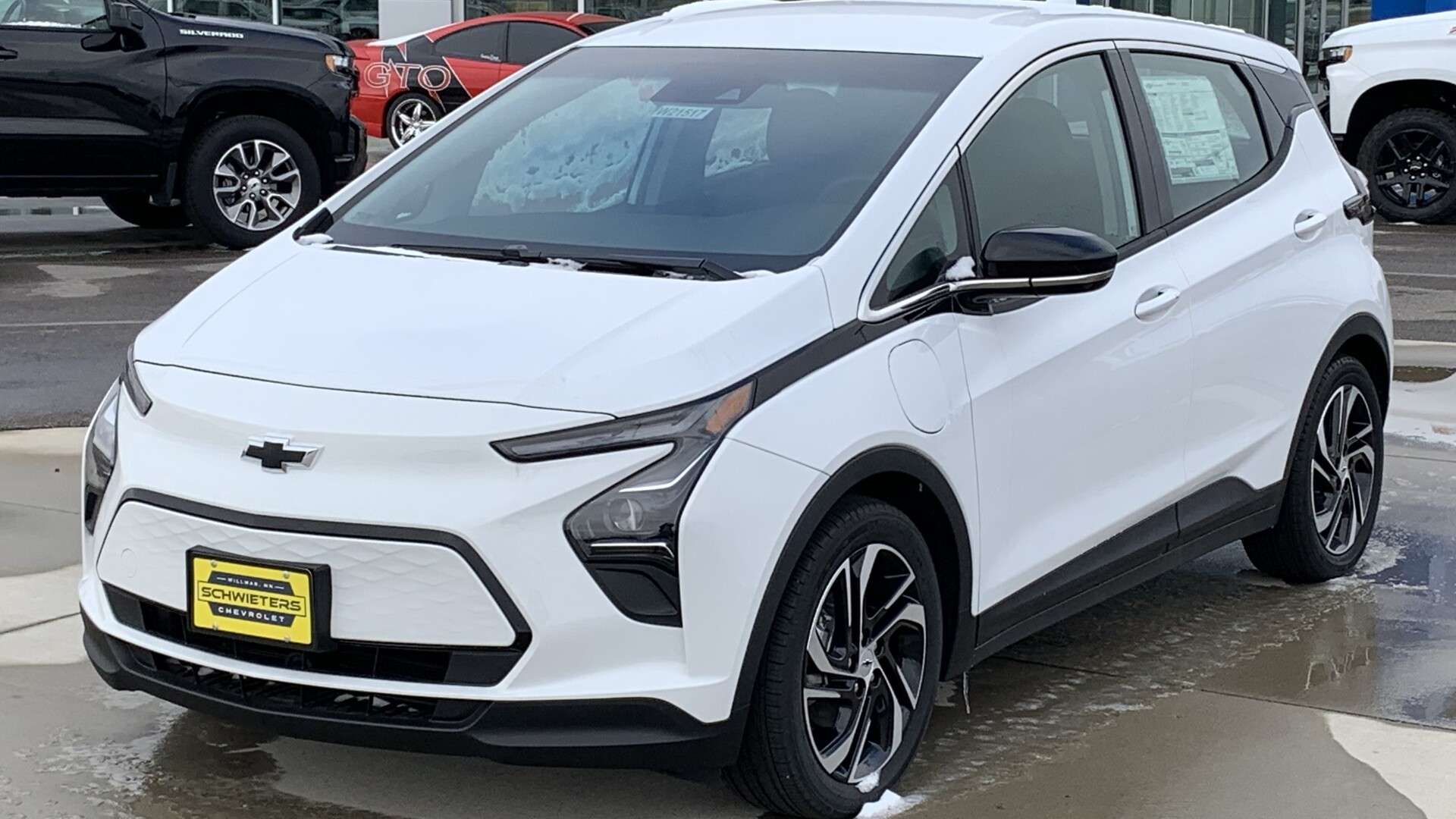
Jose De Jesus Tovar was driving a white 2023 Chevrolet Bolt EV he had rented from Hertz east on Gilman Springs Road in unincorporated Riverside County, California, at about 2:18 p.m. on Sept. 9, 2024. Riding with him were Maria Patricia Soriano Jovel, 31, and two children, a 4-year-old girl and a 6-year-old boy. According to a lawsuit their families filed in August, a westbound 2012 Honda Insight tried to pass a 2015 Dodge Durango on the right, hit it, and both vehicles crossed into the eastbound lanes, where the front of the Honda struck the front of the Bolt. The Bolt hit a metal-beam guardrail and a barbed-wire fence, went airborne, and came to rest in a drainage ditch. All four people inside died.
The families say the crash was only part of what killed them. Their complaint, filed Aug. 18, 2026, in Riverside County Superior Court against General Motors, Chevrolet, Hertz Vehicles LLC and the Durango’s driver, alleges that battery cells under the Bolt’s rear seat cushion smoked and ignited after the impact and that the fire spread through the passenger compartment. On Sept. 30, GM moved the case to the U.S. District Court for the Central District of California, where it is now Francisco Soriano Cruz v. General Motors LLC, No. 5:26-cv-05785. None of the allegations has been proven in court.
The coroner findings at the center of the complaint
The complaint cites Riverside County Sheriff’s Department coroner reports, by number, for each of the four people in the Bolt. Tovar, 55, the belted driver, died of blunt impact injury to the torso with thermal injury and smoke inhalation. Soriano Jovel was pronounced dead at the scene of multiple blunt force injuries; the families argue further forensic work will show the fire contributed. The 4-year-old girl died of thermal injuries and smoke inhalation. The 6-year-old boy died of acute carbon monoxide intoxication.
Those last two findings carry the families’ case. A person has to be breathing inside a burning car to die of carbon monoxide, and neither child’s listed cause of death is impact trauma. If the coroner reports read the way the complaint describes them, the two youngest passengers lived through the collision and died in what came after it. The complaint adds that the fire “prevented effective rescue and extraction of the occupants.”
All three vehicles were on fire when crews arrived
Proving that the Bolt’s battery started the fire is harder than the coroner findings make it look. CBS Los Angeles reported at the time, citing the Riverside County Fire Department, that firefighters found all three vehicles burning and that the flames spread into about 4 acres of roadside brush. The station reported six deaths and four people hospitalized. GM’s removal filing refers to the Honda’s driver as a decedent. The complaint itself concedes that the Bolt burned “along with other vehicles involved in the collision,” and that the fire left the Bolt’s seatbelts impossible to inspect.
The California Highway Patrol’s collision report noted no apparent pre-existing mechanical defects, according to the complaint, which argues that was an on-scene visual check that could not have caught a latent flaw inside a sealed battery pack. The families say they will pursue the forensic and engineering analysis in discovery. A gasoline-powered Honda burning nose-to-nose with the Bolt in a dry ditch is the first thing GM’s experts will point to, and the families’ experts will need to put the origin of the Bolt’s fire under the rear seat, where the complaint says the upper section of the pack sits, rather than at the front of the car.
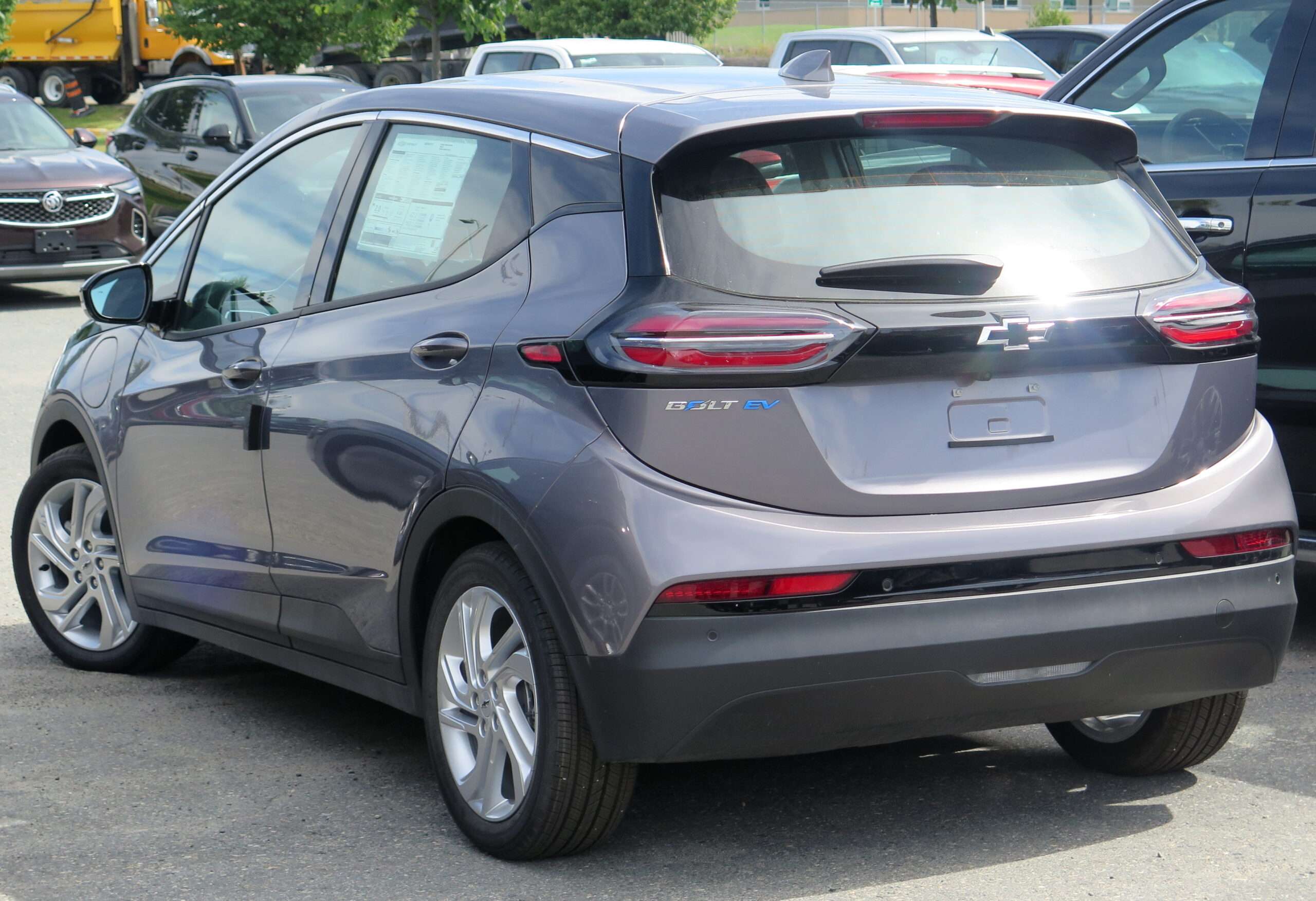
The Bolt’s battery recalls skipped the 2023 model, and a crash-fire recall did not
The Bolt’s best-known safety problem is the battery fire risk that led GM to recall the car in 2020 and 2021. The largest expansion, NHTSA campaign 21V-650, dated Aug. 20, 2021, covered 52,414 2020 to 2022 Bolt EVs and 2022 Bolt EUVs whose high-voltage batteries could catch fire when charged to full or nearly full capacity. NHTSA’s recall database lists no battery recall for the 2023 Bolt EV. The complaint does not cite those recalls or any specific prior fire. It says GM knew of the risk from internal testing and from complaints, claims, lawsuits and regulatory investigations it does not name.
The complaint also does not mention the one Bolt recall that is about fire after a crash. On Dec. 15, 2022, GM filed recall 22V-930 with NHTSA covering 111,242 2017 to 2023 Bolt EVs built from July 26, 2016, through Oct. 25, 2022. In a crash that fires the front seatbelt pretensioners, GM wrote, the pretensioner’s exhaust can ignite carpet fibers near the B-pillar. GM estimated 1% of the cars had the defect and counted three field incidents, including a 2018 Bolt that burned in Korea. The fix is metal foil over the carpet near the pretensioner and, on some cars, a cover.
A year later the fix itself needed fixing. In recall 23V-845, dated Dec. 14, 2023, GM reported that 66 Bolts Simpson Chevrolet of Irvine had marked as repaired under 22V-930 were “in fact not repaired.” GM recalled every 22V-930 repair that dealership had closed, 6,771 cars in NHTSA’s current database listing (GM’s original filing counted 6,614). GM said its data showed no complaints or incidents tied to the missed repairs.
Nothing I found in the court filings or the recall documents says whether Tovar’s rental fell inside the 22V-930 population, whether its pretensioners fired, or whether it had the foil. The pretensioner fire starts in the carpet by the B-pillar, beside the front seats, not under the rear seat where the families place the origin. But it is a documented post-crash fire path in this exact model, and Hertz’s service and recall records for the car will show whether it matters here. Those records matter for another reason: under 49 U.S.C. 30120(i), a federal rule Congress extended to rental companies in 2015, a rental company that gets a recall notice cannot rent the covered car until the remedy is done, with a narrow exception for interim fixes that remove the risk. According to GM’s filing, the state court file showed Hertz had not yet been served.
Why GM wants a federal judge, and why the Durango driver matters
GM’s notice of removal turns on the Durango’s driver. A federal court can hear a state-law case like this one only if every plaintiff is from a different state than every defendant. The families are all California citizens. GM and Chevrolet are citizens of Delaware and Michigan, and GM says Hertz is a citizen of Delaware and Florida. The Durango’s driver lived in Moreno Valley, according to the CHP report, which would ordinarily keep the case in Riverside County.
GM’s answer is a doctrine called fraudulent joinder, a term of art that does not require proof anyone lied. Under the Ninth Circuit’s 2018 ruling in GranCare v. Thrower, a federal court may ignore a local defendant who cannot be liable on any theory. GM argues that every cause of action in the complaint is a product-liability claim about how the Bolt was designed, built and sold, which a driver who had nothing to do with the car cannot be liable for. It quotes witness statements from the CHP report describing the Honda passing on the right in a lane meant for turning traffic, including one witness who said the Honda’s driver “ran out of room.” GM calls the claims against the Durango’s driver “frivolous, illegitimate, and advanced solely to prevent removal.” The families allege he failed to keep a safe distance or a proper lookout.
The venue fight has a practical stake. In a California state civil trial, three-fourths of the jury can return a verdict. In federal court, Rule 48 requires a unanimous verdict unless the parties agree otherwise, so a single holdout juror can keep either side from winning a verdict. The families can ask the federal judge to send the case back. As of the docket’s latest entries on Oct. 7 and 8, no remand motion appeared; an answer to the complaint was filed Oct. 6, and the court reassigned the case and sent the parties notice of its mediation program on Oct. 7.
California’s pain-and-suffering window closed before the families filed
California splits a death case in two. A wrongful-death claim pays the family for its own losses: support, companionship, funeral costs. A survival claim is the dead person’s own case, brought by the estate. For decades, California barred survival claims from recovering anything for the victim’s pain and suffering, a rule critics called the death discount. SB 447, which took effect Jan. 1, 2022, lifted that bar, but only for a set period. Code of Civil Procedure section 377.34 now allows those damages only in cases filed on or after Jan. 1, 2022, and before Jan. 1, 2026.
The families filed on Aug. 18, 2026, 22 days before California’s two-year deadline for death claims would have run on the crash. That timing put them inside the deadline and about eight months outside the pain-and-suffering window. The harm their complaint describes most specifically, a child’s burns and another child’s carbon monoxide poisoning, is the category of loss their survival claims can no longer be paid for. The estates can still recover economic losses the four suffered before death and any punitive damages they could have won had they lived, but the complaint’s prayer for relief does not ask for punitive damages. The families’ wrongful-death claims for their own losses are unaffected.
What the federal case will test next
The next steps are whether the case stays in federal court and what the battery pack, the CHP’s Multidisciplinary Accident Investigation Team report and Hertz’s records for the car show about where the fire began. The complaint lists the companies that designed or supplied the Bolt’s battery cells only as unnamed “Doe” defendants, so the cell maker could be added later. It is the latest in a run of wrongful-death suits against automakers where the fight over what failed comes down to experts reading a burned or crushed car, and lithium-ion thermal runaway is a problem the industry is still engineering around.
For anyone renting a car, the protection in federal law works only if the rental company acts on the recall notice. The same free VIN lookup on NHTSA’s site that owners use works on a rental; the VIN is printed at the base of the windshield, and The Auto Wire’s running list of recent recalls shows how often new campaigns land. NHTSA is collecting public ideas on how to get more recalled cars fixed at a Nov. 5 meeting.
California let pain-and-suffering damages in survival claims expire on Jan. 1, so the estates of two children who, by the coroner findings cited in the complaint, survived the impact can’t recover for what they went through afterward. Should California bring those damages back for good, or is it right that a death case pays the family’s losses and not the victim’s?