
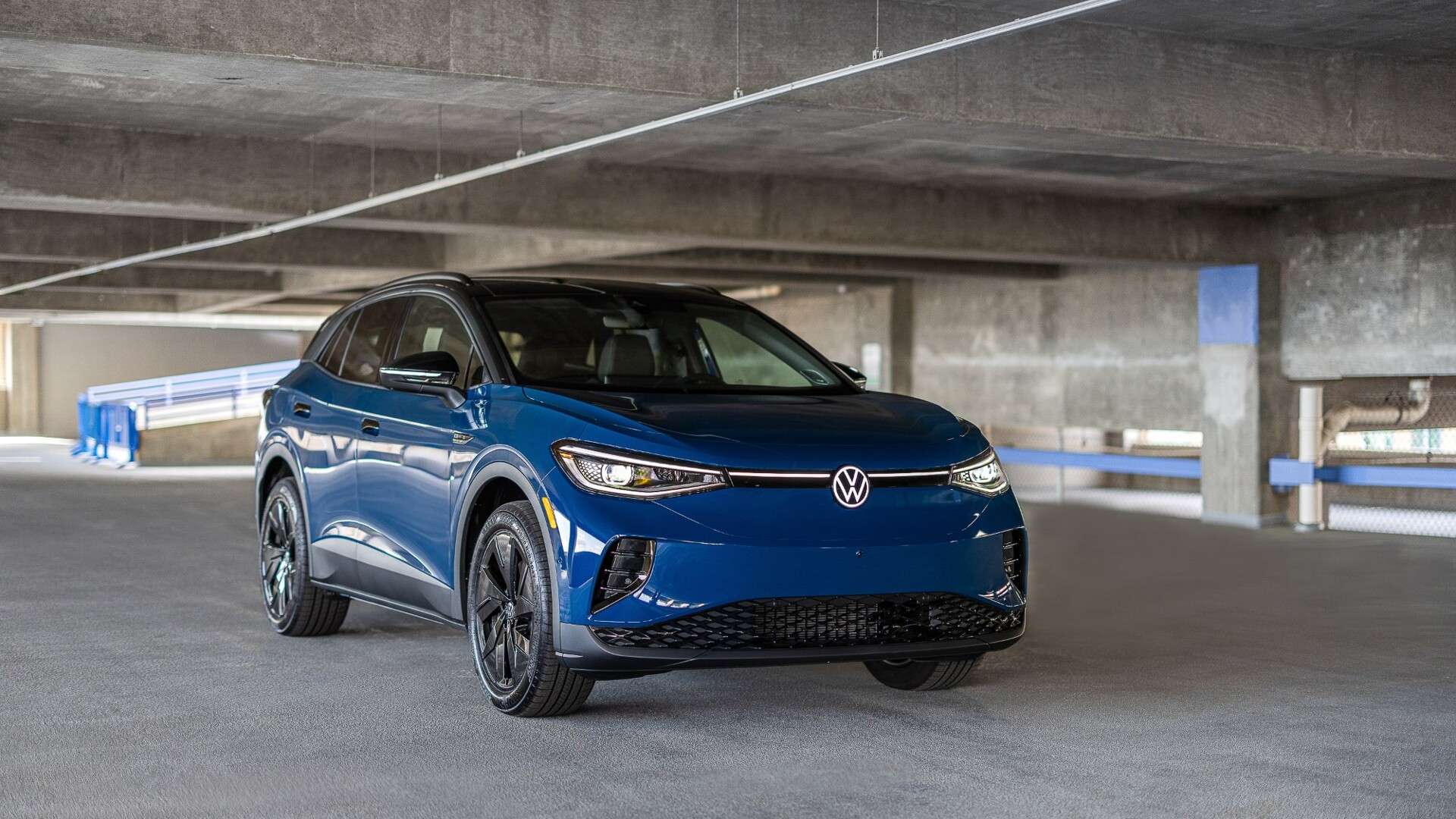
Volkswagen has told the owners of 22,524 ID.4 electric SUVs to stop charging their batteries past 80% because, by the company’s own account to federal regulators, the packs can catch fire and Volkswagen does not yet know why. The cells come from SK Battery America’s plant in Commerce, Georgia. The SUVs were built between Jan. 1, 2023, and Feb. 1, 2025, the period after Volkswagen moved ID.4 assembly to Chattanooga, Tennessee.
Volkswagen decided whose car is in the recall partly by reading the cars’ own charging data, along with factory and supplier records.
Volkswagen Group of America filed its Part 573 safety recall report with the National Highway Traffic Safety Administration on Sept. 30 and amended it Oct. 1. The campaign, NHTSA No. 26V630 and Volkswagen code 93EX, covers 2023 through 2026 model-year ID.4s. The report says certain charging profiles, combined with a state of charge above 80%, may trigger thermal propagation in some batteries. That is the chain reaction in which one overheating cell heats its neighbors until the pack burns. Volkswagen lists the root cause as unknown and the repair as still under development.
Volkswagen used charging records to draw the recall line
Manufacturers usually define a recall population by build dates, VIN ranges, or part batches. Volkswagen did that here, too, but its report says the population was also set using “available vehicle charging data.” Cars were left out if their cells were “produced outside the suspect range,” or if they had recent, complete data showing charging use “below the defined threshold.”
The report doesn’t say what that threshold is or which production dates make up the suspect range. In practice, two ID.4s with cells from the same SK batch could land on opposite sides of the line. One owner who charged at home to a modest level, in a car that reported that habit back to Volkswagen, could be excluded. A neighbor who road-tripped on fast chargers could be included. A car whose data was missing or out of date stays in by default, which is the cautious choice.
The chronology in the filing shows how the company got there. On June 17, while reviewing battery thermal events, Volkswagen’s Product Safety Committee saw preliminary data pointing to a link with isolation-resistance readings and the share of charging done on DC fast chargers. It ordered a field study of ID.4 battery systems not already covered by earlier recalls. On Sept. 21 the committee reviewed the results, asked SK for details on its production measures and when its output could be considered clean, and ordered more analysis of charging behavior. On Sept. 23 it decided to recall the cars. The report counts 22 U.S. claims between Jan. 18, 2024, and Aug. 7, 2026, but doesn’t say what each claim involved.
Volkswagen estimates 0.1% of the 22,524 cars have the defect. That works out to about 23 vehicles, nearly the same number as the claims it found. The company is restricting about 22,500 owners to guard against a few dozen batteries it can’t identify ahead of time.
What an 80% cap costs an ID.4 owner in range
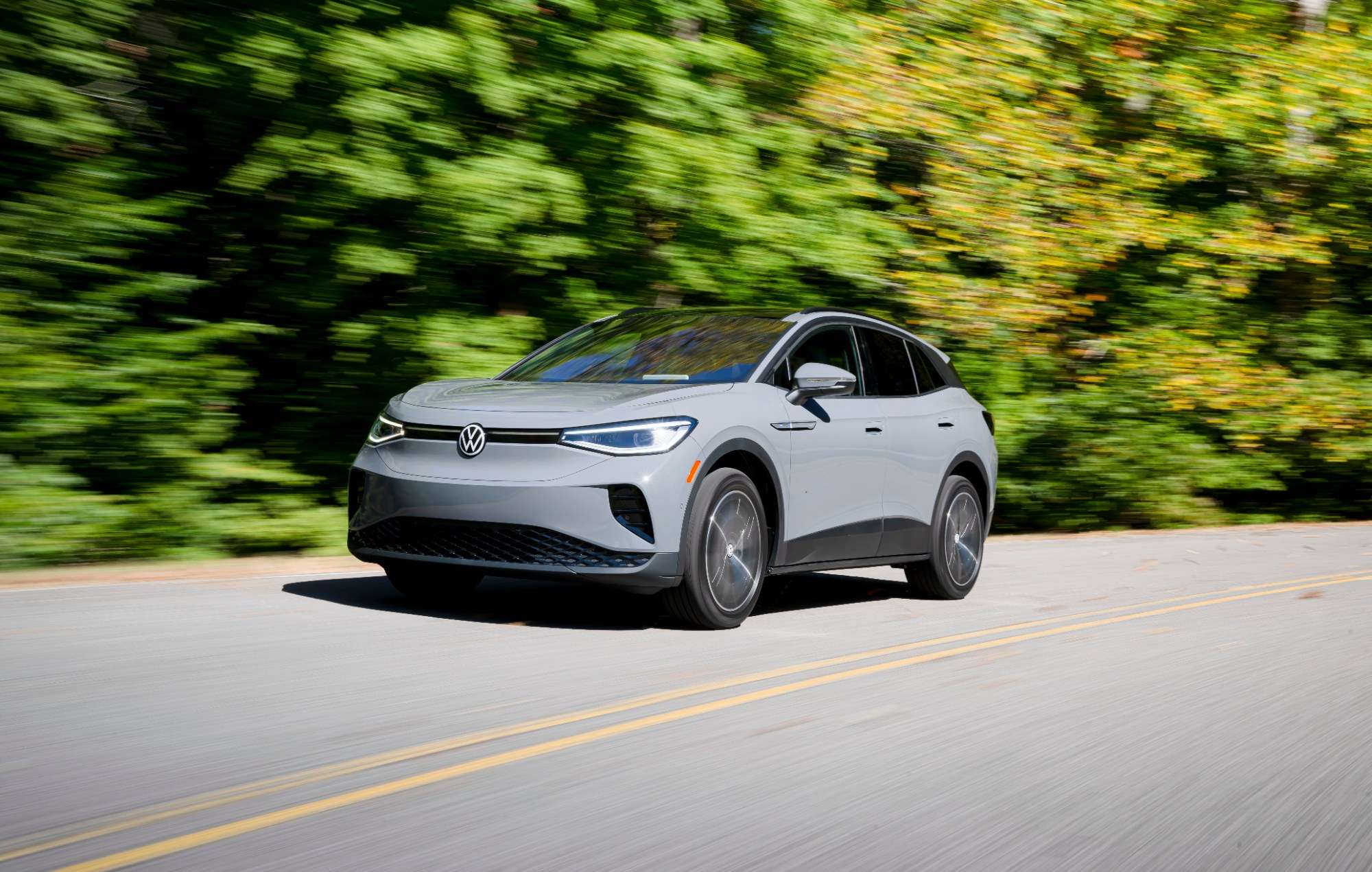
The fix is on hold, so the owner carries the cost in lost range. According to the EPA ratings on FuelEconomy.gov, a 2023 ID.4 Pro is rated at 275 miles and a 2024 or 2025 Pro at 291. The standard-battery ID.4 is rated at 209 miles for 2023 and 206 for 2024 and 2025, and the 2024–25 AWD Pro at 263. At 80%, those cars start the day with roughly 220, 233, 167, 165, and 210 miles. Those figures are The Auto Wire’s straight-line math, not Volkswagen’s, and real-world range in cold weather or at highway speed will be lower.
For a commuter who plugs in every night, losing about 40 to 60 miles of ceiling hardly matters. For someone who bought an ID.4 to drive between cities, it means an extra fast-charging stop. Fast-charging habits are one of the things Volkswagen’s engineers were studying in the first place. Unlike the two misaligned-electrode recalls that came before it, this report doesn’t tell owners to avoid DC fast chargers.
Volkswagen’s interim plan has two parts. Owners will get a warning sticker to place in the car reminding them not to charge above 80%. The report also says some vehicles may be set to cap charging at 80%, depending on their configuration and online connectivity. The connection that let VW decide you’re in the recall is the same one that may let it cap your battery remotely.
The federal deadlines behind Volkswagen’s recall schedule
Federal rules set the pace of a recall, and Volkswagen met each deadline with little time to spare. Under 49 CFR 573.6, a manufacturer has to file its report no more than five working days after it decides a defect is safety-related. Volkswagen made that decision on Wednesday, Sept. 23, and filed on Wednesday, Sept. 30, the fifth working day.
Owners have to be notified by first-class mail within 60 days of that filing under 49 CFR 577.7, which makes the deadline Nov. 29. Volkswagen expects to mail its interim letters on Nov. 27, the day after Thanksgiving. When a fix exists, the same rule requires a second letter “within a reasonable time.” No date is attached to that, and for now Volkswagen’s report lists the final remedy only as a phased recall.
Volkswagen is also not offering reimbursement. 49 CFR 573.13 normally requires a plan to repay owners who fixed the problem at their own expense before the recall. However, it lets a manufacturer exclude costs that a warranty would have covered. Volkswagen’s report says it won’t offer a plan because the cars are within the New Vehicle Limited Warranty period. Volkswagen says that warranty runs four years or 50,000 miles. The earliest-built cars in this recall turn four in January 2027, and a high-mileage 2023 car may already be past 50,000 miles. Either way, the eventual recall repair has to be free under 49 U.S.C. 30120, whatever the warranty status.
The fourth ID.4 battery fire recall in 10 months
This is not the first time these batteries have been recalled. NHTSA’s records show three earlier ID.4 battery campaigns since December, and all of them list SK Battery America in Commerce, Georgia, as the supplier.
- 25V836, filed Dec. 3, 2025, and expanded Dec. 15: 629 ID.4s whose cells may have misaligned electrodes. Volkswagen’s report lists five thermal events, in Illinois, California (twice), Utah, and Colorado, between January 2024 and August 2025. Owners were told to cap charging at 80%, avoid DC fast chargers, and park outside after charging.
- 26V028, filed Jan. 21, 2026: 670 more ID.4s with the same misaligned-electrode defect and the same instructions.
- 26V030, filed the same day: 43,881 ID.4s without Volkswagen’s self-discharge detection software, after Volkswagen said deviations at the module supplier may cause self-discharge. The fix was a battery health check, new software, and replacement modules where needed.
Together, the four campaigns account for 67,704 recall entries. Some cars may appear in more than one, so the count of individual vehicles could be lower. The first three recalls came with a known defect and a defined repair. In 26V630, Volkswagen has a set of charging conditions linked to fires and a supplier it is still asking questions. It does not yet have a cause or a fix.
The Auto Wire has followed Volkswagen’s recall run this fall, including the steering-rack bolt recall covering 208,724 U.S. vehicles, and NHTSA’s own push to rethink how recalls work.
What ID.4 owners can check before the November letters
VINs in recall 26V630 have been searchable on NHTSA’s recall lookup since Oct. 6. Owners of 2023–2026 ID.4s don’t need to wait for the mail. Volkswagen customer service is at 1-800-893-5298, and the recall code to cite is 93EX. Until a fix is announced, the charge limit can be set from the car’s charging settings, and Volkswagen’s report points owners to the owner’s manual for that. A car that isn’t in this campaign may still be in one of the three earlier ones, so the full VIN history matters.
Owners who have had a battery thermal event, a warning, or a dealer visit related to the pack can file it with NHTSA through its safety complaint form. NHTSA uses owner complaints to spot safety problems, including ones a recall may have missed. State lemon laws may also apply to a defect that goes unrepaired, but they vary, and the terms depend on the state and the car’s repair history.
The next date to watch is Nov. 27, when the interim letters are due. After that, the key question is whether Volkswagen’s second letter comes with a repair or with more limits on how owners can charge.
Should a carmaker be allowed to use owners’ charging data to decide who’s in a fire-risk recall, or should every ID.4 with cells from the suspect batch be included no matter how it was charged? And if you own an ID.4, did VW’s data put you in or leave you out?