
At the Oct. 12 national average of $4.33 a gallon, a car that gets 25 mpg costs about $2,080 a year in gasoline over 12,000 miles. An electric car charged at home at the average residential electricity rate covers the same miles for about $660, and a 50-mpg hybrid for about $1,040. That works out to roughly $118 a month in EV fuel savings. By The Auto Wire’s math, a subprime borrower financing a $20,000 used car to get those savings would pay about $520 a month.
That gap is why the fuel spike is landing so unevenly. The tools that cut a fuel bill, a hybrid or an EV, pay off for drivers with cheap credit and a place to plug in. For the households already falling behind on loans, the expensive part of a car is the financing, and at today’s rates the cheapest vehicle they can own is usually the paid-off one they already have, even at $4.33 gas.
What a mile costs on gasoline, hybrid and electric power
The fuel side of the math favors electricity by a wide margin. Regular gasoline averaged $4.331 in the week of Oct. 12, according to the Energy Information Administration, up from $3.061 a year earlier, a 41.5 percent increase. Residential electricity averaged 18.31 cents per kilowatt-hour in July, the latest month the EIA has published, up 4.9 percent from a year earlier, according to its electricity monthly update.
The Auto Wire used round efficiency figures to keep the comparison simple: 25 mpg for an older gasoline sedan, 50 mpg for a hybrid, and 30 kilowatt-hours per 100 miles for a compact EV. At those rates, a mile costs about 17.3 cents on gasoline, 8.7 cents in the hybrid and 5.5 cents in the EV. Over 12,000 miles a year, the hybrid saves about $1,040, or $87 a month. The EV saves about $1,420, or $118 a month. The EV figure assumes home charging at the national average rate. Public fast chargers set their own prices, and renters without a plug where they park never see the home rate.
A $520 payment to save $118 on fuel
Then the loan shows up. Experian’s second-quarter auto finance data put the average used-car APR at 8.81 percent for prime borrowers and 19.10 percent for subprime borrowers. On a $20,000 used hybrid or EV financed over 60 months, the prime borrower pays about $413 a month and roughly $4,800 in interest. The subprime borrower pays about $520 a month and roughly $11,200 in interest.
Against a paid-off gasoline car, neither borrower comes out ahead on monthly cash. The prime borrower spends about $295 a month more than the fuel savings return; the subprime borrower about $400 more. Swapping the old car only pencils out if it is eating several hundred dollars a month in repairs, every month. The BLS says vehicle maintenance and repair cost 5.8 percent more in September than a year earlier, which hurts, but a $2,000 repair is still about four months of that subprime payment, and the payment never ends early because the car runs well.
The used-EV credit was built for these buyers, and it ended 13 months ago
Washington had a program aimed at this buyer. The used clean vehicle credit was worth 30 percent of the sale price, up to $4,000, on EVs and plug-in hybrids selling for $25,000 or less at a dealer. It was capped by income: $75,000 in modified adjusted gross income for single filers, $112,500 for heads of household and $150,000 for joint filers. Those limits put it squarely in the income range now feeling the squeeze. The IRS says the credit is not available for vehicles acquired after Sept. 30, 2025, the cutoff set by last year’s tax law.
The credit would not have fixed the math for a subprime borrower. Taking $4,000 off the $20,000 car drops the 19.10 percent payment to about $416, still roughly $300 more than the fuel savings. It would have closed about a quarter of the gap. The one tax break still on the books for car buyers, the interest deduction, excludes used cars entirely, as The Auto Wire reported this week. The result is that the federal government stopped helping lower-income drivers buy efficient used cars about a year before gasoline jumped $1.27 a gallon, as The Auto Wire noted when it looked at global EV sales and the missing U.S. credit.
Depreciation erases more of the EV’s fuel advantage
Monthly cash is not the whole cost. AAA’s 2026 Your Driving Costs study, which The Auto Wire covered last week, found that EVs saved $1,500 or more a year on fuel and then gave it back in projected depreciation, and that hybrids were cheapest to own in every class AAA compared. That study looks at new cars. For a used-car buyer the lesson carries over in a smaller way: a car that loses value fast is a bad thing to owe money on, because the loan balance can outrun the car. The BLS index for used cars and trucks was down 1.5 percent over the year through September.
Who comes out ahead when gas jumps $1.27
A driver with a 750 credit score, a garage outlet and a car loan rate under 9 percent can answer $4.33 gas by buying a hybrid or an EV and cut a fuel bill in half or better. A driver with a 600 score who parks on the street pays the gas station or pays a lender, and on the numbers above the gas station is cheaper. The higher gasoline goes, the more the first driver saves and the more the second one pays, which widens the gap between them every week fuel stays this high.
The fuel numbers move every week with the EIA’s retail price survey, and the agency’s October outlook expects gasoline to average $3.56 in 2027, which would cut the EV’s fuel savings in our example by about a quarter. The financing numbers move more slowly, and Experian’s third-quarter rates will show whether subprime used-car APRs have budged from 19.10 percent. As long as the loan costs more than the fuel it saves, the paid-off car stays in the driveway.
If you are driving an older car that’s paid off, would $4.33 gas get you to sign a loan for something more efficient, or are you running it until it quits?
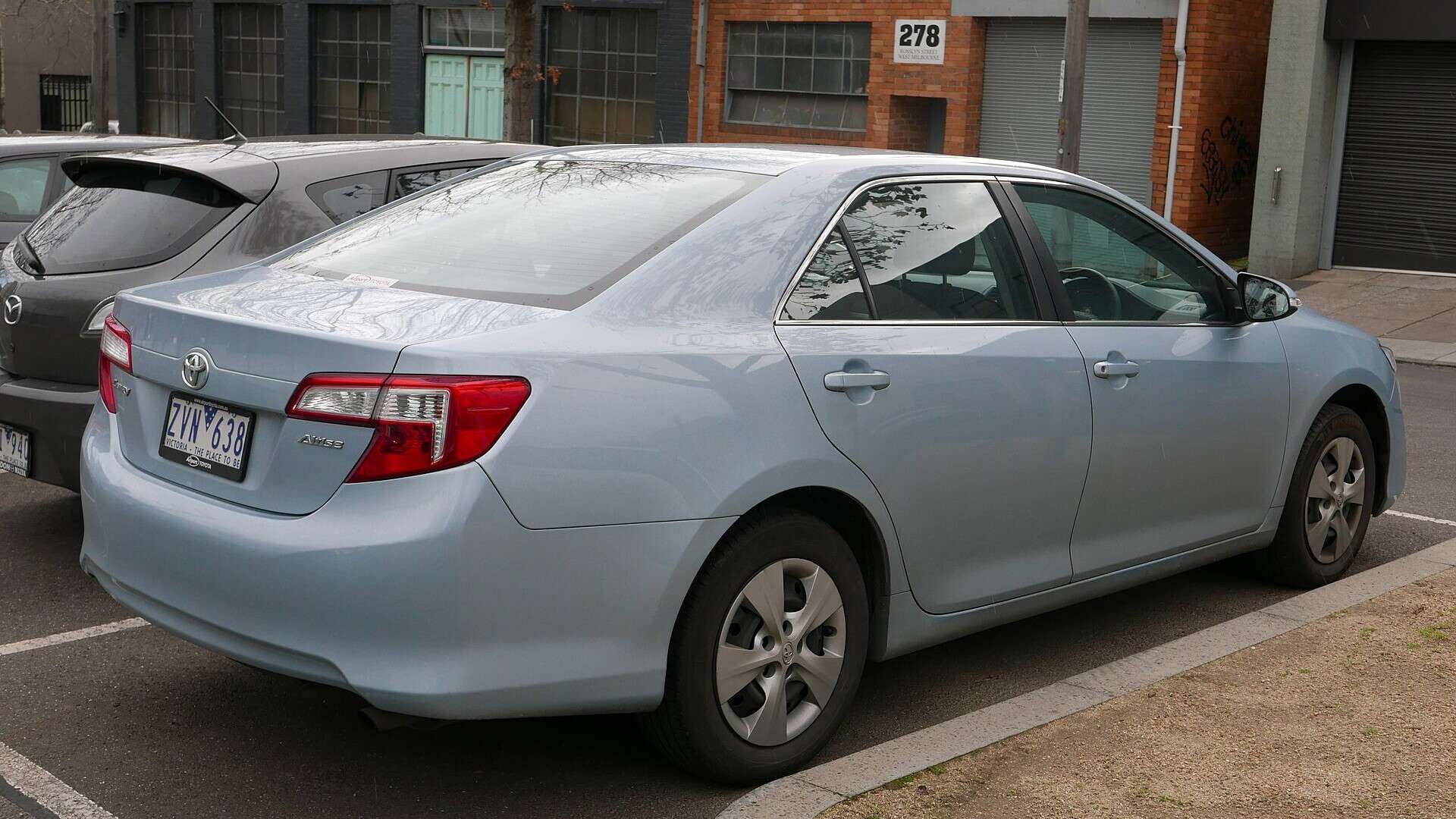
Top photo: A 2013 Toyota Camry, photographed in Australia in 2015. (Photo: OSX / Wikimedia Commons, public domain)