
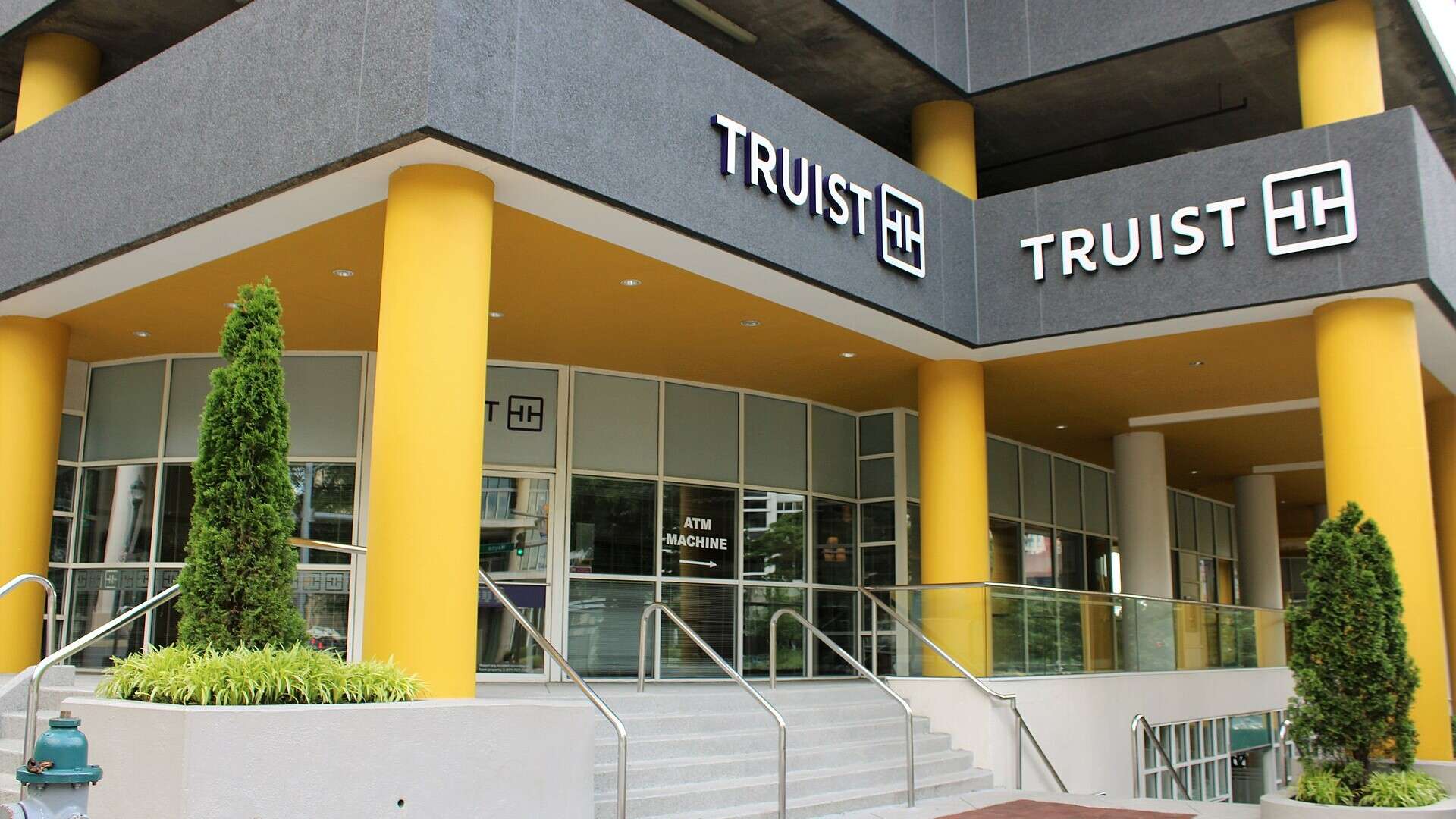
Regional Acceptance Corp. has been buying car loans made to people with bruised credit since 1978. In the first six months of 2026, the roughly $5.5 billion of those loans on its books earned its parent, Truist Financial, about nothing before taxes. Truist has now sold the whole portfolio, and the lender behind it is closing its offices in North Carolina and Texas.
A pile of high-rate car loans that earns nothing sounds like a contradiction. Inside a big bank, it’s arithmetic. Reserve rules, charge-offs and capital requirements ate the interest. On a regulated bank’s balance sheet the loans earned close to nothing, yet Truist expected about $5.2 billion in net proceeds from an outside buyer. For the dealers who sent RAC their harder deals, that means one fewer bank-owned buyer bidding on them.
What Truist sold, and what it booked
Truist disclosed the deal in a Sept. 15 filing with the Securities and Exchange Commission, which described a recently signed transaction tied to its decision to leave near-prime auto lending. The investor slide attached to that filing put the sale at about $5.5 billion of auto loans, substantially all of RAC’s assets. It said RAC’s pre-tax earnings were roughly breakeven for the six months ended June 30, 2026, and it estimated about $5.2 billion in net proceeds, a $535 million release of loan-loss reserves and about $945 million in added common equity tier 1 capital, the core measure regulators use to judge a bank’s cushion.
The sale closed faster than the late-third or early-fourth-quarter window Truist first gave. Its third-quarter earnings release said the quarter’s results reflect the completion of the RAC loan sale, and the final figures moved. The reserve release came in at $581 million before taxes, or 36 cents a share. Truist charged off $251 million when it moved the RAC loans into the held-for-sale column, plus another $66 million before the transfer, and those RAC charge-offs made up 39 of the 77 basis points in the bank’s quarterly net charge-off ratio. On the Oct. 16 earnings call, Chief Financial Officer Mike Maguire said the sale generated about $1 billion, or 23 basis points, of that capital measure, up from the September estimate. He described the unit plainly: “RAC was a roughly break-even business.”
Truist has not named the buyer in its filings or on the call. Bloomberg reported that it is Apollo Global Management, according to WSOC-TV in Charlotte. Truist has not confirmed that.
How a book of high-rate car loans ends up earning nothing
Since big U.S. banks adopted the current expected credit loss accounting standard, known as CECL, in 2020, a lender has to set aside the losses it expects over a loan’s entire life on the day it books the loan. For a prime borrower that charge is small. For a near-prime contract it is large, and it lands up front, while the interest that is supposed to pay for it trickles in over five or six years of monthly payments.
Truist’s own numbers show how large. Its September estimate of a $535 million reserve release on $5.5 billion of loans works out to about 9.7 cents per dollar. At closing, Truist charged off $251 million on the transfer and released $581 million. Add those two figures and the allowance Truist had been carrying against the RAC loans comes to roughly $830 million, about 15 cents on every dollar outstanding. That is The Auto Wire’s arithmetic from the earnings release, not a number Truist published, but it gives a sense of what the bank expected to lose on these borrowers.
Truist’s second-quarter financial supplement shows nonaccrual indirect auto loans, the loans on which the bank had stopped counting interest because it no longer expected to collect it in full, at $569 million on June 30, 2026. A year earlier the figure was $240 million. That line covers all of Truist’s dealer-originated car loans, prime and near-prime, but RAC was a big piece of it: $5.5 billion of a $23.8 billion indirect auto book, or about 23%, by my math. The annualized net charge-off rate on that book was 2.14% in the first quarter and 1.73% in the second.
Selling the loans flipped the accounting. Once the portfolio was gone, the reserve held against it came back into capital, and the bank no longer had to hold capital against the loans themselves; the September slide credited about $600 million of the capital gain to lower risk-weighted assets. Truist gave up the interest income too. Maguire said the bank’s outlook now reflects about $125 million less net interest income because of the sale. For a business he called break-even, that trade was easy.
Thirty years of near-prime lending, ended by a new CEO’s cleanup
RAC, based in Greenville, N.C., was founded in 1978 and bought by BB&T in 1996, according to a 2006 insideARM report on BB&T’s agreement to buy FSB Financial, a nonprime auto finance company in Arlington, Texas, that was to be folded into RAC. BB&T merged with SunTrust in 2019 to form Truist, and RAC came along.
Mike Lyons, who became Truist’s chief executive in September, is pruning anything that lends to people who don’t otherwise bank there. Truist had already stopped originating marine and RV loans. On Oct. 14 it signed an agreement to sell $7.7 billion of unsecured consumer loans, substantially all the assets of LightStream, its online personal-loan arm, according to the third-quarter release. On the call, Lyons grouped the exits together as “nationally focused standalone single product businesses like Marine and RV, RAC, and LightStream.”
Truist is not leaving car loans. Lyons said the bank sees room to grow “indirect auto for our clients,” meaning dealer-arranged loans to people who also keep checking accounts, mortgages or other business at Truist. What it has left is lending, through dealers in dozens of states, to buyers it will never see again once the contract is paid off. A loan like that earns only its interest, so when losses rise there is nothing else to make up the difference. A checking customer who also has a mortgage and a credit card with the bank carries the auto loan along with the rest of the relationship.
What changes for RAC borrowers and the dealers who sold them cars
For people already paying off an RAC loan, a sale does not rewrite the contract. The rate, payment amount and remaining term in a retail installment contract go with the loan when it changes hands. What can change is who collects the payment and where it goes. Truist has not said publicly who will service the loans. Borrowers should expect a notice naming a new servicer and payment address, and they should check any such letter against their contract and the contact information on their existing statements before sending money anywhere new, because loan transfers are a favorite moment for payment scams.


For dealers, the loss is a buyer. In indirect lending, the customer signs a retail installment contract with the dealership, and the finance office sends the application to several lenders at once. The lender that approves and buys the contract funds the dealer, and the dealer often keeps part of the interest rate as compensation. RAC was one of the lenders bidding on near-prime applications, the ones a prime lender turns down or prices out. The WARN filings for its North Carolina offices say that once the transaction is complete, RAC will cease operations at those sites. Nothing Truist has released says whether the buyer of the loans will take over RAC’s dealer relationships or buy new contracts.
One lender’s exit does not close the near-prime market. Captive finance arms, credit unions and independent finance companies all buy this paper. Still, each bidder that drops out leaves a marginal application with fewer approvals to choose from, and the remaining lenders can ask for more money down or a higher rate. That pressure shows up in the finance office, where a deal that once got three approvals might now get two.
458 jobs in Pitt County and Arlington
The people who underwrote and collected these loans are losing their jobs. WARN Act filings with the North Carolina Department of Commerce cover 156 workers at RAC’s office at 266 Beacon Drive in Winterville and 97 at 1424 E. Fire Tower Road in Greenville, both in Pitt County, WSOC-TV reported. The Winterville site is set to close by February 2027 and the Greenville site by the end of July 2027. In Texas, a WARN notice reviewed by TheStreet lists about 205 full-time jobs at RAC’s facility at 1351 East Bardin Road in Arlington, with the first separations around Nov. 30 and the office expected to stop operating by Feb. 28, 2027.
That totals 458 jobs at those three sites. RAC also had regional business centers serving 42 states, according to Spectrum News, and WARN notices only cover larger layoffs, so the full count may be higher.
Near-prime auto credit is moving from banks to investors
Truist got out while car-loan stress was elevated but not getting worse fast. The Federal Reserve Bank of New York’s second-quarter household debt report put auto debt at $1.713 trillion. The annualized share of auto balances that became seriously delinquent, 90 days or more late, was 3.00%, up from 2.93% a year earlier. “Still, new delinquencies for auto loans and credit cards remain at elevated levels, a trend we’ll continue to monitor,” said Joelle Scally, an economic policy advisor at the New York Fed. The Auto Wire has tracked how that strain falls on used-car buyers and how it is reaching borrowers with good credit too.
The loans themselves did not go away. They left a bank that has to reserve for lifetime losses and hold regulatory capital against every dollar, and went to a buyer whose purchase brought Truist about $5.2 billion. If Bloomberg’s report is right, that buyer is an investment firm, which does not carry a bank’s capital requirements. My read is that this is how near-prime car lending is shifting: banks hand the riskiest dealer paper to investors who can hold it more cheaply, while the banks keep the prime borrowers who bring them other business.
RAC borrowers should watch for the servicing notice and make sure their autopay follows the loan. Dealers who sent RAC their near-prime deals will see whether the buyer starts bidding on new contracts or just collects on the old ones. Truist’s fourth-quarter supplement will show how much its indirect auto book shrinks once RAC is fully out, and Truist expects the LightStream sale to close in the fourth quarter.
If you’ve financed a car with less-than-perfect credit, did your loan get sold to someone you’d never heard of, and did it matter when money got tight?