
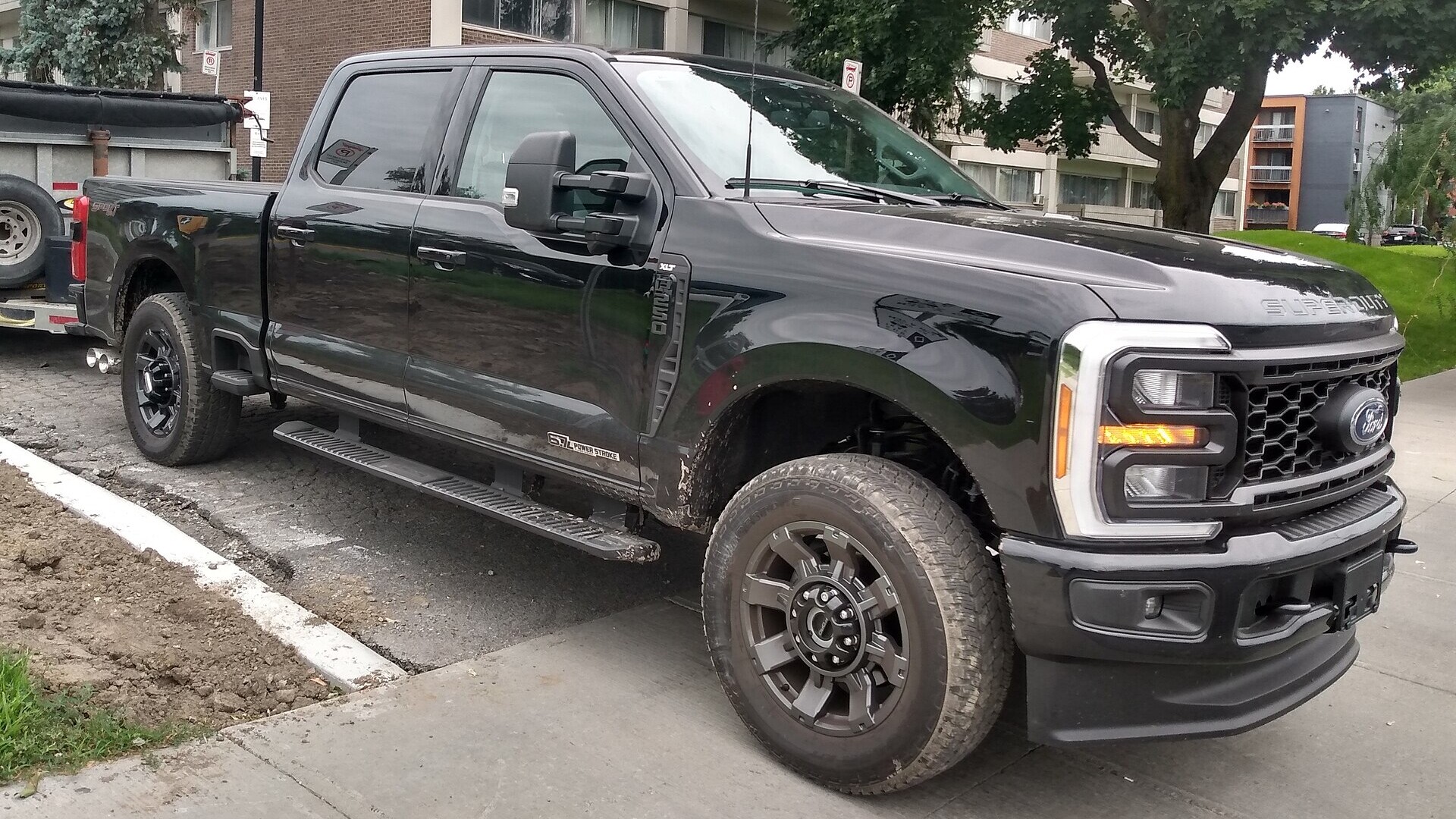
Ford will put a new instrument cluster in 102,159 F-Series pickups and chassis-cab trucks because the needles on their analog speedometers and tachometers can stick or swing erratically. By Ford’s own estimate, about 1% of those trucks have the problem. The recall report Ford filed with NHTSA on Oct. 6 also says the trucks meet the speedometer requirements of the federal safety standard it cites. Both statements hold up, because that standard governs where a speedometer sits, how it is labeled and whether it lights up. It sets no rule for whether the needle points at the right number.
What Ford told NHTSA
The filing, NHTSA campaign 26V-653 and Ford recall 26C46, describes the affected trucks as equipped with “suspect analog clusters.” I added up the populations from the report:
- 91,588 Super Duty trucks from the 2025 and 2026 model years, built Dec. 14, 2024, through April 17, 2026: 43,300 F-250s, 26,354 F-350s, 6,847 F-450s, 12,260 F-550s and 2,827 F-600s
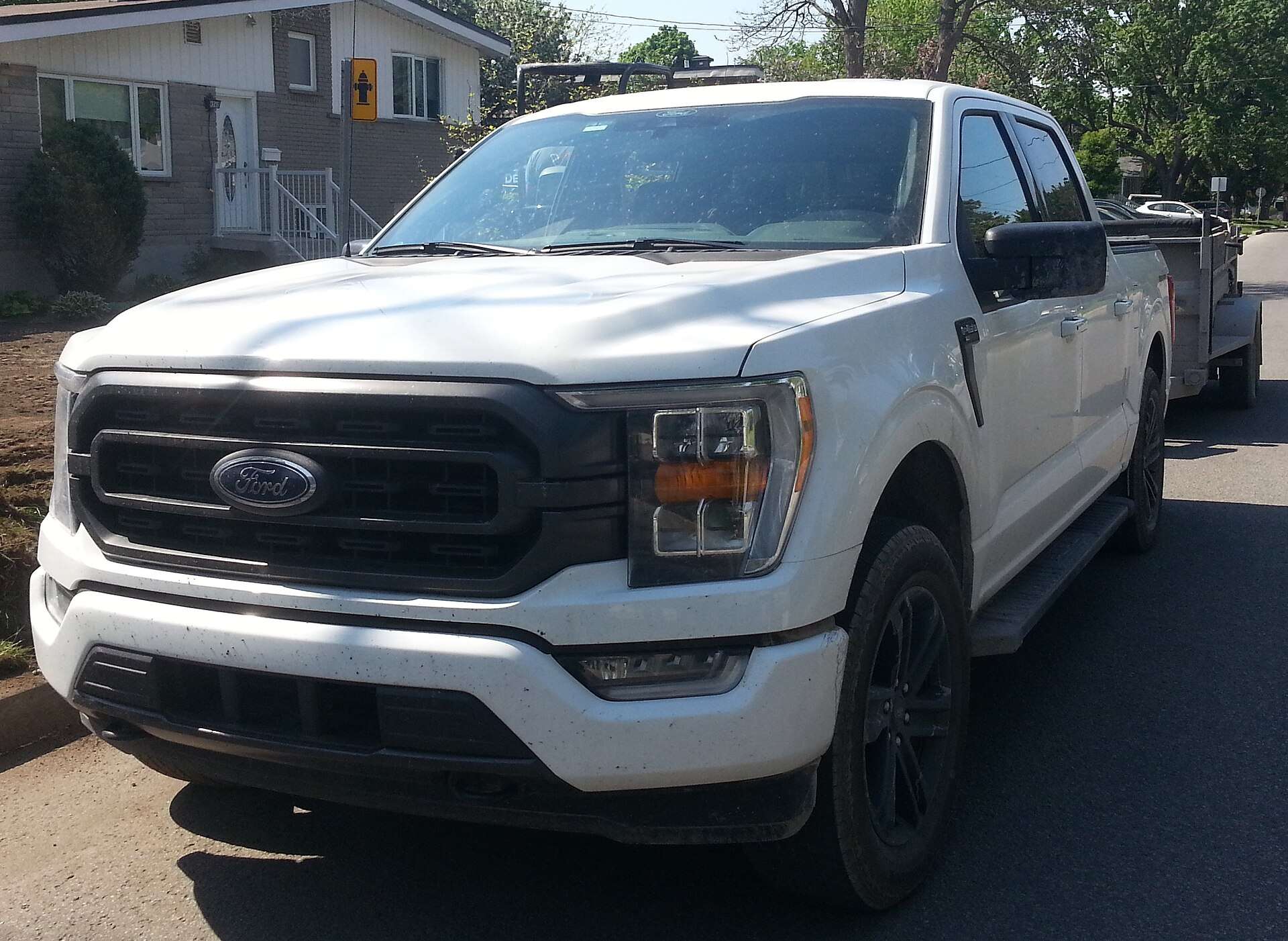
- 10,570 2026 F-150s built Aug. 22, 2025, through May 12, 2026
- One 2026 F-750, built Nov. 21, 2025
Ford blamed “supplier process deficiencies” at Visteon Corp.’s plant in Chihuahua, Mexico. As of Sept. 16, Ford had counted 18 warranty claims and 93 field reports covering 79 distinct trucks, received between Jan. 29, 2025, and Aug. 11, 2026. The company said it knows of no crashes, fires or injuries tied to the condition.
Dealers will replace the cluster module at no charge. Ford notified dealers on Oct. 9, plans to mail interim letters to owners Oct. 26 through 30, and expects to send a second round, once replacement parts are ready, Dec. 7 through 11. The interim letter exists because of a federal deadline: 49 CFR 577.7 requires owner notification within 60 days of the recall filing, and when the fix isn’t ready, a second notice once it is.
Federal speedometer rules cover labels and lighting, not accuracy
NHTSA’s public summary of the recall says the trucks fail to comply with Federal Motor Vehicle Safety Standard 101, “Controls and Displays.” Ford’s filing is more careful. It says Ford concluded the trucks “meet the stated requirements pertaining to the speedometer, but may be viewed as not meeting the full intent of the standard,” and that NHTSA’s Office of Vehicle Safety Compliance agreed the condition may not meet that intent.
The hedge makes sense once you read the rule. FMVSS 101 limits itself to the location, identification, color and illumination of controls, telltales and indicators. A speedometer has to be present, labeled and visible to a belted driver by day and night. The standard does not say how close the needle has to come to the truck’s real speed.
Washington did once write a speedometer rule with more to say. Standard No. 127, a late-1970s rule on speedometers and odometers, is why American cars of that era had dials that stopped at 85 mph. In an interpretation letter written while its repeal was pending, NHTSA’s chief counsel said “there appear to be no direct safety benefits to be gained from the regulation.” The agency rescinded Standard No. 127 in 1982, in a notice published at 47 FR 7250. No passenger-vehicle accuracy rule took its place.
The federal government does set an accuracy bar in one place, and it lands on the heaviest trucks in this recall. Motor carrier safety rules at 49 CFR 393.82 require trucks, buses and truck-tractors in commercial service to carry a speedometer accurate to within 5 mph at 50 mph. The F-450, F-550, F-600 and F-750 are built largely for work, and many of them run under those rules. For a contractor whose F-550 dump truck has a needle frozen at 38, the defect is a roadside-inspection problem as well as a safety one.
Sixteen months from the first report to Ford’s review board
The chronology in the filing is long. The first report Ford counted came in Jan. 29, 2025, about six weeks after the earliest Super Duty in the recall was built. On Jan. 15, 2026, Visteon carried out tool maintenance that Ford says resolved the deficiencies, although the report concedes their “exact nature” is “still not fully understood.” Ford’s Critical Concern Review Group took up the issue on May 28, 2026, nearly 16 months after that first report. The company’s Field Review Committee approved a recall on Sept. 29, and Ford filed on Oct. 6, five working days later, the most federal recall rules allow once a manufacturer decides a defect or noncompliance exists.
Some of that pace is understandable. A needle that sticks now and then, on a truck that may also show speed digitally, produces a faint signal: 111 reports across more than 100,000 trucks over about 18 months. The dates raise a different question. Super Duty trucks built as late as April 17 and F-150s built as late as May 12 are in the recall, three and four months after Visteon’s January fix. Ford doesn’t explain the overlap, but it does say its records “can trace analog cluster production to the vehicle” each cluster went into. The likeliest reading, and it is The Auto Wire’s inference, not Ford’s statement, is that clusters built before the tooling repair kept going into new trucks for months afterward.
The clusters came from Ford’s former parts division
Visteon started out as Ford’s in-house parts operation and was spun off in 2000. Its annual report for that year said sales to Ford made up about 84% of the total. The relationship has thinned without ending. Visteon’s 2025 annual report puts Ford at 26% of net sales, up from 23% in 2024, ahead of General Motors at 12%.
The same report tells investors that Visteon “may also be required to share in all or part of recall costs” when an automaker recalls vehicles over its parts, and that automakers are increasingly looking to suppliers for contributions. Ford’s own annual report warns that its ability to recover from suppliers “may be limited by the suppliers’ financial condition.” Neither company has said how this bill will be split, and it is not a small one. Ford hasn’t described any test that separates good clusters from bad, so 102,159 trucks get a new module to catch roughly 1,000 faulty ones, with dealer labor on every truck.
Ford’s October has been crowded. Earlier in October, contaminated LED chips put Super Duty and Expedition headlamps under inspection, and a chafing wiring harness pulled 565,691 Broncos into a recall. Our running list of recent recalls has the rest.
What F-150 and Super Duty owners can do before December
Start with the VIN. Ford says these trucks “are not produced in VIN order,” so a neighbor’s 2026 F-250 on the list tells you nothing about yours. Check NHTSA’s recall lookup or call Ford at 1-866-436-7332.
Until the parts arrive, the filing points to the simplest check. Drivers whose cluster also offers a digital speed readout “may notice a difference between the 2 speeds displayed.” If the needle and the number disagree, go by the number, and a phone navigation app’s speed display makes a decent backup. NHTSA’s record for the campaign carries no do-not-drive or park-outside warning.
Fleet operators have one more reason to move fast, since a work truck whose speedometer can’t stay within 5 mph at 50 mph falls short of carrier rules whatever the recall calendar says. Report a sticking needle the day it happens; don’t sit on it until December. Used-truck shoppers should run the VIN too. Federal law doesn’t require a dealer to fix an open recall before selling a used vehicle; a Senate bill introduced Sept. 30, 2025, would change that.
The date to watch is the Dec. 7 mailing. If replacement clusters slip past it, owners of roughly 1,000 trucks with bad gauges will spend the start of winter reading their speed off a phone, and the 16-month gap between Ford’s first report and its first formal review will look longer still.
Ford thinks about one truck in 100 has the problem. Should it have to replace the cluster in all 102,159, or only the ones whose needles actually stick?