
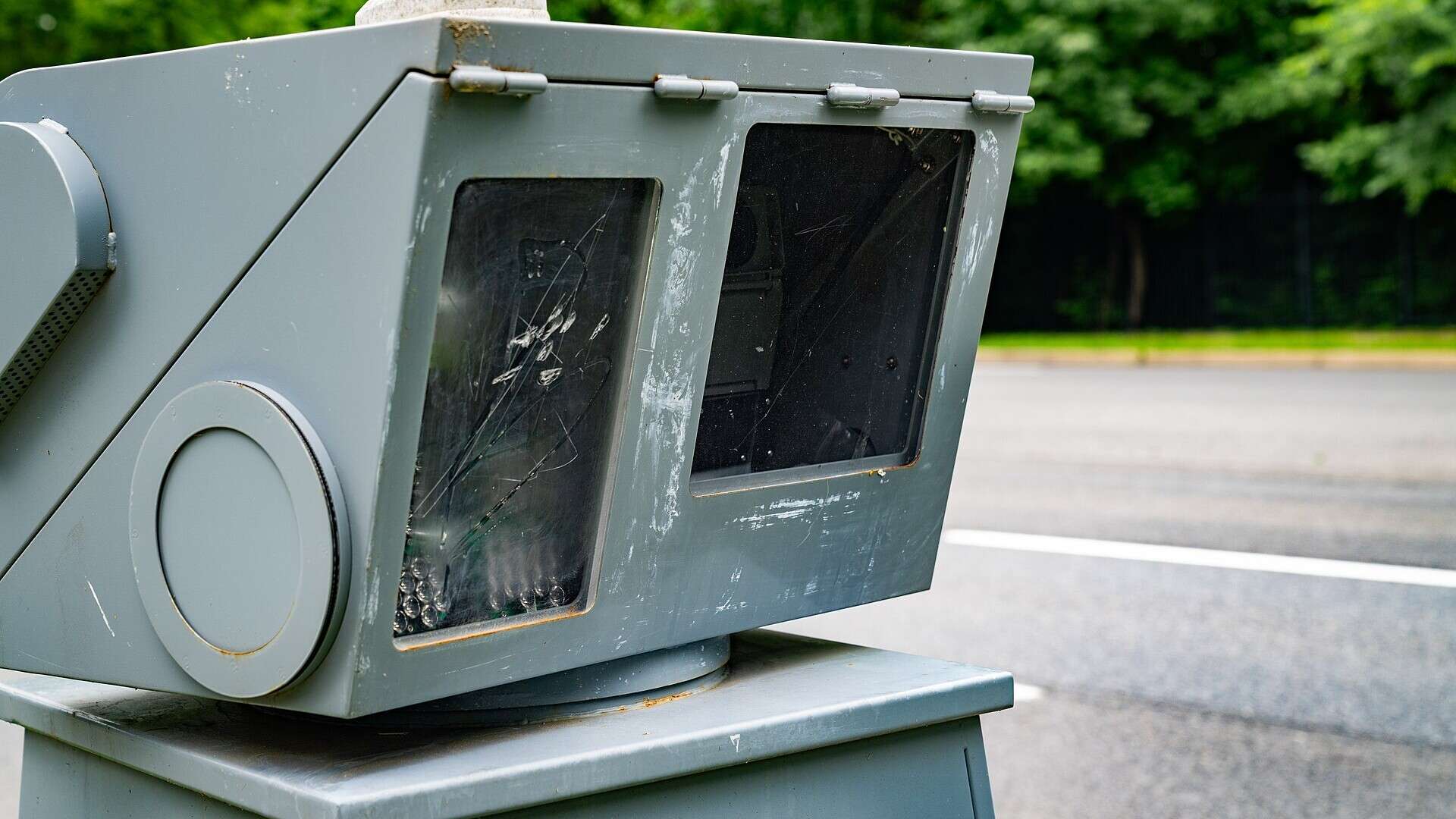
Los Angeles began switching on its first speed cameras Monday, and for the first 60 days the city says it will mail warnings instead of tickets. The Los Angeles Department of Transportation says the first systems activate beginning Oct. 26 and that all 125 are expected to be running by the end of 2026. The agreement the city signed with its camera vendor puts a price on the whole program: $4,450 per camera, per month.
That number matters to drivers because LADOT expects the cameras to recover their costs. A driver photographed going 11 mph or more over the limit will get a civil notice in the mail once the warning period ends, and the fine starts at $50.
What a Los Angeles camera ticket costs
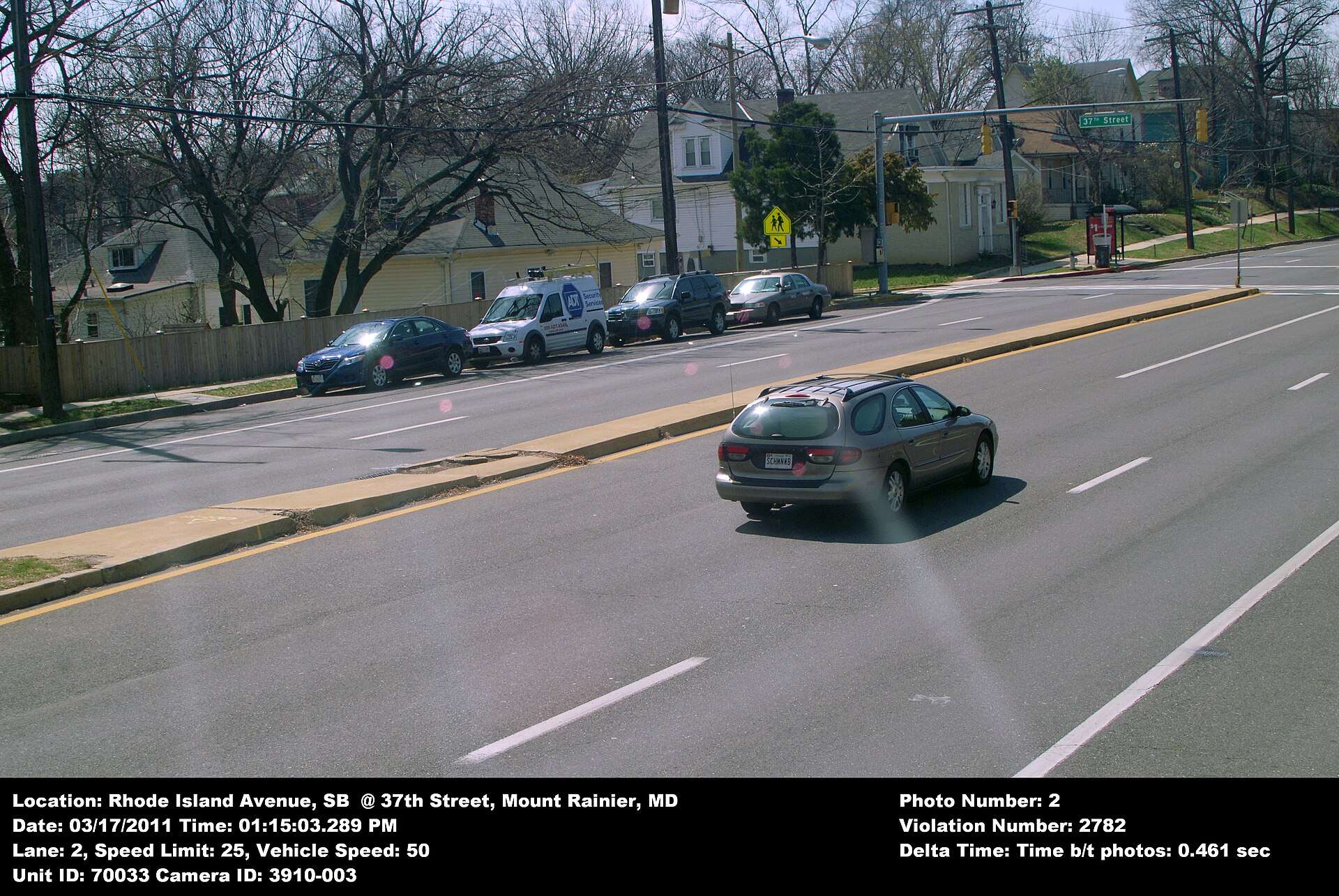
The fines come in four tiers in LADOT’s speed safety use policy: $50 for 11 to 15 mph over the posted limit, $100 for 16 to 25 over, $200 for 26 or more, and $500 at 100 mph or more. The city says the violations are civil and add no points to a license. The notice goes to the registered owner, based on a photo of the rear plate, and the city says the cameras capture plate information, not drivers’ faces.
A driver’s first violation in the 11-to-15 mph tier gets only a warning, under the policy and the state statute behind it, Vehicle Code section 22425. The same statute lets the registered owner review and copy the photographic evidence. The policy gives owners 30 calendar days from the mailing date to request a review and an administrative hearing within 21 days of the review decision, and it describes income-based reductions of up to 80% for people below the federal poverty level and up to 50% for incomes up to 250% of it.
A $33 million contract that does not pay per ticket
The agreement LADOT filed with the City Clerk this spring covers up to 125 cameras for five years at $4,450 per camera per month. That is $33,375,000 in base fees, plus up to $5 million to reimburse postage. The vendor is American Traffic Solutions, Inc., which does business as Verra Mobility. The filed copy of Section 4.1 also cites a fixed base cost of $33,750,000, a figure that does not match its own arithmetic and that the document does not reconcile.
The fee is flat. Subdivision (n) of the state statute says a camera contract may not pay the vendor based on the number of notices issued or as a percentage of revenue. Los Angeles owes $4,450 per camera per month whether that camera catches one driver or 10,000.
The city, though, has a reason to care about volume. LADOT told the Council it anticipates full cost recovery in each year of the pilot, and the state law requires ticket revenue to cover program costs first, with whatever is left going to traffic calming. Section 2.3 of the agreement conditions the city’s obligations on its ability to secure funding and on projected revenue from the program, and the memo transmitting it says delaying the launch will reduce revenue. LADOT front-funded the startup in the 2025-26 budget with $589,262 from Measure R local return and $4,185,912 from Measure M local return.
Here is the math, and it is The Auto Wire’s, not LADOT’s. At $4,450 a camera a month, one camera has to produce 89 paid $50 tickets a month to cover its own fee, or 11,125 across the network, before postage. Warnings, income reductions and unpaid notices all pull that number up. My read: the program is built to pay for itself, which is different from building it to raise money. The filings don’t say how many tickets the city expects.
Where the cameras go and what the city says they will do
LADOT’s impact report puts the cameras on priority safety corridors, with 59 of the 125 locations in equity areas. It says unsafe speed accounted for 16% of fatal and severe crashes from 2017 to 2021, and it cites pedestrian survival rates of 90% when a driver hits at 23 mph and 25% at 48 mph. Each of the 15 council districts gets at least eight cameras, according to a March 20 memo from LADOT General Manager Laura Rubio-Cornejo.
The same memo counted 193 public comments as of March 13: 127 in support, 63 raising concerns, mostly about privacy and equity, and four neutral or unrelated. On privacy, the use policy says images that do not result in a violation are kept five days from capture, and that data is not shared with local or federal law enforcement without a court order, subpoena or other legal requirement.
What happens after the warnings
Each system’s 60-day clock starts when it is activated, and state law restarts a warning period when cameras go live on new streets, so warnings and tickets can be going out at the same time as the rollout continues. A camera that went live Monday would reach the end of its warning period around Dec. 25. Signs reading “Photo Enforced” with the posted limit must stand within 500 feet of each camera, and the pilot is authorized through Jan. 1, 2032, with LADOT due to report to the Legislature at the end of it.
Los Angeles is the biggest California city to try this. Malibu’s cameras on Pacific Coast Highway logged about 100,000 violations in nine days of testing, and Chicago, which has run cameras for years, mailed 1.84 million tickets in 2024.
One camera needs 89 paid $50 tickets a month to cover its own fee. A camera that works perfectly, slowing everyone down, would never cover its $4,450. Does that bother you, or is that just the price of safer streets?