
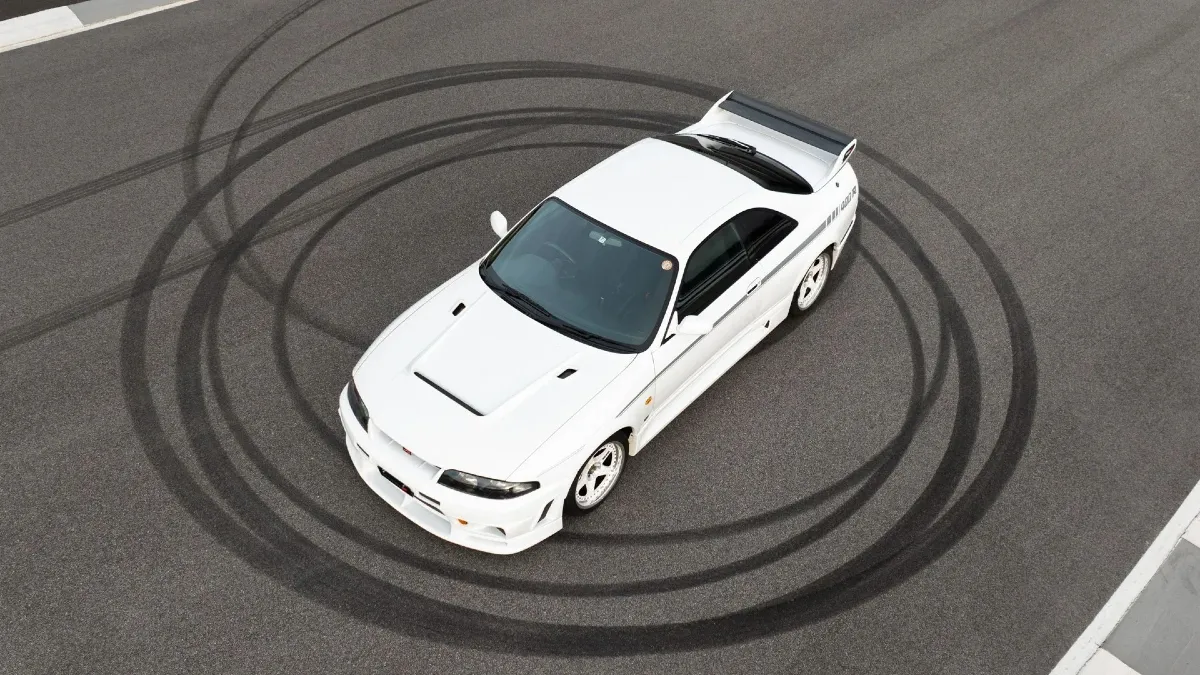
There was a time when calling a Nissan a seven-figure car would have sounded absurd. The Skyline GT-R was legendary among enthusiasts, sure, but it wasn’t discussed in the same breath as Ferrari F40s or Porsche homologation specials. That gap has narrowed rapidly in recent years.
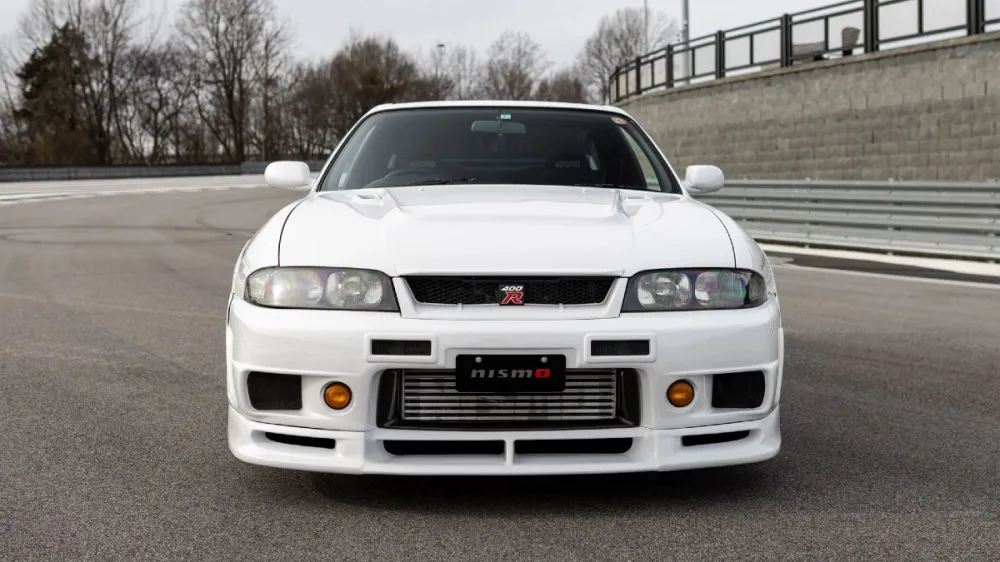
A 1996 Nissan Nismo 400R, one of just 44 examples ever completed, is scheduled to cross the block at Broad Arrow Auctions’ Amelia Island sale with a pre-auction estimate reaching $1.1 million. If bidding gets anywhere close to that figure, it will confirm a shift that’s been building quietly for years: the rarest Japanese performance cars are now competing at the highest levels of the collector market, not just within their own niche.
A Singular Spot in GT-R History
The Nismo 400R occupies a unique position in the Skyline GT-R lineage. This isn’t a cosmetic special edition or a lightly upgraded trim level, it was developed by Nissan Motorsport (Nismo) as the most focused road-going expression of the R33-generation GT-R.
When the R33 Skyline GT-R debuted in 1995, it followed the dominant R32, the car that earned the “Godzilla” nickname through touring car racing success. The R33 was larger and more refined, but it also inherited higher expectations to live up to. Nismo saw an opportunity to push the platform beyond conventional production limits entirely.
Why Only 44 Were Ever Built
Nissan originally planned to produce 100 examples of the Nismo 400R, a target that was never actually met. As production of the R33 generation wound down in 1998, the program got cut short, leaving just 44 completed cars. Unlike modern limited editions engineered specifically for marketing impact, the 400R ended up in such small numbers because of timing and cost constraints, not artificial scarcity dreamed up for collectors. That reality has made the model one of the rarest factory-built GT-R variants ever produced.
The Engine: A Le Mans-Influenced Twin-Turbo Six
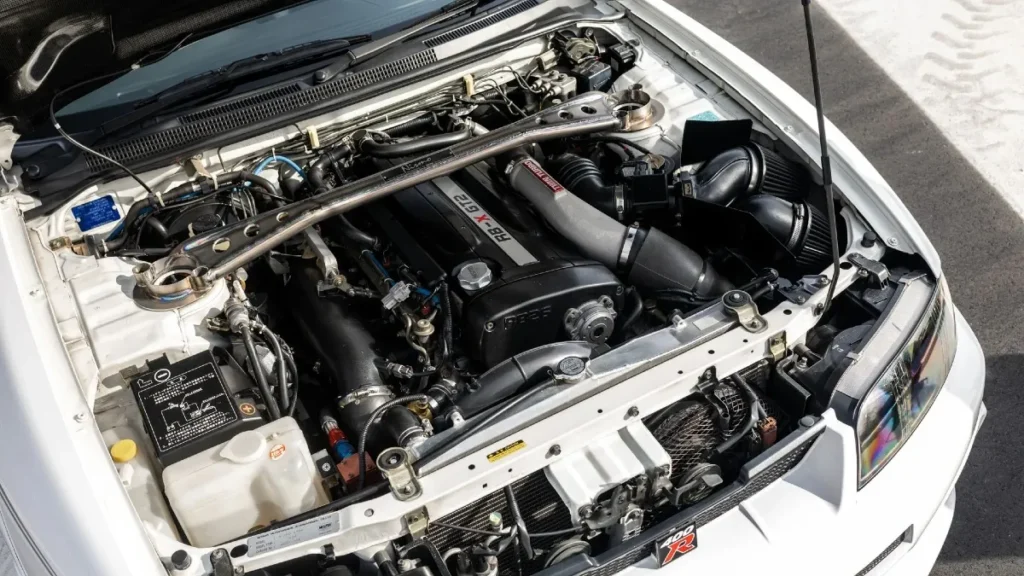
What truly separates the Nismo 400R from other R33 GT-Rs sits beneath the hood. Instead of the standard RB26DETT engine, the 400R received a 2.8-liter RBX-GT2 twin-turbocharged inline-six, developed with input from Reinik, Nissan’s longtime endurance racing engine partner. Reinik’s involvement traced back to Nissan’s Le Mans program, and the engineering influence carried over was substantial. The engine featured:
- Increased displacement
- Reinforced internal components
- Revised cooling and lubrication systems
- Larger turbochargers
Official output was listed at over 400 horsepower, a remarkable figure for the mid-1990s, and many believe the actual output exceeded that published number.
Performance That Matched Contemporary Supercars
In period testing, the Nissan Nismo 400R posted performance figures that placed it firmly in supercar territory:
- 0–60 mph: approximately 4.0 seconds
- Top speed: around 186 mph
Those numbers were competitive with high-end European performance cars of the era, despite the 400R wearing a Nissan badge and remaining largely unknown outside enthusiast circles at the time it was built.
Chassis and Aero Work Built for Function, Not Show
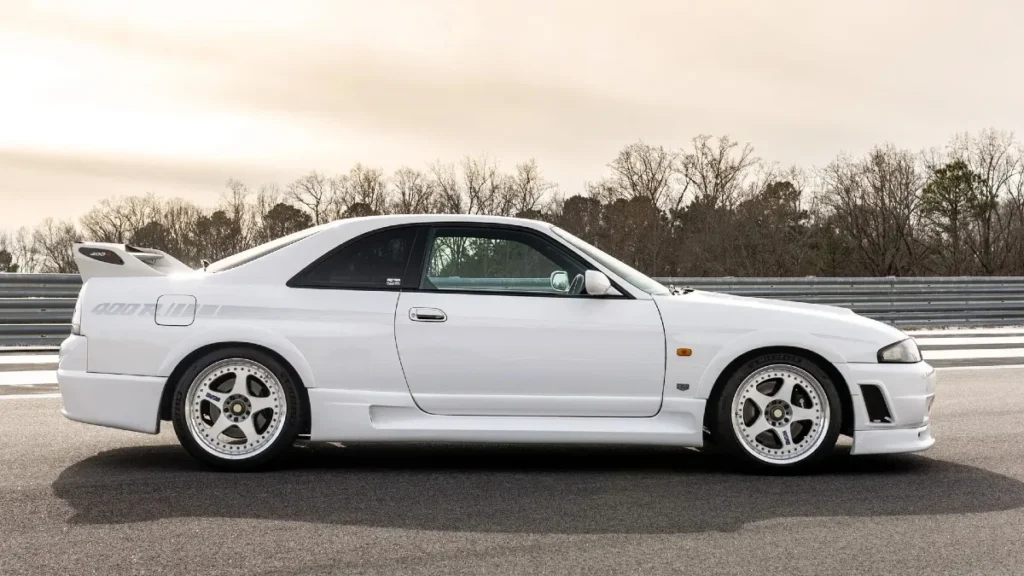
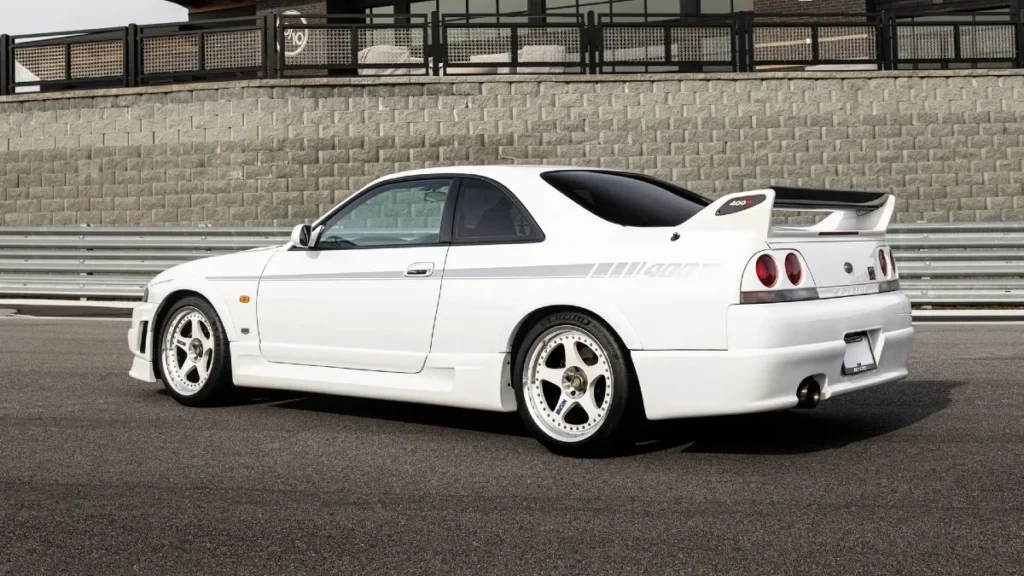
Nismo’s work extended well beyond the engine bay. The suspension was re-engineered with stiffer components and bespoke tuning aimed at high-speed stability, and the braking system was upgraded to withstand repeated heavy use on track. Aerodynamic elements, including the distinctive front bumper, side skirts, and rear wing, were designed for function rather than appearance.
Lightweight materials, including carbon fiber, were used throughout the bodywork. The result was a car that looked purposeful and restrained rather than flashy, a design philosophy that has aged exceptionally well decades later.
The Amelia Island Car: Low Miles, Strong Provenance
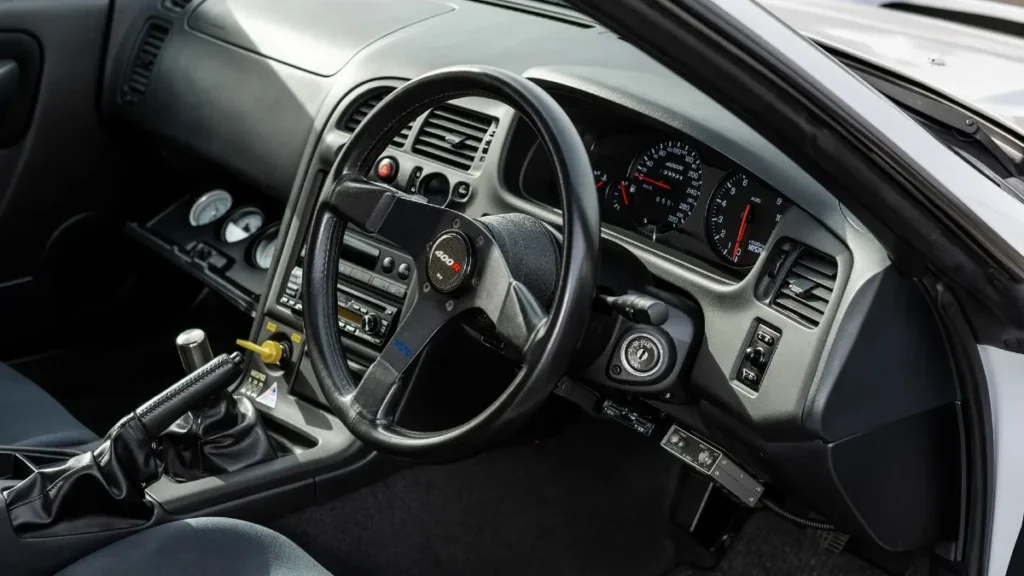
The Nismo 400R headed to Broad Arrow’s Amelia Island auction is particularly notable. It’s reportedly the eighth car produced, finished in white, and shows just over 10,000 miles on the odometer despite being nearly 30 years old. Low-mileage examples of the 400R are extremely scarce, since many surviving cars remain locked away in long-term collections overseas rather than changing hands. In today’s market, originality and documentation matter more than ever, and low mileage, factory specification, and known history all significantly influence collector confidence at the upper end of the market.
Why Japanese Performance Cars Keep Climbing in Value
For decades, Japanese performance cars occupied a strange space in the collector world. They were loved by enthusiasts but often dismissed by traditional collectors as tuner platforms rather than historically significant machines. That perception has changed considerably.
The explosion in values for the R34 Skyline GT-R, Toyota Supra Mk IV, and Mazda RX-7 signaled a broader reassessment of 1990s Japanese engineering as a whole. These cars are now recognized for their technical sophistication, racing pedigree, and cultural impact, and the Nismo 400R stands above most of its peers thanks to its factory-built status and extreme rarity.
Generational Wealth Meets Nostalgia
Another force driving demand is generational timing. Buyers who grew up watching GT-Rs dominate racing series, or driving them virtually in early Gran Turismo titles, are now well-positioned to actually compete at auction. Their emotional connection to these cars is matched by real financial capability, reshaping demand at the top end of the market in a way that wasn’t possible a decade ago.
As collectors place greater emphasis on authenticity, cars like the Nismo 400R, built and engineered by Nismo itself rather than modified aftermarket, carry a level of legitimacy that tuned vehicles simply can’t replicate.
Competing in the Seven-Figure Market
At a potential $1.1 million hammer price, the Nismo 400R is no longer competing with other Skylines. It is competing with:
- Rare homologation specials
- Limited-production European exotics
- Historically significant performance icons
Its rarity is fixed. Production will never increase. Many surviving examples are tightly held, limiting supply even further, and that imbalance between supply and demand continues to push values upward regardless of broader market conditions.
What This Sale Could Mean for Nissan’s Legacy
Broad Arrow’s Amelia Island auction has become a stage for serious collector cars, and the inclusion of a Nismo 400R reflects the model’s rising stature in that world. If the car approaches or exceeds its estimate, it will confirm that elite Japanese performance cars have fully entered the upper tier of the collector hierarchy. If it falls short, it will still provide an important data point for where the ceiling currently stands.
Either way, the moment is significant. The Nismo 400R was never built to chase headlines or auction records. Yet decades later, its engineering, rarity, and timing may place it among the most valuable Japanese cars ever sold. When the hammer falls in Amelia Island, the result won’t just reflect the value of a single Nissan, it will help define the market’s view of an entire era of performance history.