
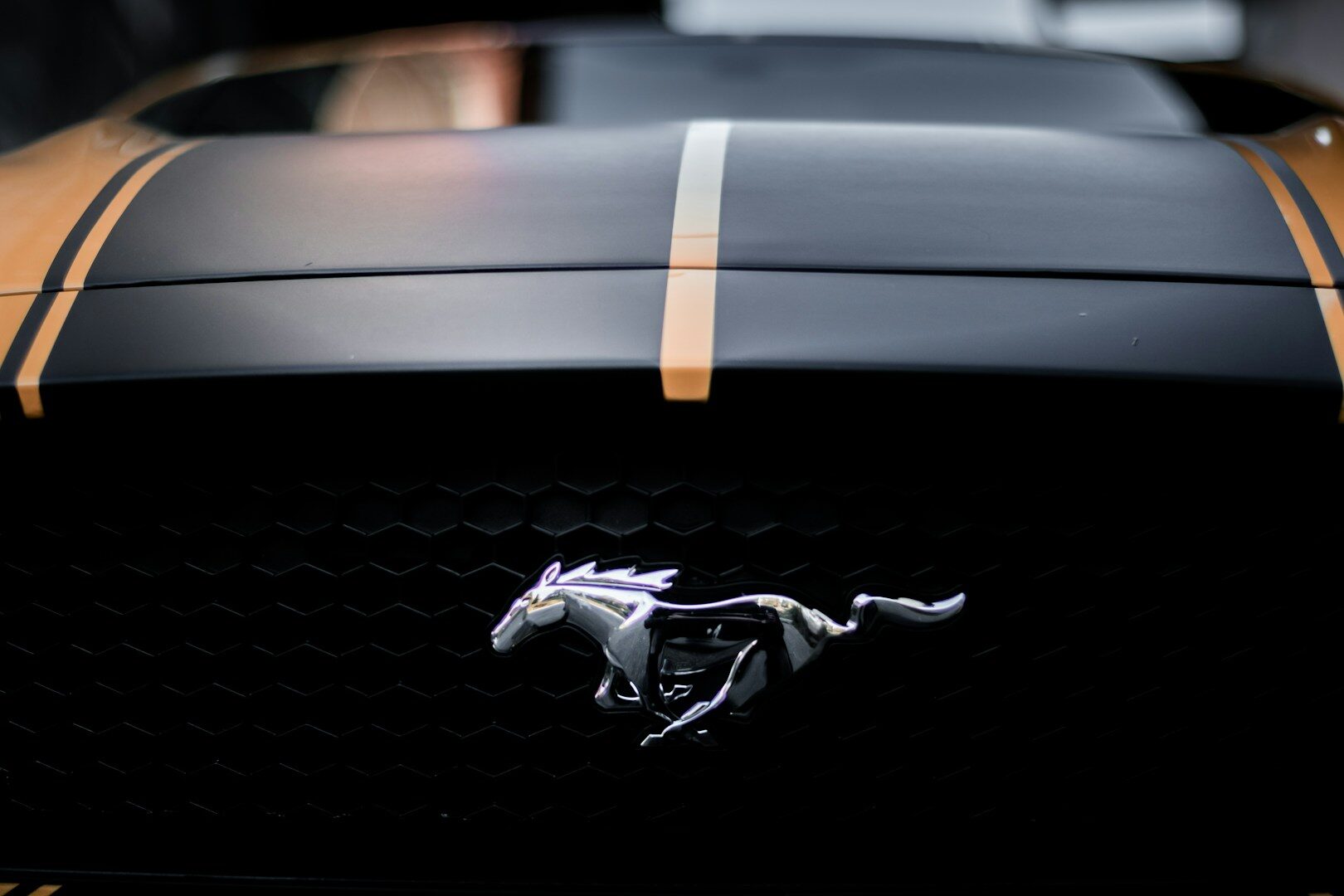
Ford told more than 110,000 Mustang owners this week that their cars have a safety defect. It didn’t tell most of them how it’s going to be fixed. Not yet, anyway.
Buried inside the two recall reports Ford just filed with the National Highway Traffic Safety Administration is a detail that says more about how recalls actually work than the defects themselves do: the repair doesn’t exist yet. For one campaign, Ford says a remedy is expected around December. For the other, March of next year. Owners are getting a warning letter now and a service appointment later, possibly nine months later.
That gap is the real story here. Not the wiper motors. Not the differential. The gap between finding a problem and fixing it.
According to NHTSA campaign 26V418000, Ford is recalling 67,842 Mustang and Mustang GTD models from the 2024 through 2026 model years because in cold weather the wiper motor can get stuck running only at its highest speed, while the washer fluid pump may quit working altogether. An iced-over windshield, a wiper that won’t slow down, and washer fluid that won’t spray add up to exactly the kind of reduced-visibility scenario NHTSA treats as a crash risk, even without a single fire or airbag involved.
Under a separate campaign, 26V417000, Ford is recalling 42,784 examples of the 2021 through 2023 Mustang Mach-E because the rear differential’s pinion shaft can fracture. That shaft connects the electric motor to the rear wheels. If it snaps, a driver can suddenly lose drive power mid-trip, or, more unsettling, the car can roll away after being parked. On the Mach-E, Park isn’t a separate mechanical pawl locking a transmission the way it is in a gas-powered Mustang. It’s a function built into the same drive unit that just cracked. Break the shaft, and there’s a real chance you’ve also broken Park.
That detail is worth sitting with. A traditional automatic transmission engages Park by wedging a pawl into a gear on the output shaft, hardware that lives apart from the axles entirely. A single-speed EV like the Mach-E has no multi-gear gearbox to house that pawl, so the parking lock gets folded into the same reduction-gear and differential assembly that does the driving. It’s tidy packaging, right up until the one part holding Park hostage fractures. Then the tidy packaging becomes the reason a car can drift down a driveway on its own.
Neither recall has a finished repair sitting in a dealer’s parts bin right now, and that’s not really Ford dragging its feet. Federal rules don’t let a manufacturer sit on a confirmed safety defect until engineering finishes a cure. Once Ford determined these problems were safety-related, the clock started, and letters had to go out to NHTSA and to owners well before either fix was ready. Interim notification letters for the wiper issue go out July 8; for the differential issue, July 13. Both explain the risk. Neither includes a repair, because Ford hasn’t finished building one yet. A second round of letters, with actual instructions for dealers, follows only once each remedy is validated.
Most owners never see this two-step process up close, because most recalls arrive with a fix already scheduled. This one is a reminder that recalled and repaired are not the same word, and the distance between them can stretch the better part of a year. For a sense of how many other campaigns are open across the industry at this exact moment, our rundown of active recalls is worth a look.
There’s a second detail in NHTSA’s files that deserves more attention than it’s gotten. This isn’t the first time a Mustang-badged Ford has been recalled over a wiper motor that can’t handle cold weather, and it isn’t the only unrelated Mustang recall this decade either. Ford recalled Mustang Mach-E models for nearly this same wiper failure back in 2024, and it recalled more than a thousand supercharged Mustangs over an unrelated software flaw just last year. Two years after that first wiper campaign, a version of the same problem has turned up on the completely different, gas-powered S650 Mustang platform. Same nameplate, unrelated architecture, familiar failure. That’s either a coincidence involving two different suppliers, or evidence that wiper-motor sourcing across the Mustang family has a cold-weather blind spot nobody has fully run to ground. Owners in Minnesota, Michigan, and anywhere else winter actually happens have more reason than most to take the letter seriously.
Then there’s the Mustang GTD sitting inside that same wiper-motor campaign. Ford’s roughly $325,000, Multimatic-assembled, Nurburgring-tuned answer to the Porsche 911 GT3 RS is hand-built in small batches in Canada, and according to this recall, it shares the same wiper motor concern as a base EcoBoost coupe built on a regular line in Flat Rock, Michigan. It’s a small detail, and also a telling one. Halo cars borrow heavily from their family tree. Sometimes that includes the family’s problems.
None of this is cause for panic. Reduced visibility in freezing rain and a differential that might crack are real risks, but they’re exactly the kind of risk NHTSA’s recall system exists to catch early and track until closed out. Owners should watch for Ford’s letters this month, hold onto them, and follow up with a dealer once actual remedy parts land later this year and into next.
The headline number, 110,626 vehicles, isn’t really what this story is about. The real story is that a modern recall notice is often the opening move, not the resolution. Ford knows something is wrong and is saying so. It doesn’t yet know exactly how it’s going to make it right. That’s not a scandal. It’s how the system is designed to work. It’s just not how most owners assume recalls work, and that space between the letter in the mailbox and the fix in the service bay is the part of this story worth remembering after the unit counts are forgotten.