
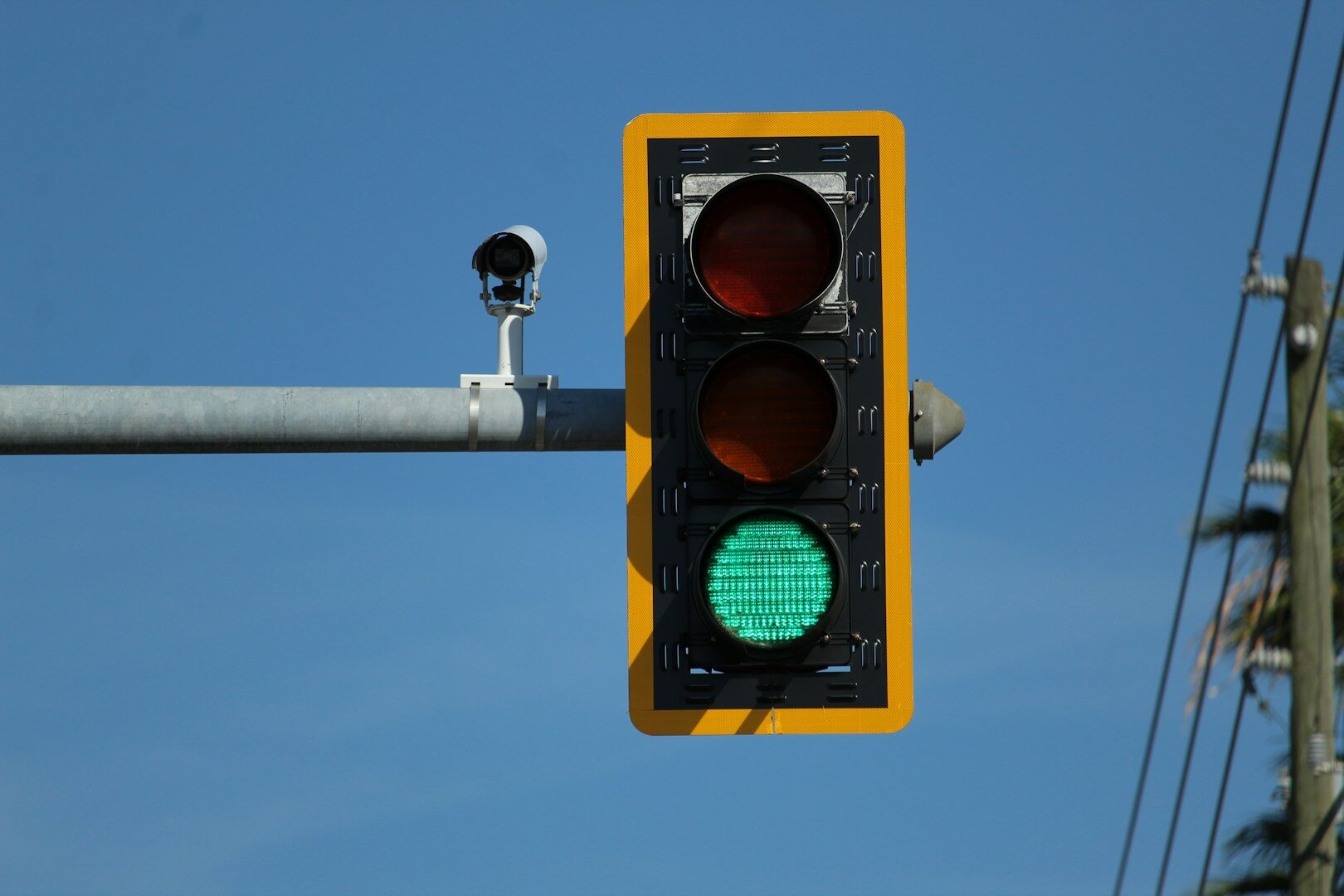
Charlotte’s city council signed off on June 22 to put red-light cameras back at 10 of the city’s worst intersections, with the program expected to switch on in early 2027. If you’ve driven through Charlotte lately, the safety pitch writes itself — the city’s own Vision Zero program is built around the premise that traffic deaths are preventable and that the city should be at zero by 2030. But the genuinely interesting part of this story isn’t the $75 ticket. It’s why these cameras vanished in the first place, and the quiet legal maneuver that made bringing them back possible.
Why they disappeared, and what changed
Charlotte ran red-light cameras once before, from the late ’90s until 2006. What killed them wasn’t public outrage — it was math and the state constitution. North Carolina’s constitution funnels the “clear proceeds” of fines and penalties to public schools, and state law caps a city’s collection-cost deduction at 10%. In practice that means the local school board has to get at least 90 cents of every dollar. Back then, camera vendors were eating far more than 10%, and courts said that arrangement shortchanged the schools. Rather than run a program where nearly all the revenue legally belonged to someone else, cities across the state pulled the plug.
Related Articles
- The 3,000-Mile Oil Change Is Dead. Here’s the Number That Actually Matters
- The Auto Wire Week in Review: VW’s Job-Cut Bombshell, a Wave of Recalls, and the Wildest Police Chases
- 2027 Porsche 911 Carrera S Manual: Specs, Price and What Buyers Should Know
That stalemate broke in May 2024, when the North Carolina Supreme Court decided Fearrington v. City of Greenville. The court blessed a workaround: a city and its school board sign an interlocal agreement where the board first receives 100% of the penalties, then reimburses the city only for the actual, reasonable costs of collection. On paper the schools get everything; in reality the city gets its operating costs back. That ruling is the whole reason Charlotte can even attempt this again — and it’s why the city routes roughly $4.05 million of a projected $4.5 million in annual revenue straight to Charlotte-Mecklenburg Schools.
The part that actually affects your wallet and your record
Here’s what most coverage buries: a camera ticket in North Carolina is not a moving violation. Under the enabling statute — which, notably, names Charlotte specifically as one of the few cities allowed to do this — a camera-detected red-light violation is a noncriminal civil penalty. The law expressly says no DMV points and no insurance points attach. Translation: your premium doesn’t move, your license stays clean, and there’s no conviction on your driving record. It’s closer to a parking ticket than a citation from an officer.
That civil status cuts the other way, too. The ticket goes to the registered owner of the car, not whoever was driving. If your teenager, your spouse, or a friend borrowed the car and ran the light, the citation still lands in your mailbox. The statute lets you escape liability by filing an affidavit naming who actually had the vehicle (there are specific carve-outs for leased and rented cars), but the default assumption is that the owner pays. And that $75 is Charlotte’s specific number, set by a 2007 session law that bumped the city above the $50 statutory floor. Ignore the notice and the law allows an additional civil penalty of up to $100 — that’s the “$100 fee” you’ll see referenced. Miss the response window and you’ve also waived your right to contest it at the nonjudicial administrative hearing the city has to offer.
A built-in safeguard worth knowing
The oldest trick in the red-light-camera playbook is shaving a few tenths of a second off the yellow to juice violation counts. North Carolina law slams that door: at any camera intersection, the yellow interval can’t be shorter than what a licensed professional engineer specified on the signal plan of record, and it has to comply with the federal Manual on Uniform Traffic Control Devices. The same statute also requires warning signs posted within 300 feet of each camera. So if you’re driving through one of these intersections, the yellow can’t legally be rigged against you, and you’re entitled to advance notice the camera exists.
Related Articles
- Premium Gas vs. Regular: The Octane Myth That’s Quietly Costing You Money
- This 1971 Chevy Pickup Was Stolen for Eight Months. It Was Sitting in a Garage the Whole Time
Follow the money and the enthusiasm cools a bit. Because the schools get 90%, Charlotte keeps only about 10% — call it $450,000 — against a program that costs roughly $600,000 to run. That leaves a $150,000 annual hole the city plans to plug with existing Vision Zero dollars. In other words, this isn’t a revenue grab; it’s a safety program the city is partially subsidizing, which is a very different animal than the profit-driven camera schemes of the 2000s. Whether it’s the best use of that safety money is a fair question — cameras are strong at cutting the T-bone, angle-type crashes that maim and kill, but they’re a fixed bet on 10 specific corners in a city with more than a thousand signalized intersections. The pilot runs a year. If the collision numbers move, expect the map to grow; if they don’t, expect this debate to reopen fast.
The practical takeaway for Charlotte drivers is simple: come 2027, stop on the yellow at these corners, and if a citation shows up, know that it won’t touch your insurance — but also know that “I wasn’t driving” only helps if you file the paperwork.