
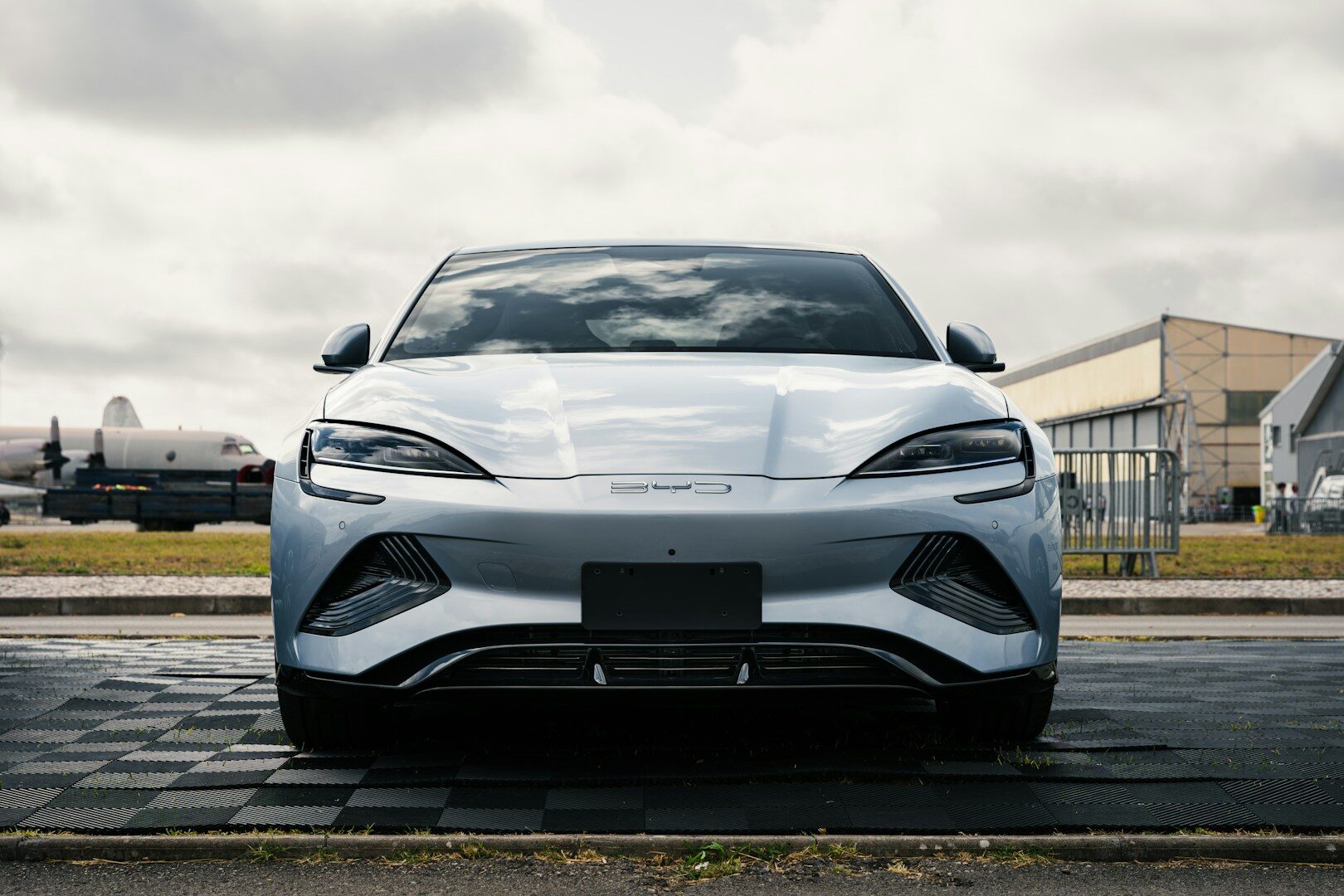
Mexico’s 50% tariff wall went up on January 1. Six months later, Chinese brands are selling more cars than ever. Both of those things are true, and the gap between them is where the actual story lives.
Start with the legal instrument, because most people arguing about this haven’t read it. On December 29, 2025, the federal government published a decree in DOF rewriting the duty rates on tariff lines in Mexico’s general import and export tax law. The Secretaría de Economía’s own statement puts the count at 1,463 tariff fractions across automotive, textiles, apparel, plastics, steel, appliances, aluminum, toys, furniture, footwear, leather goods, paper and cardboard, motorcycles, trailers and glass — all of it aimed at goods from countries Mexico has no trade agreement with. Economía’s framing was that this is a commercial measure benefiting the Mexican people and is not directed at any country in particular. Sure.
Related Articles
- Mercedes-AMG’s Legendary Four-Cylinder Is Dead. What’s Left Is a Speaker Playing Its Ghost
- GMC Acadia Owners Got a Warranty Extension and a Check for Their Leaky Coolant Hose. Chevy Colorado Owners Got a Lawsuit.
Two things about how that duty actually works, because “50% tariff” gets thrown around like it’s a 50% price increase. It isn’t. The duty is assessed on customs value — the landed value of the vehicle at the border — not on the showroom price. A car with a $14,000 customs value takes a $7,000 duty hit, on a unit that might retail north of $22,000 once freight, dealer margin, VAT and ISAN are layered in. And because Mexico’s value-added tax is calculated on customs value plus duties, the tariff compounds: every peso of duty drags roughly sixteen centavos of extra IVA behind it. The effective retail impact lands well below 50%, but it’s meaningfully worse than the headline duty alone.
What the official numbers actually say
Here’s where it gets useful, because there’s a data problem sitting underneath every share figure you’ll read this week.
Mexico’s official new-vehicle sales register is INEGI’s RAIAVL. Pull the May bulletin and the shape of the market is unmistakable. Total domestic sales January through May: 627,616 units, up 4.86% year over year. But split that by group and the picture fractures. The AMIA-affiliated brands — the legacy players, Nissan, GM, VW, Toyota, the Koreans — grew a collective 1.78%. The non-affiliated column, which is where most of the Chinese newcomers file, went from 29,443 units to 48,418. That’s 64.45% growth in the first five months of a year that opened with a tariff wall.
Inside that column, the distribution is brutal and nothing like uniform. Geely went from 5,012 units to 19,018 — up 279.4%, and it is now outselling Suzuki. Jetour Soueast went from 227 units to 2,472. Changan added 65.7% to reach 9,317. Zeekr and Lynk & Co showed up in the register for the first time with 1,609 combined.
And then the other half of the ledger, which nobody is writing about: Great Wall Motor is down 10.9% to 5,460. JAC is down 5.6%. Foton dropped 39.5%. Motornation — the group reporting BAIC, JMC, DFSK and SERES together — collapsed 63.5% to 426 units in five months. That is not a wave. That is a shakeout happening in real time, with the tariff acting as the sorting mechanism. Brands with deep pockets and the ability to eat duty are buying share; brands running thin distribution and no financial cushion are being pushed off the table.
Worth noting separately: MG sits in the affiliated column, up 17.2% to 22,927 units. SAIC-owned, Chinese-built, and quietly the largest single Chinese-brand seller in the official register. Any analysis that treats “non-affiliated” as shorthand for “Chinese” is already wrong.
Why nobody’s share numbers agree
Now the part that should make you skeptical of every percentage in this story, including the ones I just quoted. Read RAIAVL’s footnotes. As of May 2025, Chirey Motor México — which supplied the Chirey and Omoda brands — stopped providing its operating information to the register. As of the same period, Jetour stopped reporting as well. INEGI can’t publish what companies don’t file, and it flags those cells as unavailable rather than guessing.
Meanwhile BYD, which by any account is among the largest Chinese sellers in Mexico, does not appear in the RAIAVL brand tables at all. Neither does Chirey’s current volume. The register is a voluntary administrative filing covering 43 brands through AMIA affiliates and eight non-affiliated companies — not a mandatory registration census.
So Mexico’s official statistics agency is structurally undercounting Chinese-brand share, and by an unknown margin. Distributor-side tallies capture the missing brands and land higher. Both datasets are honest; they’re counting different universes. When you see two Chinese-share figures for Mexico that don’t match, this footnote is usually why — and it’s a genuine problem for anyone trying to regulate a segment they can’t fully measure.
What it means if you’re shopping, or negotiating
For buyers: the surviving Chinese brands have so far chosen margin sacrifice over sticker shock, which is rational when you’re building a dealer network and can’t afford a share reversal. Don’t assume that holds. The brands bleeding volume are the ones to watch carefully, because a distributor that exits leaves you holding a vehicle with no warranty administrator, no parts pipeline and a resale value that falls through the floor. Check who actually imports and services the car, not just whose badge is on the grille.
Related Articles
- Advance Auto Parts Let a Clerk Play Detective. Now a Wrongly Accused Mom Wants $15 Million
- DeKalb County Paid $18.9 Million for “Ethical” Car Surveillance. A Deputy Voided the Warranty in Nine Months
On parts and insurance: the decree hit automotive components alongside finished vehicles. Higher duty on imported collision parts feeds straight into repair estimates, and repair cost is the primary input insurers use to set physical-damage premiums. If you own a low-volume import with a single distributor and no domestic parts depot, expect longer cycle times after a collision and, eventually, comprehensive premiums that reflect it.
And on the trade politics: the entire measure was designed to be readable from Washington ahead of the USMCA review, where the region’s integrated auto industry is the whole argument. Chinese-brand cars sold in Mexico are imports with no North American origin content — they can’t cross into the U.S. duty-free regardless. But the optics of a 17% Chinese share south of the border are doing real work in that negotiating room, which is precisely why the government keeps steering the conversation toward import volumes rather than sales volumes. Imports are the number the tariff was built to move. Sales are the number that shows what buyers actually did about it.