
Wall Street decided this one was noise. The engineering paperwork says otherwise.
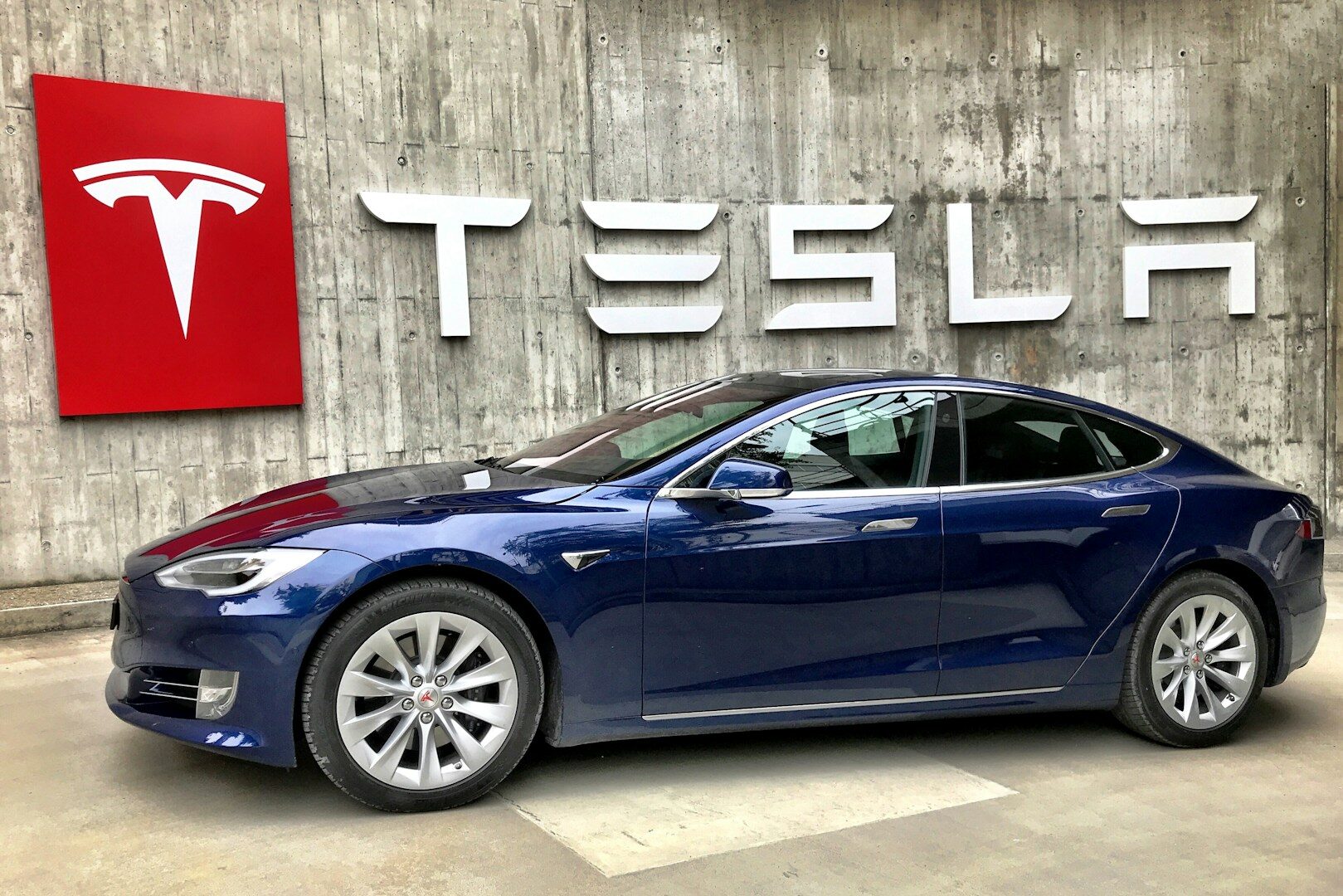
On July 29, NHTSA’s Office of Defects Investigation opened Preliminary Evaluation PE26006, covering an estimated 1,198,300 Teslas — 2018-2020 Model 3 sedans and 2021-2023 Model Ys. The subject is the front lower lateral link detaching from the subframe. ODI has logged 156 complaints. Zero crashes, zero fires, zero injuries, zero fatalities. Investors saw that clean casualty column, filed it under routine, and went back to arguing about robotaxis and Tesla’s Q2 8-K, where record revenue met a badly compressed operating margin.
Fine. But there’s a sentence in the ODI resume that deserves more attention than the complaint count, and almost nobody has read it in context.
Third time on the same component
This isn’t Tesla’s first lateral link campaign. It’s at least the fourth, depending on how you count.
October 2021: recall 21V-835, 2,791 vehicles — 2019-2021 Model 3 and 2020-2021 Model Y. Tesla’s stated cause was fasteners not secured to the correct specification at build.
December 2022: recall 22V-895, a tiny 26-unit campaign on 2023 Model Ys from Giga Austin, left-hand link only. Tesla’s own service bulletin, SB-22-31-002, describes the same failure chain: fastener not torqued to internal spec, loosens over time, link separates.
March 2023: recall 23V-235, 422 more Model 3s from 2018-2019. Read Tesla’s Part 573 chronology on that one carefully. The company states that production records do not indicate low torque values or missing bolts, and says it filed the recall out of an abundance of caution anyway. Tesla identified 25 warranty claims and two field reports across five years.
Related Articles
- Ford’s Quarterly Loss Hides a Worse EV Number and a Very Good Trade
- Tesla ‘Fixed’ This Suspension Failure Twice Already. NHTSA’s New Files Say That Didn’t Work.
Now put ODI’s line from PE26006 next to that history: the failures under investigation exceed the scope of those recalls and “do not appear to be related” to the production issue behind them.
Translation for anyone who’s ever chased a warranty claim: the explanation Tesla has used for five years — a torque miss on a specific assembly window — no longer covers what’s failing. That’s the whole story. A production issue is a bad batch. It gets fixed with a VIN list. What ODI is now examining is whether cars built correctly are failing anyway, which is a very different question with a very different remedy.
Why a bolted joint lets go
Worth understanding the mechanics, because “the bolt came loose” undersells it.
A suspension link doesn’t stay attached because the bolt is strong in shear. It stays attached because the bolt is stretched, and that stretch generates clamp load that pins the link’s bushing collar hard against the subframe. Friction does the work. The fastener is a spring holding two parts still.
Lose preload — through under-torque, through relaxation in an aluminum casting, through thermal cycling, through a joint that’s been shock-loaded a few thousand times on bad pavement — and the parts start to micro-move against each other. That movement is what kills the joint. It fretting-wears the mating faces, elongates the bore, and progressively bleeds off whatever clamp load was left. Then the bolt walks. By the time it exits, the joint has been failing for a long time in a way no sensor on the car is watching.
That’s why NHTSA specifically notes that the vehicle provides no visual warning. There is no torque sensor in a lateral link joint on any production car. Some owners reported hearing something first. Many got nothing.
It’s also why the remedy path matters. Tesla’s SB-21-31-003 labor codes are instructive: 0.15 hours to inspect and confirm proper torque, but 0.60-0.75 to replace a link, and roughly 1.85-2.05 hours to replace a front subframe. Inspection is cheap. Consequences aren’t. And unlike the FSD investigations that dominate Tesla’s regulatory docket, no part of this can be pushed over the air. Somebody has to put a wrench on 1.2 million cars.
What this means if you own one
Every vehicle in this population is out of its basic warranty or close to it. Tesla’s Basic Vehicle Limited Warranty runs four years or 50,000 miles, whichever comes first. A 2018 Model 3 blew through that during the last administration. Suspension links aren’t covered by the eight-year battery and drive unit warranty. Right now, a link failure on a 2019 Model 3 is a tow plus an out-of-pocket repair.
Three practical moves.
First, keep every invoice. If ODI escalates this to an Engineering Analysis and it eventually produces a recall, owners who already paid have a claim. Tesla’s own recall letter for 21V-835 spells it out: previous payment for a repair addressing the recall may be eligible for a refund. That reimbursement window is a legal requirement, not a courtesy, and people forfeit it constantly by throwing away paperwork.
Second, treat noise as data. A clunk over expansion joints, a knock under braking, steering that’s gone vague or wanders — on any of these cars, that warrants getting the front end on a lift and having someone physically check the lateral link fasteners for movement and the bores for elongation. Torque-checking a bolt that’s already been through a loosening cycle isn’t the same as replacing it, and a competent shop will tell you which one you need.
Related Articles
- Carvana’s Record Quarter Wasn’t Built on Used Car Prices — Here’s What Actually Happened
- Jeep Recalled 641 Wranglers Over Cracking Steel Wheels — Which Defeats the Entire Point of Steel Wheels
Third, if you’re shopping used: run the VIN through NHTSA’s recall lookup and confirm 21V-835, 22V-895, and 23V-235 completion status where applicable. A 2020-2022 Model Y should also be checked against 21V-912, a separate 826-unit campaign over front and rear suspension knuckles fracturing. Suspension history on these cars is not a footnote.
The part the market got wrong
A Preliminary Evaluation is the first step, not a finding. ODI opened this one to determine cause, scope, and severity, and it may close with nothing — the agency has closed Tesla suspension inquiries before.
But the market’s read of “no injuries, therefore nothing” inverts how defect investigations actually work. Zero injuries across 156 detachment reports isn’t evidence the failure is benign. It’s evidence that most of these have happened at parking-lot speeds, and that the sample is still small relative to 1.2 million cars. Regulators are supposed to move in exactly that window, before the casualty column fills in.
The tell to watch isn’t the stock. It’s whether ODI upgrades PE26006 to an Engineering Analysis. That’s the step that historically precedes a recall — and on a population this size, with a remedy that requires hands on hardware rather than a software push, it would be a genuinely expensive quarter for a company already spending heavily.