
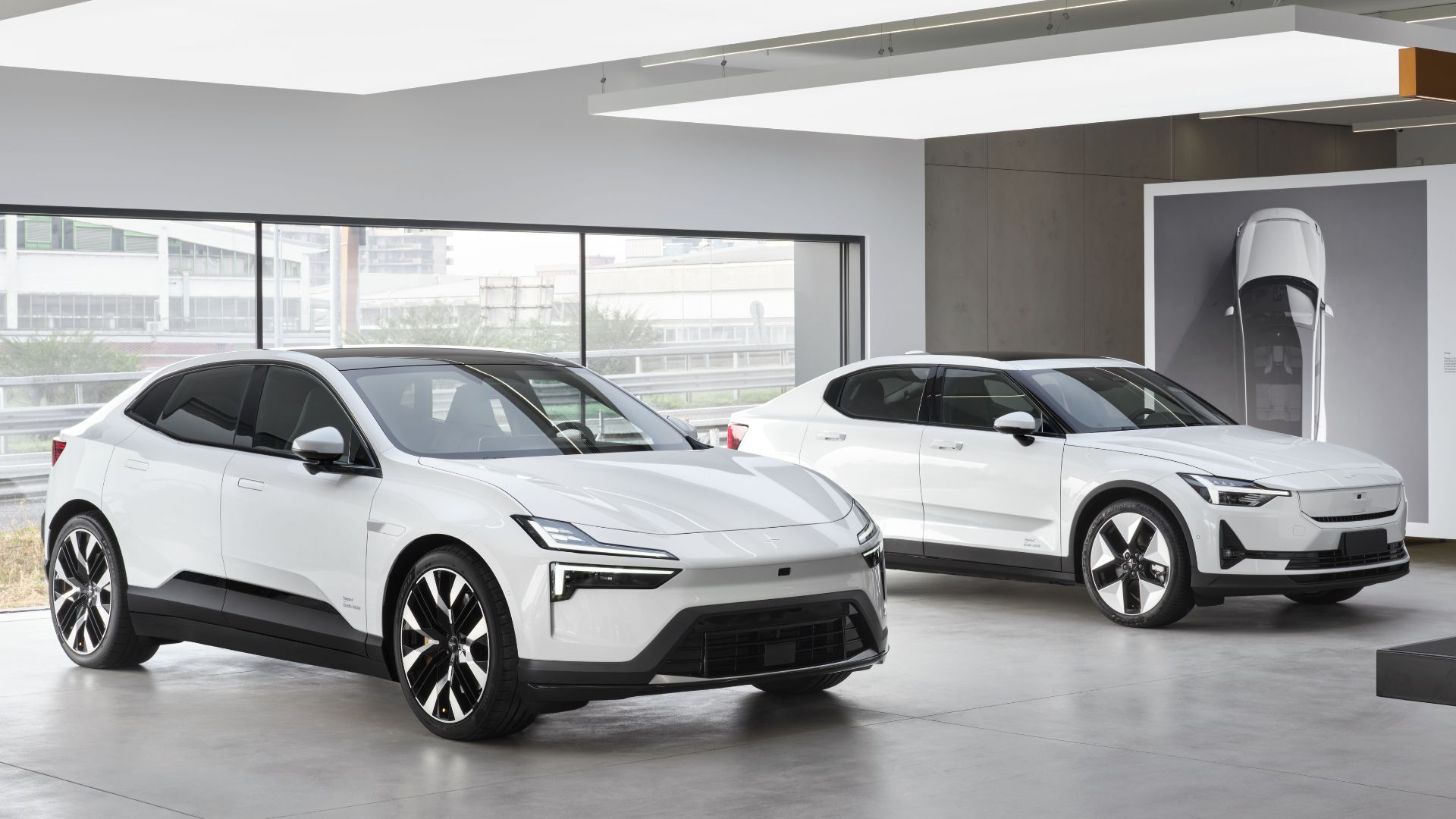
Prestige Imports wants $25 million from Polestar, and its lawsuit reads like a straightforward betrayal story: a manufacturer that spent two years quietly planning its exit, then hid behind a federal ban to avoid paying for it. A New Jersey court will eventually decide whether that’s true. But underneath the lawsuit sits a stranger, more durable story, and it has nothing to do with whether Polestar acted in good faith. The U.S. government didn’t ban Polestar’s cars. It banned Polestar’s owner.
In June, the Commerce Department’s Bureau of Industry and Security denied Polestar authorization to sell vehicles in the United States starting with the 2027 model year, citing the Connected Vehicle Rule, a national-security regulation built around who controls a car’s software and hardware, not how well the car performs. Polestar is majority-owned by Geely, the Chinese conglomerate that also owns Volvo. That ownership stake, not any defect or complaint, is what triggered the denial. Polestar’s own statement on the decision said the company was “increasing its strategic focus on Europe” as a result, a remarkably candid admission, for a Nasdaq-listed company, that America had become a market it could no longer plan around.
Here’s the detail that should stop you. The Polestar 3, the SUV at the center of this mess, is built at Volvo’s plant in Ridgeville, South Carolina, by American workers on American soil. None of it mattered. The Connected Vehicle Rule doesn’t test where a car is welded together. It tests who owns the software supplier, who controls the telematics hardware, and who ultimately sits atop the ownership chart. For Polestar, assembly location was never the relevant address. Ownership was.
The Rule Nobody Voted On Twice, Somehow
That distinction matters beyond Polestar, and so does the rule’s odd political history. Its legal authority traces to Executive Order 13873, signed by Donald Trump in 2019, which declared a national emergency over foreign control of America’s technology supply chains. The Biden administration renewed that emergency every year it was in office, then used it to finalize the actual Connected Vehicle Rule on January 16, 2025, four days before leaving the White House. The second Trump administration inherited the rule and chose to enforce it against Polestar rather than roll it back. Three administrations, two parties, one policy, zero reversals. In an industry used to regulation swinging with every election, that continuity is the real signal here: this isn’t a tariff fight that ends with the next administration.
The mechanics matter too, because they explain why Polestar ended up first in line. The rule’s software restrictions apply starting with model-year 2027 vehicles; hardware restrictions on Chinese- or Russian-linked components don’t kick in until model-year 2030. Polestar didn’t get caught by the hardware ban that will eventually reach deeper into the industry’s supply chain. It got caught by the software deadline, arriving years earlier, and Geely’s ownership stake made it an obvious, easy test case.
The Number That Undercuts the Drama
Here’s what tempers the story. Polestar’s own numbers show 94% of its first-quarter 2026 retail sales came from outside the United States, with Europe alone representing close to 80% of global volume. Polestar wasn’t torn away from its most important market. It was formally locked out of a market it had already mostly written off. The ban makes for a dramatic headline. The balance sheet reads more like paperwork.
What the Lawsuit Is Really Testing
Which brings us to Prestige Imports, and the part of this story that actually earns the $25 million headline. New Jersey, like most states, restricts how a manufacturer can end a dealer franchise. Under the state’s Franchise Practices Act, an automaker generally needs advance notice and a legally sufficient reason before terminating a franchise relationship, and a federal regulatory denial doesn’t automatically satisfy that bar if a court decides the manufacturer maneuvered its way into it. Prestige argues Polestar spent roughly two years positioning for a U.S. exit and then let the Commerce Department’s decision do the work of ending franchise obligations for free. Those remain allegations, not findings.
The Auto Wire has already covered Prestige’s specific allegations in detail. The short version that matters here: the lawsuit is really a referendum on how automakers are allowed to leave a market, not simply whether they’re allowed to.
Polestar’s own securities filings hint at how much regulatory friction already existed before Commerce made its call. Buried in the standard risk-factor language of its June announcement, the company flags an open NHTSA investigation into the Polestar 2’s rearview camera, alongside unresolved litigation tied to Gores Guggenheim, the special-purpose acquisition company that took Polestar public in 2022. A connected-car ban is the headline. A rearview-camera investigation and lingering SPAC litigation are the fine print, and together they describe a company that was carrying more regulatory weight than its U.S. sales ever justified.
What Owners Should Actually Watch
None of this changes what current owners need to know. Federal safety recall obligations don’t expire when a manufacturer stops selling new cars in a market; they follow the vehicle, indefinitely. Polestar says its service network, much of it layered onto existing Volvo dealership infrastructure, will remain in place, and warranty coverage, four years or 50,000 miles on the vehicle, eight years or 100,000 miles on the battery and motors, doesn’t change either. The slower risk is that as new-car sales stop, the financial incentive for dealers to keep dedicated Polestar technicians, parts inventory and diagnostic tools thins out over time. Resale values, already soft for a low-volume EV brand, get harder to predict once buyers start pricing in what appraisers call orphan brand risk: the discount attached to any car whose manufacturer support has gone uncertain.
The Bigger Irony
The sharper irony is that Geely, the very company whose ownership got Polestar locked out of America, is becoming more embedded in Western manufacturing, not less. Ford just partnered with Geely on a factory in Valencia, Spain, betting on Geely’s manufacturing costs even as Washington treats Geely’s software ties as a national security risk. Meanwhile, the same Connected Vehicle Rule that ended Polestar’s American ambitions is already forcing suppliers to prove their hardware has no Chinese or Russian fingerprints at all, and it’s the reason Polestar’s dealers were left managing an exit they didn’t choose. Ownership, not geography, is becoming the industry’s new border wall.
Prestige Imports may well win its $25 million. Polestar may well have been planning its exit before Washington made the decision for it. Those are separate questions a judge can sort out. Strip away the lawsuit, though, and what’s left is a preview of how the next decade of the U.S. auto industry actually gets built: not by where a plant sits, but by who’s listed above it on the ownership chart. Polestar got the geography right and the genealogy wrong. Every automaker with a foreign parent company should be taking notes.