
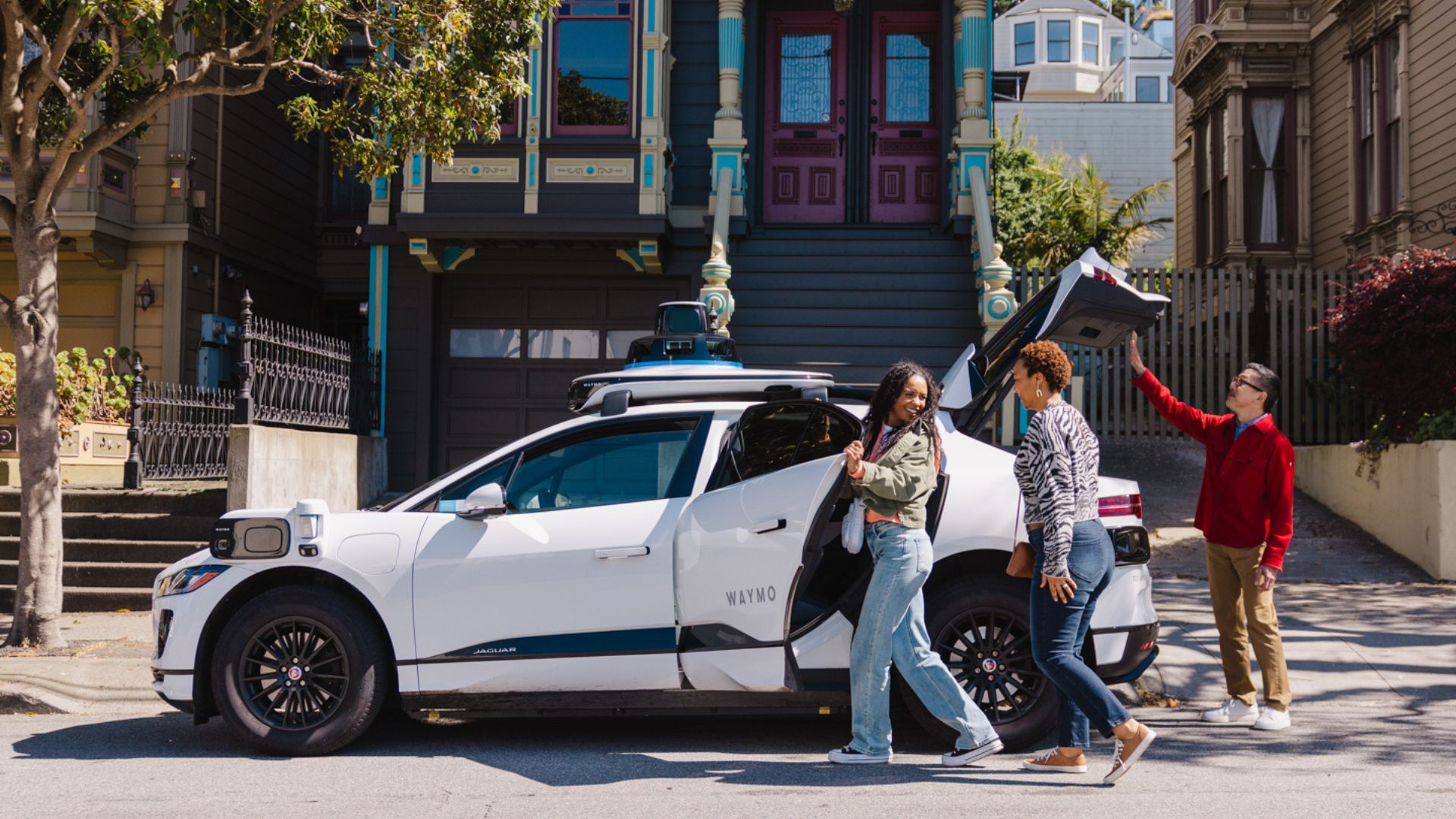
Somewhere at the Port of Los Angeles, Waymo has been quietly paying a bill that should make Detroit nervous for entirely the wrong reason. Since 2024, the company has imported 3,200 Chinese-built electric vehicles to serve as robotaxis, absorbing a 127.5% Chinese robotaxi tariff on every single one. That’s the kind of tax that turns a $38,000 car into an $86,500 car before a single sensor gets bolted on. Waymo did it anyway – 2,600 times just this year.
The easy read is that Alphabet’s money is simply bigger than Washington’s trade policy. The real story is smaller than that, and more interesting. Waymo’s own numbers show the car was never the expensive part of building a robotaxi. Even with a punishing tariff attached, this vehicle still lands cheaper than the one it’s replacing. That single fact says more about the real cost of autonomous driving than any mileage report the company publishes.
The vehicle is built by Zeekr, the EV brand owned by China’s Geely, on a platform Waymo calls the Ojai and Zeekr sells at home as the CM1e. Waymo rolled it out this spring in San Francisco, Los Angeles, and Phoenix alongside the sixth generation of its self-driving system, and says it expects thousands running by year’s end. Import declarations cited by Forbes put the landed factory cost around $38,000. After the 127.5% duty is applied at customs, that number climbs to roughly $86,500 – before the car has done anything but clear a shipping container.
The Number That Actually Matters
Here’s the figure that matters more than the Chinese robotaxi tariff rate: Waymo’s outgoing robotaxi, a modified Jaguar I-Pace, has reportedly cost the company upward of $200,000 per vehicle to retrofit with sensors and computing hardware. Add roughly $25,000 in hardware and software to the tariffed Zeekr, and Waymo ends up with a fully autonomous-capable car for a bit over $110,000 – less than half of what it was spending to convert an ordinary production SUV. A 127.5% tax on the car was still the bargain next to the cost of teaching a normal car to drive itself.
That gap exists because the Jaguar was never built to be driven by a computer. Giving it redundant steering, redundant braking, and backup power for when the primary system fails means re-engineering systems that were designed once, for a human, and never touched again. Zeekr builds the Ojai with those redundancies on the factory line, because the car was designed from the start for driverless ride-hailing instead of adapted after the fact. Waymo isn’t just buying a cheaper car. It’s buying a car that needed less engineering to begin with.
Washington Built This Wall For Someone Else
That distinction matters more right now because Washington has spent two years trying to wall off exactly this kind of vehicle. Congress has floated legislation that would ban Chinese-made cars outright, and Brussels is fighting a similar battle, with Volkswagen now pushing European regulators to move faster against Chinese-built competitors undercutting its own lineup. The 127.5% rate Waymo pays traces back to a 2024 decision to roughly quadruple the tariff on Chinese EVs, a move aimed at protecting American automakers and buyers from vehicles priced far below anything built domestically.
The tariff does exactly what it was designed to do for ordinary buyers. No dealership is importing a $38,000 Zeekr and selling it for $86,500, because no consumer would pay double sticker for a car with no dealer network, no warranty support, and no parts supply chain in the United States. What nobody fully priced in was a company that never sells the car at all. Waymo puts the Ojai to work instead, spreading that tariff across years of fares rather than a single sale. A tax built to protect the American consumer market is being absorbed in full by a business model the tariff never anticipated.
Nobody Talks About Who Fixes These
It’s worth pausing on what these cars had to clear to get here at all. Vehicles carrying paying passengers on public roads don’t qualify for the low-volume or show-and-display exemptions that let importers bring in something like a JDM sports car nobody plans to drive daily. Every Ojai has to meet the same federal safety standards as a Honda or a Ford, run through the same crash and equipment testing pipeline, despite Zeekr having no retail presence or dealer network in this country. The Ojai may end up being the only Chinese-built passenger car most Americans ever ride in on U.S. roads. Most of them will never realize it, because they booked the trip through an app.
That creates a cost nobody is advertising: what happens when one of these gets hit. Waymo’s existing fleet has already racked up parking tickets in Austin and ended up in a very public dead-end standoff in San Francisco, and fleet vehicles log far more miles, and far more collisions, than the average commuter car. Body panels, battery packs, and electronics for a car with no U.S. sales network have to move through the same import pipeline, tariff included, that brought the vehicle here in the first place. Waymo isn’t just building a ride-hailing business. It’s building a parts and repair supply chain from a manufacturer that has never sold a single car at retail in America.
There’s an irony buried in the ownership chart, too. Zeekr’s parent, Geely, is the same company that bought Volvo in 2010 and later took a controlling stake in Polestar – deals that were, at the time, treated as a story about China absorbing Western engineering talent. Fifteen years later, that same corporate family is sending its own engineering in the other direction, into American cities, wearing a Waymo badge instead of a Swedish one.
What This Means Five Years From Now
Zoom out and this is bigger than one company’s import bill. As robotaxi operators like Amazon’s Zoox push toward commercial service, the industry keeps arriving at the same conclusion: retrofitting an existing consumer car for autonomy is the expensive way to do this. Purpose-built platforms, wherever they’re sourced, keep winning the math. If that holds, the pressure eventually lands on Detroit and the rest of the domestic industry to build purpose-made autonomous platforms at home, or watch fleet operators keep solving the problem by importing someone else’s answer, tariff and all.
The Chinese robotaxi tariff was written to keep those cars away from American buyers, and it’s succeeding at that. What it wasn’t built for was a customer who never sells the car to anyone, who just needs it to drive itself, cheaply, for a decade. Waymo found the gap in that logic before anyone else did. The number that matters here was never 127.5%. It’s the fact that even after paying it, Waymo still came out ahead of building the robotaxi the American way.