
A Recall So Small It’s Almost the Point
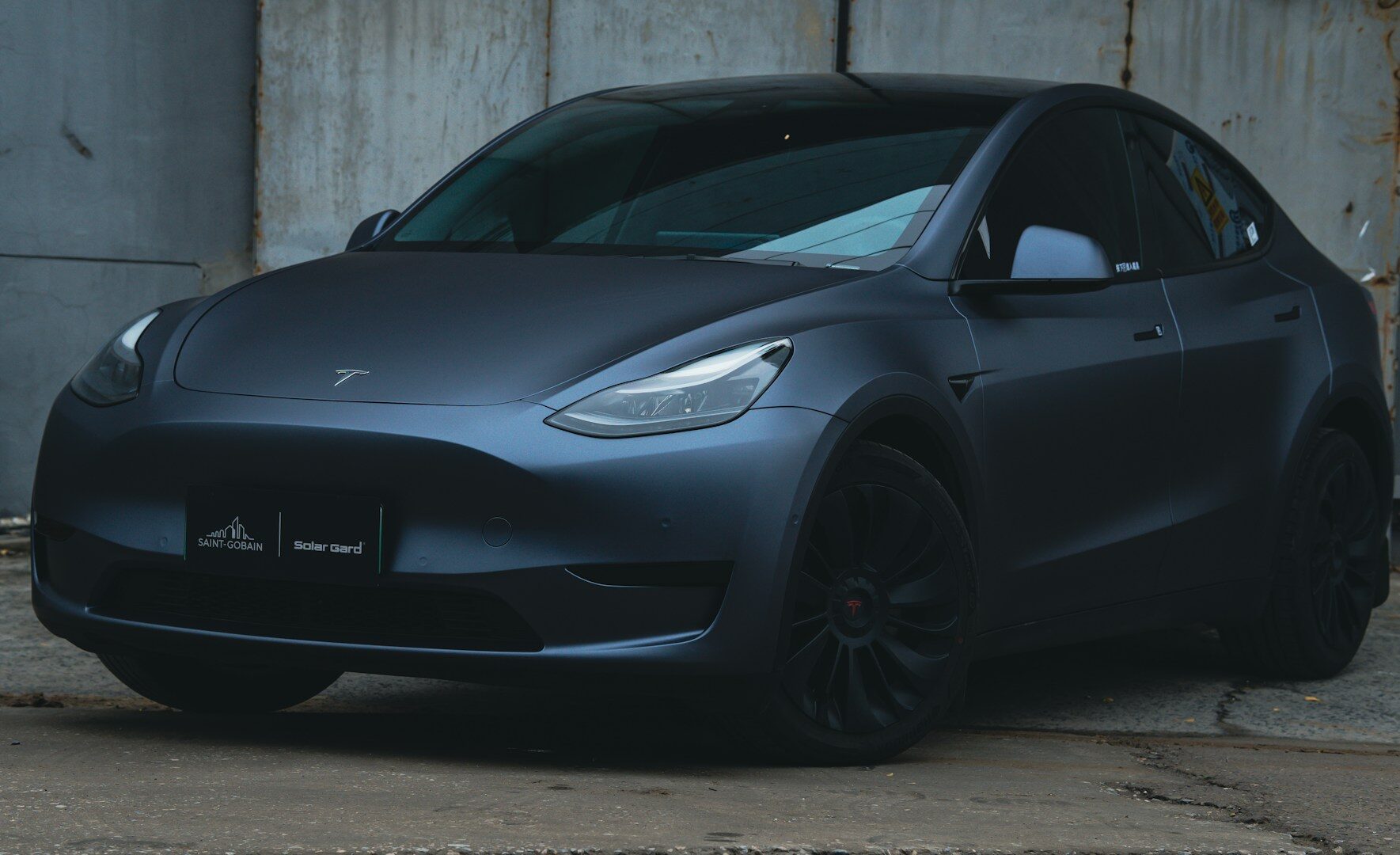
Nineteen cars. That’s the entire population of Tesla’s newest safety recall, filed with the National Highway Traffic Safety Administration on September 1, 2026, as Campaign 26V558000. Nineteen 2026 Model Ys, somewhere on American roads or still sitting on dealer lots, left the factory with a front suspension fastener that never got torqued to spec.
That’s the whole recall. By the standards of an industry where six- and seven-figure recall numbers are routine, 19 cars barely registers. But the tiny scale is the least interesting thing about this filing. The interesting part is that this is the fourth time since 2021 Tesla has told federal regulators the exact same joint, on the exact same suspension component, wasn’t attached correctly on the assembly line.
According to the defect report on file with NHTSA, one or more fasteners on the front lower lateral link, the arm that locates each front wheel and manages cornering and braking loads, may not have been properly tightened. If a bolt backs out far enough, the lateral link can separate from the sub-frame entirely. NHTSA’s language for the consequence is blunt: a separation could shift the wheel alignment, causing a loss of vehicle control and increasing the risk of a crash. The fix is free: inspect, re-torque or replace the fasteners, check alignment, and swap any parts already damaged. Owner letters go out October 30. Tesla’s internal reference is SB-26-31-004.
Here’s the first thing most owners don’t realize about recalls: federal law doesn’t care how many cars are involved. A recall exists to address unreasonable risk, not to clear some volume threshold. A defect affecting two cars gets the same Part 573 paperwork, the same public filing, and the same free repair as one affecting two million. Legally, this 19-car filing carries the same weight as the roughly 5-million-vehicle door handle recall Tesla is still fighting in China.
The Same Bolt, Four Times Since 2021
What should catch your attention is the recurrence. In October 2021, Tesla recalled 2,791 Model Y and Model 3 units, filing 21V835000, because front suspension lateral link fasteners could loosen and allow the lateral link to separate from the sub-frame. In December 2022, it recalled 26 more 2023 Model Ys, filing 22V895000, for fasteners that may not have been properly tightened. In March 2023, it expanded the 2021 action to cover 422 more 2018-2019 Model 3s under filing 23V235000, using almost the identical sentence: front suspension lateral link may separate. Now, in September 2026, on a Model Y built years after all three of those campaigns, the same joint failed the same way.
Tesla’s own internal service bulletin numbers tell the story in miniature: SB-21-31-003, SB-22-31-002, SB-23-31-001, and now SB-26-31-004. Same component family. Same suspension system code. Four separate tickets across five years, spanning both the Model 3 and Model Y lines.
Why a “Simple” Bolt Is Never Simple on an Assembly Line
None of this means the lateral link itself is a bad design. NHTSA’s filings don’t allege a part defect; they allege an assembly defect. That distinction matters more than it sounds. A torque spec failure is a process problem, not an engineering one. Modern assembly lines are built to prevent exactly this with angle-verified torque guns that log every fastener electronically and won’t let the line advance without a passing signal, sometimes backed up by camera vision or color-coded torque-stripe paint that a worker or auditor can confirm at a glance. When a bolt still ships loose, the failure usually isn’t the wrench. It’s somewhere in the verification chain: a gun that logged a false pass, a part reinstalled by hand after being pulled for an unrelated repair, or a station where the electronic check was never wired into the line’s stop-and-fix logic.
That’s the part worth sitting with. Tesla built its public identity on manufacturing as engineering. Elon Musk has spent years telling investors the factory is the product. Four separate federal filings, on three different vehicle lines, describing essentially the same bolt in nearly the same sentence, suggest that whatever fixed the torque process in 2021 didn’t fully survive contact with 2022, 2023, or a new Model Y line in 2026. We broke down the engineering behind another recent Tesla recall in detail here; this one isn’t really about physics. It’s about whether a fix actually holds once a factory moves on to the next changeover.
This Isn’t Just a Tesla Problem, But the Timing Matters
To be fair to Tesla, repeat recalls on the same fix aren’t a Tesla-only problem. They’re a manufacturing problem every automaker eventually runs into. Ford issued a Mustang recall specifically to correct an earlier Mustang recall that didn’t fully take. What’s notable here is the timing: roughly three years of apparent quiet on this specific joint, followed by a fourth filing on a current-year vehicle, landing in the same stretch when NHTSA has a much larger preliminary evaluation open into roughly 1.2 million older Model 3 and Model Y vehicles over separate front suspension detachment complaints. NHTSA has been explicit that the two matters are not the same defect, but regulators are clearly paying closer attention to Tesla’s front suspension hardware right now than they have in years. It’s a pattern worth tracking, and one we’ve examined before in Tesla’s broader relationship with its own regulator.
What Owners and Used Model Y Buyers Should Actually Do
For the 19 owners actually affected, the fix is straightforward: don’t wait for the October 30 letter. Check the VIN through NHTSA’s recall lookup or the Tesla app now, and if the car hasn’t left the lot yet, ask the delivery advisor to complete the re-torque before you take it home. New noises from the front end, a steering wheel that no longer sits centered, or fast, uneven tire wear are all reasons to call Tesla service immediately rather than wait.
There’s a broader lesson here for anyone shopping a used Model 3 or Model Y from any of these build years, too. A completed recall repair doesn’t just mean a bolt got tightened once and forgotten. Ask the seller for the alignment printout from the recall visit. A lateral link that spent any time loose can accelerate uneven tire wear or bushing fatigue well before it ever throws a warning light, and that history won’t show up on a basic VIN check.
Nineteen cars will not move any needle. But a recall isn’t only a measure of how many vehicles were affected. It’s a measure of whether a manufacturer actually closed the loop on a problem it already promised regulators it had solved. Tesla has now made that promise about this exact bolt four times. The fifth filing, whenever it comes, will tell us whether anyone at Tesla was really listening to the first three.