
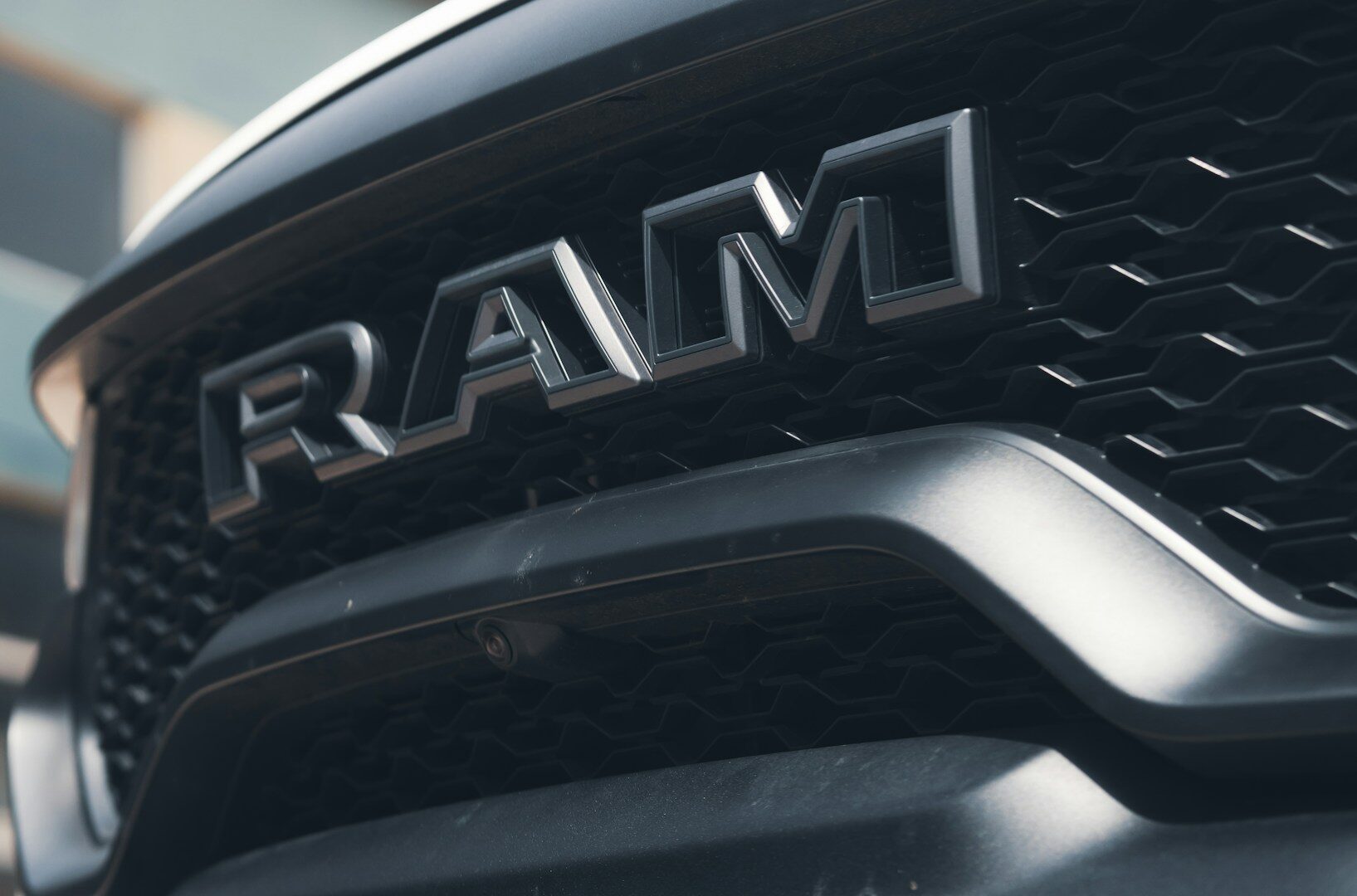
Picture this: you’re idling at a red light in stop-and-go traffic, or easing your truck through an automatic car wash, and without any input from you, the dashboard chimes, a warning appears, and the transmission drops itself into Park. The parking brake sets on its own. You didn’t touch anything. That isn’t a hypothetical dreamed up for a magazine feature — it’s described, in strikingly similar language, across multiple owner complaints filed with the National Highway Traffic Safety Administration about the redesigned 2025 Ram 1500.
Stellantis rebuilt the Ram 1500 from the ground up for 2025, replacing the long-serving 5.7-liter HEMI V8 as the truck’s mainstream engine with the new Hurricane twin-turbo inline-six, offered in Standard Output form and, in the RHO performance trim, a 540-horsepower High Output tune. That much is documented in Stellantis’s own materials. The same twin-turbo six now underpins a growing share of the lineup, including the police-package Dodge Charger that swapped a turbocharged six in for its old V8 pursuit engine, which makes the 1500’s early reliability record a useful bellwether for how the architecture holds up at scale. Pull the truck’s full safety file straight from NHTSA’s public database, though, and a less flattering picture appears: 337 complaints and eight recalls logged against the standard 2025 Ram 1500 in under two years, plus another 40 complaints and four recalls specific to the RHO.
Filter those complaints down to the powertrain and engine categories and a specific, repeated failure pattern emerges. Several owners, in different states, describe the truck’s automatic stop-start system throwing an error demanding a reset, then shifting itself into Park and applying the parking brake while the vehicle was still moving. One Florida owner told NHTSA the malfunction struck more than once, including inside an automatic car wash, where the sudden stop left the truck rear-ended by another vehicle. Another owner, driving through a red light with a child in the back seat, reported the truck flashing a park warning and shutting down on its own. A third described briefly losing steering, throttle and brake response while crawling through a parking lot with kids on board, managing only to angle the truck out of the way before it shut off.
Buyer’s guide: Best Truck-Bed Accessories for Pickup Owners
Here’s the detail that should give every owner pause: as of this writing, NHTSA lists zero open formal investigations into the 2025 Ram 1500, despite complaints describing the same failure mode, in the same stretch of months, from unrelated owners in unrelated states. That isn’t a loophole. It’s how the process is designed to work. A complaint is a data point. An investigation requires the agency to first notice a pattern worth chasing. A recall requires that investigation to turn up a defect the manufacturer or NHTSA agrees is safety-related. Right now, this particular failure sits at step one — and every owner who hasn’t filed a complaint yet is a data point the agency doesn’t have.
None of this means the engine itself is blameless. A separate complaint out of Ballston Lake, New York, describes a “complete engine block failure” after the timing chain failed badly enough to punch a hole through the block, requiring a full engine replacement. That’s a mechanical failure, not a software glitch, and a reminder that an all-new engine architecture carries its own break-in risk independent of anything happening in the truck’s wiring.
Zoom out to the truck’s full recall history and the software angle gets harder to ignore. Of the eight recalls issued against the 2025 Ram 1500 since October 2024, the instrument panel display has been recalled twice — once in December 2025 and again the following April — for failing to show critical information like gear selection and warning lights. Separate campaigns cover a rearview camera that may not display, electronic stability control that can disable itself, incorrect tire-pressure readings, and trailer brakes and lighting that don’t activate. Only one of the eight, in isolation, points at a traditional mechanical part; the rest point at code. The pattern hasn’t stopped with the 2025 model, either — the following model year has already racked up four separate recalls tied to its wiring in a single seven-month stretch.
This is the trade-off of the software-defined pickup. A traditional body-on-frame truck used to be judged almost entirely on what a mechanic could put a wrench on: the block, the frame, the axles. Ram built its reputation, and its ad campaigns, on exactly that kind of toughness. The 2025 truck still has all of that hardware, but it now runs underneath a far more ambitious electrical architecture governing everything from throttle response to when the transmission is allowed to select Park on its own. When that layer misfires, the fix usually isn’t a part number. It’s a calibration update pushed through a dealer’s diagnostic tool — a very different kind of repair than swapping a timing chain, and one an owner can’t verify just by looking under the hood.
There’s a real tension sitting on Ram’s own homepage right now, where the brand advertises being America’s most dependable full-size truck alongside a powertrain warranty covering select 2026 models for 10 years or 100,000 miles. That warranty is a legitimate hedge against exactly the kind of catastrophic engine failure reported out of New York. It’s much less clear whether it does anything for an owner whose truck decided, on its own, to stop moving in traffic. Stellantis’s own 2025 annual report confirms something else worth noting: the HEMI V8 has returned to the Ram 1500 lineup as an available engine — a sign that even the company isn’t fully ready to bet the truck’s reputation on the Hurricane alone.
None of this means the 2025 Ram 1500 is unsafe to drive, and it doesn’t mean the Hurricane engine is a lemon. It means the truck’s real growing pains aren’t where most buyers are looking. A blown timing chain is a problem a mechanic can diagnose with a borescope and fix with a parts order. A truck that decides, on its own, that you’re parked when you’re not is a problem you diagnose with a laptop, and right now, nobody outside of Stellantis and NHTSA’s complaint files has fully diagnosed it. That’s the story worth watching as more of these trucks rack up miles: not what’s under the hood, but what’s quietly running the show above it.
Has software ever caused a problem your car’s engine never would have? Sound off in the comments.