
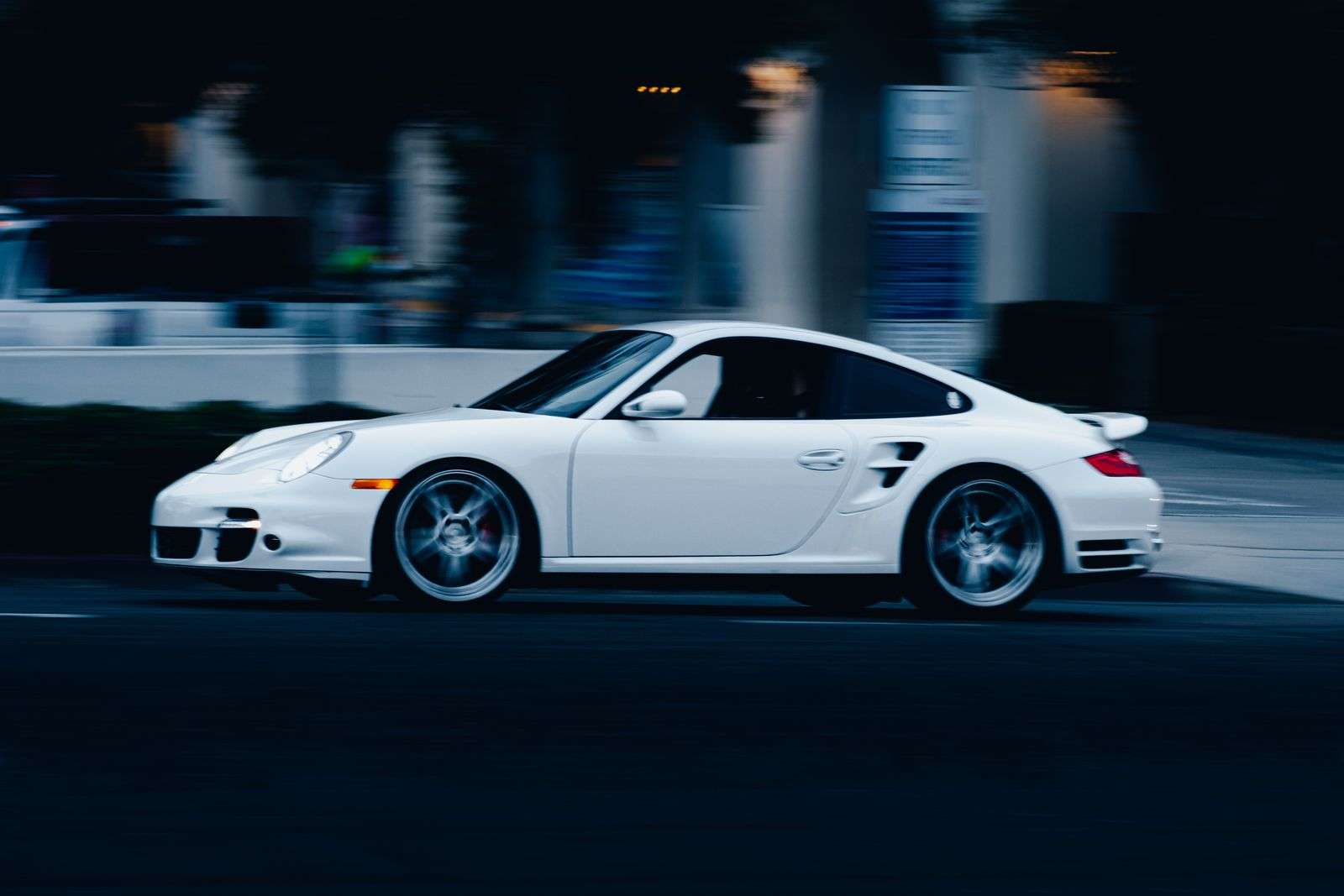
Here is the number that explains Porsche’s year better than any profit warning: 19 percent. That is how much 911 deliveries rose in the first half of 2026, according to Porsche’s own delivery report. Every other Porsche model line went backward. The Macan fell 22 percent. The Panamera fell 38 percent. The 718 Boxster and Cayman fell 73 percent.
The car that built the brand is doing fine. The machine that made the brand rich is not.
That is the story hiding inside Volkswagen’s roughly €6 billion Porsche write-down. On Sept. 18, Volkswagen cut its 2026 forecast and now expects an operating return on sales of up to 1 percent, down from a previous range of 4 to 5.5 percent. The single largest reason is a non-cash goodwill impairment of around €6 billion on the Porsche segment, triggered after Porsche updated its long-term planning. The rest comes from a sharper downturn in China, more early-retirement costs, the planned sale of the Osnabrück plant, and write-downs on Chinese assets.
Read the headlines and you would think Porsche has lost its magic. The numbers say something narrower and more interesting: Porsche is still a great sports car company. It is no longer a great profit engine for Volkswagen. Those are two very different problems.
What a goodwill write-down actually confesses
Goodwill is one of the least glamorous lines on a balance sheet, and one of the most revealing. It is the premium a parent company carries on its books above the value of a business’s identifiable assets, essentially a bet on that business’s future earnings. When Volkswagen impairs it, no money leaves the bank. Volkswagen stresses exactly that, and still expects €3 billion to €6 billion of automotive net cash flow this year.
But an impairment is a formal admission. It says the parent’s accountants no longer believe the subsidiary will earn what they once assumed.
Here is the part most people missed: this is the second one in twelve months. On Sept. 19, 2025, Volkswagen booked about €3 billion of goodwill impairment on Porsche after the sports car maker cut its medium-term margin target from 15-17 percent to 10-15 percent. Add this year’s charge and Volkswagen has marked down its view of Porsche by roughly €9 billion in about a year.
From 18 percent to 1.1 percent
To understand how far this has fallen, go back to 2022. That year Porsche earned €6.8 billion in operating profit on an 18 percent return on sales, and launched a program called “Road to 20”, aimed at a group return of more than 20 percent over the long term. Its September 2022 IPO valued the company at roughly €78 billion, the largest European listing by market capitalization at the time.
By 2025, Porsche reported operating profit of €413 million on €36.27 billion in revenue. That is a 1.1 percent return, down from 14.1 percent a year earlier. Porsche attributed about €3.9 billion in burdens to three things: roughly €2.4 billion for realigning its product strategy, about €700 million for battery activities, and about €700 million in U.S. tariffs.
The first half of 2026 looked better on the surface. Porsche posted a 7.8 percent operating return, up from 5.5 percent, and net cash flow more than doubled. But revenue fell 5.1 percent and deliveries fell 16.5 percent to 122,306 cars. The cost cutting is working. The company is also getting smaller while it works.
The budget brand is out-earning the sports car maker
Now the moment that should stop any longtime Porsche watcher cold. In the same half-year, Škoda reported an 8.5 percent return on sales on €16.0 billion in revenue, with deliveries up 9.1 percent.
Per euro of revenue, the brand that sells Octavias and Kodiaqs out-earned the brand that sells 911s.
That comparison needs a fair caveat. Porsche’s half included about €100 million in restructuring costs, and Porsche still targets a 10-15 percent return in the medium term. But that is precisely the point. At the IPO, a Porsche margin premium was treated as a law of nature. It turns out it was a product of a specific moment, a specific mix of vehicles, and a specific market.
Three bets that broke at the same time
China. In 2021, Porsche delivered 95,671 cars in China, its largest single market. By 2025 that figure had fallen to 41,938, and in the first half of 2026 it dropped another 32 percent. Porsche has pointed to intense local competition, particularly in fully electric models. Volkswagen finance chief Arno Antlitz said last week the market situation has deteriorated further, particularly in China, with no recovery in sight, while Chinese makers push low-cost cars into Europe.
Electrification. In 2022, Porsche said it wanted more than 80 percent of its new vehicles to be all-electric by 2030. At its June 2026 annual meeting, CEO Michael Leiters told shareholders there will be “no fully electric 911” and described the hybrid as fundamental rather than transitional. Battery-electric vehicles made up 19.4 percent of Porsche deliveries in the first half, down from 23.5 percent. Reversing course cost about €2.4 billion in 2025 alone. For more on how that bet played out, see our look at why the Taycan is on its way out.
The United States. North America was Porsche’s largest region in the first half of 2026, with 37,712 deliveries, and even that was down 13 percent. Porsche builds its cars in Europe, which means the showroom in Atlanta or Dallas now carries a tariff bill that Porsche put at about €700 million last year.
Any one of those would have dented margins. All three at once turned a sports car company that had learned to behave like a volume luxury brand back into a sports car company.
The regulation that quietly killed the cheapest Porsche
The steepest drop on Porsche’s chart belongs to the 718, and the reason is not what most buyers assume. In its 2025 delivery report, Porsche said 718 production ended in October 2025, and that EU cybersecurity regulations had already caused supply gaps for the 718 and the combustion-engine Macan in Europe.
In other words, rules written for the connected, software-defined car helped retire the entry point to Porsche’s mid-engine sports cars in its home market before the market did. The 2,789 718s delivered in the first half of 2026 are the tail end of a car that is no longer being built. We have written before about what automotive cybersecurity compliance really costs, and the 718 is the most tangible example yet.
What “value over volume” means if you actually buy these cars
Porsche’s chief financial officer, Jochen Breckner, credits “rigorous cost management and value-over-volume strategy” for the first-half margin rebound. Leiters says Porsche will focus on its “sports car DNA,” trim the number of model variants and simplify the organization, with details due at a Capital Markets Day on Oct. 7. Porsche has also said it is in talks with employee representatives about job reductions, part of a wave we tracked in our Sept. 22 industry roundup.
Translate the corporate language and you get a simple formula: fewer cars, fewer variants, more money per car. For people who already own a desirable 911, scarcity tends to be a friend. For shoppers who hoped to step into a new Porsche sports car at the bottom of the range, the door is narrower than it has been in a long time.
And for Volkswagen, it is a genuine dilemma. A smaller, higher-margin Porsche can be a healthy company and still be a disappointing subsidiary. Volkswagen needs cash to fund a restructuring that already stretches from Audi to its own namesake brand. A Porsche that sells fewer cars on purpose throws off less of it, even when each car is more profitable.
The one thing to remember
The 911 made Porsche famous. The Cayenne, the Macan and China made it rich. Only one of those jobs is still getting done, and it is the one Volkswagen can’t put a €6 billion price on.
Porsche is not broken as a sports car maker. It is broken as a growth story, and the €9 billion Volkswagen has written off in a year is the bill for having believed the growth story would last. The Oct. 7 strategy presentation will show whether Porsche’s leadership has accepted that, or is still trying to buy it back.
Should Porsche embrace becoming a smaller, pricier, 911-first company, or fight to win back SUV and EV volume in China and the U.S.? Where would you draw the line?