
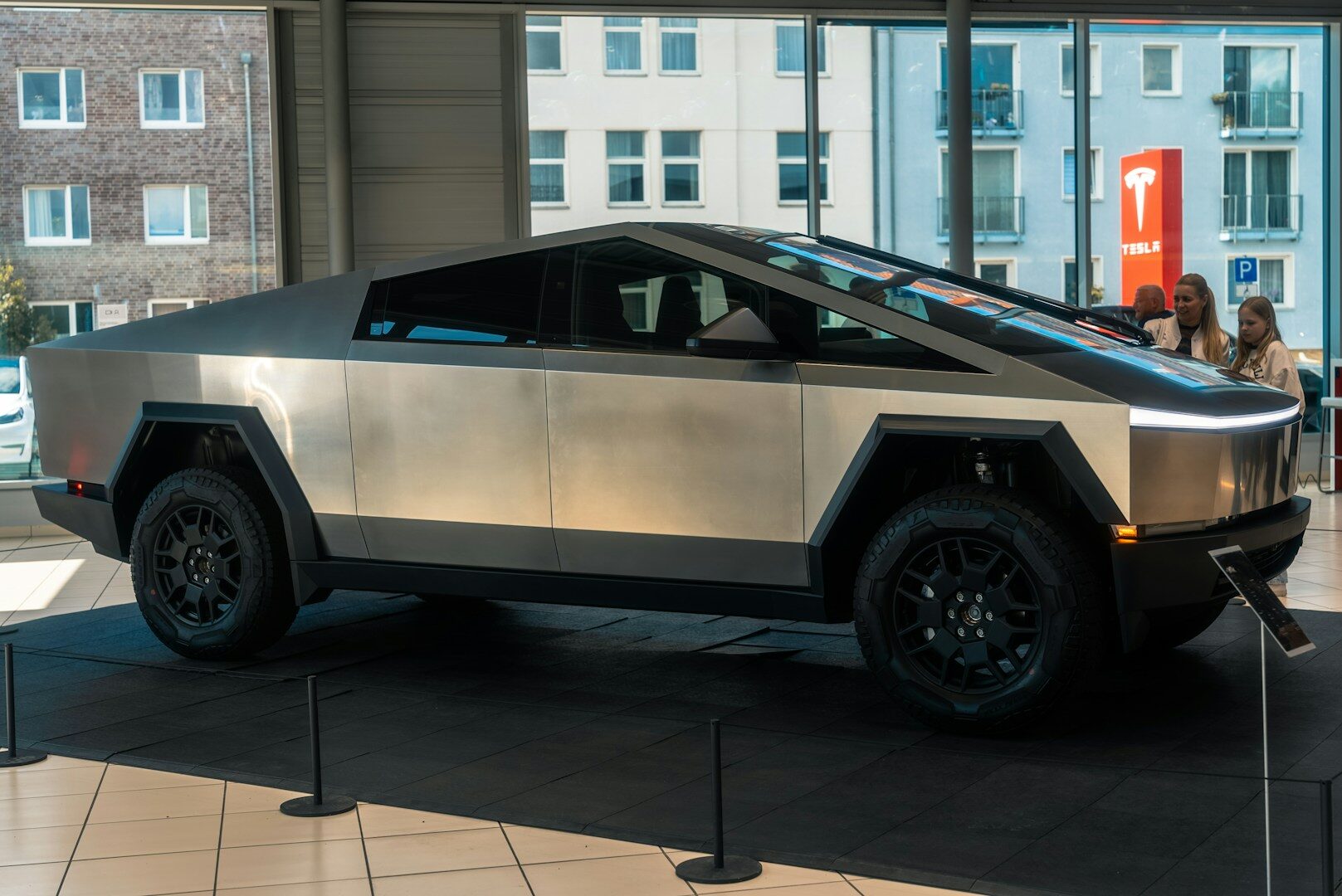
The Tesla Cybertruck and Ford F-150 Lightning represent two fundamentally different visions of what an electric pickup should be. The Cybertruck is a stainless-steel, software-forward statement piece built around novelty and outright performance, while the F-150 Lightning brings electric power to America’s best-selling truck in a package that looks and drives like the F-150 owners already know. Choosing between them comes down less to which is objectively “better” and more to which philosophy actually matches how you use a truck day to day.
Quick Verdict
The Cybertruck wins on raw acceleration, futuristic tech, and access to Tesla’s Supercharger network, making it the pick for early adopters who want something bold and don’t mind a steep learning curve. The F-150 Lightning counters with familiar truck practicality, a more conventional interior layout, and genuinely useful work-truck features like Pro Power Onboard. If you want a truck that still feels like a truck, the Lightning is the safer bet. If you want to drive something that looks like nothing else on the road, the Cybertruck delivers that in a way few vehicles ever have.
Performance
Both trucks are genuinely quick by pickup truck standards, a fact that still feels strange to type about a segment historically defined by low-revving V8s. The Cybertruck, particularly in its quickest trim, is significantly faster in a straight line, with 0-60 mph acceleration times reported under three seconds in top configurations. The F-150 Lightning is quick in its own right, but Ford has clearly prioritized towing capability and everyday usability over drag-strip numbers. Both trucks offer competitive range, with top estimates generally landing in the neighborhood of 300 miles depending on trim, wheel size, and how much weight is in the bed or on the hitch. Towing meaningfully cuts into range on both trucks, which is worth factoring in heavily if hauling a trailer is part of your regular routine rather than an occasional weekend task.
Interior
The Cybertruck’s cabin is minimalist and unapologetically tech-forward, built around a large central touchscreen and a steering interface that takes some adjustment even for longtime EV owners. The F-150 Lightning’s interior is far more conventional, closely mirroring the standard gas-powered F-150 with physical controls, a large available center display, and Ford’s practical fold-flat work surface built into the center console. Buyers transitioning directly from a gas-powered pickup will generally feel more immediately at home in the Lightning’s cabin.
Technology
Tesla continues to lead on software polish, over-the-air update frequency, and the overall Supercharger charging experience, along with a suite of advanced driver-assistance features. Ford has closed much of that gap in recent years, and its infotainment system remains straightforward and easy to use even for buyers who don’t consider themselves particularly tech-savvy. Charging access remains a meaningful consideration either way: Tesla’s Supercharger network has historically been the more seamless and widely available option, though Ford EVs increasingly gain Supercharger access through adapters, narrowing the practical difference for everyday charging.
Safety and Reliability
The F-150 Lightning benefits from decades of traditional F-150 engineering heritage and a more conventional overall design, though it has had isolated early production issues like most new EV platforms. The Cybertruck is a newer and mechanically more unconventional vehicle, which comes with the usual early-adopter tradeoffs of a less proven long-term track record. Anyone cross-shopping these two should weigh how much they value a longer history of real-world reliability data against the appeal of genuinely new engineering.
Pros and Cons
Tesla Cybertruck
- Pros: Blistering acceleration, futuristic design, Supercharger network access, advanced software
- Cons: Polarizing styling, unconventional interior layout, higher pricing at the top of the range, newer and mechanically more complex
Ford F-150 Lightning
- Pros: Familiar truck practicality, Pro Power Onboard home backup capability, conventional interior, proven overall platform
- Cons: Range drops significantly under heavy towing, less visually distinctive, charging network historically less seamless than Tesla’s
Final Recommendation
If cutting-edge performance, futuristic design, and Supercharger convenience matter most to you, the Cybertruck is the bolder and more distinctive choice. If you want a familiar, genuinely work-ready electric truck that drives and functions like the F-150 you already trust, with the added benefit of Pro Power Onboard for home backup power, the Lightning is the more practical and approachable pick. Both trucks push the electric pickup segment forward in different directions, so the right answer depends heavily on whether you’re buying a truck to make a statement or a truck to get work done.
Frequently Asked Questions
Which electric truck is faster?
The Cybertruck, particularly in its top trim, is significantly faster, with 0-60 mph acceleration reported under three seconds. The F-150 Lightning is quick but prioritizes towing capability and everyday usability over outright speed.
Can the F-150 Lightning power your home?
Yes. The F-150 Lightning offers Pro Power Onboard and, with the proper home integration equipment installed, can supply backup power to a house during an outage, a genuinely standout practical feature for a pickup truck.
Which has better charging access?
Tesla’s Supercharger network has historically been the most seamless and extensive charging option available. That said, many non-Tesla EVs, including current Ford models, increasingly gain Supercharger access through adapters, which has narrowed the practical gap considerably for day-to-day charging.